

You should take vitamin D with your largest meal of the day, whether that’s breakfast, lunch, or dinner. Since it’s a fat-soluble vitamin, consuming it with foods containing healthy fats like avocados, nuts, or fatty fish can increase absorption by 32-50%. The specific time doesn’t matter as much as consistency—pick a time that fits your schedule and stick with it daily. Understanding these absorption factors will help you optimize your supplementation strategy.
Understanding Vitamin D and Its Importance for Health

Although your body naturally produces vitamin D when exposed to sunlight, you’ll likely need additional sources to maintain ideal levels.
Vitamin D is a fat-soluble vitamin that’s essential for your immune system, muscle function, and calcium absorption. Despite its significance, approximately 25% of Americans experience vitamin D deficiency due to limited dietary sources and insufficient sun exposure.
The health benefits of vitamin D make adequate levels vital for your overall health. Deficiency has been linked to serious conditions like osteoporosis and depression.
Vitamin D deficiency poses serious health risks, potentially leading to bone disorders like osteoporosis and mental health issues including depression.
The Recommended Daily Value for older adults is 800 IU, emphasizing why supplementation often becomes necessary. Regular healthcare consultations can help determine your individual needs and create an appropriate strategy for maintaining peak vitamin D levels.
The Science Behind Vitamin D Absorption
Understanding how your body absorbs vitamin D starts with recognizing it’s a fat-soluble vitamin that needs dietary fat to work effectively.
You’ll absorb considerably more vitamin D when you take it with meals containing healthy fats like nuts, avocados, or olive oil rather than on an empty stomach.
The timing of when you eat these fat-rich meals with your supplement matters more than whether you take it in the morning or evening.
Fat-Soluble Vitamin Requirements
The biochemistry of vitamin D reveals why timing your supplement intake with meals matters greatly. Unlike water-soluble vitamins, vitamin D requires dietary fats for ideal absorption in your digestive system. When you take your supplement with a high-fat meal, you’re providing the necessary vehicle for this fat-soluble vitamin to enter your bloodstream effectively.
| Meal Type | Blood Level Increase |
|---|---|
| Fat-free meal | Baseline absorption |
| Low-fat meal | 15-20% increase |
| Moderate-fat meal | 25-30% increase |
| High-fat meal | 32-50% increase |
| Largest daily meal | Up to 50% increase |
Incorporating healthy fats like avocados, nuts, or fatty fish with your vitamin D supplement maximizes absorption. Studies demonstrate that this strategic pairing can boost your blood levels considerably compared to taking supplements on an empty stomach.
Meal Timing Benefits
When you synchronize your vitamin D intake with strategic meal timing, you’re leveraging fundamental biochemical processes that can dramatically enhance supplement effectiveness.
Taking vitamin D supplements with your largest meal of the day delivers remarkable absorption benefits, increasing blood levels by up to 50% after consistent intake.
Research demonstrates that consuming vitamin D with high-fat meals boosts blood levels approximately 32% within twelve hours compared to fat-free alternatives.
You’ll maximize these benefits by pairing your supplements with nutritious sources like avocados, nuts, fatty fish, or full-fat dairy products.
The healthy fats in these foods create ideal conditions for absorption, transforming a simple meal into a powerful delivery system that guarantees you’re getting maximum value from every dose you take.
Morning Vs Evening: Does Timing Really Matter?
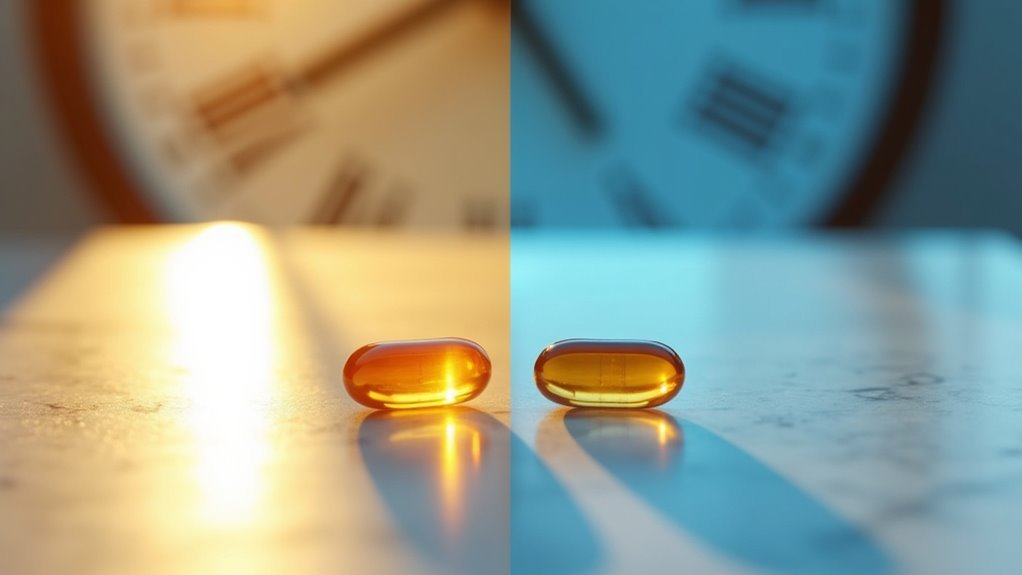
You might wonder if taking vitamin D in the morning versus evening makes a real difference for your body’s absorption.
The good news is that research shows no conclusive evidence that timing notably impacts how well your body processes this essential nutrient.
What matters most isn’t the clock on your wall, but finding a time that works consistently with your daily routine and preferences.
Absorption Remains Consistent
Although many people wonder whether morning or evening is best for vitamin D supplementation, research shows that absorption remains remarkably consistent regardless of timing. Your body processes this fat-soluble vitamin efficiently whether you take it at dawn or dusk, as long as you consume it with a meal containing healthy fats.
The key to effective supplementation isn’t when you take vitamin D, but how consistently you maintain your routine. Studies demonstrate that taking vitamin D with fat-rich meals increases absorption by 32% compared to fat-free options, but timing itself doesn’t affect this enhancement.
Rather than stressing over perfect timing, focus on building sustainable habits that match your individual preferences and daily schedule for peak consistency.
Choose Personal Preference
Since your body absorbs vitamin D equally well throughout the day, your personal schedule and preferences should guide your decision.
The best time to take vitamin D is when it aligns with your routine and guarantees consistency in supplementation.
If you’re taking vitamin D in the morning, you’ll align with natural sunlight patterns and can pair it with breakfast.
Evening intake works well if you prefer taking supplements with dinner or your largest meal or snack.
Either timing provides the same health benefits when you maintain regular supplementation.
Focus on absorption and increase blood levels by taking your supplement with foods containing healthy fats, regardless of timing.
What matters most is establishing a routine that keeps your vitamin D levels stable and supports your overall wellness goals consistently.
Taking Vitamin D With Meals for Better Absorption
Because vitamin D is fat-soluble, your body can’t absorb it effectively without dietary fats present in your system. Taking vitamin D with meals containing healthy fats can boost your blood levels by approximately 32% after 12 hours compared to taking it on an empty stomach.
For even better results, take your supplement with your largest meal of the day, which can enhance absorption and increase blood levels by about 50% over 2-3 months.
Include nutritious fat sources like avocados, nuts, seeds, fatty fish, full-fat dairy, or eggs with your vitamin D dose.
Establishing a consistent routine of taking vitamin D with meals rather than solo won’t just improve absorption—it’ll also help you maintain better adherence to your supplementation schedule.
How Fat-Soluble Vitamins Work in Your Body

Your body processes vitamin D differently than water-soluble vitamins because it requires dietary fats to move through your intestinal wall effectively.
Once you consume vitamin D with fats, your digestive system breaks down and absorbs both nutrients together, allowing the vitamin to enter your bloodstream and travel to your liver for processing.
This fat-dependent absorption mechanism means your body can store vitamin D in fatty tissues for future use, unlike water-soluble vitamins that get flushed out quickly through urine.
Fat Absorption Requirements
When you take vitamin D, your body requires dietary fat to properly absorb this essential nutrient. Since vitamin D is fat-soluble, it dissolves in fats and oils rather than water. Without adequate fat intake, your absorption becomes considerably reduced, limiting the supplement’s effectiveness.
| Fat Source | Absorption Benefit | Best Timing |
|---|---|---|
| Avocados | Enhanced uptake | With largest meal |
| Nuts/Seeds | 32% increase in 12 hours | During main meals |
| Olive Oil | Ideal blood levels | Throughout day |
| Fish/Eggs | 50% improvement over 2-3 months | Consistent daily intake |
| Dairy Fats | Sustained absorption | Regular meal timing |
Including healthy fats in your meals maximizes vitamin D supplementation benefits. Research shows taking vitamin D with high-fat meals dramatically improves blood levels compared to fat-free alternatives, making proper meal timing essential for ideal results.
Vitamin D Processing
Understanding how vitamin D moves through your body reveals why timing and fat intake matter so much for absorption. As a fat-soluble vitamin, vitamin D dissolves in oils and fats, making dietary fat essential for peak uptake.
Once you consume it, your liver converts vitamin D into calcidiol for storage, then your kidneys transform it into calcitriol, the active form your body uses. This complex processing system explains why taking vitamin D with high-fat meals greatly boosts blood levels.
Your fatty tissues and liver store these vitamins, gradually releasing them when needed. Without adequate fat or proper timing, you risk deficiency and related health issues.
This storage system supports vital functions like calcium absorption and immune support over time.
The Role of Dietary Fats in Vitamin D Uptake
The fat-soluble nature of vitamin D means you’ll absorb considerably more of this essential nutrient when you take it alongside dietary fats.
Research demonstrates that consuming vitamin D with a high-fat meal increases blood levels by approximately 32% within 12 hours compared to fat-free alternatives.
For best absorption, pair your vitamin D supplement with healthy fats like avocados, nuts, seeds, fatty fish, full-fat dairy, or eggs.
Taking vitamin D with your largest meal can boost blood levels by 50% over 2-3 months, highlighting meal timing’s importance.
Since vitamin D is fat-soluble, incorporating it into meals containing nutritious fats guarantees your body properly utilizes this essential nutrient, maximizing the supplement’s effectiveness and supporting your overall health.
Creating a Consistent Daily Vitamin D Routine
Beyond enhancing absorption through proper meal pairing, you’ll need to establish a consistent daily routine to maximize your vitamin D supplementation benefits.
Creating this routine starts with choosing a specific time that aligns with your daily activities, whether that’s breakfast or another meal containing healthy fats.
Set up practical reminders like phone alarms, weekly pillboxes, or place your supplement bottle somewhere visible. The key isn’t finding the “ideal” time but maintaining consistency with whatever time you choose.
Taking vitamin D at the same time daily helps your body maintain optimal levels while building a sustainable habit.
Focus on integrating supplementation seamlessly into existing routines rather than creating entirely new ones. This approach guarantees better adherence and maximizes absorption benefits.
Factors That Affect Vitamin D Absorption
While maintaining consistency matters most, several biological and lifestyle factors can considerably impact how well your body absorbs vitamin D supplements.
Understanding these variables helps you optimize your supplementation strategy:
- Dietary fats enhance absorption – Since vitamin D is fat-soluble, taking it with a high-fat meal increases blood levels by 32% compared to fat-free options. Include foods like nuts, avocado, or olive oil.
- Age affects efficiency – Older adults typically experience decreased vitamin D absorption compared to younger individuals, often requiring higher doses or more strategic timing.
- Skin color influences synthesis – Darker skin tones need increased sun exposure due to higher melanin content blocking vitamin production.
- Medications can interfere – Anti-seizure drugs and steroids may lower vitamin D levels, requiring dosage adjustments.
When to Adjust Your Vitamin D Timing
Although ideal timing remains flexible for most people, certain situations signal you should modify when you take your vitamin D supplement. If you’re frequently forgetting doses, adjust to the best time of day that fits your routine.
Taking your vitamin D consistently at the same time enhances adherence more than perfect timing. When taking multiple supplements, morning intake helps establish a reliable schedule. You might experiment with evening doses if you’re interested in potential sleep benefits, though more research is needed to confirm vitamin D supplementation can improve sleep quality.
Always prioritize taking your dose with meals containing healthy fats to maximize absorption of vitamin. Consult your healthcare provider if you experience side effects, as consistency in timing matters less than finding what works for your body.
Potential Sleep Effects of Evening Vitamin D
When you take vitamin D in the evening, you might notice changes in your sleep patterns, though research reveals conflicting findings about this timing’s impact. The potential sleep effects of evening vitamin D supplementation remain complex and individualized.
Current research findings suggest several key considerations:
Research reveals several important factors to consider when timing your evening vitamin D supplementation for optimal sleep outcomes.
- Melatonin interference – Some studies propose that evening vitamin D intake could disrupt melatonin production, potentially affecting your sleep onset.
- Sleep quality improvements – Higher vitamin D levels may enhance your overall sleep quality, according to a 2021 review.
- Mixed efficiency results – Research shows varied outcomes regarding sleep efficiency and duration with evening supplementation.
- Personal experimentation – You’ll benefit from testing different timing of vitamin D intake to determine how it affects your individual sleep patterns.
Maximizing Your Body’s Vitamin D Levels
Beyond timing considerations, you can greatly boost your vitamin D absorption by pairing your supplement with the right foods and maintaining consistent habits.
Taking vitamin D with high-fat meals enhances absorption by approximately 50%, with studies showing a 32% increase in blood levels when consumed with fatty foods versus fat-free options. This happens because vitamin D’s fat-soluble nature requires dietary fats for ideal uptake.
Consistency plays an essential role in maintaining steady blood levels. Take your supplement at the same time daily, preferably with your largest meal.
Remember that individual factors like age and health conditions affect absorption rates, so regular consultations with a healthcare professional guarantee your supplementation approach maximizes effectiveness for your specific needs.
Signs Your Current Timing May Need Changes
How can you tell if your vitamin D timing needs adjustment? Your body provides clear signals when your current schedule isn’t working effectively.
Your body sends clear signals when your vitamin D supplement timing isn’t optimal for maximum effectiveness.
Watch for these key indicators:
- Frequent forgetfulness – If you’re constantly missing doses, shift to taking your vitamin D during a more consistent routine like breakfast or bedtime snacks.
- Digestive issues – Stomach discomfort suggests you should take vitamin D with a meal can enhance absorption, especially one containing healthy fats.
- Sleep disruptions – Changes in your sleep patterns or poor sleep quality may indicate you’re taking it too late, as vitamin D can affect melatonin production.
- Persistent low levels – Despite consistent supplementation, low blood tests warrant taking multiple supplements consultation.
Consult a healthcare provider about timing adjustments.
Professional Guidance for Optimal Vitamin D Use
While these timing adjustments can help enhance your vitamin D routine, working with a healthcare provider guarantees you’re getting the most from your supplementation strategy.
Professional guidance guarantees your vitamin D supplementation aligns with your specific health conditions, age, and body size. Your healthcare provider can determine the appropriate form and dosage based on your vitamin D levels through regular testing.
They’ll provide personalized advice considering factors that influence absorption and requirements unique to your situation. Healthcare professionals can also recommend ideal timing that works with your dietary habits and daily schedule.
Additionally, they’ll monitor your progress and adjust supplementation as needed, especially if you’re taking medications or have conditions affecting vitamin D metabolism, guaranteeing ideal vitamin D use for your individual health needs.
Frequently Asked Questions
When Should Vitamin D Be Taken, Morning or Night?
You can take vitamin D morning or night since absorption remains consistent. Choose whichever time works with your fat-containing meal and stick to it daily for better adherence.
What Vitamins Should You Not Mix With Vitamin D?
You shouldn’t mix vitamin D with high doses of vitamin A, as they compete for absorption. Avoid combining it with excessive calcium supplements, which can cause hypercalcemia when taken together.
Can Vitamin D Make You Sleepy?
Vitamin D can affect your sleep patterns, but it’s unlikely to make you directly sleepy. Low levels might worsen sleep quality, while adequate levels could improve it, though individual responses vary considerably.
Why Shouldn’t You Take Vitamin D3 at Night?
You shouldn’t take vitamin D3 at night because it may interfere with melatonin production, potentially disrupting your sleep quality. Additionally, you’ll absorb it less effectively without dietary fats typically present during daytime meals.


Leave a Reply