
Beef liver provides 42 IUs of vitamin D per 3-ounce serving, supporting your muscle strength through enhanced calcium absorption. This vitamin D activates receptors in your skeletal muscle tissue, boosting protein synthesis and muscle development. You’ll absorb 30-40% more calcium with adequate vitamin D levels, improving muscle contraction and reducing weakness. Grass-fed liver offers superior nutrients with four times more phytonutrients than grain-fed options. Discover the complete nutritional strategy that maximizes your muscle performance potential.
Beef Liver’s Vitamin D Content and Nutritional Profile
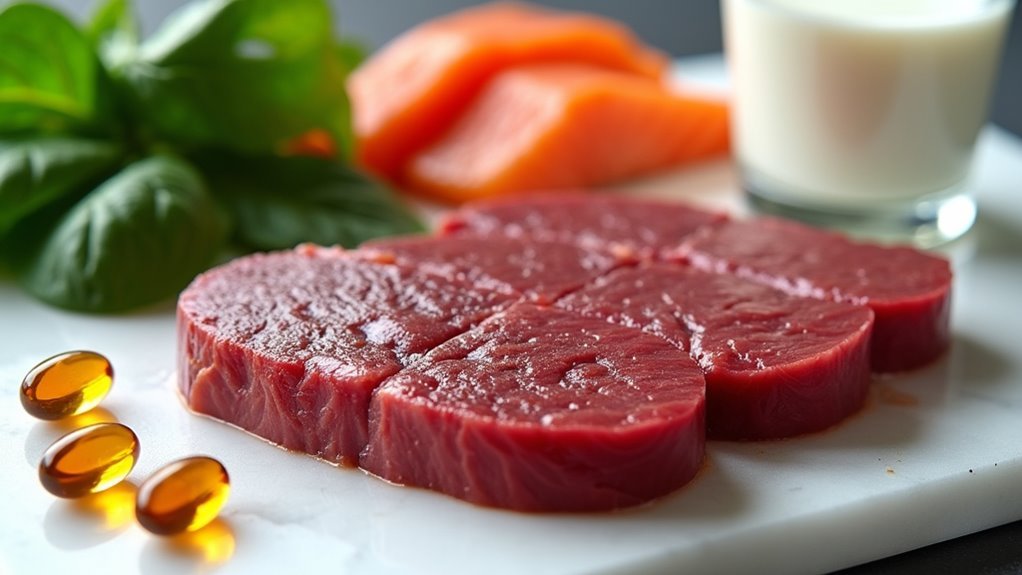
Powerhouse nutrition meets vitamin D benefits when you choose beef liver as part of your diet. A 3-ounce serving delivers approximately 42 IUs of vitamin D content, providing about 5% of your daily recommended value.
Beef liver packs a nutritional punch with 42 IUs of vitamin D per 3-ounce serving, meeting 5% of daily needs.
This impressive nutritional profile extends beyond vitamin D, offering 17 grams of high-quality protein essential for muscle repair and growth.
Beef liver’s extensive nutrient density includes iron, vitamin B12, and folate, creating a perfect complement to its vitamin D benefits.
You’ll find this organ meat particularly valuable if you’re dealing with vitamin D deficiency, especially when sun exposure is limited.
The vitamin D in beef liver enhances calcium absorption, directly supporting both muscle function and bone health while addressing common dietary gaps.
How Vitamin D Supports Muscle Function and Contraction
When your muscles contract and flex, vitamin D works behind the scenes to orchestrate the complex protein synthesis required for peak strength and performance.
Your skeletal muscle tissue contains vitamin D receptors that directly influence muscle development through gene expression regulation. This nutrient enhances calcium absorption, which is essential for proper muscle contraction mechanisms.
If you’re experiencing vitamin D deficiency, you’ll likely notice muscle weakness and decreased performance. Research shows that adequate vitamin D levels considerably improve muscle function, particularly in older adults who face increased fall risks.
When you maintain ideal vitamin D status, you’re supporting the intricate cellular processes that power every muscle movement. Studies demonstrate that vitamin D supplementation can restore muscle strength in deficient individuals, making this nutrient vital for maintaining physical capabilities throughout life.
The Role of Calcium Absorption in Muscle Strength
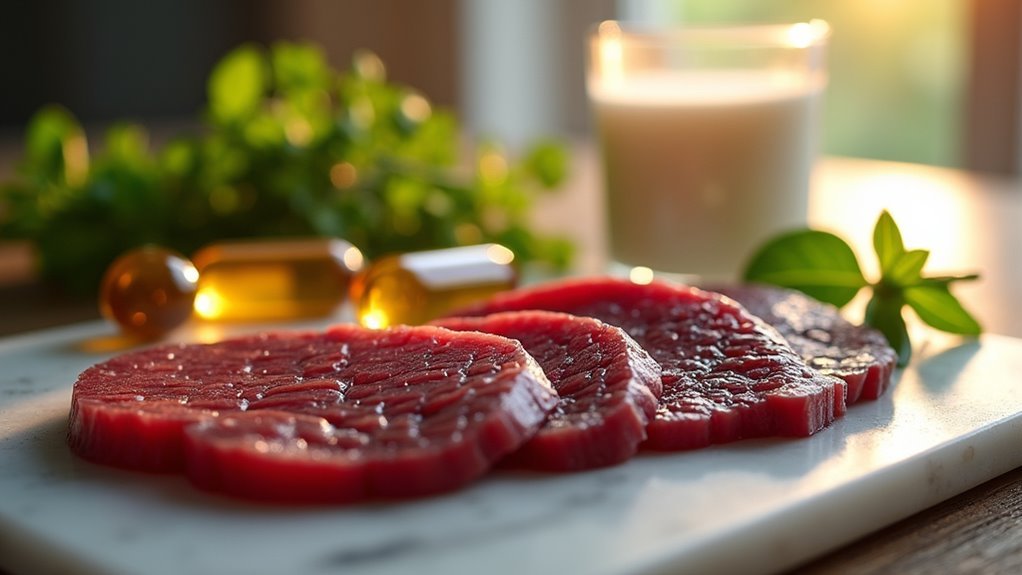
You’ll find that vitamin D acts as an essential gatekeeper for calcium absorption in your intestines, directly impacting your muscle strength potential.
When your body can’t absorb enough calcium due to insufficient vitamin D, your muscles can’t contract effectively, leading to weakness and increased injury risk.
Beef liver provides concentrated vitamin D that supports this calcium-muscle connection, helping you maintain the strong, responsive muscles you need for peak performance.
Vitamin D Enhances Absorption
Although calcium gets most of the credit for building strong bones, vitamin D acts as the vital gatekeeper that determines how much calcium your body actually absorbs from food. Without adequate vitamin D levels, you’ll only absorb about 10-15% of dietary calcium, but with sufficient vitamin D, that absorption jumps to 30-40%.
| Vitamin D Status | Calcium Absorption Rate | Muscle Function Impact |
|---|---|---|
| Deficient | 10-15% | Decreased strength, fall risk |
| Adequate | 30-40% | Ideal performance |
This enhanced calcium absorption directly translates to better muscle strength and function. Research shows that vitamin D supplementation considerably improves muscle performance in older adults. Beef liver provides this essential vitamin D, ensuring your muscles receive the calcium they need for peak performance.
Calcium-Muscle Contraction Connection
Deep within your muscle fibers, calcium acts as the molecular switch that transforms electrical signals into physical force. When calcium binds to troponin, it triggers the interaction between actin and myosin filaments, generating the contractions that power your movements.
Without adequate calcium, your muscles can’t function efficiently, leading to weakness and fatigue during exercise.
Here’s where vitamin D becomes vital: it dramatically enhances calcium absorption in your intestines, ensuring your muscles have the calcium they need.
Beef liver provides an exceptional source of vitamin D, helping maintain ideal calcium levels for effective muscle contraction. Studies show higher vitamin D levels directly correlate with improved muscle strength and function, especially in athletes and older adults seeking peak performance.
Beef Liver Nutritional Support
Powerhouse nutrition meets muscle development when you incorporate beef liver into your strength-building regimen. This nutrient-dense organ meat delivers approximately 42 IUs of vitamin D per 3-ounce serving, directly supporting your body’s calcium absorption mechanisms. When you consume beef liver regularly, you’re enhancing your muscle’s ability to contract effectively and recover efficiently.
| Nutrient | Amount per 3oz | Muscle Benefit |
|---|---|---|
| Vitamin D | 42 IUs | Calcium absorption |
| Protein | 20g | Muscle repair |
| Iron | 18mg | Oxygen transport |
Your muscles depend on adequate calcium levels for proper contraction. Without sufficient vitamin D from sources like beef liver, you’ll experience muscle weakness and cramping. The vitamin D content facilitates protein synthesis essential for muscle growth, while improved calcium absorption guarantees your muscles perform at peak strength during workouts and daily activities.
Comparing Beef Liver to Other Vitamin D Rich Foods
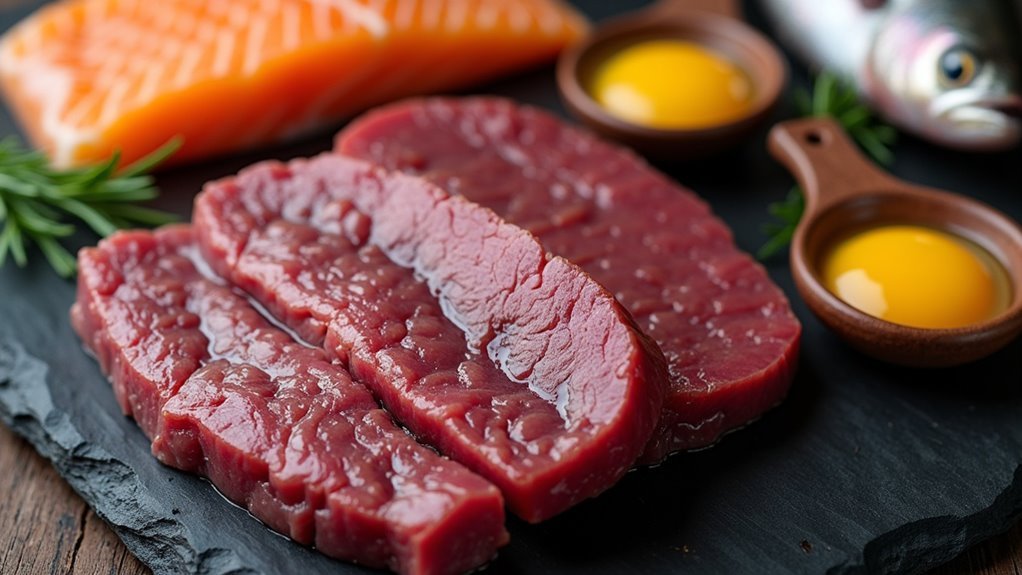
When you’re choosing vitamin D sources, you’ll find that beef liver provides about 42 IUs per 3-ounce serving, which represents just 5% of your daily value.
Wild-caught sockeye salmon outperforms liver considerably with 447 IUs per serving, delivering 56% of what you need daily.
You’ll get more vitamin D from fatty fish than liver, but beef liver still offers valuable nutrition through its complete nutrient profile including vitamins A, B12, and iron.
Beef Liver Vitamin Content
Nutritional comparisons reveal that beef liver’s vitamin D content falls short of other well-known sources. While beef liver provides approximately 42 IU per 3-ounce serving, meeting just 5% of your recommended daily value, it’s not your best option for vitamin D alone.
However, beef liver remains an excellent source of protein and other essential nutrients.
Consider these vitamin D comparisons per serving:
- Wild-caught sockeye salmon: 447 IU (56% daily value)
- Fortified orange juice: 137 IU per cup
- Egg yolks: 41 IU per large yolk
- Beef liver: 42 IU per 3-ounce serving
You’ll find that fatty fish considerably outperform beef liver’s vitamin D content. While beef liver won’t be your primary vitamin D powerhouse, it’s still a nutrient-dense food that contributes to your overall nutritional profile when combined with other vitamin D sources.
Fish Vs Liver Comparison
Although beef liver offers valuable nutrients, fatty fish clearly dominate the vitamin D landscape with considerably higher concentrations. You’ll get approximately 447 IUs from a 3-ounce serving of wild-caught sockeye salmon, delivering 56% of your daily value, while beef liver provides only 42 IUs or 5% of your needs.
When you’re prioritizing vitamin D levels, fatty fish prove far more efficient for boosting this essential nutrient.
However, don’t dismiss beef liver’s nutritional benefits entirely. You’ll receive exceptional amounts of iron and vitamin B12, important for muscle function and energy production.
Meanwhile, fatty fish deliver omega-3 fatty acids supporting heart health and reducing inflammation. For ideal vitamin D intake, you should regularly consume fatty fish while incorporating beef liver for its unique nutritional profile in your balanced diet.
Grass-Fed Vs Grain-Fed Beef Liver for Maximum Nutrients
While both grass-fed and grain-fed beef liver provide valuable nutrients, grass-fed varieties deliver markedly superior nutritional benefits that can enhance your vitamin D absorption and overall health outcomes.
When you choose grass-fed liver, you’re getting a cleaner, more potent source of essential nutrients that support muscle health and vitamin D utilization:
- Four times more phytonutrients compared to grain-fed options for enriched nutritional density
- Higher omega-3 fatty acids that reduce inflammation and support muscle function
- Fewer antibiotic-resistant bacteria due to superior farming practices
- Less harmful additives for cleaner nutrient absorption
To guarantee you’re getting maximum benefits, look for USDA organic certification. This assures your grass-fed liver is free from antibiotics and hormones, providing the highest quality vitamin D and nutrients for ideal muscle support.
Muscle Recovery Benefits of Adequate Vitamin D Levels
When your muscles undergo intense training or physical stress, adequate vitamin D levels become your secret weapon for accelerated recovery and enhanced performance.
Your body relies on vitamin D to absorb calcium and phosphate, essential minerals that fuel muscle function and repair processes. Without sufficient levels, you’ll experience muscle weakness and prolonged recovery times that hamper your athletic goals.
Research demonstrates that athletes maintaining ideal vitamin D status recover faster and show greater muscle strength compared to those with deficiencies.
You’re also protecting yourself from increased injury risk when your levels remain adequate.
Beef liver offers an excellent dietary source of vitamin D, delivering concentrated health benefits that support your muscle recovery needs while providing superior nutritional density for peak performance.
Safe Consumption Guidelines for Beef Liver
Despite beef liver’s impressive nutritional benefits, you’ll need to follow careful consumption guidelines to avoid potential health risks from its concentrated nutrient content.
These safe consumption guidelines will help you maximize benefits while minimizing risks:
- Limit portions to 3 ounces weekly – This prevents vitamin A toxicity while providing essential nutrients.
- Choose grass-fed, pasture-raised sources – Reduces exposure to pesticides and heavy metals.
- Start with smaller portions initially – Allows your digestive system to adjust gradually.
- Monitor cholesterol levels regularly – Beef liver’s high cholesterol content requires careful tracking.
If you’re pregnant or have heart disease, consult your healthcare provider before adding beef liver to your diet.
Those with high cholesterol should be particularly cautious, as excessive consumption can negatively impact cardiovascular health.
Preparing Beef Liver to Retain Vitamin D Content
When you’re preparing beef liver to maximize its vitamin D content, your cooking method and temperature control make all the difference.
You’ll want to use gentle techniques like sautéing or light grilling at moderate heat to prevent nutrient degradation.
Proper storage practices before and after cooking will also help you maintain the liver’s nutritional value and vitamin D potency.
Optimal Cooking Methods
Since beef liver contains valuable vitamin D that can be lost through improper preparation, you’ll want to use cooking methods that preserve this essential nutrient.
The ideal cooking methods for maintaining vitamin D content involve quick, high-heat techniques that minimize nutrient degradation.
Here are the best approaches for cooking organ meats like beef liver:
- Pan-fry or grill for 2-3 minutes per side at high temperatures
- Cook to 160°F internal temperature for safety while preserving nutrients
- Use minimal oil or fats to maintain bioavailability of fat-soluble vitamins
- Add herbs and spices for flavor enhancement without compromising nutrition
Avoid prolonged cooking methods like boiling or stewing, as these leach water-soluble vitamins and reduce the liver’s overall health benefits.
Temperature Control Tips
Temperature control serves as the cornerstone of preserving vitamin D during beef liver preparation. You’ll want to maintain cooking temperatures between 140-160°F (60-71°C) to minimize nutrient loss while ensuring food safety.
These temperature control tips prevent the breakdown of heat-sensitive vitamin D content that occurs at higher temperatures. Use a reliable meat thermometer to monitor internal temperature accurately. Cook your beef liver to medium-rare, which retains maximum vitamins compared to well-done preparations.
Quick searing at controlled heat works better than prolonged exposure to high temperatures. Different cooking methods require specific temperature adjustments. When sautéing, keep your pan at medium heat.
For grilling, use medium-low settings with brief cooking times. This approach maximizes vitamin D retention while delivering perfectly cooked, flavorful beef liver.
Storage Best Practices
Although proper cooking techniques matter greatly, your storage best practices determine whether beef liver retains its valuable vitamin D content before it even reaches your pan.
Proper storage starts immediately after purchase. You’ll want to refrigerate beef liver in an airtight container and consume it within 1-2 days to prevent nutrient degradation. For longer storage, freezing preserves vitamin D levels effectively.
Follow these essential storage guidelines:
- Wrap liver tightly in plastic wrap or vacuum-seal before freezing
- Keep refrigerated liver in airtight containers for maximum freshness
- Source from grass-fed animals for higher nutrient density
- Avoid pre-soaking in water or milk, which leaches vitamins
When you’re ready to cook, choose gentle cooking methods like sautéing at lower temperatures to maintain the vitamin D you’ve carefully preserved through proper storage.
Who Should Consider Beef Liver for Muscle Health
Several groups can greatly benefit from incorporating beef liver into their nutrition plan for enhanced muscle health.
If you’re an athlete or engage in regular strength training, beef liver’s vitamin D intake supports muscle function and recovery while strengthening your immune system. With 42 IUs per 3-ounce serving, this nutrient-dense food contributes considerably to your daily requirements.
You should particularly consider beef liver if you have limited sun exposure, live in northern latitudes, or maintain a sedentary lifestyle. These circumstances often lead to insufficient vitamin D levels, compromising muscle strength and overall muscle health.
Additionally, beef liver provides essential protein and iron for muscle repair and physical performance, making it valuable for anyone prioritizing muscular development and recovery.
Combining Beef Liver With Other Vitamin D Sources
Maximizing your vitamin D intake requires a strategic combination of multiple food sources, and beef liver serves as an excellent foundation for this approach.
While beef liver provides 42 IU per 3-ounce serving, you’ll amplify your vitamin D levels by incorporating complementary foods.
Consider these powerful combinations:
- Fatty fish partnerships – Wild-caught salmon delivers 447 IU per serving alongside beef liver
- Fortified foods additions – Plant-based milks, cereals, and orange juice (137 IU per cup) supplement your intake
- Egg yolks inclusion – Each yolk contributes 41 IU, doubling your vitamin D when paired with beef liver
- UV-exposed mushrooms – Half-cup servings provide up to 366 IU for diverse nutrition
This multi-source strategy guarantees you’re meeting vitamin D requirements effectively for peak muscle function.
Frequently Asked Questions
Is Beef Liver Good for Muscle?
You’ll find beef liver excellent for muscle health. It’s packed with high-quality protein for muscle repair, iron for oxygen transport, and vitamin D that supports calcium absorption for proper muscle contraction and strength.
Does Beef Liver Help With Vitamin D?
Yes, beef liver does help with vitamin D. You’ll get about 42 IUs per 3-ounce serving, which contributes to your daily intake and helps combat deficiency, especially if you don’t get much sun exposure.
Is the Liver Good for Vitamin D?
You’ll find liver’s an excellent source of vitamin D, providing about 42 IU per 3-ounce serving. It’s particularly valuable if you’re not getting enough vitamin D from sunlight or other foods.
Which Organ Meat Has the Most Vitamin D?
You’ll find beef liver contains the highest vitamin D levels among organ meats, providing 42 IUs per 3-ounce serving. It’s notably richer than chicken liver and other organ meats you might consider.


Leave a Reply