

You’ll maximize vitamin D absorption by incorporating these five magnesium-rich foods into your diet. Dark leafy greens like spinach provide 158mg per cooked cup, while pumpkin seeds deliver an impressive 168mg per ounce. Cashews and almonds offer convenient snacking options with substantial magnesium content. Whole grains and legumes provide sustained release throughout the day, and dark chocolate with avocados make delicious additions. These foods activate the enzymes your body needs to convert vitamin D into its usable form, and there’s much more to discover about optimizing this vital nutrient partnership.
How Magnesium Enhances Vitamin D Metabolism in Your Body
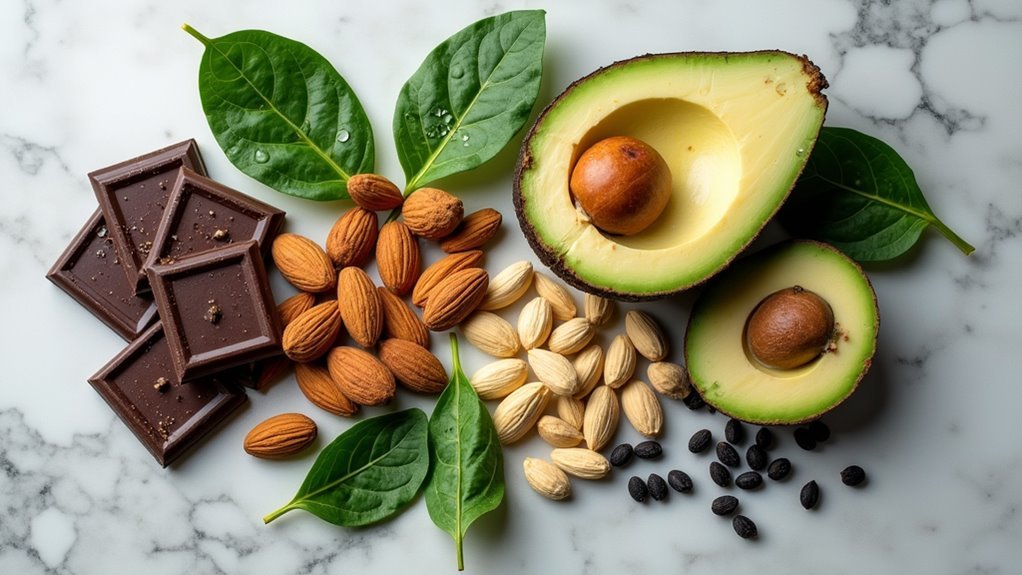
While your body can produce vitamin D from sunlight or obtain it through supplements, it can’t effectively use this essential nutrient without adequate magnesium levels.
Magnesium serves as a cofactor for enzymes responsible for vitamin D metabolism in your liver and kidneys. Without sufficient magnesium, your body struggles to convert vitamin D into its active form, leaving you vulnerable to deficiency despite supplementation.
Without adequate magnesium levels, your body cannot effectively convert vitamin D into its active, usable form.
This mineral directly impacts absorption and utilization, making your vitamin D supplements more effective.
When you maintain ideal magnesium levels through magnesium-rich foods or targeted supplementation, you’re supporting both bone health and immune system function.
The synergistic relationship between these nutrients means addressing magnesium deficiency is vital for maximizing your overall health outcomes.
Dark Leafy Greens: Spinach and Kale for Maximum Nutrient Synergy
When you’re looking to boost your magnesium intake naturally, dark leafy greens like spinach and kale deliver exceptional nutritional value that directly supports vitamin D metabolism.
These nutrient powerhouses help prevent deficiency while enhancing your body’s ability to absorb and utilize essential vitamins.
Here’s why you should prioritize these dark leafy greens in your diet:
- Spinach provides 158mg magnesium per cooked cup – delivering 37% of your daily value
- Enhanced vitamin D absorption – magnesium activates enzymes vital for vitamin D metabolism
- Bone health support – ideal calcium absorption occurs when magnesium and vitamin D work together
- Low-calorie nutrient density – you’ll get vitamins A, C, and K alongside magnesium
Incorporating kale and spinach regularly maximizes nutrients while supporting your vitamin D supplementation effectiveness.
Nuts and Seeds: Almonds, Pumpkin Seeds, and Cashews for Daily Intake
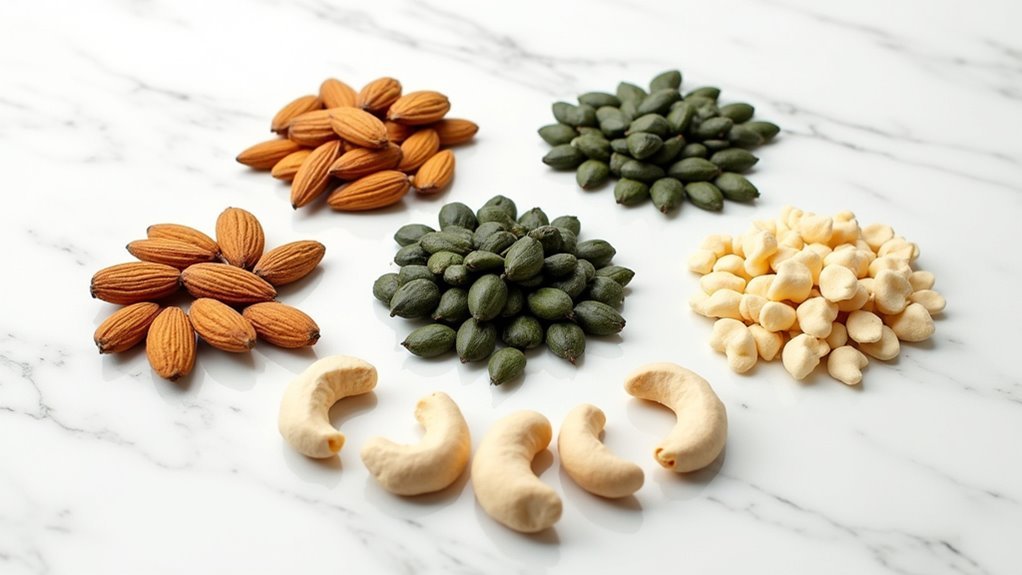
As you explore convenient ways to boost your magnesium levels, nuts and seeds offer portable, nutrient-dense options that seamlessly fit into your daily routine while supporting excellent vitamin D metabolism.
Pumpkin seeds lead the pack with 168mg magnesium per ounce, delivering 40% of your daily intake needs. Cashews provide 83mg per ounce (20% DV), while almonds contribute 76mg (19% DV). These nuts and seeds prevent magnesium deficiency that can impair vitamin D absorption and activation.
Pumpkin seeds deliver 40% of daily magnesium needs per ounce, while cashews and almonds provide essential support for vitamin D metabolism.
You’ll maximize health benefits by incorporating all three into your diet. Their convenient portability makes them perfect snacks, salad toppings, or smoothie additions.
This variety guarantees consistent magnesium intake while supporting your body’s vitamin D metabolism for ideal bone and immune health.
Whole Grains and Legumes: Sustained Magnesium Release Throughout the Day
Beyond the quick magnesium boost from nuts and seeds, whole grains and legumes offer a different advantage: they release magnesium steadily throughout your day, creating sustained support for vitamin D metabolism.
These nutrient-dense foods maintain consistent magnesium levels that enhance vitamin D absorption and effective utilization. Quinoa and buckwheat provide approximately 20% of your daily value per cooked cup, while black beans deliver an impressive 29%.
Top benefits of whole grains and legumes for magnesium:
- Sustained release – Provides consistent magnesium throughout the day
- Enhanced energy levels – Supports metabolic processes and muscle function
- Improved vitamin D activation – Optimizes absorption and utilization
- Complete nutrition – Delivers multiple nutrients supporting overall health
You’ll experience improved muscle function and energy levels while maximizing your body’s vitamin D response.
Dark Chocolate and Avocados: Delicious Ways to Boost Absorption
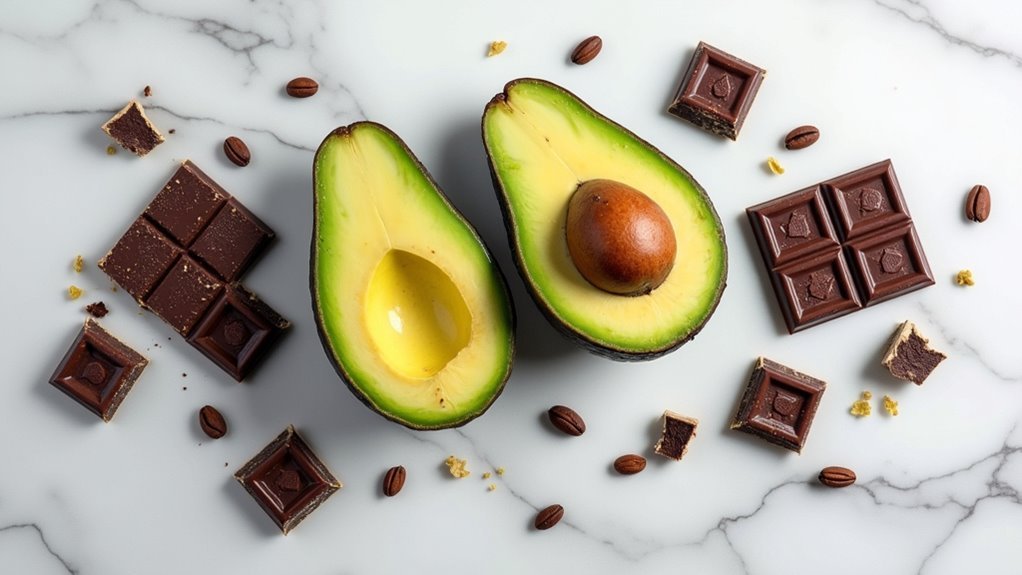
Sweet treats and creamy fruits offer some of the most enjoyable paths to ideal magnesium intake for vitamin D absorption.
Dark chocolate containing at least 70% cocoa delivers approximately 65 mg of magnesium per ounce, supporting effective absorption while satisfying your sweet tooth. Avocados provide 58 mg of magnesium per medium fruit, plus healthy fats that complement vitamin D metabolism.
These nutritional options excel as dietary sources because they’re packed with antioxidants that combat inflammation and oxidative stress.
You’ll maximize your vitamin D absorption by incorporating both into your balanced diet. The magnesium in these foods activates essential enzymatic processes that metabolize vitamin D efficiently.
Magnesium from these nutrient-rich foods triggers the enzymatic reactions your body needs for optimal vitamin D metabolism and absorption.
Choose dark chocolate and avocados as delicious alternatives to traditional supplements for best nutrient synergy.
Frequently Asked Questions
What Magnesium Is Best for Vitamin D Absorption?
You’ll want magnesium glycinate for ideal vitamin D absorption. It’s highly bioavailable, gentle on your stomach, and effectively supports the enzymes that convert vitamin D into its active form in your body.
How to Get 400 Mg of Magnesium a Day From Food?
You’ll easily reach 400 mg daily by combining pumpkin seeds (168 mg), black beans (120 mg), and spinach (158 mg). Add quinoa, almonds, or dark chocolate to boost intake while enjoying diverse, nutrient-rich meals.
What Is the Downside of Magnesium Glycinate?
You’ll face higher costs compared to other magnesium forms, potential digestive issues at high doses, and possible additives like magnesium stearate that raise safety concerns for some users.
What Is the Best Magnesium for Absorption?
You’ll find magnesium glycinate offers the best absorption since it’s chelated with amino acids. Your body absorbs it more efficiently than oxide or citrate forms, reducing digestive upset while maximizing bioavailability.


Leave a Reply