
You’re boosting your immunity with zinc-rich dinner recipes because zinc directly enhances white blood cell activity, which forms your body’s primary defense against infections. When you consume adequate zinc through evening meals, you’re reducing cold duration by 1-2 days and strengthening compromised immune function. Zinc deficiency weakens your body’s defenses, making you more susceptible to illness. Incorporating zinc-rich ingredients like oysters, red meat, and beans into dinner maximizes absorption when your body repairs itself overnight, and the extensive strategies below will transform your evening meals into powerful immune-boosting tools.
The Essential Role of Zinc in Immune Function
While your body requires only small amounts of zinc daily, this mighty mineral plays an outsized role in keeping your immune system running at peak performance.
Zinc enhances white blood cell activity, your body’s primary defense against infections and diseases. Without adequate daily zinc intake, your immune function becomes compromised, making you more susceptible to illnesses and slower wound healing.
Inadequate zinc weakens your immune defenses, leaving you vulnerable to infections and delaying your body’s natural healing processes.
You’ll need 11mg daily if you’re a man or 8mg if you’re a woman to maintain ideal immune health.
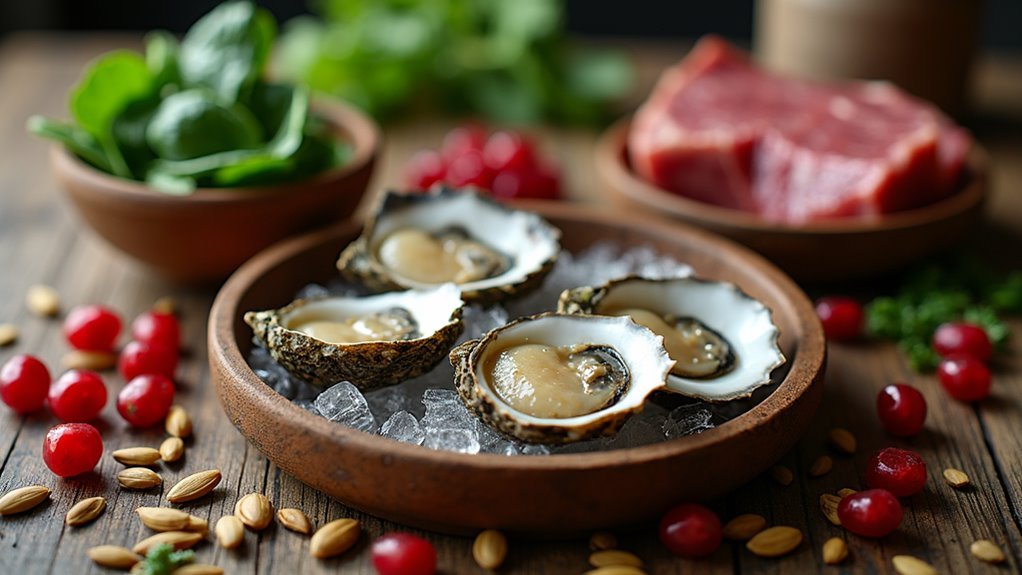
Including zinc-rich foods like oysters, red meat, poultry, beans, nuts, and whole grains in your dinner recipes guarantees you’re meeting these requirements.
Studies show that proper zinc consumption can actually reduce cold duration by 1-2 days, demonstrating its powerful immune-supporting capabilities.
How Zinc Deficiency Compromises Your Body’s Defenses
When your body doesn’t get enough zinc, your immune defenses begin to crumble like a fortress with weakened walls. Zinc deficiency severely compromises immune function by disrupting the development and activity of essential immune cells that protect you from infections.
Without adequate levels of this important nutrient, you’ll notice your immune system struggling to respond effectively to threats. You might experience delayed wound healing since zinc’s important for protein synthesis and cell division during tissue repair.
Your body may also develop troubling symptoms like hair loss, persistent diarrhea, and diminished taste or smell. These warning signs indicate your immune system isn’t receiving the essential nutrients it needs.
Vegetarians, pregnant women, and those with gastrointestinal disorders face higher risks of developing these immune-compromising deficiencies.
Top Zinc-Rich Ingredients for Immune-Boosting Dinners
Your dinner plate becomes a powerful immune-strengthening tool when you choose ingredients naturally packed with zinc. Zinc plays an essential role in maintaining your body’s defenses, and these food sources deliver exceptional amounts.
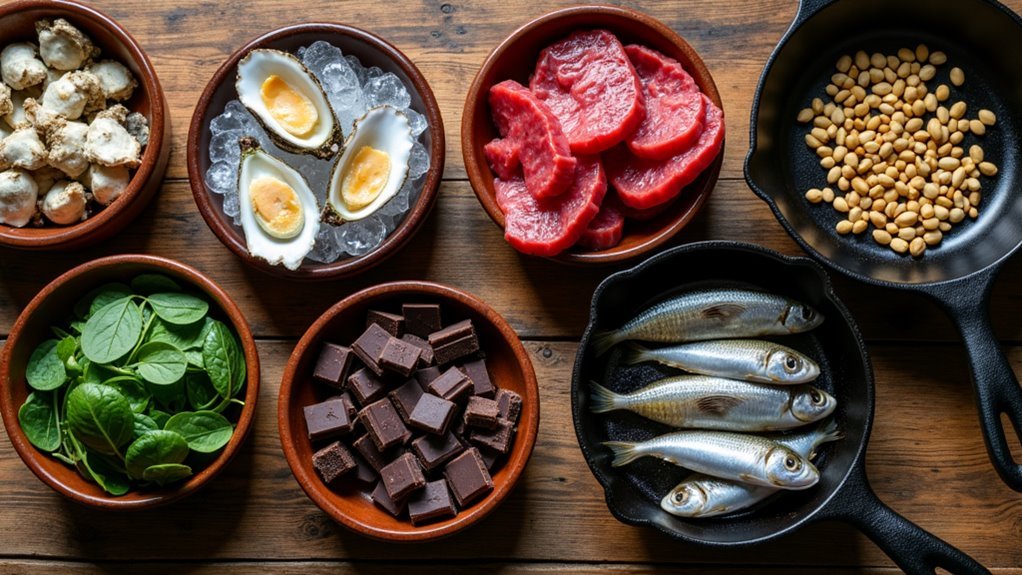
Oysters reign supreme, providing nearly 500% of your daily zinc needs in just three ounces. For seafood lovers, Alaskan king crab offers 43% while lobster contributes 23% of daily requirements.
Oysters deliver an impressive 500% of daily zinc requirements in just three ounces, making them the ultimate immune-boosting powerhouse.
Plant-based options keep your immune system strong too. Baked beans deliver 38% of daily zinc, and chickpeas provide 18% per cup. Pumpkin seeds add 15% in one ounce, perfect for sprinkling over salads or soups.
Dark meat chicken rounds out these Zinc-Rich Foods, contributing 16% while adding satisfying protein to your immune-boosting dinner.
Seafood-Based Dinner Recipes That Pack a Zinc Punch
You’ll discover that seafood offers some of the most potent zinc sources available, with oysters leading the pack at nearly 500% of your daily requirement in just 3 ounces.
When you’re preparing oysters, you can maximize their zinc benefits through simple methods like steaming, grilling, or enjoying them raw on the half shell.
Crab and lobster provide impressive zinc levels too, with Alaskan king crab delivering 43% of your daily needs and lobster contributing 23% per serving.
Oyster Preparation Methods
Oysters stand as the undisputed champion of zinc-rich foods, delivering an astounding 500% of your daily recommended intake in just a 3-ounce serving.
This nutrient-dense food provides exceptional immune support while offering culinary versatility that’ll transform your dinner table.
You can prepare these zinc powerhouses using various cooking methods that preserve their nutritional benefits:
- Grilling – Creates a smoky flavor while maintaining high zinc content
- Steaming – Gentle cooking method that preserves delicate texture and nutrients
- Baking – Perfect for dishes like Oysters Au Gratin with breadcrumbs and cheese
- Raw preparation – Maximizes zinc absorption and omega-3 fatty acids
Each preparation method enhances oysters’ natural taste while delivering essential nutrients that boost your immune system and overall health.
Crab and Lobster Benefits
While oysters dominate the zinc rankings, crab and lobster deliver impressive nutritional benefits that’ll elevate your dinner game without compromise. These premium shellfish pack substantial zinc content alongside complete protein profiles that support your immune system’s daily demands.
| Seafood | Serving Size | Zinc Content | Daily Value % | Protein |
|---|---|---|---|---|
| Alaskan King Crab | 3 ounces | 6.5mg | 43% | 16g |
| Cooked Lobster | 3 ounces | 2.5mg | 23% | 19g |
| Blue Crab | 3 ounces | 3.8mg | 25% | 17g |
| Dungeness Crab | 3 ounces | 4.7mg | 31% | 17g |
| Spiny Lobster | 3 ounces | 3.4mg | 22% | 22g |
Transform crab into stuffed mushroom appetizers or create elegant lobster ravioli for sophisticated zinc-rich dinners that naturally boost immunity.
Meat and Poultry Dishes for Maximum Zinc Absorption
When it comes to maximizing your zinc intake, meat and poultry dishes stand out as nutritional powerhouses that deliver this essential mineral in its most absorbable form.
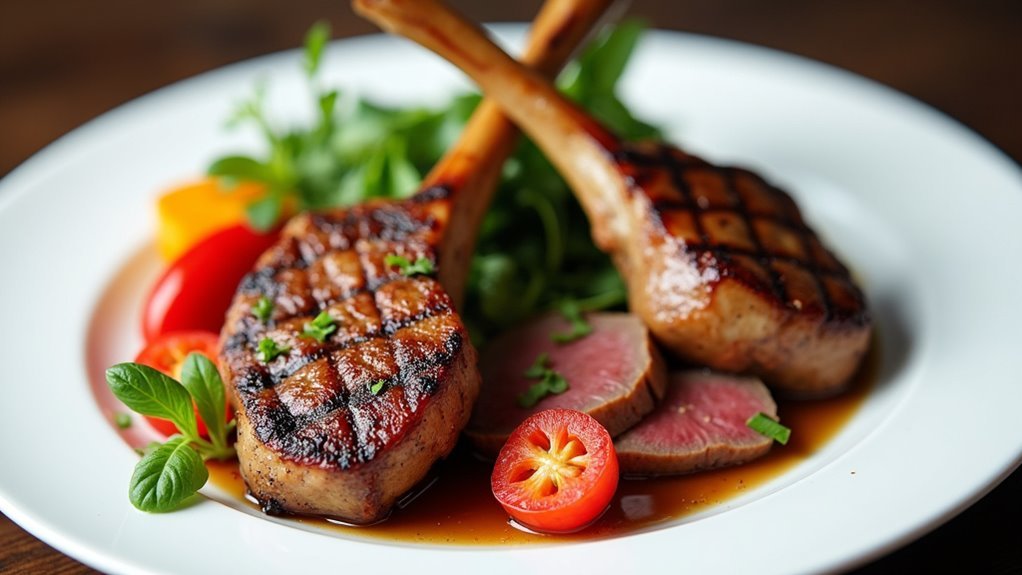
Your body can utilize zinc from animal sources more effectively than plant-based options, making meat and poultry essential for peak immune system function.
Animal-sourced zinc delivers superior bioavailability compared to plant sources, making meat and poultry crucial for optimal immune function.
Consider these zinc-rich options for your dinner table:
- Chuck roast – delivers 47% of men’s daily zinc needs and 58% for women per 3-ounce serving
- Beef patties – provide approximately 35% of your daily zinc requirement
- Dark meat chicken – offers 16% of daily zinc intake per serving
- Pork dishes – excellent bioavailable zinc sources for immune support
Incorporating various meat and poultry preparations guarantees you’ll meet your zinc needs while supporting overall health and enhanced absorption.
Plant-Based Zinc Sources for Vegetarian Immune Support
Although animal proteins reign supreme for zinc absorption, you can still build impressive immune defenses through carefully selected plant-based sources that deliver this essential mineral. Your immune system thrives when you combine zinc-rich legumes, nuts, and whole grains strategically.
| Plant-Based Zinc Source | Zinc Content |
|---|---|
| Pumpkin seeds (1 oz) | 15% daily value |
| Cooked chickpeas (100g) | 1.13mg |
| Tempeh (100g) | 1.14mg |
| Quinoa (cooked, 100g) | 1.09mg |
| Tofu (100g) | 0.99mg |
You’ll maximize absorption by pairing these plant-based sources of zinc with Vitamin C-rich foods like citrus fruits and bell peppers. Fermented options like tempeh offer enhanced bioavailability, while soaking grains reduces phytates that inhibit absorption. This combination strengthens your defenses against cold symptoms naturally.
Enhancing Zinc Bioavailability in Your Evening Meals
Since your body’s zinc absorption depends heavily on how you prepare and combine foods, strategic dinner planning can dramatically boost your mineral intake from the same ingredients.
You can greatly enhance nutrient availability through these preparation methods:
- Soak or sprout legumes and grains before cooking to reduce phytates that block zinc absorption.
- Add vitamin C-rich foods like bell peppers or citrus fruits to your zinc-containing meals.
- Use high-heat cooking methods such as roasting or grilling for meats and poultry.
- Combine diverse zinc sources including seafood, meat, and plant-based options in single meals.
These techniques transform ordinary ingredients into powerhouse meals.
When you pair lentils with roasted red peppers or grill chicken alongside citrus-marinated vegetables, you’re creating synergistic combinations that maximize zinc uptake.
This strategic approach guarantees your balanced diet delivers peak immune-supporting benefits.
Weekly Meal Planning With Zinc-Focused Dinner Recipes
You’ll find success in meeting your daily zinc requirements by mapping out seven days of zinc-rich dinners that strategically incorporate high-content ingredients throughout the week.
Planning your weekly menu allows you to balance seafood-heavy days with plant-based options, ensuring you consistently hit those 8-11mg daily targets without overwhelming your budget or taste preferences.
Each recipe you select should clearly indicate its zinc content per serving, helping you track your intake and make informed substitutions when needed.
Seven Day Menu Planning
Planning seven days of zinc-rich dinners transforms your weekly routine into a powerful tool for immune support and nutritional balance.
Creating a structured approach guarantees you’re meeting your daily zinc requirements while enjoying diverse, flavorful meals that strengthen your immune system.
- Monday & Tuesday: Start with seafood options like Crab-Stuffed Mushrooms and Lobster Ravioli to deliver high zinc concentrations.
- Wednesday & Thursday: Incorporate plant-based proteins through Tempeh Neatballs and Sweet Chili Tempeh for varied nutrient profiles.
- Friday & Saturday: Feature legume-based dishes such as Easy Lentil Stew and Pressure-Cooker Hummus to maintain consistent intake.
- Sunday: Combine multiple zinc sources in one meal, pairing seafood with nuts and seeds.
This systematic approach helps you track intake effectively while foods include vitamin C-rich ingredients that enhance zinc absorption throughout the week.
Zinc Content Per Serving
Understanding the precise zinc content in each dinner recipe empowers you to track your daily intake accurately and adjust portions as needed.
When planning zinc-focused meals, you’ll find that a 3-ounce chuck roast delivers 47% of your recommended daily zinc requirement, making it a powerhouse choice for dinner. Seafood sources like crab provide 43% zinc per serving, while lobster contributes 23%.
For plant-based options, baked beans offer 38% of daily needs per cup. Lentils contain 3.27 mg zinc per 100g serving, supporting your immune system while adding fiber and protein.
These varied sources guarantee you can meet your zinc goals regardless of dietary preferences, optimizing your body’s natural defense mechanisms.
Frequently Asked Questions
How Does Zinc Improve Immunity?
Zinc strengthens your immune system by boosting white blood cell activity and antibody production. You’ll fight infections more effectively, recover from colds faster, and heal wounds quicker when you maintain adequate zinc levels.
What Is the Best Meal to Boost Immune System?
You’ll boost your immune system best with zinc-rich meals like oyster stew or beef with bell peppers. These combinations provide essential zinc while vitamin C enhances absorption, strengthening your body’s defenses.
Why Do You Need to Take Zinc With Food?
You’ll absorb zinc better when you take it with food because protein enhances bioavailability. Food also prevents stomach upset that occurs on an empty stomach, making zinc supplementation more comfortable and effective.
What Are the Health Benefits of Eating Zinc?
You’ll strengthen your immune system and fight infections more effectively when you eat zinc. It enhances white blood cell activity, reduces cold duration, speeds wound healing, and prevents deficiency-related health issues.


Leave a Reply