
You can greatly boost your immune function by incorporating these five zinc-rich foods into your diet. Oysters lead the pack with 28-32 mg of zinc per serving, while beef and poultry provide 4 mg and support white blood cell production. Nuts and seeds like cashews and pumpkin seeds offer plant-based zinc with healthy fats. Lentils and chickpeas deliver sustained immune support with additional B vitamins. Whole grains and fortified cereals round out your daily zinc requirements for ideal immune defense.
Oysters: The Ultimate Zinc Powerhouse for Immune Defense

When you’re looking to maximize your zinc intake for immune support, oysters stand out as nature’s most concentrated source of this essential mineral.
You’ll get 28-32 milligrams of zinc from just one 3-ounce serving, far exceeding the daily recommended intake of 11 milligrams for men and 8 milligrams for women. The zinc in oysters is highly bioavailable, meaning your body absorbs it efficiently to boost your immune system’s function.
This exceptional zinc content helps enhance wound healing and may reduce respiratory infections’ duration.
Beyond zinc, you’re also getting high-quality protein, omega-3 fatty acids, and essential vitamins that support your overall health, making oysters one of the most effective food sources for immune defense.
Beef and Poultry: Protein-Rich Sources Supporting White Blood Cell Production
Beyond the ocean’s offerings, beef and poultry deliver substantial zinc quantities alongside complete proteins that fuel your immune system’s cellular army.
These protein-rich sources provide essential building blocks for white blood cells while supporting your body’s defense mechanisms.
Key immune benefits of beef and poultry:
- Zinc powerhouse – Beef provides nearly 4 milligrams per 3-ounce serving, while turkey offers a quarter of daily zinc needs.
- White blood cell production – High-quality protein and vitamin B6 enhance immune cell formation.
- Red blood cells formation – Supports nutrient transport and oxygen delivery to immune cells throughout your body.
- Tissue repair – Complete proteins aid healing and strengthen your resistance against infections.
Regular consumption of these zinc-rich foods helps regulate immune responses and reduces infection risk, making beef and poultry valuable additions to your health-focused diet.
Nuts and Seeds: Plant-Based Zinc for Enhanced Infection Fighting
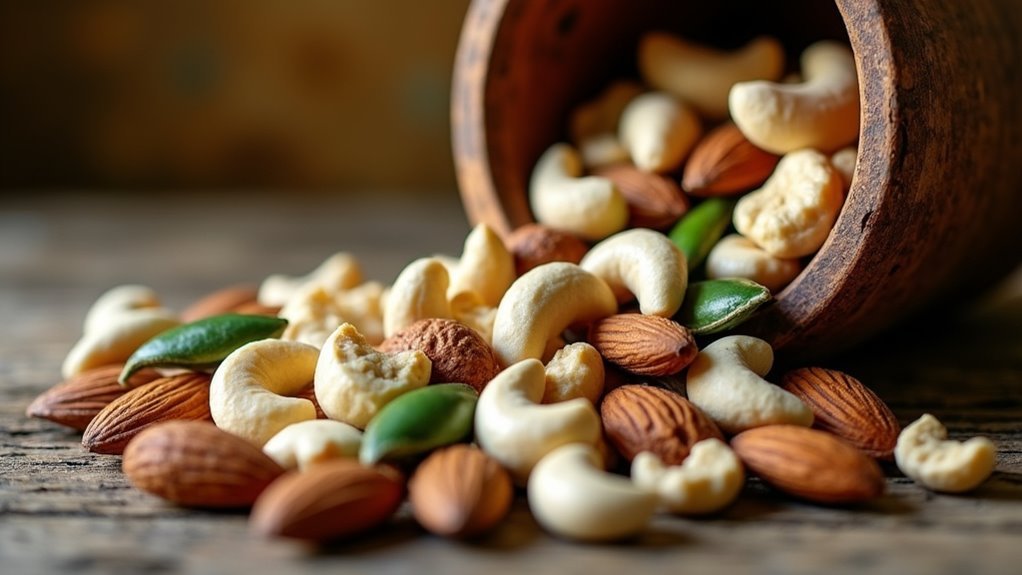
Plant-based powerhouses like nuts and seeds deliver impressive zinc levels while offering a vegetarian-friendly path to stronger immunity.
Cashews provide 1.7 mg of zinc per ounce, almonds offer 1 mg, and pumpkin seeds pack nearly 18% of your daily zinc intake in just one serving. While plant-based zinc may have lower bioavailability due to phytates, you can enhance absorption through fermentation and sprouting techniques.
Maximize plant-based zinc absorption from cashews, almonds, and pumpkin seeds through smart preparation methods like fermentation and sprouting.
Beyond zinc, these nutrient-dense foods supply healthy fats and antioxidants that amplify immune function. Regular consumption supports immune cells’ production and performance, strengthening your infection fighting capabilities.
Meeting the recommended daily requirements of 8-11 mg helps maintain a robust immune system, making nuts and seeds essential allies in your pursuit of peak health and enhanced immunity.
Legumes: Lentils and Chickpeas for Sustained Immune Support
Lentils and chickpeas deliver consistent zinc levels that support your immune system’s daily demands while offering additional nutritional benefits.
These legumes provide reliable zinc sources for plant-based diets while enhancing overall nutrient density.
Here’s how these powerhouse legumes boost your immune health:
- Zinc Content: Lentils offer 1.3mg zinc per half-cup, while chickpeas provide 0.8mg, helping prevent zinc deficiency.
- Immune Support: Both contain vitamin B6, which works alongside zinc to strengthen your immune system.
- Antioxidant Power: These legumes deliver protective antioxidants that combat oxidative stress and support immunity.
- Complete Nutrition: High protein and fiber content promotes sustained energy and overall health.
Regular consumption of these versatile legumes guarantees consistent zinc intake while providing thorough nutritional support for long-term immune function.
Whole Grains: Oats and Fortified Cereals for Daily Zinc Requirements

While legumes provide excellent zinc sources, whole grains like oats and fortified cereals offer another practical pathway to meet your daily zinc requirements. A cooked cup of oats delivers approximately 2.3 milligrams of zinc, contributing greatly toward the recommended 8 mg for women and 11 mg for men. Fortified cereals become particularly valuable since they contain added zinc for convenient intake.
However, you’ll need to take into account bioavailability. Phytates in whole grains can inhibit nutrient absorption, reducing zinc uptake. You can enhance this by choosing fermented or sprouted varieties, which improve bioavailability considerably.
Beyond zinc, incorporating diverse whole grains supports your immune system through a balanced diet rich in fiber and essential nutrients, creating thorough nutritional benefits for ideal health.
Frequently Asked Questions
What Food Is Highest in Zinc?
Oysters contain the highest zinc levels you’ll find in food, delivering 28-32 milligrams per 3-ounce serving. You can’t beat this amount compared to other zinc-rich options like beef or pumpkin seeds.
Can Zinc Improve the Immune System?
Yes, you’ll boost your immune system with zinc since it supports T-cell and B-cell production and activity. You’re less susceptible to infections when you maintain adequate zinc levels through diet or supplementation.
Which Foods Boost Immunity Faster?
You’ll boost immunity fastest by combining citrus fruits for vitamin C with zinc-rich oysters and beef. Add yogurt’s probiotics, almonds for vitamin E, and chicken for B6 to maximize your immune response quickly.
How Can I Increase My Zinc Levels Quickly?
You can quickly boost zinc levels by eating oysters, which contain 28-32mg per serving, or pumpkin seeds providing 18% daily value. Consider fortified cereals and consult your doctor about supplements if needed.


Leave a Reply