

You’ll need strategic vitamin D foods to maintain muscle strength during winter’s limited sunlight exposure. Focus on fatty fish like salmon (447 IUs per serving) and swordfish, fortified dairy products providing 84 IU per 100 grams, and egg yolks delivering 82 IU per two yolks. Include beef liver, UV-exposed mushrooms with up to 1,000 IU, fortified cereals, and cod liver oil providing 1,360 IU per tablespoon. These nutrient-dense options will help you discover extensive strategies for winter muscle health.
Fatty Fish: Your Winter Protein Powerhouse
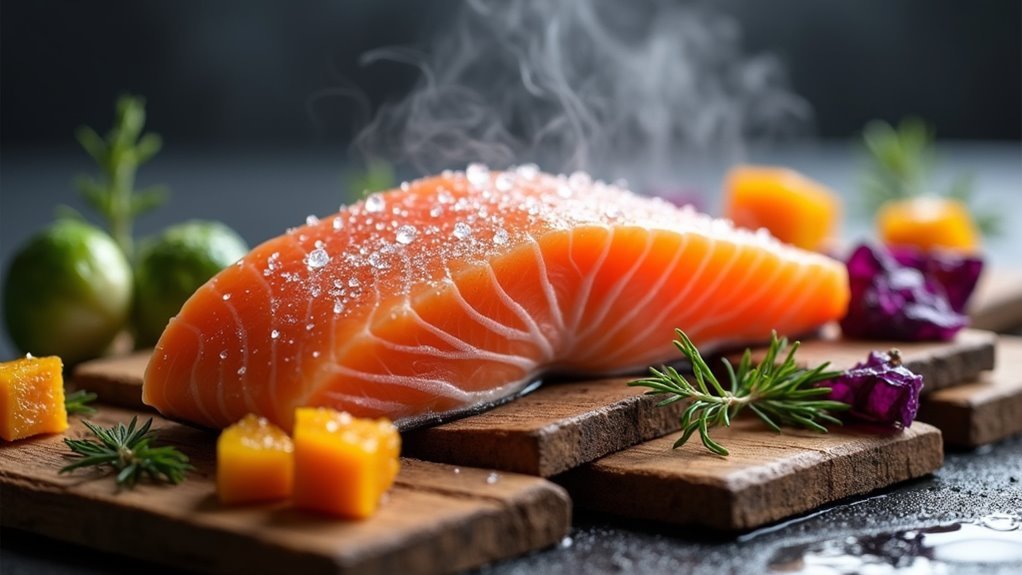
When winter’s shorter days limit your sun exposure, fatty fish emerges as one of nature’s most potent vitamin D sources. Wild-caught salmon delivers an impressive 447 IUs per 3-ounce serving—that’s 56% of your daily needs. Swordfish packs even more punch with 666 IUs per 100 grams, while bluefin tuna provides 227 IUs, making it perfect for quick meals.
During winter months, you’ll appreciate how fatty fish tackles vitamin D deficiency head-on. This powerhouse protein doesn’t just support muscle health through vitamin D—it’s loaded with omega-3 fatty acids that boost your immune system and heart function.
Regular fatty fish consumption becomes your nutritional insurance policy when sunlight’s scarce, delivering essential nutrients that keep your muscles strong and your body resilient throughout winter’s challenges.
Fortified Dairy Products for Daily Nutrition
While fatty fish delivers impressive vitamin D numbers, fortified dairy products offer you a more accessible daily solution that seamlessly integrates into your winter routine.
You’ll get approximately 84 IU of vitamin D3 per 100 grams from fortified milk and yogurt, helping you reach your recommended daily intake of 800 IU. These fortified dairy products don’t just boost your vitamin D intake—they’re also packed with calcium, creating a powerful combination for bone health and calcium absorption.
During winter months when sunlight’s scarce, you can easily incorporate fortified with vitamin D options into cereals, smoothies, or coffee.
Even lactose-intolerant individuals can benefit from plant-based alternatives like almond or soy milk, which are similarly fortified with vitamin D.
Egg Yolks: Small but Mighty Vitamin D Sources

You’ll find that egg yolks pack a surprising amount of natural vitamin D, with just two large yolks delivering around 82 IU to support your daily needs.
They’re incredibly easy to work into your winter meals, whether you’re scrambling them for breakfast or adding them to baked goods and sauces.
This makes egg yolks one of the most accessible ways to naturally boost your vitamin D intake when sunlight’s scarce.
Natural Vitamin D Content
Although egg yolks contain a modest amount of vitamin D compared to other sources, they’re surprisingly valuable additions to your winter nutrition arsenal. When sun exposure becomes limited during colder months, these vitamin D–rich foods can help boost your intake naturally. Each egg yolk delivers approximately 41 IUs of vitamin D, and cooking two eggs provides around 82 IUs.
Here’s why you should prioritize egg yolks when dealing with low vitamin D levels:
- Immediate availability – They’re already in your refrigerator, ready to combat winter deficiency.
- Versatile preparation – From omelets to baked goods, endless meal possibilities await.
- Bonus nutrients – You’ll also receive high-quality protein, choline, and omega-3s.
- Winter necessity – Essential backup when natural sunlight can’t provide adequate vitamin D.
Easy Dietary Integration
Since egg yolks pack their vitamin D content into such a small package, you can effortlessly incorporate them into meals you’re already making.
Two egg yolks deliver about 82 IUs of vitamin D while providing high-quality protein that supports overall muscle health. Easy dietary integration becomes simple when you add them to scrambled eggs, omelets, or baked goods you’d normally prepare.
During winter months when sun exposure decreases, these vitamin D foods become especially valuable for preventing vitamin D deficiency. You don’t need complex meal planning or exotic ingredients—just crack open a few eggs.
This straightforward approach to boosting your dietary intake means you’re supporting muscle function while enjoying familiar, versatile foods that enhance both nutrition and flavor.
Beef Liver: Nutrient-Dense Winter Fuel
You’ll find beef liver delivers about 40 IU of vitamin D per slice, making it a powerful ally against winter’s limited sunlight.
This nutrient powerhouse doesn’t stop there—it’s packed with vitamin A, iron, and B vitamins that fuel your muscles and boost energy levels when you need it most.
One three-ounce serving provides over 300% of your daily vitamin A needs, supporting both immune function and muscle repair during the demanding winter months.
Vitamin D Content
Beef liver stands out as one of winter’s most nutrient-packed foods, delivering approximately 40 IU of vitamin D per slice while serving as a powerhouse of essential nutrients your body craves during colder months.
When natural sunlight can’t help us maintain adequate levels of vitamin D, this natural source of vitamin becomes essential for muscle strength and well-being.
Foods naturally high in vitamin D like beef liver can absorb the vitamin deficiency gap winter creates:
- Combat seasonal depression with sustained energy from nutrient density
- Strengthen weakened immune systems when cold weather strikes hardest
- Prevent muscle weakness that leaves you feeling defeated and sluggish
- Boost iron levels to fight winter fatigue that drains your motivation
You’ll get concentrated nutrition that supports your body through winter’s harshest challenges.
Muscle Building Benefits
While most winter foods leave you feeling sluggish, beef liver delivers the protein powerhouse your muscles desperately need during cold months.
You’ll get approximately 25 grams of muscle-building protein per 3-ounce serving, making it one of the most efficient sources of vitamin D and protein combined. Your body can absorb nutrients from beef liver at higher rates than many supplements, ensuring peak muscle health throughout winter.
When vitamin D levels drop due to limited sunlight, your muscles suffer. Beef liver’s 40 IU of vitamin D per slice helps adults and children maintain strength and supports calcium absorption for bone density.
The iron and B vitamins enhance energy metabolism, while vitamin A promotes muscle recovery, making beef liver essential winter fuel.
UV-Exposed Mushrooms: Plant-Based Vitamin D
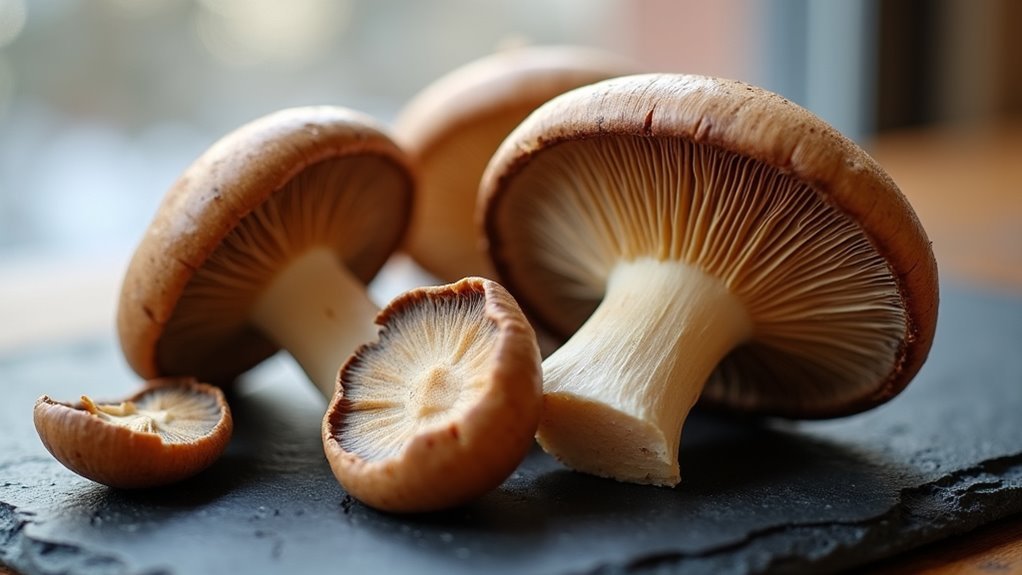
When winter sunlight becomes scarce, UV-exposed mushrooms emerge as one of nature’s most reliable plant-based sources of vitamin D.
These specially treated varieties like maitake and shiitake deliver up to 1,000 IU per 100 grams of vitamin D2, making them great sources of vitamin for your muscle-building goals.
Getting enough vitamin D during winter becomes effortless when you incorporate these nutritional powerhouses:
- Boost your mood naturally while strengthening bones and muscles
- Fight winter fatigue with enhanced energy levels
- Support immune function when you need it most
- Enjoy delicious versatility in countless recipes
Check the nutrition label for “UV-exposed” or “vitamin D enriched” labeling to help guarantee you’re maximizing your intake through these incredible fungi.
Fortified Cereals and Breakfast Options
Since many people struggle to maintain adequate vitamin D levels during darker months, fortified cereals offer a convenient breakfast solution that seamlessly fits into your daily routine. Many breakfast cereals contain up to 100 IU per serving of this essential nutrient.
| Cereal Type | Vitamin D Content |
|---|---|
| Whole grain varieties | Higher fortification levels |
| Standard fortified | Up to 100 IU per serving |
| Combined with fortified milk | Enhanced nutrient content |
| With nuts/seeds added | Improved absorption |
| Low-sugar options | Maximum health benefits |
When selecting fortified cereals, check nutrition labels carefully to verify vitamin D content while avoiding highly sugary options. Pair your breakfast with healthy fats like nuts or seeds to improve absorption, and choose milk that’s also fortified to maximize your morning’s nutritional impact.
Cod Liver Oil: Traditional Winter Supplement
Beyond fortified breakfast foods, cod liver oil stands out as one of the most potent vitamin D sources available during winter months. This traditional winter supplement delivers approximately 1,360 high IU of vitamin D per tablespoon, far exceeding daily requirements while combating seasonal vitamin D deficiency.
Your cod liver oil supplement provides multiple benefits:
- Strengthens muscle function when sunlight can’t reach you
- Protects bone health during harsh winter conditions
- Boosts immune function when flu season threatens your wellbeing
- Delivers omega-3 fatty acids for heart health and inflammation reduction
You’ll find this time-tested remedy particularly valuable during prolonged indoor periods. Regular consumption supports your body’s strength maintenance while providing essential nutrients that modern diets often lack during colder seasons.
Frequently Asked Questions
How to Raise Vitamin D Levels in Winter?
You can raise vitamin D levels by eating fatty fish like salmon, taking 5000 IU vitamin D3 supplements daily, consuming fortified foods, adding egg yolks, and choosing UV-exposed mushrooms.
Does Vitamin D Make Your Muscles Stronger?
Yes, vitamin D strengthens your muscles by supporting muscle fiber growth and function. You’ll experience improved muscle mass, enhanced strength, and better physical performance when you maintain adequate vitamin D levels through supplementation or diet.
What Is the Best Source of Vitamin D in the Winter?
You’ll find wild-caught salmon is your best winter vitamin D source, providing 670 IU per serving. If you can’t access fresh fish, canned sardines offer a convenient alternative with significant vitamin D content.
What Food Is Highest in Vitamin D?
Wild-caught salmon’s your best bet for vitamin D, packing about 670 IU per serving. You’ll also get excellent amounts from swordfish at 666 IU, making these fatty fish your top choices for boosting vitamin D levels naturally.


Leave a Reply