

You’ll sleep better when you eat whole grains because they stabilize your blood sugar levels, preventing overnight spikes and crashes that disrupt sleep cycles. Whole grains like quinoa, brown rice, and oats contain magnesium, which calms your nervous system and promotes relaxation. Their complex carbohydrates also help your brain produce more serotonin and melatonin, the hormones essential for deep, restful sleep. Discover the ideal timing and specific grain choices that maximize these natural sleep benefits.
How Whole Grains Support Natural Sleep Cycles
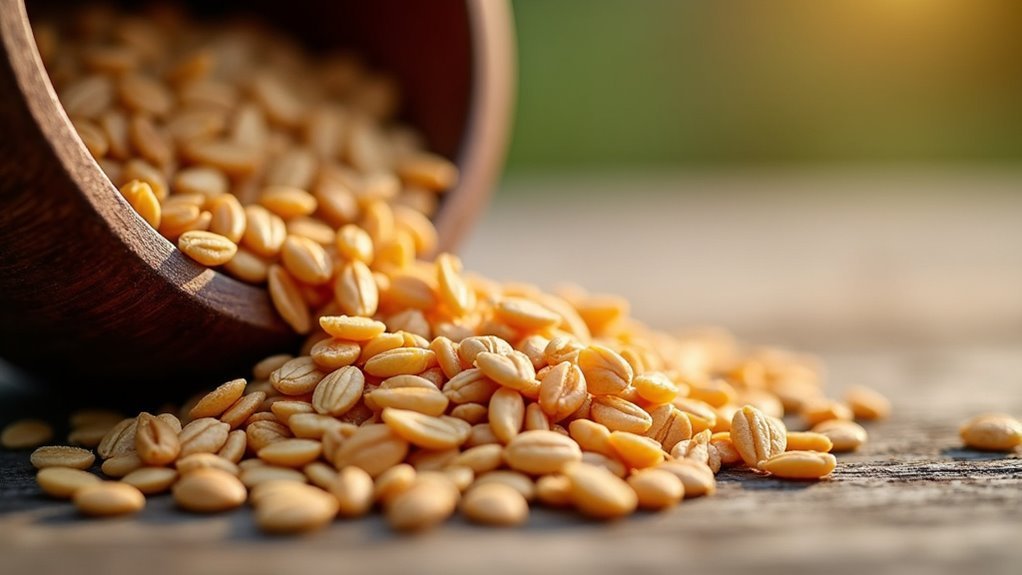
When you consume whole grains like brown rice and oats, you’re providing your body with complex carbohydrates that work steadily to stabilize blood sugar levels throughout the night.
This prevents the blood sugar spikes and crashes that can disrupt your sleep cycles and leave you tossing and turning.
Whole grains also deliver magnesium, a mineral that directly regulates your sleep-wake cycle and helps you achieve deeper, more restful sleep.
Additionally, these dietary choices boost serotonin production by supplying the carbohydrates needed for your brain to convert tryptophan into this essential sleep hormone.
Magnesium in Whole Grains: The Sleep-Enhancing Mineral
Among the many nutrients found in whole grains, magnesium stands out as a powerful sleep-promoting mineral that your body relies on for quality rest. This essential nutrient regulates neurotransmitters that signal your brain, calming your nervous system and promoting relaxation before bedtime.
When you consume whole grains like brown rice, quinoa, and oats, you’re boosting your magnesium intake considerably.
Research demonstrates that adequate magnesium consumption improves sleep quality by extending sleep duration and reducing insomnia episodes. You’ll need to meet your daily dietary allowance: 400-420 mg for men and 310-320 mg for women.
Complex Carbohydrates and Serotonin Production for Better Rest

Beyond magnesium’s sleep-enhancing properties, whole grains offer another powerful pathway to better rest through their complex carbohydrate content.
When you consume nutrient-rich foods like brown rice and whole wheat bread, you’re providing your body with complex carbohydrates that stabilize blood sugar and promote insulin release. This process facilitates tryptophan’s journey to your brain, where it’s converted into serotonin, directly supporting serotonin production.
Increased serotonin levels then boost melatonin production, your body’s natural sleep hormone that regulates sleep-wake cycles.
Studies show that diets rich in dietary fiber from whole grains greatly improve sleep quality compared to low-fiber diets. You’ll experience deeper, more restorative sleep with fewer nighttime awakenings, making whole grains essential for ideal sleep health.
Best Whole Grain Options for Evening Meals and Bedtime Snacks
Since timing matters as much as food choice, selecting the right whole grains for your evening meals and bedtime snacks can greatly impact your sleep quality.
Brown rice and quinoa stabilize blood sugar levels while enhancing serotonin production, making them excellent dinner staples.
For bedtime snacks, you’ll benefit from whole grain crackers paired with cheese or nut butter, creating a protein-fiber combination that won’t disrupt sleep.
Whole grain oats deserve special attention for evening consumption, as they release tryptophan, supporting natural melatonin production.
These whole grains are also rich in magnesium, a mineral directly linked to improved sleep duration and quality.
Incorporating these options into your healthy diet creates sustained energy without sleep interference.
Timing Your Whole Grain Intake for Maximum Sleep Benefits

When you consume whole grains matters just as much as which ones you choose, as strategic timing can amplify their sleep-promoting benefits. Aim to eat whole grains approximately four hours before bedtime to stabilize blood sugar levels and promote restful sleep. These complex carbohydrates help your brain absorb tryptophan more effectively, boosting serotonin and melatonin production naturally.
Incorporating whole grains into earlier meals prevents late-night snacking that disrupts sleep patterns. You’ll avoid hunger pangs that might otherwise lead to poor food choices before bed.
Focus on aligning whole grain consumption with your personal meal schedules, ensuring adequate digestion time. This approach optimizes nutrient absorption while minimizing digestive discomfort that can interfere with sleep quality throughout the night.
Frequently Asked Questions
Do Whole Grains Help You Sleep?
Yes, whole grains help you sleep better. They’re complex carbohydrates that stabilize your blood sugar, promote serotonin production, and provide magnesium. You’ll experience fewer nighttime awakenings and improved sleep quality.
Do Whole Grains Make You Sleepy?
Whole grains don’t directly make you sleepy, but they’ll help you sleep better. They stabilize blood sugar, provide magnesium for relaxation, boost serotonin production, and supply B vitamins for melatonin creation.
Why Do I Sleep Better After Eating Carbs?
When you eat carbs, they trigger insulin release that helps tryptophan cross into your brain. This amino acid converts to serotonin and melatonin, which naturally promote sleepiness and improve your sleep quality.
What Promotes Sleep Quality?
You’ll improve sleep quality by maintaining consistent bedtime routines, creating a cool dark environment, limiting screen time before bed, avoiding caffeine late, exercising regularly, and managing stress through relaxation techniques.


Leave a Reply