
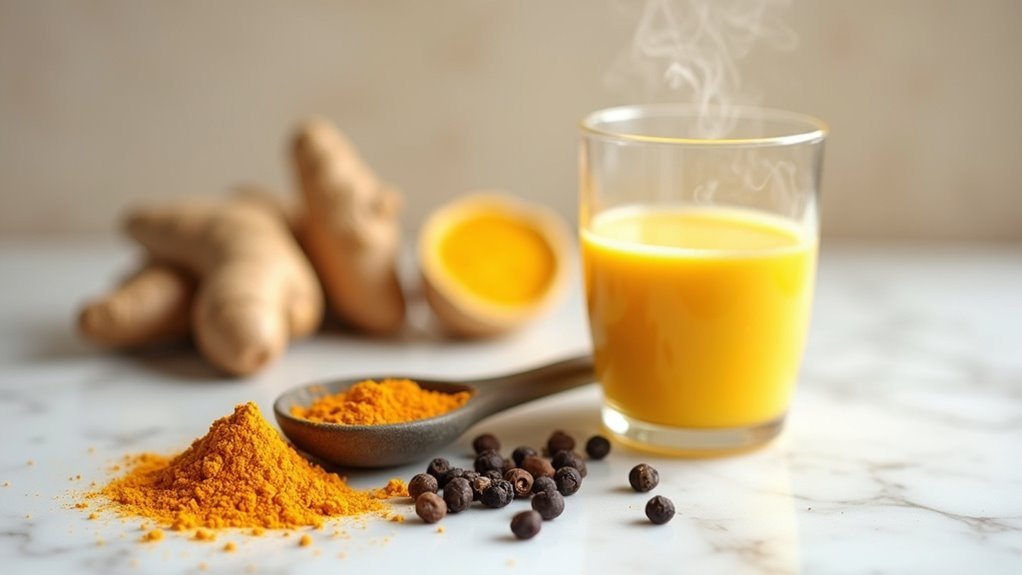
You’ll want to use 1-3 grams of fresh turmeric root or powder daily to combat inflammation effectively. Always combine turmeric with black pepper, which boosts curcumin absorption by up to 2,000%, and pair it with healthy fats like olive oil or coconut oil. Add it to soups, stews, rice dishes, golden milk, smoothies, or salad dressings for maximum benefits. However, consult your healthcare provider before starting, especially if you’re taking blood thinners, as there’s much more to take into account for ideal results.
Understanding Turmeric’s Anti-Inflammatory Properties
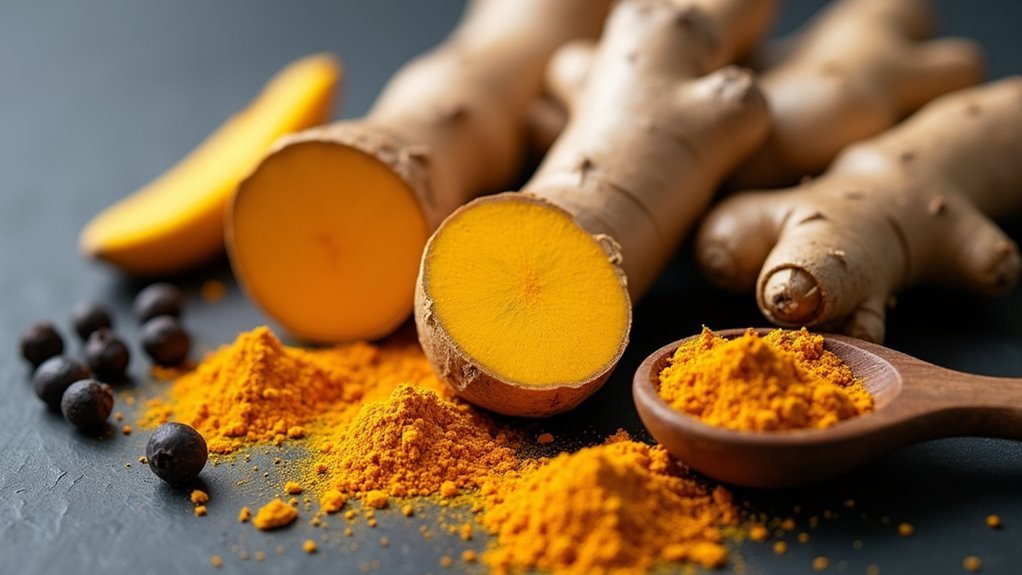
The quest for natural inflammation relief has led countless people to discover turmeric, a golden-hued spice that’s packed with curcumin—a powerful bioactive compound that acts as your body’s anti-inflammatory ally.
Scientific studies reveal that curcumin can greatly lower inflammation markers, making it particularly beneficial for conditions like arthritis and metabolic syndrome.
Research demonstrates curcumin’s powerful ability to significantly reduce inflammation markers, offering natural relief for arthritis and metabolic syndrome sufferers.
You’ll find that turmeric’s anti-inflammatory effects extend beyond joint health, potentially improving mood disorders and boosting immune function.
The compound’s antioxidant properties work synergistically with its anti-inflammatory actions, creating a dual defense against chronic inflammation.
When you incorporate turmeric into your diet regularly, you’re accessing centuries of traditional wisdom now backed by modern research demonstrating curcumin’s remarkable ability to combat systemic inflammation naturally.
Choosing Fresh Turmeric Root vs. Ground Turmeric Powder
When selecting turmeric for your anti-inflammatory regimen, you’ll face a fundamental choice between fresh root and ground powder—each offering distinct advantages for your health journey.
Fresh turmeric root delivers superior potency with higher curcumin levels, making it ideal for maximizing anti-inflammatory benefits. You can grate it into smoothies, soups, or salads for vibrant color and raw nutrition without cooking.
Ground turmeric powder offers convenience and versatility for everyday cooking. While it may lose potency over time, it’s perfect for spice blends, curries, and baked goods when stored properly in cool, dark conditions.
Here’s how to optimize each form:
- Fresh root: Grate or juice immediately before use to preserve curcumin content
- Ground powder: Store in airtight containers away from light and heat
- Both forms: Combine with black pepper to enhance curcumin absorption considerably
Daily Dosage Guidelines for Whole Food Turmeric
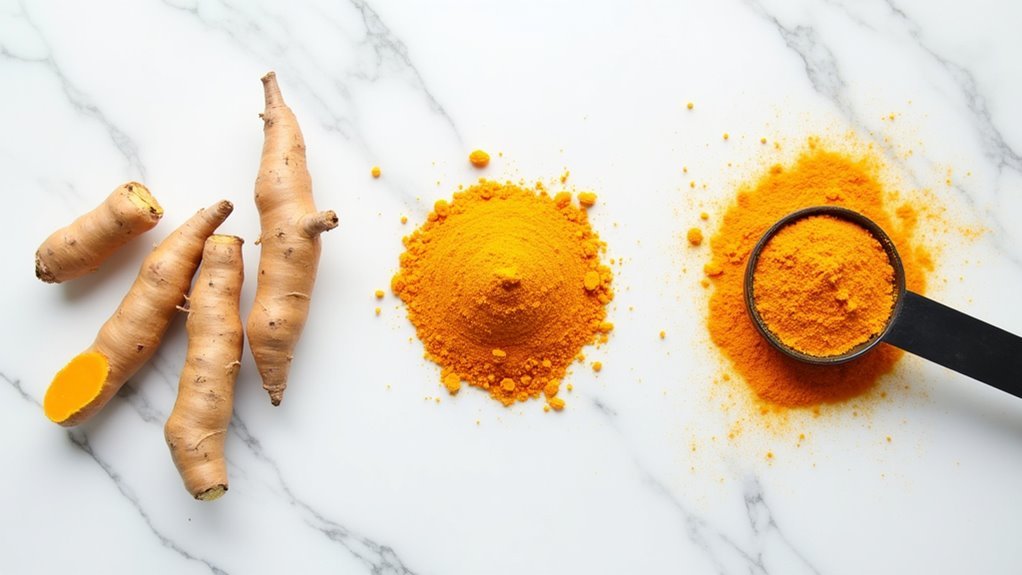
Establishing proper dosage amounts guarantees you’ll maximize turmeric’s anti-inflammatory benefits while avoiding potential side effects.
Follow these daily dosage guidelines: consume 1 to 3 grams of whole food turmeric daily for ideal inflammation management. When using turmeric powder, add approximately 1 teaspoon (2-3 grams) to your soups, stews, or smoothies. If you’re working with fresh turmeric root, grate 1 to 2 inches into your dishes for equivalent anti-inflammatory benefits.
Always combine turmeric with black pepper to dramatically enhance curcumin absorption and effectiveness.
Consider incorporating turmeric into golden milk or turmeric tea for consistent daily intake. Regular consumption within these dosage ranges helps maintain steady anti-inflammatory levels in your system while keeping you safely within recommended limits.
Enhancing Turmeric Absorption With Black Pepper and Healthy Fats
You’ll dramatically increase turmeric’s effectiveness by pairing it with black pepper, which can boost curcumin absorption by up to 2,000%.
Adding healthy fats like olive oil or coconut oil creates an even more powerful combination since curcumin is fat-soluble.
This simple pairing strategy transforms turmeric from a poorly absorbed spice into a potent anti-inflammatory powerhouse.
Black Pepper Boosts Absorption
Although turmeric contains powerful anti-inflammatory compounds, your body struggles to absorb them effectively on its own.
That’s where black pepper becomes your secret weapon. The piperine in black pepper can dramatically enhance turmeric absorption by up to 2,000%, transforming this golden spice into a potent anti-inflammation powerhouse.
Here’s how to maximize this synergistic effect:
- Add a pinch of freshly ground black pepper to every turmeric dish, whether it’s golden milk, curry, or soup.
- Combine both spices with healthy fats like olive oil or coconut oil since curcumin is fat-soluble.
- Cook them together to activate the compounds and create better bioavailability for your body.
This simple pairing reveals turmeric’s full potential for managing inflammation and chronic pain.
Healthy Fats Enhance Bioavailability
While black pepper acts as turmeric’s absorption catalyst, healthy fats serve as the delivery system that carries curcumin into your bloodstream.
Since curcumin is fat-soluble, you’ll need dietary fats to release its full potential for fighting inflammation.
Adding coconut oil, olive oil, or avocados to your turmeric recipes dramatically improves bioavailability.
When you combine turmeric with healthy fats, you’re creating ideal conditions for your body to absorb and utilize curcumin’s anti-inflammatory compounds.
You can easily incorporate this combination into golden milk made with coconut milk, turmeric-spiced curries cooked in olive oil, or salad dressings that blend turmeric with avocado oil.
This simple pairing transforms turmeric from a poorly absorbed spice into a powerful inflammation-fighting tool your body can actually use.
Adding Turmeric to Soups and Stews
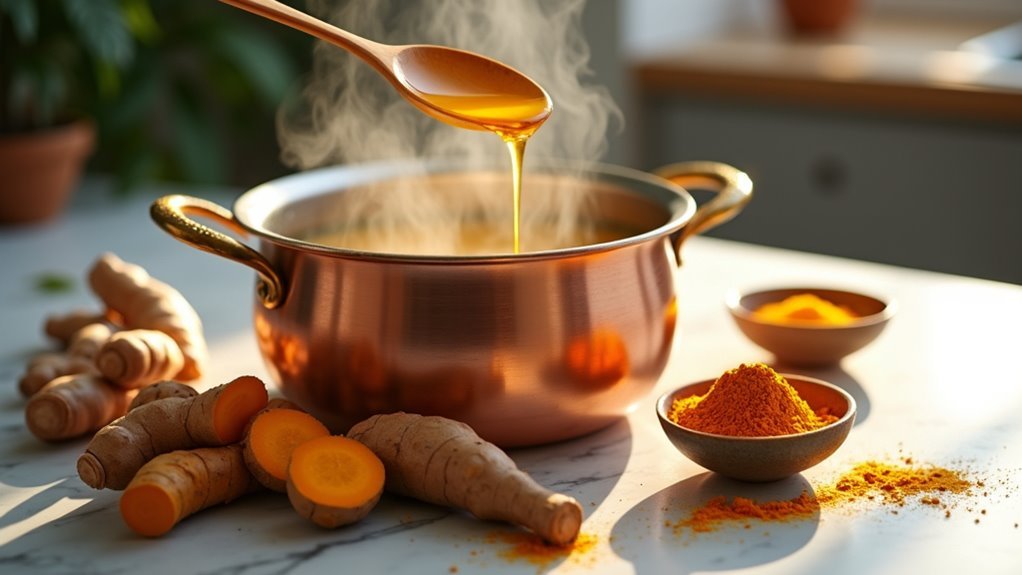
You’ll find that soups and stews provide an ideal vehicle for incorporating turmeric’s anti-inflammatory benefits into your daily routine.
The key lies in understanding which base ingredients complement turmeric best, when to add it during the cooking process for maximum potency, and how to optimize absorption through strategic ingredient pairings.
These simple techniques will transform your everyday soups into powerful inflammation-fighting meals.
Perfect Soup Base Combinations
Since turmeric transforms ordinary soups into powerful anti-inflammatory meals, you’ll want to master the art of incorporating this golden spice into your favorite soup bases.
The health benefits of turmeric shine when you strategically combine it with complementary ingredients that enhance both flavor and inflammation-fighting properties.
Here are three perfect soup base combinations:
- Butternut Squash Base – Add one teaspoon of turmeric with garlic and ginger for a vibrant, earthy flavor that complements the squash’s natural sweetness.
- Chicken Broth Foundation – Incorporate turmeric with onions and black pepper to maximize curcumin absorption by up to 2,000%.
- Cream-Based Pumpkin – Blend turmeric into curried pumpkin soup where its bold color enhances the dish’s richness while delivering powerful anti-inflammatory compounds.
Heat Level Timing Tips
The timing of when you add turmeric to your soups and stews directly impacts both flavor development and health benefits.
You’ll want to incorporate turmeric early in the cooking process, allowing its compounds to fully infuse throughout your dish. This early addition guarantees maximum flavor penetration and ideal health benefits.
Once you’ve added turmeric, maintain a gentle simmer for at least 10-15 minutes. This cooking time activates turmeric’s anti-inflammation properties and enhances curcumin absorption, especially when you’ve included black pepper in your recipe.
The sustained heat helps break down the turmeric’s cellular structure, making its beneficial compounds more bioavailable.
Remember to combine turmeric with fats like olive oil or coconut milk during cooking. This combination greatly improves absorption, maximizing turmeric’s anti-inflammatory effects in your finished dish.
Enhancing Absorption Methods
While cooking time matters, maximizing turmeric’s anti-inflammatory benefits requires strategic ingredient combinations that enhance curcumin absorption.
The key to revealing turmeric’s full potential lies in creating the right environment for your body to absorb its active compounds effectively.
- Add black pepper – Include a pinch of black pepper with your turmeric to boost curcumin absorption by up to 2,000%, dramatically amplifying the anti-inflammatory effects.
- Include healthy fats – Combine turmeric with coconut milk or olive oil in your soups and stews, as curcumin is fat-soluble and requires fats for peak absorption.
- Pair with complementary spices – Add ginger and garlic alongside turmeric to create synergistic health benefits while enhancing the overall anti-inflammatory properties of your dish.
Incorporating Turmeric Into Rice and Grain Dishes
Golden grains transform ordinary meals into nutritionally powerful dishes when you incorporate turmeric into your rice and grain recipes. This vibrant spice delivers powerful inflammation-fighting benefits through curcumin while enhancing flavor and color.
For Indian yellow rice, combine basmati rice with turmeric, garlic, and onion to create a flavorful base that pairs perfectly with proteins and vegetables.
You can also stir 1 teaspoon of turmeric per cup into cooked quinoa or barley for instant nutritional benefits.
When making risotto, turmeric adds beautiful golden color while complementing the creamy texture.
Mix turmeric into grain salads like farro or bulgur wheat to boost flavor and nutrition. These grain dishes become excellent meal prep options that fight inflammation.
Creating Golden Milk and Turmeric Teas
You can easily transform turmeric into soothing, anti-inflammatory beverages that’ll become staples in your wellness routine.
Golden milk and turmeric tea offer simple yet powerful ways to harness turmeric’s healing properties while creating warming drinks you’ll actually enjoy.
Let’s explore the basic recipes and enhancement techniques that’ll help you craft these therapeutic beverages at home.
Basic Golden Milk Recipe
This ancient Ayurvedic beverage combines the powerful anti-inflammatory properties of turmeric with the comfort of warm milk to create a soothing drink that’s perfect for evening relaxation.
Golden milk delivers curcumin’s inflammation-fighting benefits while serving as a caffeine-free alternative to traditional beverages.
Here’s how to make basic golden milk:
- Heat one cup of milk (dairy or dairy-free) in a small saucepan over medium heat until warm but not boiling.
- Whisk in one teaspoon of turmeric until completely dissolved and the mixture turns golden yellow.
- Add black pepper and ginger to boost curcumin absorption by up to 2,000% and enhance the anti-inflammatory effects.
You can customize your golden milk by incorporating coconut oil or almond oil to further improve curcumin absorption and maximize inflammation reduction.
Turmeric Tea Preparation Methods
Beyond the classic golden milk recipe, several preparation methods can help you create flavorful turmeric teas that deliver potent anti-inflammatory benefits.
For basic turmeric tea, combine 1 teaspoon of turmeric powder with 4 cups of hot water, then simmer for 10 minutes before straining.
You’ll enhance both flavor and anti-inflammatory properties by adding ginger and turmeric together, along with lemon juice and honey.
Don’t forget to include black pepper, which boosts curcumin absorption by up to 2,000%.
These preparation methods allow you to customize your tea based on taste preferences while maintaining therapeutic benefits.
Whether you prefer simple turmeric tea or enhanced versions with additional ingredients, you’re supporting immune function and potentially managing inflammation-related conditions like arthritis through daily consumption.
Flavor Enhancement Tips
Flavor enhancement transforms ordinary turmeric beverages into delicious, therapeutic drinks you’ll actually crave.
When adding turmeric in recipes, strategic flavor combinations make these powerful anti-inflammatory drinks more palatable while maximizing the benefits of turmeric for various health conditions.
Here are three essential flavor enhancement strategies:
- Sweet & Spicy Balance – Add honey or maple syrup with a pinch of black pepper to golden milk, creating depth while boosting curcumin absorption by 2,000%.
- Citrus & Heat – Combine lemon juice with ginger in turmeric tea for bright, warming flavors that provide additional anti-inflammatory benefits.
- Creative Applications – Blend turmeric into smoothies or stir into oatmeal, making adding turmeric effortless in your daily routine while maintaining therapeutic properties.
Blending Turmeric Into Smoothies and Wellness Shots
While turmeric powder works well in cooking, blending fresh or powdered turmeric into smoothies and wellness shots creates one of the most palatable ways to consume this anti-inflammatory powerhouse daily.
Your turmeric smoothie becomes a nutritional goldmine when you combine it with bananas, berries, spinach, or yogurt. The curcumin delivers potent inflammation-fighting benefits while the other ingredients mask turmeric’s earthy taste.
For wellness shots, mix fresh turmeric root with orange juice, ginger, and honey for concentrated anti-inflammatory turmeric benefits.
Here’s the game-changer: add black pepper to increase curcumin absorption by up to 2,000%.
Try this simple recipe: blend 1-2 teaspoons turmeric with coconut milk, frozen pineapple, ginger, and a pinch of black pepper for maximum effectiveness.
Using Turmeric in Salad Dressings and Marinades
Salad dressings and marinades offer another excellent vehicle for incorporating turmeric’s anti-inflammatory properties into your daily routine.
Transform everyday salads and marinades into powerful anti-inflammatory nutrition boosters with simple turmeric additions to your kitchen routine.
You can effortlessly create vibrant, health-boosting condiments that transform ordinary meals into nutrient-dense experiences.
Here are three effective ways to use turmeric in your kitchen:
- Basic Turmeric Dressing: Mix 1 teaspoon turmeric with 2 tablespoons olive oil and 1 tablespoon lemon juice for enhanced nutrient absorption in salads.
- Enhanced Vinaigrette: Combine turmeric with olive oil, apple cider vinegar, honey, and spices to create flavorful dressings with anti-inflammatory benefits.
- Power Marinades: Add turmeric and black pepper to meat or vegetable marinades—the pepper considerably boosts curcumin absorption for maximum inflammation-fighting effectiveness.
You can refrigerate these turmeric-infused creations for several days, ensuring convenient healthy options are always available.
Cooking With Turmeric in Curry and Spice Blends
When you explore traditional curry recipes and spice blends, turmeric emerges as the golden cornerstone that delivers both extraordinary flavor depth and powerful anti-inflammatory benefits.
You’ll maximize turmeric’s effectiveness by pairing it with black pepper, which boosts curcumin absorption by up to 2,000%. Combine turmeric with cumin and coriander in your homemade curry powder to create complex flavor profiles while amplifying health benefits.
Add turmeric during the cooking process to infuse its vibrant color and anti-inflammatory properties throughout your dish.
Create versatile spice blends incorporating turmeric for soups, marinades, and various recipes. This approach makes it effortless to include turmeric’s inflammation-fighting compounds in your everyday cooking while building layers of authentic, traditional flavors that support your overall wellness goals.
Roasting Vegetables With Turmeric Seasoning
Roasted vegetables transform into golden, caramelized masterpieces when you coat them with turmeric seasoning, delivering both exceptional flavor and potent anti-inflammatory benefits.
The curcumin in turmeric makes these roasted vegetables powerful allies against inflammation while creating vibrant, appealing dishes.
- Toss vegetables like carrots, cauliflower, or sweet potatoes with olive oil, turmeric, and black pepper – the piperine in black pepper increases curcumin absorption by up to 2,000%
- Roast at 400°F for 25-30 minutes until vegetables caramelize and develop rich, complex flavors that enhance both taste and nutritional value
- Add these colorful roasted vegetables to any meal for an antioxidant boost that supports your anti-inflammatory diet while creating visually stunning plates
Potential Interactions and Safety Considerations
While turmeric supplements offer impressive anti-inflammatory benefits, you’ll need to contemplate several important safety considerations before adding supplements to your routine.
High doses may increase kidney stone risk and cause iron deficiency anemia, requiring careful monitoring. Potential interactions exist with pain relievers and blood thinners, making it essential to consult a healthcare provider before use.
Children, pregnant women, and breastfeeding mothers should exercise extra caution due to limited safety data. If you’re taking medications or have existing health conditions, discussing turmeric supplementation with your healthcare provider guarantees safe incorporation.
Remember that curcumin isn’t easily absorbed, so combining supplements with black pepper enhances bioavailability by up to 2,000%.
Frequently Asked Questions
How to Eat Fresh Turmeric for Inflammation?
You can grate fresh turmeric into smoothies, add it to soups, juice it with other vegetables, mix it into salad dressings, or use it in marinades for flavorful anti-inflammatory benefits.
How Do You Mix Turmeric for Anti-Inflammatory?
You’ll mix turmeric with black pepper to boost absorption by 2,000%. Add healthy fats like coconut oil, then blend into golden milk, soups, or salad dressings for maximum anti-inflammatory benefits.
What Is the Most Effective Way to Take Turmeric for Inflammation?
You’ll maximize turmeric’s anti-inflammatory benefits by consuming it daily with black pepper in warm beverages like golden milk, or incorporating turmeric powder into curries, soups, and smoothies for consistent absorption.
How Much Turmeric to Take Daily for Inflammation?
You should take 500 to 2,000 milligrams of curcumin daily for inflammation, with 1,000 mg being most effective for arthritis. Alternatively, you can consume 1-2 teaspoons of turmeric powder daily.


Leave a Reply