
You can greatly reduce your osteoporosis risk by incorporating these five vitamin D-rich foods into your diet: wild-caught salmon providing up to 1,000 IU per serving, fortified dairy products that enhance calcium absorption, UV-treated mushrooms offering 1,000 IU per 100 grams, pasture-raised egg yolks rich in omega-3s, and canned fish with soft bones for dual calcium and vitamin D benefits. These natural sources support your daily 800 IU requirement while strengthening bone density and improving remodeling processes that become essential as you age.
Fatty Fish: Salmon, Sardines, and Mackerel for Maximum Vitamin D

When you’re looking to boost your vitamin D intake naturally, fatty fish stands out as one of the most powerful dietary sources available.
Wild-caught salmon delivers an impressive 600-1,000 IU of vitamin D per 3.5 ounces, making it exceptional for preventing osteoporosis. Sardines provide around 300 IU while supporting bone health through beneficial omega-3 fatty acids that enhance calcium absorption.
Wild-caught salmon packs up to 1,000 IU of vitamin D per serving, while sardines deliver 300 IU plus bone-strengthening omega-3s.
Mackerel offers similar benefits, strengthening your skeletal system naturally.
These fatty fish options help you reach the recommended 800 IU daily vitamin D intake essential for peak bone strength.
You’ll also gain high-quality protein and nutrients that work synergistically to protect against bone loss. Regular consumption creates a foundation for lifelong skeletal health.
Fortified Dairy Products That Boost Calcium Absorption
While fatty fish provides excellent vitamin D content, fortified dairy products create an equally powerful combination by delivering both vitamin D and calcium in one convenient package.
You’ll find that fortified milk and yogurt aren’t just calcium-rich foods—they’re strategically enhanced with vitamin D to maximize calcium absorption in your body.
A typical serving of fortified milk provides about 100 IU of vitamin D, contributing markedly to your daily vitamin D requirements.
This combination becomes especially important for maintaining bone density as you age. For older adults, consuming these fortified dairy products regularly helps support effective bone remodeling and prevents osteoporosis.
UV-Treated Mushrooms as Plant-Based Vitamin D Sources

For those following plant-based diets, UV-treated mushrooms offer a rare and powerful source of vitamin D that’s typically absent from the plant kingdom. These specially treated fungi provide up to 1,000 IU of vitamin D2 per 100 grams, making them an excellent versatile option to enhance vitamin D intake.
| Benefit | Impact | Result |
|---|---|---|
| High vitamin D2 content | Improves overall vitamin D levels | Supports bone health |
| Enhanced calcium absorption | Strengthens bone density | Reduces risk of osteoporosis |
| Plant-based source | Fills nutritional gap | Perfect for vegan diets |
You can easily incorporate UV-treated mushrooms into stir-fries, soups, and salads. Regular consumption helps prevent osteoporosis by supporting calcium absorption, making these mushrooms essential for maintaining strong bones on a plant-based diet.
Egg Yolks From Pasture-Raised Chickens for Natural Nutrition
Although conventional eggs provide some vitamin D, pasture-raised chicken eggs deliver markedly higher levels of this essential nutrient due to the hens’ increased sunlight exposure. Each large egg yolk contains approximately 37 IU of vitamin D, helping you meet your daily vitamin D requirement of 400 IU. This supports calcium absorption and strengthens bone health, reducing osteoporosis risk.
Egg yolks from pasture-raised chickens offer additional benefits beyond vitamin D. They’re rich in omega-3 fatty acids and choline, nutrients that further support bone density and overall health. You’ll find these eggs particularly valuable if you live in regions with limited sunlight.
Choosing pasture-raised chickens represents a sustainable choice that prioritizes animal welfare while providing superior nutrition for your bones.
Canned Fish With Soft Bones for Double Bone Protection
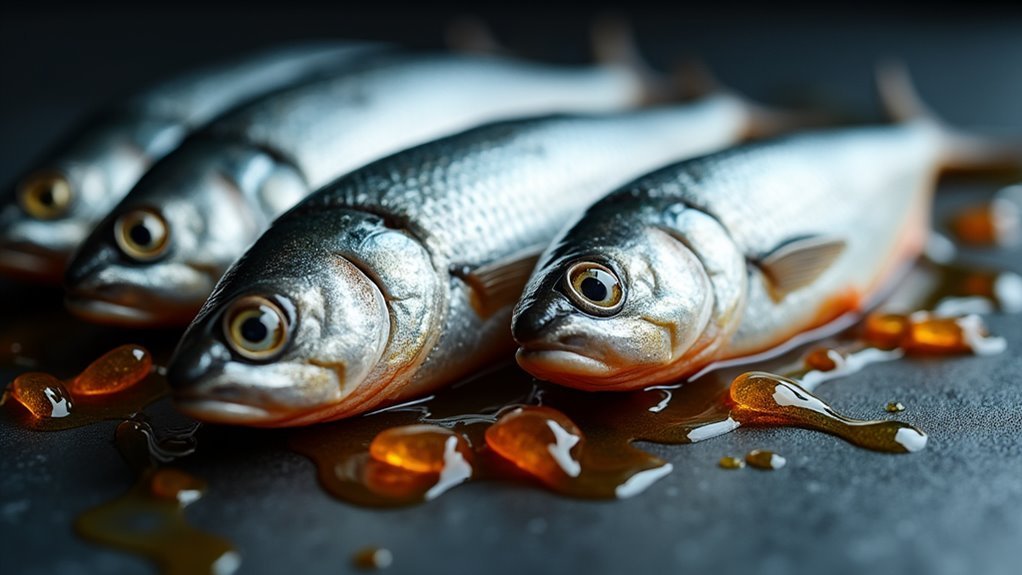
Canned fish with soft bones delivers a powerful dual nutritional punch that conventional fish fillets can’t match.
When you eat canned salmon or sardines, you’re consuming edible soft bones that markedly boost your calcium intake while getting vitamin D for enhanced calcium absorption.
A 3.5-ounce serving of canned salmon provides approximately 180 mg of calcium, while sardines offer around 300 IU of vitamin D.
This combination supports bone health through improved bone remodeling and density maintenance, making it essential for osteoporosis prevention.
Regular consumption helps reduce fracture risks and provides convenient dietary options for those with limited nutrition sources.
You’ll find canned fish an easy, practical way to enhance nutrient intake.
Frequently Asked Questions
What Foods Increase Bone Density?
You’ll boost bone density by eating fatty fish like salmon, leafy greens such as kale, fortified milk and cereals, dried figs, and calcium-enriched tofu for essential nutrients.
What Food Is Highest in Vitamin D?
You’ll find wild-caught salmon contains the highest vitamin D levels, offering 600-1,000 IU per 3.5 ounces. This makes it one of nature’s richest sources, considerably outpacing other foods.
What Vitamin D Is Best for Osteoporosis?
You’ll want vitamin D3 (cholecalciferol) rather than D2 for osteoporosis since it’s more effective at raising your vitamin D levels. Take 800-1,000 IU daily with calcium for best results.
Is 2 Eggs a Day Enough Vitamin D?
Two eggs daily provide only 74 IU of vitamin D, far below your required 600 IU. You’ll need additional sources like fatty fish, fortified foods, or supplements to meet daily requirements and prevent osteoporosis effectively.


Leave a Reply