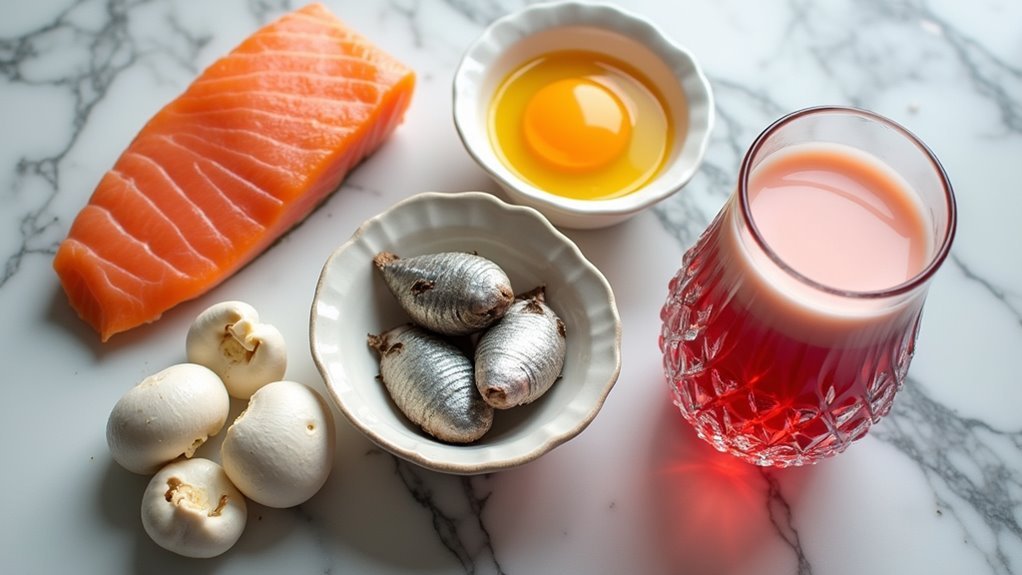
You can strengthen your elderly joints by incorporating five vitamin D-rich foods into your daily diet. Wild-caught salmon provides up to 924 IU per serving, while UV-exposed mushrooms deliver 1,100 IU per cup. Fortified dairy products combine calcium and vitamin D for maximum absorption, and cod liver oil offers concentrated 450 IU per teaspoon. Vitamin D-enhanced eggs provide an easy daily source. These foods reduce inflammation and enhance calcium absorption for better bone health, and there’s much more to discover about optimizing your joint strength.
Fatty Fish: Wild-Caught Salmon and Sardines for Maximum Vitamin D
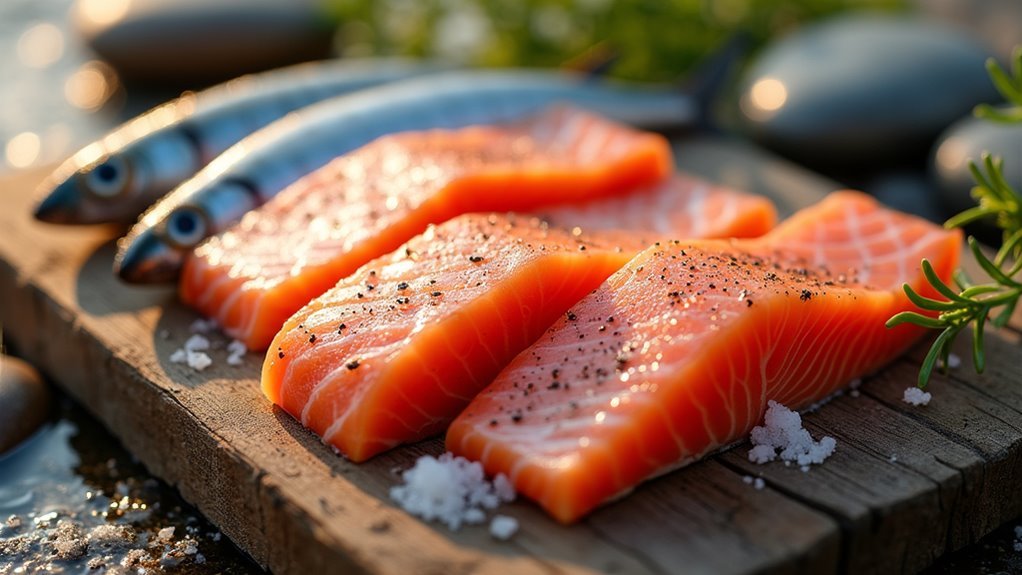
When it comes to boosting your vitamin D intake naturally, wild-caught salmon stands out as one of the most potent dietary sources available. You’ll get between 556 and 924 IU per 3.5-ounce serving, making it exceptionally valuable for elderly individuals concerned about bone health.
Sardines offer another convenient option, delivering approximately 193 IU of vitamin D per serving—that’s 24% of your daily value. These fatty fish don’t just provide vitamin D; they also enhance calcium absorption, which directly supports joint strength and overall skeletal integrity.
The omega-3 fatty acids in these fish reduce inflammation, helping alleviate joint pain while improving mobility. Regular consumption effectively combats vitamin D deficiency, a common issue among the elderly that considerably impacts joint and bone wellness.
UV-Exposed Mushrooms: The Plant-Based Vitamin D Powerhouse
Although most plant-based foods contain little to no vitamin D, UV-exposed mushrooms break this pattern by delivering an impressive 1,100 IU per cup—that’s 139% of your daily value.
These unique fungi produce vitamin D2 when exposed to ultraviolet light, making them essential for elderly individuals following a plant-based diet.
Unlike commercially grown varieties with minimal vitamin D content, UV-treated mushrooms considerably enhance calcium absorption, directly supporting your bone health as you age.
You’ll want to specifically seek out UV-exposed varieties to maximize these benefits.
Beyond vitamin D, these mushrooms provide powerful antioxidants and nutrients that promote overall joint health.
Fortified Dairy Products: Milk and Yogurt for Dual Calcium-Vitamin D Benefits
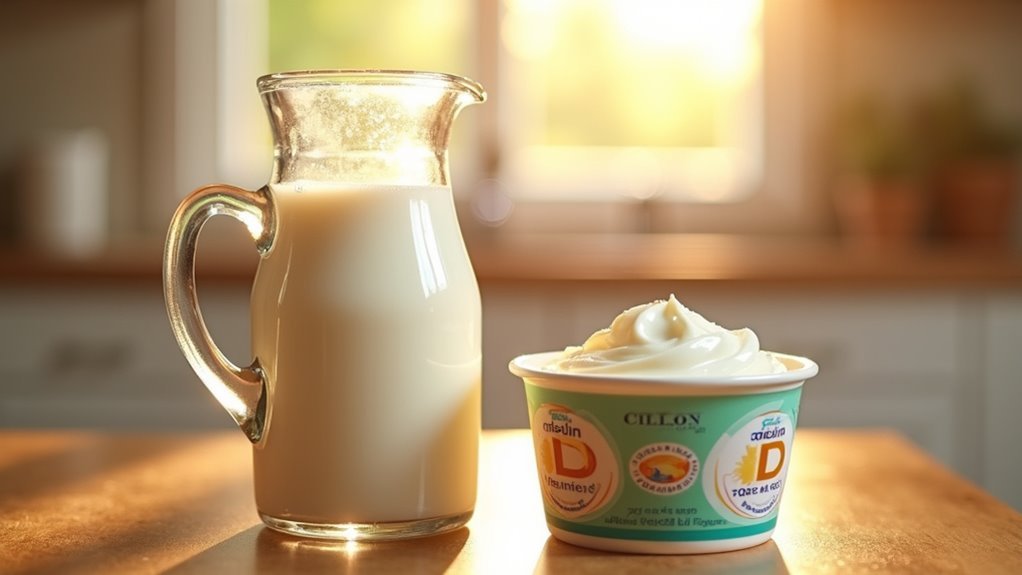
While many foods provide either calcium or vitamin D separately, fortified dairy products deliver both nutrients in a single, convenient package that’s perfectly designed for aging joints. Fortified milk contains 111 IU of vitamin D per cup, while yogurt provides approximately 400 mg of calcium per 8-ounce serving. This powerful combination makes these calcium-rich foods essential for the elderly population.
The vitamin D in fortified dairy products enhances calcium absorption, maximizing bone health benefits. You’ll strengthen your defenses against osteoporosis while supporting bone density and joint function.
Yogurt offers additional advantages by promoting gut health, which improves overall nutrient absorption.
Regular consumption helps you meet daily requirements: 1,200 mg calcium and 800 IU vitamin D for those over 51, leading to stronger bones and improved joint mobility.
Cod Liver Oil: Concentrated Vitamin D for Enhanced Joint Protection
Beyond traditional food sources, cod liver oil delivers an exceptionally concentrated dose of vitamin D that can greatly boost your daily intake with just a single teaspoon. Each teaspoon provides approximately 450 IU of vitamin D, making it particularly valuable for elderly individuals whose joint health depends on adequate nutrient levels.
The omega-3 fatty acids in cod liver oil enhance vitamin D absorption while reducing inflammation that causes joint pain and stiffness. This dual action supports bone density maintenance and protects against osteoporosis, critical concerns as you age.
If you don’t eat fish regularly, cod liver oil guarantees you’re still getting essential nutrients for joint protection.
However, due to its concentrated nature, consult healthcare providers before beginning supplementation to prevent over-supplementation and guarantee safe, effective use.
Vitamin D-Enhanced Eggs: Free-Range Options for Daily Bone Support
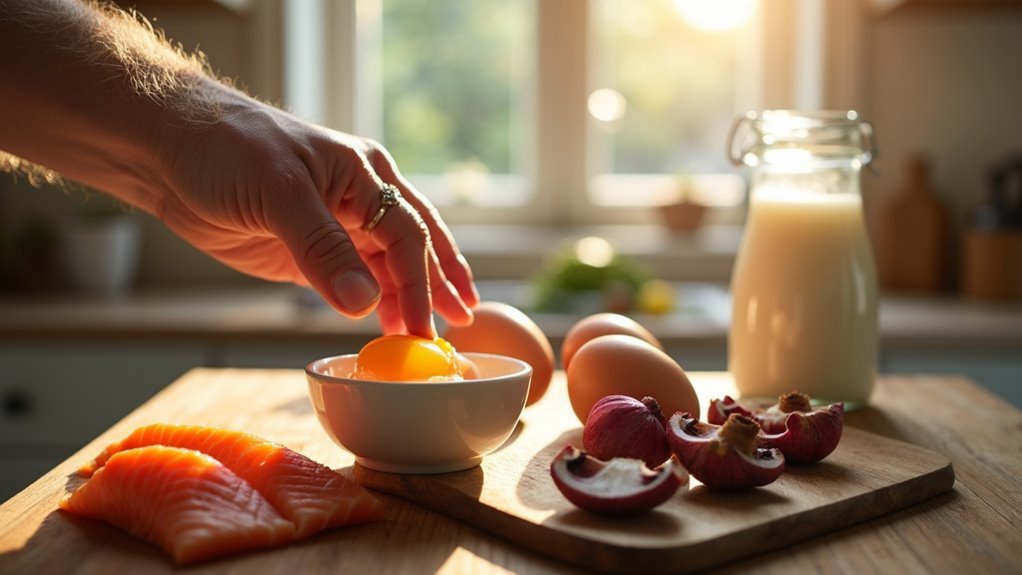
Free-range eggs offer an accessible, kitchen-friendly source of vitamin D that you can easily incorporate into your daily routine for consistent bone support. Each large yolk contains up to 41 IU of vitamin D, making free-range eggs particularly valuable for elderly individuals focused on bone health.
You’ll find vitamin D-enriched options that provide even higher levels through enhanced hen feed or UV light exposure. These versatile eggs boost calcium absorption, helping you maintain strong bones and reducing your risk of osteoporosis.
During winter months when sunlight’s limited, eggs become especially important for preventing bone density loss. By including eggs in your balanced diet, you’re taking a practical step toward meeting your vitamin D requirements while enjoying meals that are both nutritious and easy to prepare.
Frequently Asked Questions
What Foods Have Vitamin D for the Elderly?
You’ll find vitamin D in fatty fish like salmon and mackerel, canned sardines, fortified soy milk and orange juice, vitamin D-enriched eggs, and UV-exposed mushrooms like cremini.
Is 2 Eggs a Day Enough Vitamin D?
No, you won’t get enough vitamin D from two eggs daily. They’ll only provide about 82 IU, while you need 800-1,000 IU. You’ll require additional sources like fatty fish or supplements.
What to Eat to Strengthen Bones and Joints?
You’ll strengthen bones and joints by eating fatty fish like salmon, fortified milk, UV-exposed mushrooms, and calcium-rich cereals. Don’t forget egg yolks and mackerel for vitamin D absorption.
What Vitamin D Is Best for Seniors?
You should choose vitamin D3 (cholecalciferol) over D2 because it’s more effective at raising your blood levels. Take 800-1,000 IU daily to support calcium absorption and maintain strong bones.


Leave a Reply