
The three best vitamin D foods for absorption are fatty fish like wild-caught salmon (556-924 IU per serving), UV-exposed cremini mushrooms (up to 1100 IU per cup), and fortified dairy products consumed with dietary fats. You’ll get superior bioavailability from these sources because vitamin D is fat-soluble, requiring fats for ideal uptake. Wild salmon offers the highest natural content, while UV-treated mushrooms provide excellent plant-based options. These strategic choices will maximize your body’s vitamin D utilization.
Fatty Fish: The Superior Vitamin D Source
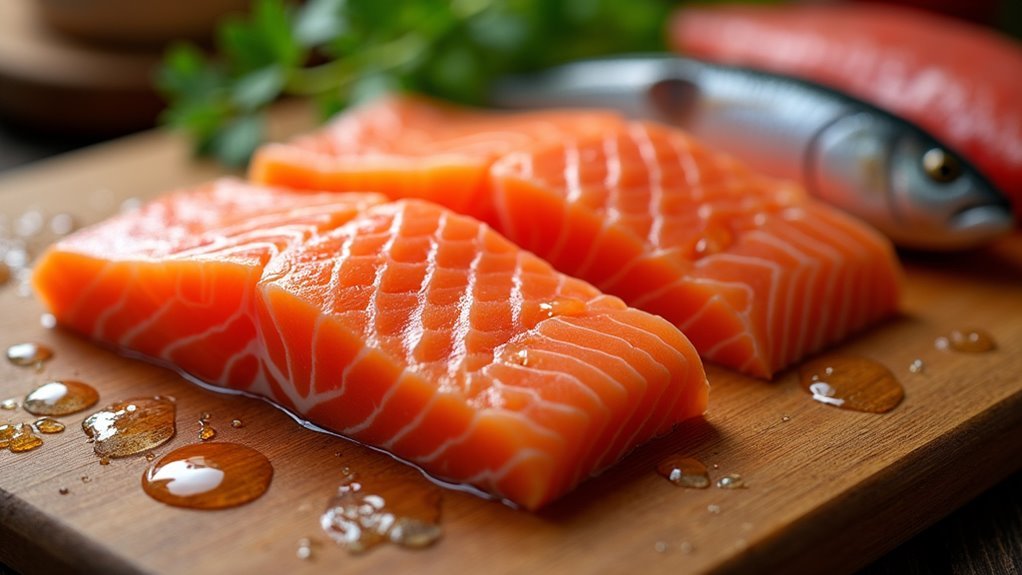
When you’re looking to boost your vitamin D intake naturally, fatty fish stands out as the most potent dietary source available. Wild-caught salmon delivers the highest levels, providing 556-924 IU per 3.5-ounce serving—that’s 70-116% of your daily value.
Wild-caught salmon provides up to 924 IU of vitamin D per serving, making it nature’s most powerful dietary source.
Mackerel offers another nutrient-dense option with 643 IU per serving, while farmed Atlantic salmon contains 441 IU. Don’t overlook canned sardines, which provide 193 IU and represent an affordable, convenient choice for regular consumption.
These fatty fish options become particularly valuable when you have limited sun exposure. Unlike synthetic supplements, fish naturally contain vitamin D in its most bioavailable form.
Regular consumption can greatly help maintain adequate levels year-round, making fatty fish your best dietary strategy for meeting vitamin D requirements.
UV-Exposed Mushrooms: Plant-Based Vitamin D Powerhouse
While animal products dominate vitamin D sources, UV-exposed mushrooms offer a remarkable plant-based alternative that can greatly boost your intake. When mushrooms receive UVB light exposure, they naturally produce vitamin D2, creating an exceptional non-animal source of this essential nutrient.
You’ll find cremini mushrooms particularly impressive, delivering up to 1100 IU per cup—that’s 139% of your daily intake requirements. Morels contribute 136 IU per cup, making them valuable vitamin D-rich foods for your diet.
However, you must choose UV-exposed varieties, as commercially grown mushrooms typically lack vitamin D without proper light treatment.
For those following plant-based diets, these mushrooms provide significant health benefits and excellent absorption rates, making them indispensable for maintaining adequate vitamin D levels naturally.
Fortified Dairy Products: Enhanced Absorption Through Natural Fats
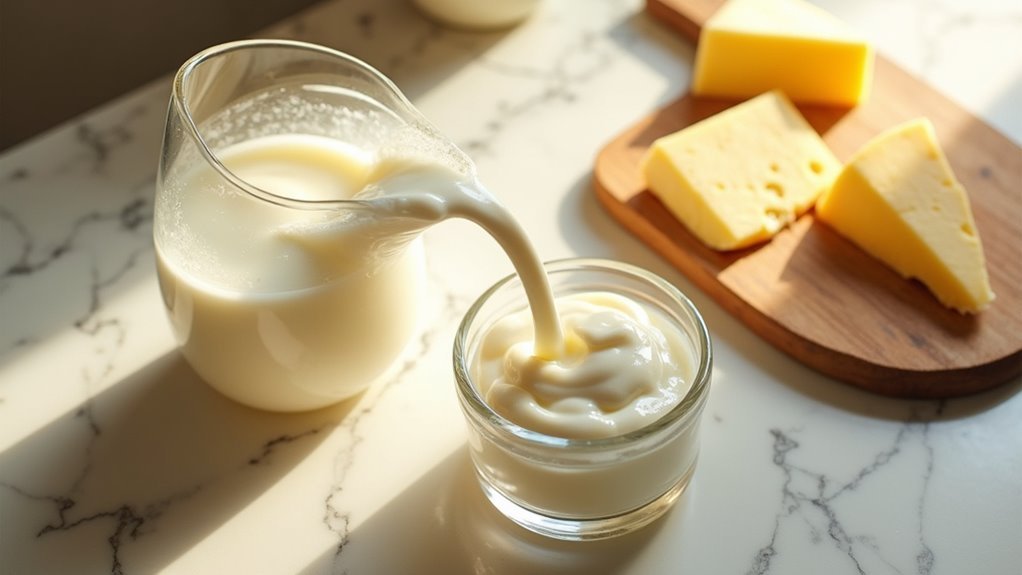
Beyond plant-based options, fortified dairy products represent one of the most accessible and effective ways to increase your vitamin D intake.
You’ll find that fortified cow’s milk and yogurt provide excellent vitamin D absorption due to their natural fat content, which enhances bioavailability since vitamin D is a fat-soluble vitamin. A cup of fortified 2% milk delivers approximately 111 IU, representing 14% of your daily value.
Whole milk offers superior absorption compared to low-fat alternatives because of its higher fat concentration. These products also deliver calcium, supporting improved bone health through nutrient synergy.
If you prefer fortified plant-based alternatives, soy milk provides even more vitamin D at 185 IU per cup—23% of your daily value.
Frequently Asked Questions
What Foods Are High in Absorbable Vitamin D?
You’ll find the highest absorbable vitamin D in wild-caught salmon, cod liver oil, UV-exposed mushrooms, canned sardines, and fortified milk. These foods provide excellent bioavailability for your body’s needs.
What Helps the Absorption of Vitamin D?
You’ll absorb vitamin D better when you consume it with dietary fats like nuts, avocados, or olive oil. Don’t forget magnesium-rich foods either—they’re essential for activating vitamin D in your body effectively.
Which Food Is Highest in Vitamin D?
Wild-caught salmon contains the highest vitamin D levels among foods, providing up to 924 IU per 3.5-ounce serving. You’ll get 70-116% of your daily value from this single serving.
Is 2 Eggs a Day Enough Vitamin D?
No, you won’t get enough vitamin D from two eggs daily. They’ll provide only 82 IU, while you need 600-800 IU. You’ll need additional sources like fatty fish or supplements.


Leave a Reply