
You’ll boost your eye health markedly by eating vitamin A-rich leafy greens like spinach, kale, and Swiss chard. These nutritional powerhouses contain beta-carotene, which your body converts to vitamin A for proper retinal function and clear vision. They’re also packed with lutein and zeaxanthin, compounds that act like natural sunglasses by filtering harmful blue light and protecting against macular degeneration. Aim for 2-3 servings daily to discover how these greens can transform your visual wellness.
The Science Behind Vitamin A and Eye Function
When light enters your eye, vitamin A plays an essential role in transforming that light into the clear images you see every day. This important nutrient enables your retina to function properly, converting incoming light signals into visual information your brain can process.
Vitamin A transforms incoming light into clear visual images by enabling your retina to properly process signals for your brain.
Without adequate vitamin A, you’ll experience compromised visual function, particularly in low-light conditions.
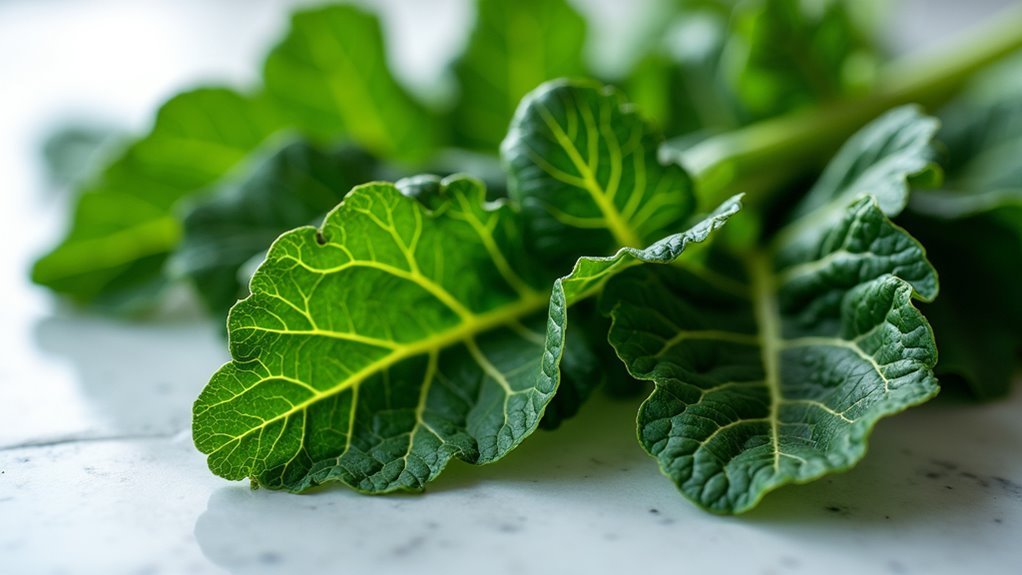
Leafy greens like spinach and kale contain carotenoids, specifically beta-carotene, which your body converts into active vitamin A. These nutrients don’t just support basic eye health—they’re significant for preventing serious conditions.
A deficiency can lead to night blindness and xerophthalmia, potentially causing permanent vision loss. Additionally, consuming vitamin A-rich leafy greens helps reduce your risk of age-related macular degeneration while supporting overall ocular wellness.
Top Leafy Greens Rich in Beta-Carotene
You’ll find that spinach stands out as a nutritional powerhouse, delivering 56% of your daily vitamin A needs in just one cup.
Kale takes it even further, with half a cup providing 100% of your recommended daily intake of this vision-supporting vitamin.
Swiss chard rounds out the top contenders, offering excellent beta-carotene content that works alongside other antioxidants to protect your eyes from age-related damage.
Spinach Nutrition Benefits
Spinach stands out as a nutritional powerhouse among leafy greens, delivering an impressive 56% of your daily vitamin A needs in just one cup. This nutrient-dense green contains only 7 calories per cup, making it perfect for maintaining your eye health without extra weight gain.
The lutein and zeaxanthin in spinach act as powerful antioxidants that shield your retina from oxidative damage and greatly reduce your risk of age-related macular degeneration (AMD).
- Beta-carotene boost: Gets converted to vitamin A for healthy vision and night blindness prevention
- Antioxidant protection: Lutein and zeaxanthin guard against retinal damage
- Low-calorie nutrition: Maximum eye health benefits with minimal caloric impact
- Glaucoma prevention: High vitamin K supports calcium regulation
Kale Vitamin Content
Kale delivers an even more impressive vitamin A punch, supplying 50% of your daily requirement in just half a cup. This powerhouse green’s beta-carotene converts light into retinal images, ensuring your vision stays sharp.
You’ll also get lutein and zeaxanthin, protective antioxidants that shield your eyes from damaging light and oxidative stress.
Beyond vitamin A, kale’s packed with vitamins C and K, which strengthen blood vessels around your eyes and fight inflammation. These nutrients work together to maintain peak eye health throughout your life.
When you eat kale regularly, you’re actively protecting yourself against age-related vision problems like macular degeneration. It’s one of nature’s most effective defenders for long-term eye wellness.
Swiss Chard Properties
Swiss chard stands out as another beta-carotene powerhouse, delivering over 50% of your daily vitamin A needs in just one cooked cup. This vibrant leafy green protects your vision through multiple mechanisms, making it an excellent choice for maintaining healthy eyes.
Swiss chard contains high concentrations of lutein and zeaxanthin, specialized antioxidants that shield your retina from harmful blue light exposure. These compounds work together with vitamins A, C, and K to strengthen your eye’s natural defenses against oxidative stress and age-related damage.
- Provides essential beta-carotene for night vision support
- Contains lutein and zeaxanthin for blue light protection
- Delivers only 19 calories per nutrient-dense cooked cup
- Supports antioxidant defenses against macular degeneration
Regular Swiss chard consumption enhances your eye health while providing exceptional nutritional value.
Lutein and Zeaxanthin: Protective Compounds in Dark Greens
When you consume dark leafy greens like kale and spinach, you’re getting powerful compounds called lutein and zeaxanthin that specifically protect your macula—the part of your eye responsible for sharp, central vision.
These carotenoids act as natural sunglasses within your eyes, filtering out harmful blue light that can damage delicate retinal tissues over time.
You’ll greatly reduce your risk of age-related macular degeneration and cataracts by regularly including these protective compounds in your diet.
Macular Protection Benefits
Although many people focus on vitamin A’s role in night vision, the lutein and zeaxanthin found in dark leafy greens offer equally impressive protection for your eyes’ most critical structures.
These powerful antioxidants specifically target your macular region, creating a protective barrier against harmful blue light and oxidative damage.
When you consume leafy greens like kale and spinach, lutein and zeaxanthin accumulate directly in your retina, filtering out damaging wavelengths that can lead to age-related macular degeneration (AMD).
This natural defense system strengthens your eye health considerably.
- Reduces AMD risk by filtering harmful blue light wavelengths
- Accumulates in retinal tissue for targeted macular protection
- Lowers cataract development while enhancing visual clarity
- Decreases glaucoma risk by 57% with regular consumption
Blue Light Defense
Since modern life exposes your eyes to unprecedented levels of blue light from digital screens and LED lighting, the lutein and zeaxanthin in dark leafy greens serve as your body’s natural defense system against this constant bombardment.
These powerful antioxidants concentrate directly in your macula, creating a protective filter that blocks harmful blue wavelengths before they damage delicate retinal cells.
You’ll experience improved visual comfort and performance when consuming foods rich in these compounds, especially during extended screen time or bright light exposure.
Research demonstrates that adequate intake of lutein and zeaxanthin considerably reduces your risk of developing age-related macular degeneration (AMD) and cataracts.
Incorporating just 6-10 mg daily through leafy greens provides substantial protection, supporting ideal eye health throughout your lifetime.
How Spinach Supports Retinal Health

As your eyes convert light into visual images, spinach delivers a powerful 56% of your daily vitamin A requirements in just one cup, providing the essential nutrients your retinas need to function effectively.
This leafy green powerhouse contains lutein and zeaxanthin, which shield your macula from oxidative damage that leads to age-related macular degeneration.
Your retinal health benefits from spinach’s rich antioxidant profile, including beta-carotene that fights harmful free radicals attacking eye cells.
Regular spinach consumption helps prevent dry eyes and vision loss while supporting overall eye function.
- Provides 56% daily vitamin A in one nutrient-dense cup
- Contains lutein and zeaxanthin for macular protection
- Delivers powerful antioxidants that combat cellular damage
- Supports retinal function with only 7 calories per serving
Kale’s Role in Preventing Macular Degeneration
When you’re looking to protect your eyes from macular degeneration, kale stands out as one of nature’s most potent defenders. This powerhouse leafy green delivers exceptional vitamin A content—just half a cup provides 50% of your daily requirement, making it incredibly healthy for your eyes and essential for preventing night blindness.
Kale’s lutein and zeaxanthin are particularly valuable in fighting age-related macular degeneration. These compounds shield your macula from oxidative damage while filtering harmful blue light that threatens your vision.
Kale’s lutein and zeaxanthin act as natural shields, protecting your macula from oxidative damage and filtering harmful blue light.
The vitamin K in kale further supports eye health by preventing tissue calcification.
Regular kale consumption notably reduces your AMD risk and supports long-term retinal health, making it an indispensable addition to your vision-protective diet.
Daily Serving Recommendations for Optimal Eye Benefits
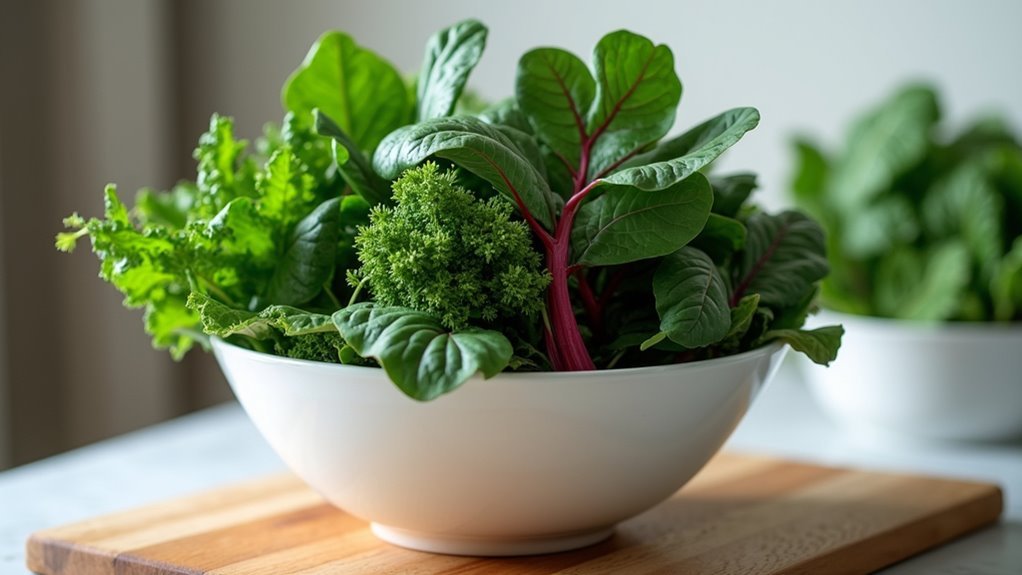
The ideal daily intake of vitamin A-rich leafy greens requires consuming 2-3 servings to enhance eye health benefits. Each serving provides over 50% of your daily vitamin A needs, supporting retinal function and maintaining moisture in the eyes.
You’ll want to include one cup of varied greens daily to guarantee adequate carotenoids like lutein and zeaxanthin, which protect against age-related macular degeneration.
Here’s your daily serving strategy for peak eye health:
- Aim for 2-3 servings of dark leafy greens like spinach and kale throughout your day
- Include one cup minimum in meals to boost antioxidant protection for your retina
- Vary your greens to enhance carotenoids that prevent AMD
- Maintain consistent intake to support low-light vision and prevent eye dryness
Creative Ways to Incorporate More Leafy Greens Into Your Diet
Since you’re already committed to getting your daily 2-3 servings of vitamin A-rich leafy greens, you’ll need practical strategies that seamlessly blend these nutritional powerhouses into meals you already love. These creative ways to incorporate more leafy greens boost your intake of vitamins A and C while supporting ideal eye health through powerful antioxidants.
| Creative Method | Benefits |
|---|---|
| Morning smoothies with spinach/kale | 56% daily vitamin A, low calories |
| Stir-fries with Swiss chard/collards | Lutein and zeaxanthin for eye health |
| Colorful salad bases | Enhanced vitamins A, C, K intake |
| Homemade green pesto | Antioxidants plus healthy fats |
You can also finely chop kale or arugula into pasta dishes and casseroles without greatly altering flavors while maximizing nutritional density.
Frequently Asked Questions
Which Leafy Vegetable Is Good for Eyesight?
You’ll find spinach excellent for eyesight since it provides 56% of daily vitamin A needs per cup. Kale’s also outstanding, meeting daily requirements for vitamins A, C, and K while protecting against macular degeneration.
Can Vitamin a Improve Eyesight?
You can improve your eyesight with vitamin A, especially night vision. It’s essential for converting light into images in your retina, prevents dry eyes, and helps protect against age-related eye diseases.
What to Eat to Increase Eyesight?
You should eat carrots, fish rich in omega-3s, citrus fruits, nuts, and eggs to boost eyesight. These foods contain essential vitamins and antioxidants that’ll protect your eyes and improve vision health naturally.
Which Leaves Are Best for Eyesight?
You’ll get the best eye benefits from spinach, kale, collard greens, and Swiss chard. These dark leafy greens pack vitamin A, lutein, and zeaxanthin that’ll protect your vision and prevent age-related eye diseases.


Leave a Reply