
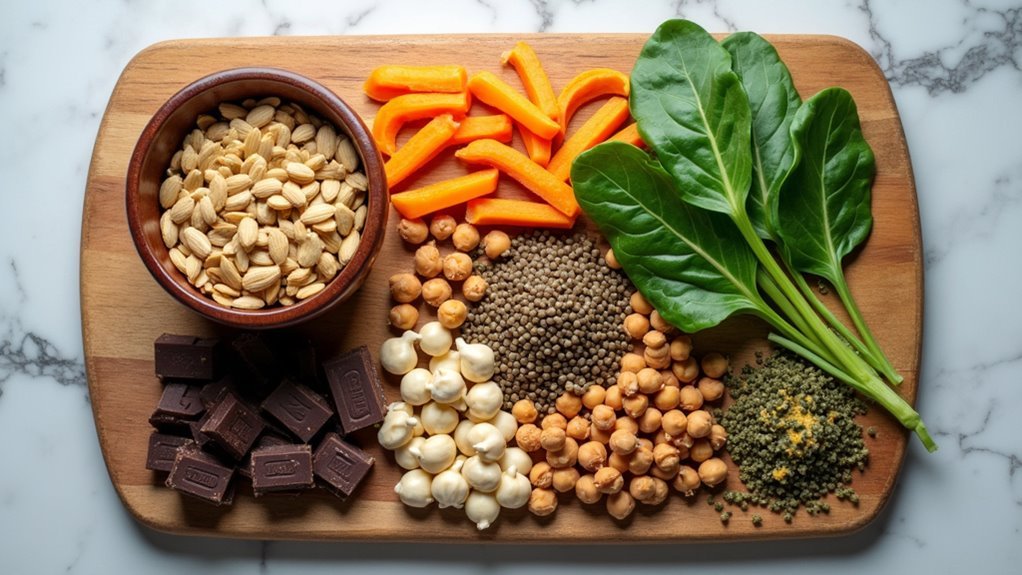
You’ll boost your immune system with zinc-rich vegetarian foods like pumpkin seeds (7.8 mg per 100g), watermelon seeds (10.24 mg), and cashews (5.34 mg). Lentils and black beans provide over 3 mg of zinc per serving, while fortified cereals offer additional support. To maximize absorption, you should soak legumes overnight, pair zinc foods with vitamin C sources, and combine rice with beans. These strategic food choices will optimize your body’s natural defenses against infections and support overall immune health.
Daily Zinc Requirements for Optimal Immune Function

While many people focus on vitamins when considering immune health, zinc plays an equally critical role in maintaining your body’s defense systems. Understanding your daily zinc requirements helps optimize immune function naturally.
The recommended daily allowance varies by gender and life stage – men need 17 mg while women require 13.2 mg. Pregnant women should increase intake to 14.5 mg, and breastfeeding mothers need 14.1 mg daily.
Zinc deficiency weakens your immune response, making you more vulnerable to infections. This essential mineral supports immune cells like neutrophils and natural killer cells that defend against pathogens.
Fortunately, you can meet these requirements through vegetarian sources. A balanced diet featuring zinc-rich foods such as legumes, nuts, seeds, and whole grains provides substantial health benefits for robust immunity.
Top Legumes and Beans Packed With Immunity-Boosting Zinc
Legumes stand as nutritional powerhouses that deliver impressive zinc content alongside complete protein profiles essential for vegetarian immune support.
You’ll find lentils leading the pack with 3.31 mg of zinc per 100g, making them an exceptional source for your health needs. Black beans follow closely at 3.08 mg, while kidney beans provide 2.5 mg per serving.
These high-zinc legumes boost your immune system effectively when you’re following a vegetarian diet.
Chickpeas offer 1.13 mg per 100g, though they’re incredibly versatile for daily meals.
When you consume one cup of baked beans, you’re getting 38% of your required daily zinc intake.
These beans aren’t just zinc sources – they’re fiber-rich foods that support overall immune function while meeting your vegetarian protein requirements.
Seeds and Nuts That Deliver Maximum Zinc for Immune Support
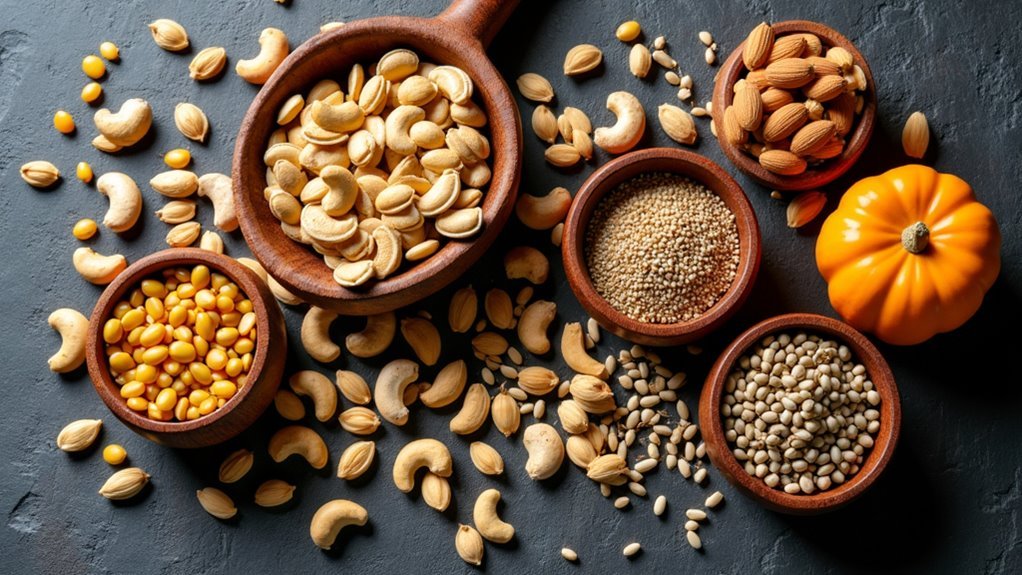
Seeds and nuts represent some of nature’s most concentrated zinc sources, delivering exceptional immune-boosting power in compact, convenient packages.
These vegetarian sources pack impressive zinc content that’ll strengthen your body’s defenses while satisfying your snacking needs.
- Watermelon seeds lead the pack with 10.24 mg zinc per 100g – an excellent source of zinc that’s often overlooked.
- Pumpkin seeds deliver 7.8 mg zinc per 100g, making them perfect for immune support during fall months.
- Cashews provide 5.34 mg zinc per 100g alongside essential vitamins for thorough immunity.
- Sunflower seeds offer 5 mg zinc per 100g plus heart-healthy fats for overall wellness.
- Almonds contain 3.5 mg zinc per 100g and blend seamlessly into recipes for nutrient enhancement.
These nuts and seeds transform ordinary meals into immunity-boosting powerhouses.
Whole Grains and Cereals Rich in Zinc for Vegetarian Diets
Although nuts and seeds provide concentrated zinc, whole grains and cereals offer vegetarians a more accessible foundation for meeting their daily zinc requirements.
Whole grains like whole wheat deliver approximately 2.85 mg of zinc per 100g, making them excellent protein sources for immune support. You’ll find brown rice contains 1.6 mg per 100g and easily fits into various meals.
Oatmeal provides 1.3 mg per half cup while supporting heart health alongside immune function. Quinoa stands out as a complete protein containing 1.1 mg of zinc per 100g, perfect for vegetarian diets.
Don’t overlook fortified cereals, which notably boost your zinc intake beyond unfortified versions, helping you reach your daily zinc requirement more effectively.
Maximizing Zinc Absorption From Plant-Based Foods for Better Immunity
While whole grains provide a solid zinc foundation, you’ll need strategic preparation and pairing techniques to maximize absorption from plant-based sources for peak immune support.
Soaking, sprouting, or fermenting legumes and grains dramatically reduces phytate levels that block zinc absorption. You can boost your immune system by pairing diverse zinc-rich foods like lentils and pumpkin seeds with vitamin C-rich foods such as citrus fruits or bell peppers.
Steam vegetables instead of boiling to preserve zinc content for ideal protein synthesis and overall health.
- Soak chickpeas overnight before cooking to reduce absorption inhibitors
- Combine rice and beans for complementary amino acids and enhanced zinc uptake
- Add bell peppers to lentil dishes for vitamin C absorption boost
- Steam broccoli instead of boiling to retain maximum zinc content
- Sprout quinoa before cooking to improve mineral bioavailability
Frequently Asked Questions
Which Vegetarian Food Is Highest in Zinc?
You’ll find watermelon seeds contain the highest zinc levels among vegetarian foods, providing 10.13-10.24 mg per 100g. They’re often overlooked but you can easily incorporate them into your diet for ideal zinc intake.
How Do Vegetarians Get Enough Zinc?
You’ll get enough zinc by eating legumes like lentils, nuts such as cashews and pumpkin seeds, whole grains, and dairy alternatives. Pair these with vitamin C-rich foods to enhance absorption.
How Do You Get 100% of Zinc Daily?
You’ll reach 100% daily zinc by combining lentils, chickpeas, pumpkin seeds, and whole grains. Sprout legumes, pair with vitamin C sources, and include nuts like cashews to maximize absorption and meet requirements.
What Food Is Highest in Zinc?
You’ll find watermelon seeds contain the highest zinc levels among vegetarian sources, providing 10.13-10.24 mg per 100 grams. They’re followed by pumpkin seeds with 7.8 mg per 100 grams.


Leave a Reply