

You’ll maximize turmeric’s anti-inflammatory benefits by pairing it with black pepper, which boosts curcumin absorption by up to 2,000%. Use fresh turmeric root when possible, add healthy fats like olive oil or coconut milk, and start with small amounts to build flavor tolerance. Combine turmeric with complementary spices like ginger, cook at temperatures below 350°F, and store in dark, airtight containers. These techniques guarantee you’re getting the most therapeutic value from every dish you prepare.
Pair Turmeric With Black Pepper to Boost Absorption

When you’re cooking with turmeric, adding a pinch of black pepper transforms this golden spice from a simple flavor enhancer into a nutritional powerhouse.
The piperine in black pepper dramatically increases curcumin absorption by up to 2,000%, making turmeric’s anti-inflammatory benefits far more effective in your body.
Black pepper’s piperine compound can boost your body’s curcumin absorption from turmeric by an incredible 2,000 percent.
You’ll maximize these health benefits by combining both spices in dishes like golden milk, soups, and marinades.
The pepper doesn’t just boost absorption initially—it helps maintain higher curcumin levels in your bloodstream for extended periods.
This simple pairing technique guarantees you’re getting the most from turmeric’s therapeutic properties while creating flavorful meals that support your wellness goals through enhanced bioavailability.
Use Fresh Turmeric Root for Maximum Potency
Beyond adding black pepper to enhance absorption, choosing fresh turmeric root over dried powder takes your cooking and health benefits to the next level.
Fresh turmeric contains higher concentrations of curcumin, delivering more potent anti-inflammatory properties than its dried counterpart.
You can grate or juice fresh turmeric and add it to smoothies, teas, or soups for vibrant color and earthy flavor.
Handle it carefully since it stains surfaces and skin—wear gloves and use easily cleaned cutting boards.
Store fresh turmeric in your refrigerator for up to two weeks or freeze it for longer shelf life.
This accessibility lets you maximize health benefits while incorporating this powerful root into various dishes throughout the week.
Add Healthy Fats to Enhance Curcumin Bioavailability

Since curcumin is fat-soluble, pairing turmeric with healthy fats dramatically boosts your body’s ability to absorb this powerful compound. When you combine turmeric with olive oil, coconut oil, or avocado, you’ll increase curcumin bioavailability by up to 2,000%, especially when paired with black pepper.
Add a tablespoon of coconut milk to your turmeric smoothies or soups to enhance both flavor and absorption.
Cook turmeric with fatty ingredients like oils when preparing curries or sautéed vegetables to extract more beneficial compounds. You’ll maximize the anti-inflammatory properties when you include healthy fats at every turmeric-containing meal.
Try incorporating nut butter, olive oil drizzles, or coconut-based dishes to guarantee you’re getting the most therapeutic benefits from this golden spice.
Start With Small Amounts to Build Flavor Tolerance
If you’re new to cooking with turmeric, you’ll want to ease into its distinctive earthy flavor by starting with just 1/4 to 1/2 teaspoon per dish.
Building turmeric tolerance takes time, but these strategies help maximize both flavor acceptance and inflammation-fighting health benefits:
- Pair with black pepper – This combination enhances absorption while balancing turmeric’s earthy notes.
- Start with familiar recipes – Add turmeric to soups, stews, or curry dishes you already enjoy.
- Use in marinades and dressings – Blending with other ingredients creates a milder initial experience.
- Gradually increase amounts – Work up to 1 teaspoon or more as your palate adapts.
This gradual approach lets you develop appreciation for turmeric’s unique flavor while revealing its powerful anti-inflammatory properties in your favorite recipes.
Combine Turmeric With Complementary Anti-Inflammatory Spices
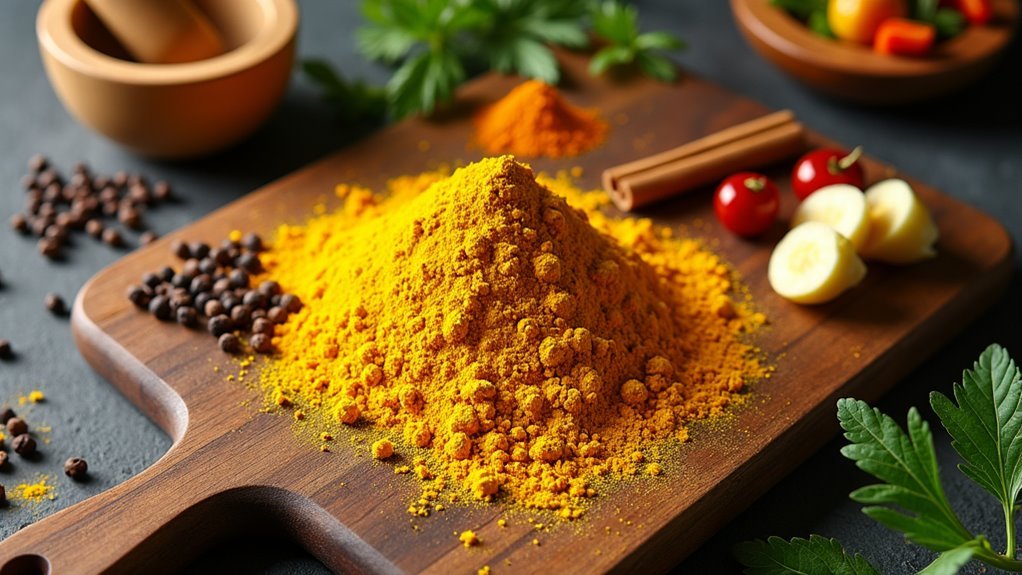
While turmeric delivers impressive anti-inflammatory benefits on its own, you’ll amplify its healing power by combining it with other inflammation-fighting spices that work synergistically.
Black pepper is your most important pairing—its piperine content enhances curcumin absorption by up to 2,000%, making your anti-inflammatory meals markedly more effective.
Ginger complements turmeric perfectly, adding robust flavor while reducing inflammation markers throughout your body.
You’ll find garlic creates excellent synergy too, as its sulfur compounds provide additional anti-inflammatory effects in soups, stews, and marinades.
Cinnamon adds sweetness while potentially lowering blood sugar and supporting heart health.
For metabolism-boosting benefits, incorporate cayenne pepper to enhance thermogenic effects and support weight management alongside inflammation reduction.
Apply Low-Heat Cooking Methods to Preserve Active Compounds
You’ll want to keep your cooking temperatures below 350°F when preparing turmeric to protect its valuable curcumin content from heat damage.
Gentle simmering allows you to infuse turmeric’s earthy flavor into soups, stews, and sauces without destroying its anti-inflammatory properties.
Steam and sauté methods work particularly well since they use moderate heat while still developing rich, complex flavors in your dishes.
Gentle Simmering Techniques
Since turmeric’s most valuable compound, curcumin, breaks down under intense heat, you’ll want to master gentle simmering techniques that preserve its potent anti-inflammatory properties.
Keep your cooking temperature below 300°F (150°C) to maintain curcumin’s effectiveness. This approach protects the active compounds while allowing flavors to develop naturally.
Here’s how to optimize your gentle simmering techniques:
- Add healthy fat like olive oil or coconut oil to enhance curcumin absorption.
- Incorporate turmeric into soups and stews for effective flavor melding.
- Monitor temperature consistently to avoid exceeding the 300°F threshold.
- Avoid high-heat methods like frying or high-temperature baking.
These gentle methods guarantee your turmeric retains maximum nutritional value while creating delicious, anti-inflammatory meals that support your health goals.
Steam and Sauté Methods
Beyond simmering, steam and sauté methods offer you powerful ways to preserve turmeric’s active compounds while creating flavorful, nutrient-dense meals.
When you steam vegetables with turmeric, you’ll retain more nutrients compared to boiling since there’s minimal water exposure and lower temperatures. Keep your cooking temperature around 300°F to prevent curcumin degradation and maintain anti-inflammatory properties.
For maximum absorption, sauté turmeric with healthy fats like olive oil or coconut oil. You’ll boost curcumin absorption by up to 2000% when you add black pepper to your sautéed dishes.
Incorporate garlic, ginger, or onions during sautéing to create synergistic effects that enhance both flavor and health benefits. These gentle methods preserve turmeric’s vibrant color and beneficial phytonutrients effectively.
Store Turmeric Properly to Maintain Nutritional Value
You’ll maximize turmeric’s nutritional benefits by choosing the right storage methods after cooking with it at low temperatures.
Your storage containers, temperature settings, and light protection strategies directly impact how well turmeric retains its valuable curcumin content over time.
Let’s explore how proper storage techniques can preserve turmeric’s health-promoting compounds for months or even years.
Proper Storage Containers
When you choose the right storage container for your turmeric, you’ll preserve its vibrant color and powerful nutritional benefits for months to come. Proper storage containers protect curcumin, turmeric’s active compound, from degradation caused by light exposure and air.
Here are four essential container guidelines:
- Use glass or opaque containers – These materials prevent harmful light from breaking down curcumin and maintain turmeric powder potency.
- Ensure airtight seals – Tight-fitting lids keep moisture and air out when you store ground turmeric.
- Avoid clear plastic containers – Transparent materials allow light penetration that diminishes nutritional value.
- Wrap fresh turmeric root – Place in paper towels inside perforated plastic bags before refrigerating.
Choose proper storage containers to maximize your turmeric’s anti-inflammatory properties and cooking effectiveness.
Ideal Temperature Conditions
Storage containers work hand-in-hand with proper temperature control to keep your turmeric at peak quality. The ideal temperature conditions for storing turmeric involve keeping it in a cool, dark place away from heat sources like stoves, ovens, or direct sunlight.
Heat degrades turmeric’s nutritional value and potency, diminishing its health benefits over time. When you store turmeric properly at room temperature (around 60-70°F), ground turmeric maintains its effectiveness for up to three years, though you’ll get best flavor within six months.
Fresh turmeric root requires different handling—refrigerate it wrapped in paper towels to maintain freshness for two weeks. Avoid temperature fluctuations that create condensation, which causes clumping and reduces the spice’s therapeutic compounds essential for anti-inflammatory cooking.
Light Protection Methods
Light exposure poses one of the greatest threats to turmeric’s valuable compounds, making proper protection vital for preserving its nutritional benefits.
UV rays break down active compounds, reducing turmeric’s health benefits and potency. Implementing effective light protection methods guarantees you’ll maintain maximum nutritional value.
Follow these essential storage practices:
- Store in opaque containers – Use dark glass jars or metal tins instead of clear containers.
- Choose dark pantry locations – Keep your airtight container away from windows and bright kitchen lights.
- Avoid direct sunlight – Never leave turmeric on countertops where sunlight hits.
- Use cabinet storage – Select cool, dark cabinets for ideal protection.
Proper light protection methods preserve turmeric’s vibrant color and earthy aroma, indicating maintained quality and effectiveness.
Frequently Asked Questions
How to Cook Turmeric for Inflammation?
You’ll maximize turmeric’s anti-inflammatory benefits by cooking it with black pepper and healthy fats like olive oil. Add it to soups, stews, or marinades where it can blend well with other flavors.
How to Eat Turmeric for Anti Inflammation?
You’ll maximize turmeric’s anti-inflammatory benefits by consuming it with black pepper daily. Add it to curries, drink turmeric tea, blend into smoothies, or mix with olive oil for better absorption.
What Should You Not Mix With Turmeric?
You shouldn’t mix turmeric with high-fat dairy without black pepper, excessive iron-rich foods, blood thinners, large amounts of alcohol, or refined sugars, as these combinations can hinder absorption or cause adverse effects.
What Is the Most Effective Way to Eat Turmeric?
You’ll maximize turmeric’s effectiveness by combining it with black pepper and healthy fats like coconut oil. Add it to warm dishes, soups, or teas, and consume regularly at recommended dosages for ideal anti-inflammatory benefits.


Leave a Reply