
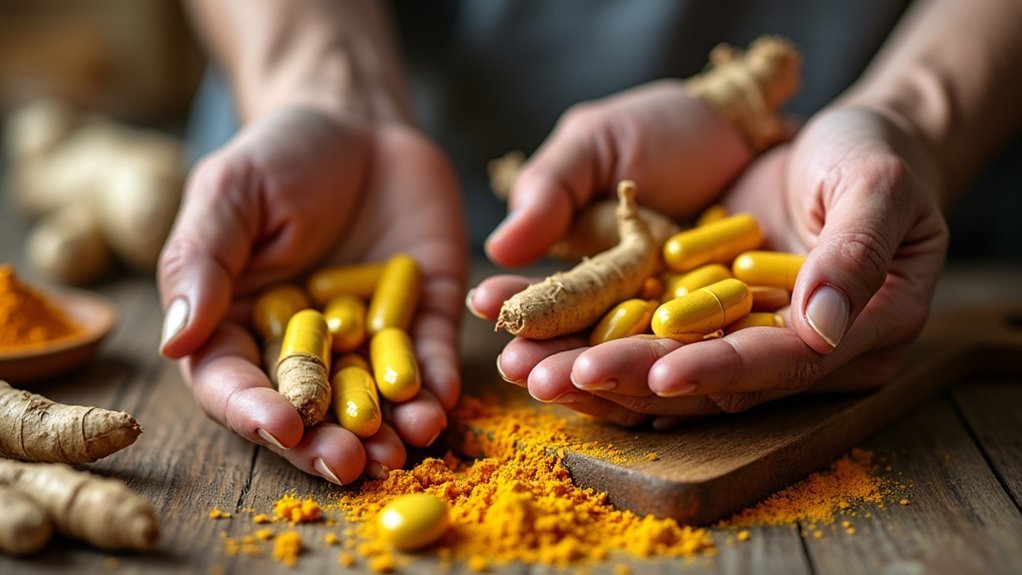
Long-term turmeric curcumin use can be safe when you follow WHO’s recommended dosage of 1.4 mg per pound of body weight, but you’ll need to watch for potential risks. You should avoid it if you have gallbladder disease, bleeding disorders, or kidney stones, and consult your doctor about drug interactions with blood thinners or diabetes medications. Choose third-party tested supplements and monitor for liver damage symptoms like jaundice or fatigue to guarantee your safety throughout extended use.
What Is Turmeric and Curcumin?
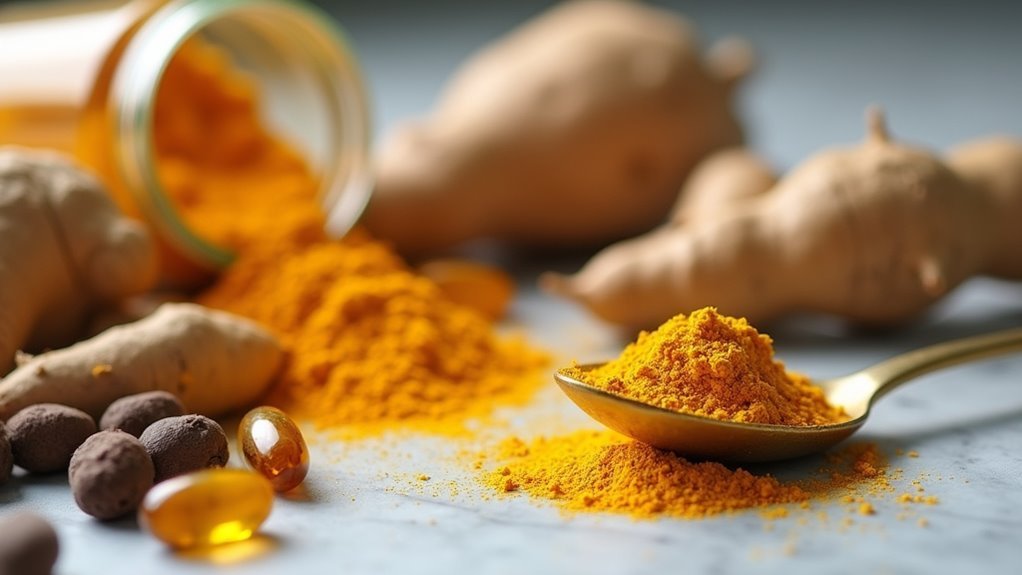
Golden and aromatic, turmeric stands as one of the world’s most recognizable spices, derived from the underground stems called rhizomes of the Curcuma longa plant.
You’ve likely encountered its vibrant yellow color in curry dishes, but turmeric offers much more than culinary appeal.
Curcumin represents the powerhouse compound within turmeric, delivering the potential benefits you’re seeking. This bioactive ingredient provides anti-inflammatory effects and antioxidant properties that researchers have extensively studied.
Curcumin delivers powerful anti-inflammatory and antioxidant properties that make turmeric a scientifically-backed wellness powerhouse you can trust.
While regular turmeric spice contains only 2% curcumin, you’ll find concentrated dietary supplements offering up to 95% curcumin content.
Studies suggest curcumin’s effectiveness in managing chronic diseases, supporting cognitive function, and reducing inflammation.
These health benefits explain why millions incorporate turmeric into their daily routines through cooking or supplementation.
Proven Health Benefits of Long-Term Use
While short-term curcumin use offers notable benefits, extended supplementation reveals even more compelling health benefits that can transform your long-term wellness.
Research shows long-term use markedly reduces inflammation markers like C-reactive protein and interleukin-6, which are directly linked to heart disease and diabetes. You’ll experience enhanced cardiovascular health through improved blood vessel function when taken consistently over extended periods.
If you’re dealing with osteoarthritis, curcumin provides sustained pain relief that builds over time.
Studies indicate cognitive function improvements in older adults, suggesting powerful neurological protection. Your digestive health can also benefit considerably, particularly if you’re managing inflammatory bowel diseases like ulcerative colitis.
These cumulative effects demonstrate why consistent, long-term curcumin supplementation offers superior therapeutic value compared to sporadic use.
Recommended Dosages for Extended Consumption

When determining appropriate curcumin dosages for extended consumption, you’ll need to take into account your specific health goals and body weight.
The World Health Organization establishes recommended dosages at 1.4 mg per pound of body weight for long-term consumption.
If you’re managing osteoarthritis, studies show 500–1,500 mg daily proves effective and safe.
For ulcerative colitis patients, research indicates 100–10,000 mg daily can provide benefits over prolonged periods.
Average Indian diets demonstrate that consuming 60–100 mg of curcumin daily through culinary use appears generally safe.
However, you shouldn’t rely solely on these guidelines for curcumin supplementation.
Healthcare professionals can provide personalized recommendations tailored to your specific circumstances, underlying conditions, and current medications.
Liver Safety Concerns and Case Reports
Although turmeric supplements have gained popularity for their potential health benefits, documented cases of liver injuries have raised considerable safety concerns that you should understand before starting long-term supplementation.
Case studies report individuals experiencing jaundice, fatigue, and abdominal pain after using turmeric supplements. Some cases escalated to acute liver failure requiring hospitalization, though many resolved when patients discontinued supplementation.
The severity of liver damage varies greatly between individuals, suggesting personal risk factors you can’t easily predict. Researchers believe the mechanism involves curcumin metabolism, but they need further investigation to understand why some people develop liver injuries while others don’t.
These safety concerns have prompted regulatory bodies to call for extensive studies evaluating turmeric supplements’ long-term effects on liver function.
Who Should Avoid Long-Term Turmeric Use

Despite turmeric’s widespread popularity as a natural supplement, certain individuals shouldn’t use it long-term due to specific health conditions that create elevated risk profiles.
If you’re pregnant or nursing, avoid long-term turmeric use since insufficient research exists regarding safety during these critical periods. Those with gallbladder disease should also exercise caution, as turmeric may worsen existing symptoms and complications.
Additional populations who should avoid extended turmeric use include:
- Individuals with bleeding disorders – Turmeric can slow blood clotting, potentially exacerbating bleeding risks and creating dangerous complications.
- People with kidney stone history – High oxalate content in turmeric may contribute to kidney stone formation, particularly problematic for susceptible individuals.
- Those with iron deficiency – Long-term use may interfere with iron absorption, worsening anemia or low iron levels.
Drug Interactions and Medication Considerations
If you’re taking medications, you’ll need to contemplate how turmeric curcumin supplements might interact with your prescriptions.
Turmeric can enhance blood-thinning effects when combined with anticoagulant medications, potentially increasing your bleeding risk.
You’ll also face concerns if you’re diabetic, as curcumin may amplify your diabetes medications’ effects and cause dangerous drops in blood sugar levels.
Blood Thinning Effects
When you take turmeric supplements alongside blood-thinning medications, you’re fundamentally amplifying their anticoagulation effects, which can push your bleeding risk into dangerous territory.
Curcumin actively slows blood clotting, creating particularly serious concerns if you have bleeding disorders or take warfarin.
Here are three critical considerations:
- Enhanced anticoagulation – Turmeric supplements can dangerously increase blood thinner effectiveness
- Hypoglycemia risk – Combined with antidiabetic medications, turmeric may drop blood sugar too low
- Delayed clotting – Curcumin’s natural properties interfere with your body’s normal clotting mechanisms
You’ll need to consult your healthcare provider before starting turmeric supplements if you’re on any medications affecting blood clotting or sugar levels.
Don’t risk serious complications by self-medicating.
Diabetes Medication Interactions
While turmeric’s blood sugar-lowering properties offer potential benefits for diabetics, they create serious interaction risks when combined with antidiabetic medications. Curcumin can enhance your diabetes medications’ effects, potentially dropping your blood sugar levels dangerously low and causing hypoglycemia.
This interaction occurs because curcumin influences insulin sensitivity, amplifying your medication’s glucose-lowering action.
You’ll need to consult your healthcare provider before adding turmeric supplements to your regimen. They can assess potential interactions with your specific medications and recommend appropriate dosage adjustments.
While cooking with turmeric poses minimal risk, concentrated supplement forms pack considerably more curcumin, making interactions more likely. Limited research on turmeric-diabetes medication combinations means you shouldn’t experiment independently.
Your doctor’s guidance guarantees you avoid dangerous blood sugar drops while potentially benefiting from turmeric’s properties.
Side Effects From Prolonged Supplementation
Though turmeric curcumin offers numerous health benefits, prolonged supplementation can trigger several uncomfortable side effects that you should consider before starting a long-term regimen.
Long-term use commonly causes digestive issues including stomach pain, diarrhea, constipation, nausea, and vomiting in sensitive individuals.
More serious concerns include:
- Cardiovascular complications – High doses have been linked to abnormal heart rhythms in documented case studies.
- Liver injury risks – Reports of liver damage from curcumin supplementation highlight the importance of monitoring liver function during extended use.
- Pre-existing condition complications – If you have gallbladder disease or are prone to kidney stones, prolonged supplementation may worsen these conditions.
While research suggests curcumin may reduce some toxicity, the long-term safety of high-dose supplementation remains unconfirmed and requires further investigation.
Choosing Quality Supplements for Safety
Given these potential risks from prolonged use, selecting a high-quality supplement becomes paramount to minimizing adverse effects.
You’ll want turmeric supplements containing up to 95% curcumin as the active ingredient, rather than standard powders with only 2%-9%. Look for products combining curcumin with black pepper (piperine), which boosts curcumin absorption by up to 2,000%.
Quality matters greatly for safety. Choose supplements verified through third-party testing by organizations like NSF International, Informed Choice, or USP. These certifications guarantee accurate labeling and freedom from contaminants that cheaper products might contain.
Before starting any regimen, consult your healthcare provider, especially if you have underlying conditions or take medications. This professional guidance helps determine appropriate dosing and identifies potential interactions.
Monitoring Your Health During Extended Use
When you’re taking turmeric curcumin long-term, you’ll need to stay vigilant about monitoring your health through regular check-ups and blood work.
Your liver function deserves particular attention since some cases of liver injury have been linked to turmeric supplements, making routine liver enzyme tests essential.
You should also learn to recognize early warning signs like persistent stomach discomfort, unusual fatigue, or changes in your overall well-being that might signal it’s time to reassess your supplementation routine.
Regular Blood Tests
How can you confirm that long-term turmeric curcumin supplementation isn’t silently affecting your health? Regular blood tests provide the answer. These significant monitoring tools detect potential adverse effects before they become serious problems.
Your healthcare provider should track these key markers during long-term use:
- Liver function – Monitor ALT and AST enzymes since turmeric curcumin supplements have caused documented liver injury cases.
- Kidney function – High curcumin doses may increase kidney stone risk in susceptible individuals.
- Blood sugar levels – Especially vital for diabetics, as curcumin can lower glucose and interact with antidiabetic medications.
You’ll need to work with your healthcare provider to determine appropriate testing frequency and specific blood panels. This proactive approach guarantees you’re catching potential issues early while maximizing turmeric’s benefits safely.
Warning Signs Recognition
Blood tests provide valuable data, but you also need to recognize warning signs your body sends between medical appointments.
Watch for liver damage symptoms like jaundice, fatigue, and abdominal pain, which have been reported with turmeric supplements.
Monitor for gastrointestinal issues including stomach pain, diarrhea, constipation, nausea, or vomiting from high curcumin doses.
Pay attention to allergic reactions such as skin rashes or respiratory problems, especially if you’re sensitive to turmeric.
Track changes in blood sugar levels, as turmeric may enhance antidiabetic medications and cause hypoglycemia.
If you’re taking anticoagulants, watch for unusual bleeding or bruising.
Contact your healthcare provider immediately if you notice any concerning symptoms during long-term use.
Frequently Asked Questions
Can You Take Turmeric Curcumin Long Term?
You can take turmeric curcumin long-term, but you should follow WHO’s recommended dosage of 1.4mg per pound of body weight and consult your healthcare provider to monitor for potential liver issues.
What Happens to Your Body When You Take Turmeric Everyday?
Your body experiences reduced inflammation when you take turmeric daily. You’ll likely see lower C-reactive protein levels, improved joint pain from arthritis, and potentially enhanced cognitive function, especially as you age.
What Does the Mayo Clinic Say About Taking Turmeric?
The Mayo Clinic says you should use turmeric cautiously, especially supplements. They acknowledge curcumin’s anti-inflammatory benefits but warn about risks for certain conditions and recommend consulting healthcare providers before use.
Is Turmeric Curcumin Better Than Just Turmeric?
You’ll get more potent benefits from turmeric curcumin supplements since they contain 95% curcumin versus turmeric powder’s 2-9%. The concentrated form delivers stronger anti-inflammatory effects for therapeutic uses.


Leave a Reply