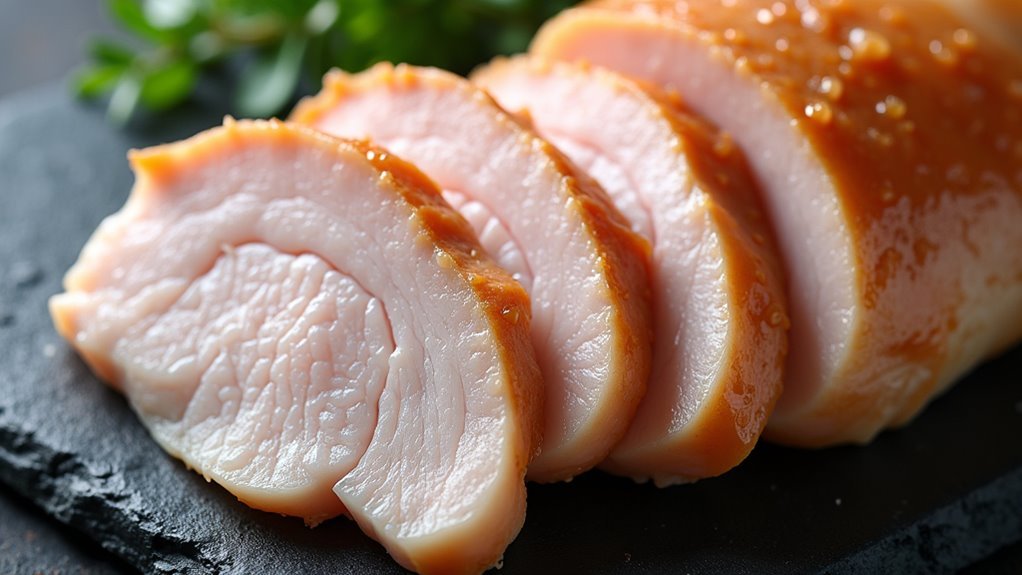
Turkey and chicken earn their reputation as zinc powerhouses through their superior bioavailability, with your body absorbing 40-60% of their zinc content compared to just 20-30% from plant sources. Turkey delivers 1.5-4.0 mg of zinc per serving while chicken provides 0.8 mg, with dark meat containing even higher concentrations at 2.4 mg. Unlike plant foods, poultry doesn’t contain phytates that block absorption, and their amino acids actually enhance zinc transport. There’s much more to discover about maximizing these benefits.
The Essential Role of Zinc in Human Health and Immunity
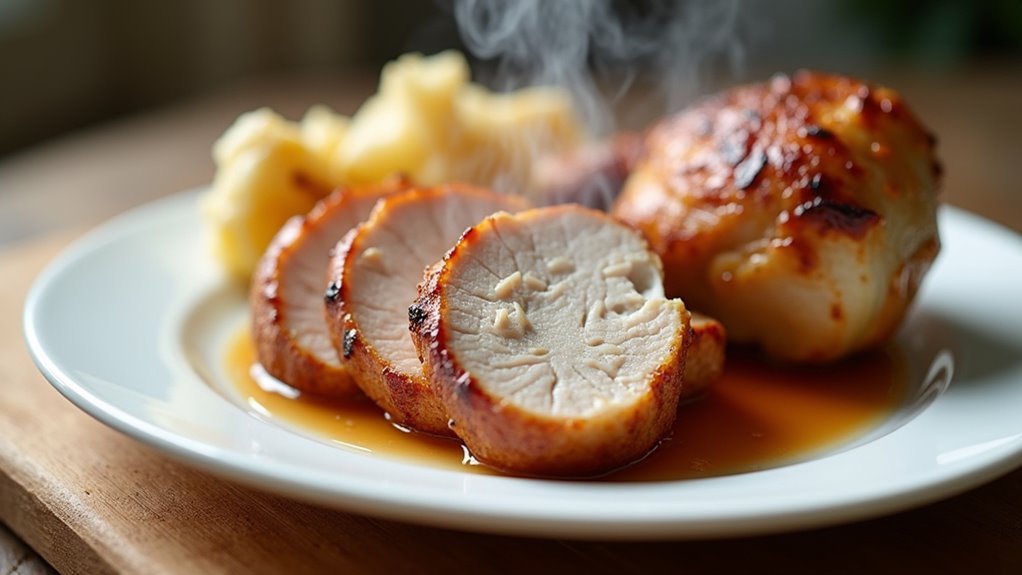
Your body relies on zinc for dozens of significant functions, from powering your immune system’s defense against infections to orchestrating the complex processes of DNA synthesis and cell division.
This essential mineral acts as your body’s cellular guardian, enhancing inflammation reduction while supporting protein metabolism that’s important for growth and repair.
When your zinc levels are adequate, you’ll experience sharper cognitive function and better protection against age-related mental decline.
However, zinc deficiency creates noticeable problems—you might suffer from slow-healing wounds, frequent infections, and diminished taste and smell.
Zinc deficiency manifests through telltale signs: wounds that heal poorly, recurring infections, and loss of taste and smell sensitivity.
Research demonstrates that maintaining sufficient zinc intake dramatically improves survival rates in serious conditions like COVID-19, proving how essential this mineral is for your immune system’s best performance and overall health maintenance.
Comparing Zinc Content: Turkey Vs Chicken Vs Other Protein Sources
When you’re choosing protein sources for zinc intake, turkey delivers nearly twice the zinc content of chicken, with 1.5 milligrams versus 0.8 milligrams per 3-ounce serving.
You’ll find that while both poultry options provide decent zinc levels, they’re outpaced by red meats like beef, which contains around 4 milligrams per serving.
However, oysters reign supreme in the zinc department, offering an extraordinary 28-32 milligrams per serving that dwarfs all other protein sources.
Turkey Vs Chicken Content
Turkey emerges as the clear winner when comparing zinc content between these two popular poultry options. You’ll get nearly double the zinc from turkey breast compared to chicken breast, making it a superior protein source for meeting your daily zinc requirements.
| Poultry Type | Zinc Content (mg) |
|---|---|
| Turkey breast (3 oz) | 1.5 |
| Chicken breast (3 oz) | 0.8 |
| Ground turkey (6 oz) | 4.0 |
| Ground chicken (6 oz) | 2.4 |
When you’re choosing between these zinc-rich food options, turkey consistently delivers more zinc per serving. Ground turkey particularly stands out, providing 4.0 milligrams per 6-ounce serving. This significant difference makes turkey your better choice when prioritizing zinc intake through poultry consumption.
Protein Source Rankings
Understanding how turkey and chicken stack up against other protein sources reveals where these poultry options truly rank in the zinc hierarchy.
While turkey delivers 1.5 milligrams per 3-ounce serving and chicken provides 0.8 milligrams, they’re positioned in the middle tier of zinc-rich foods.
Beef dominates as a protein source with 5.2 milligrams per 4-ounce serving, while oysters reign supreme at 33 milligrams per six oysters.
Ground turkey bridges the gap at 4.0 milligrams per 6 ounces, offering competitive zinc levels with less fat than beef.
For your daily intake goals, zinc in poultry provides moderate but reliable amounts.
You’ll need larger portions of chicken and turkey compared to beef or seafood to meet your zinc requirements effectively.
How Dark Meat Delivers Superior Zinc Concentrations
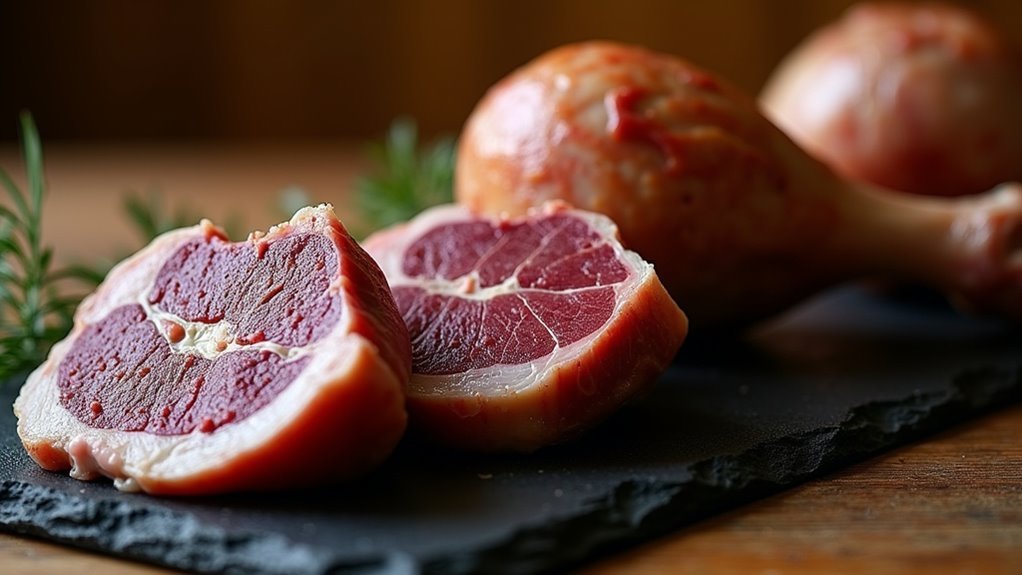
When you’re choosing between dark and white meat, you’ll get considerably more zinc from dark cuts like thighs and drumsticks.
Dark meat provides about 2.4 mg of zinc per 3-ounce serving, while breast meat only delivers 1.5 mg in the same portion size.
This 60% increase in zinc content makes dark meat your better choice for meeting daily zinc requirements.
Dark Meat Zinc Content
Nutrition enthusiasts seeking maximum zinc intake will find dark meat portions of turkey and chicken deliver considerably higher concentrations than their white meat counterparts.
You’ll get approximately 2.5 to 3 milligrams of zinc per 3-ounce serving from dark meat, making it an excellent choice for zinc-rich diets.
Dark meat’s superior zinc content stems from its greater fat and muscle tissue composition, which enhances nutrient retention compared to leaner white meat.
You’ll obtain about 2.7 milligrams from dark meat chicken, while turkey provides an even more impressive 3.1 milligrams per serving.
The higher moisture content and fat in dark meat also improves zinc bioavailability, helping your body absorb this essential mineral more effectively than white meat alternatives.
Thigh Versus Breast Comparison
Two distinct patterns emerge when comparing zinc levels between poultry cuts: thighs consistently outperform breasts in mineral density.
You’ll find turkey thighs deliver approximately 2.4 mg of zinc per 3-ounce serving, while breasts provide only 1.5 mg. This significant difference makes dark meat your superior choice for incorporating zinc in your diet.
The nutritional advantage stems from dark meat’s unique composition:
- Higher myoglobin content enhances oxygen storage and muscle metabolism
- Greater fat density concentrates essential minerals like zinc
- Increased calorie density provides more nutrients per serving
- Rich B vitamin profile supports overall metabolism
- Higher iron content complements zinc absorption
When you’re selecting zinc-rich foods, choosing dark meat cuts helps you reach daily requirements more efficiently, especially considering adults need 8-11 mg zinc daily.
Ground Turkey’s Impressive Zinc Profile and Nutritional Benefits
Ground turkey stands out as a zinc powerhouse, delivering an impressive 4.0 milligrams of this essential mineral in every 6-ounce serving.
You’ll also get 37 grams of high-quality protein from this exceptional protein source, supporting muscle maintenance and immune function simultaneously.
This zinc in animal products doesn’t work alone – ground turkey’s rich B vitamins including riboflavin, niacin, and B6 enhance energy metabolism and brain health.
Beyond zinc, you’re getting iron, phosphorus, potassium, copper, and selenium, creating a thorough nutritional package.
You can easily incorporate ground turkey into chili, burgers, and tacos, making it simple to boost your zinc intake while enjoying versatile, flavorful meals that support your overall health goals.
Bioavailability of Zinc From Poultry Compared to Plant Sources
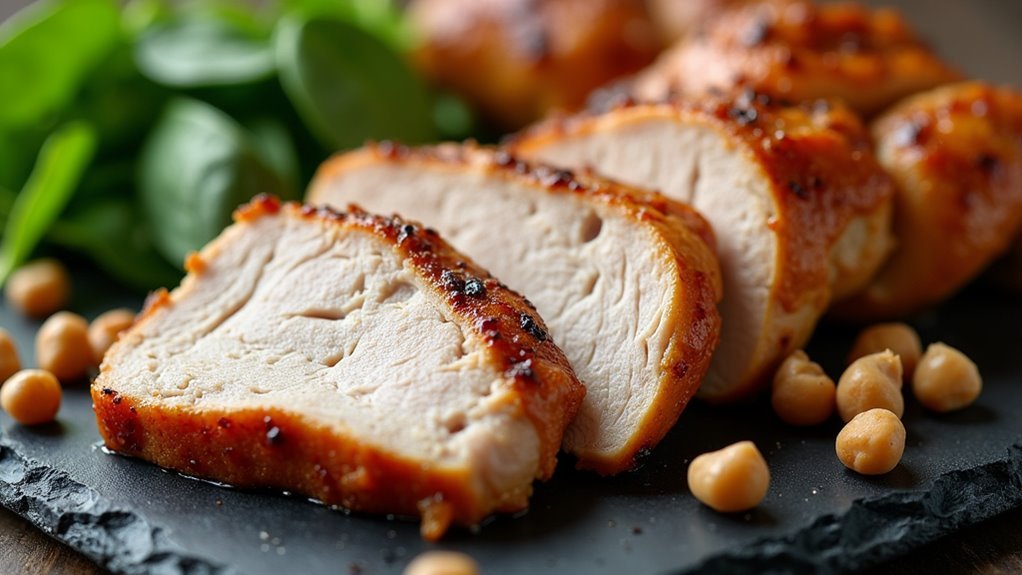
Your body absorbs zinc from turkey and chicken far more efficiently than from plant sources, with absorption rates reaching 40% compared to only 20-30% from plants.
Plant foods contain phytates that bind to zinc and greatly reduce how much you can actually use, while poultry provides zinc in forms your digestive system readily recognizes and processes.
This means you’ll get more usable zinc from a smaller serving of chicken or turkey than from larger portions of beans or grains.
Absorption Rate Differences
While both animal and plant foods contain zinc, your body absorbs this essential mineral far more efficiently from poultry sources like turkey and chicken.
The absorption rate differences between animal and plant-based zinc sources are striking:
- Poultry zinc absorption: Your body can absorb 40-60% of zinc from turkey and chicken
- Plant source absorption: Only 20-30% of zinc gets absorbed from legumes and grains
- Protein enhancement: Zinc in poultry binds with proteins, making it more bioavailable
- Phytate interference: Plant foods contain phytates and oxalates that block zinc absorption
- Dietary requirements: Vegetarians need 50% more zinc intake to compensate for lower absorption rates
This efficiency means you’ll meet your zinc needs more easily through poultry consumption, making turkey and chicken superior dietary choices for ideal zinc status.
Phytate Interference Factors
Since phytates act as zinc inhibitors in your digestive system, plant-based sources can’t compete with poultry’s superior bioavailability.
When you consume whole grains and legumes, phytates bind to zinc molecules, slashing absorption rates by 50-70%. This interference creates a significant nutritional disadvantage for vegetarian diets.
Turkey and chicken sidestep this problem entirely. You won’t find phytates in animal proteins, allowing your body to absorb zinc without chemical interference.
While chickpeas contain 2.5 milligrams of zinc per serving compared to turkey’s 1.5 milligrams, the actual amount your body absorbs tells a different story.
Poultry’s zinc absorption remains consistently high because there’s nothing blocking the mineral’s uptake.
This fundamental difference makes animal proteins far more efficient zinc sources than their plant-based counterparts.
Bioavailable Zinc Forms
Because animal proteins contain zinc in its most absorbable form, poultry delivers considerably more usable zinc than plant sources despite similar numerical values on nutrition labels.
When you choose turkey or chicken, you’re getting zinc in bioavailable forms that your body readily recognizes and absorbs. Unlike plant-based zinc that faces absorption barriers, poultry provides this essential mineral without interference from compounds like phytates.
Consider these zinc absorption advantages from poultry:
- Turkey breast contains 1.5mg zinc per 3-ounce serving versus chickpeas’ 0.8mg
- Animal-sourced zinc bypasses phytate inhibitors found in plant foods
- Your body absorbs poultry zinc more efficiently than plant alternatives
- Vegetarians require 50% more zinc intake due to poor plant absorption
- Roasting and grilling poultry optimizes zinc retention and bioavailability
Why Lean Poultry Cuts Maximize Zinc Absorption
When you choose lean poultry cuts like turkey and chicken breast, you’re selecting foods that don’t just contain zinc—they actively enhance your body’s ability to absorb it.
Turkey delivers 1.5 mg of zinc per 3-ounce serving, while chicken breast provides 0.8 mg. The protein in lean poultry creates an absorption advantage through amino acids that facilitate zinc transport across your intestinal walls.
Lean poultry’s amino acids create an absorption advantage, helping your body transport zinc more efficiently across intestinal walls.
You’ll benefit from superior bioavailability compared to plant sources, since animal products don’t contain zinc-blocking phytates.
The low fat content in lean cuts promotes better nutrient absorption overall. When you grill or bake these meats, you’ll retain maximum zinc content while improving bioavailability, ensuring your body can actually use the zinc you’re consuming.
The Science Behind Zinc’s Immune-Boosting Properties
Your body’s immune system depends heavily on zinc to function at peak performance, and understanding exactly how this mineral works reveals why turkey and chicken are such valuable additions to your diet.
Zinc plays multiple critical roles in strengthening your defenses against illness and infection.
Here’s how zinc enhances your immune function:
- Develops and activates neutrophils and natural killer cells that destroy pathogens
- Regulates cytokine production to prevent harmful inflammatory responses
- Boosts antibody responses, making vaccines more effective
- Accelerates wound healing by supporting cellular repair processes
- Maintains ideal immune cell communication throughout your body
When you’re deficient in zinc, you’ll experience increased infection susceptibility and slower recovery times.
Quality food sources like turkey and chicken deliver bioavailable zinc your body readily absorbs.
Cooking Methods That Preserve Maximum Zinc Content
Although zinc naturally resists heat degradation, the cooking methods you choose can greatly impact how much of this essential mineral remains in your turkey and chicken.
Steaming, grilling, and baking help preserve nutrients while maintaining zinc content better than high-heat techniques. You’ll want to avoid overcooking, which causes unnecessary nutrient loss.
Gentle cooking methods like steaming, grilling, and baking retain more zinc than aggressive high-heat techniques that destroy nutrients.
Marinating your poultry in acidic solutions like lemon juice or vinegar enhances zinc retention and adds flavor.
Using a slow cooker preserves more zinc compared to prolonged high-heat cooking methods. Keep the skin on during cooking—it acts as a protective barrier against moisture loss.
Boost your meal’s zinc profile by incorporating zinc-rich ingredients like nuts or seeds into marinades and side dishes for maximum nutritional benefit.
Daily Zinc Requirements and How Poultry Helps Meet Them
Understanding your daily zinc needs becomes essential for maintaining ideal health, especially since your body can’t store this crucial mineral.
Poultry serves as an excellent source to help you reach these requirements efficiently.
Your daily zinc targets vary by gender:
- Adult men need 11 milligrams of zinc per day
- Adult women require 8 milligrams daily
Turkey breast provides 1.5 milligrams per serving (14% women’s needs, 11% men’s).
Chicken breast delivers 0.8 milligrams per serving.
Regular poultry consumption supports immune function and cellular metabolism.
You’ll find poultry particularly beneficial if you’re at risk for zinc deficiency, such as following vegetarian diets or experiencing digestive issues.
The bioavailable form of zinc in poultry makes it easier for your body to absorb compared to plant-based sources.
Combining Turkey and Chicken With Other Zinc-Rich Foods
When you combine turkey and chicken with other zinc-rich foods, you’ll create meals that markedly boost your daily zinc intake while adding variety to your diet.
| Protein Base | Zinc Partner | Total Zinc Content |
|---|---|---|
| Turkey (3 oz) | Pumpkin seeds (1 oz) | 3.7 mg |
| Chicken (3 oz) | Chickpeas (1 cup) | 3.3 mg |
| Ground turkey | Lentils (1 cup) | 4.0 mg |
You’ll find that pairing roasted chicken with quinoa creates a complete meal delivering 1.9 mg of zinc. Adding almonds to your turkey salad contributes healthy fats while increasing zinc content. These strategic combinations guarantee you’re maximizing zinc absorption from high-quality protein sources while creating satisfying, nutritious meals that support your immune function and overall health.
Health Benefits Beyond Zinc: Complete Nutritional Advantages of Poultry
While zinc remains a standout mineral in turkey and chicken, these poultry powerhouses deliver an impressive array of nutrients that’ll transform your overall health profile.
Beyond their zinc content, turkey and chicken provide complete protein packed with essential amino acids your body can’t produce independently.
The nutrition facts reveal these lean meats excel in multiple areas:
- B Vitamin Rich: Niacin and B12 support energy metabolism and red blood cell production
- Immune Support: Selenium and phosphorus work alongside zinc for peak immune function
- Weight Management: Low-calorie, nutrient-dense profile helps maintain healthy weight
- Disease Prevention: High-quality protein and low fat content reduce chronic disease risks
- Wound Healing: Combined minerals accelerate tissue repair and recovery
You’re getting maximum nutritional value with minimal calories when choosing poultry.
Frequently Asked Questions
Does Chicken and Turkey Have Zinc?
Yes, you’ll find zinc in both chicken and turkey. Turkey’s got more with 1.5 milligrams per 3-ounce serving, while chicken provides 0.8 milligrams, making both excellent lean protein sources.
What Meat Has the Most Zinc in It?
You’ll find oysters contain the most zinc of any meat, providing 33.0 mg per six raw Eastern oysters. Lamb foreshank ranks second with 8.7 mg per four ounces, followed by beef sirloin.
Is Turkey a Good Source of Zinc?
Yes, you’ll find turkey’s an excellent zinc source. You’re getting 1.5 milligrams per 3-ounce serving of boneless breast meat. That’s nearly double what chicken provides, supporting your immune function effectively.
How Do Chickens Get Zinc?
Chickens get zinc through their diet of grains, seeds, and fortified feed containing 40-50 mg per kg. You’ll find phytase helps enhance zinc absorption by breaking down inhibiting phytates.


Leave a Reply