
You can naturally enhance your mood by incorporating tryptophan-rich seeds into your daily diet. Pumpkin seeds provide 25mg of tryptophan per ounce along with mood-supporting magnesium, while sunflower seeds offer vitamin E antioxidants. Chia and flaxseeds deliver both tryptophan and omega-3s for brain health, and sesame seeds contribute healthy fats and minerals. For ideal serotonin production, pair these seeds with whole grains to maximize tryptophan absorption and discover how strategic timing amplifies their mood-boosting potential.
Understanding Tryptophan and Its Role in Mood Regulation

When you’re looking to naturally boost your mood, tryptophan stands as one of the most significant amino acids your body needs. This essential amino acid serves as the building block for serotonin production in your brain, directly influencing your emotional well-being and mental health.
Your body can’t produce tryptophan on its own, so you must obtain it through foods rich in tryptophan. Once consumed, tryptophan travels to your brain where it converts into serotonin, the neurotransmitter responsible for regulating mood, sleep patterns, and appetite control.
Higher serotonin levels typically correlate with improved mood and reduced anxiety symptoms. Understanding this connection helps explain why maintaining adequate tryptophan intake through your diet plays such an essential role in supporting your overall mental health and emotional stability.
The Science Behind Seeds and Serotonin Production
When you eat tryptophan-rich seeds, your body converts this amino acid into serotonin through a complex biochemical pathway that requires specific cofactors and enzymes.
Seeds offer distinct advantages over other tryptophan sources because they’re packed with healthy fats and fiber that enhance nutrient absorption, while many protein-heavy foods actually compete with tryptophan for brain uptake.
You’ll get the most benefit when you combine seeds with carbohydrates, which triggers insulin release and clears competing amino acids from your bloodstream, allowing more tryptophan to reach your brain.
Tryptophan Conversion Process
Although your body can’t produce tryptophan on its own, it transforms this essential amino acid through a fascinating biochemical pathway that directly impacts your mood.
When you consume tryptophan from foods like seeds, your body converts it into 5-hydroxytryptophan (5-HTP), which then becomes serotonin—the neurotransmitter responsible for regulating your emotional well-being.
The conversion process becomes more efficient when you pair tryptophan-rich seeds with carbohydrates. These carbs trigger insulin release, which enhances tryptophan absorption into your brain.
This means combining pumpkin or sunflower seeds with whole grains optimizes the pathway from tryptophan to serotonin. Understanding this conversion helps you make strategic food choices that support your mental health naturally and effectively.
Seeds Vs Other Sources
While turkey often gets credit as the go-to tryptophan source, seeds actually deliver this mood-boosting amino acid more efficiently for your brain. Pumpkin seeds pack 25 mg of tryptophan per ounce, rivaling traditional animal proteins while offering plant-based convenience for vegetarians and vegans.
Unlike meat sources, seeds provide bonus nutrients that amplify their mood benefits. You’ll get fiber, healthy fats, magnesium, and zinc—all supporting brain health and neurotransmitter regulation.
When you pair tryptophan-rich seeds with whole grains, the fiber-carbohydrate combination enhances tryptophan absorption, boosting serotonin production more effectively than isolated protein sources.
Research shows this nutrient-dense approach may reduce depression risk better than single-source foods, making seeds your superior choice for sustained mood enhancement.
Optimal Absorption Methods
Since tryptophan competes with other amino acids to cross the blood-brain barrier, you’ll maximize its mood-boosting potential by strategically timing your seed consumption with carbohydrates. Pairing pumpkin seeds with whole grains triggers insulin release, giving tryptophan preferential access for serotonin production.
| Seed Type | Best Pairing | Timing |
|---|---|---|
| Pumpkin seeds | Oatmeal or quinoa | Morning or pre-workout |
| Sunflower seeds | Whole grain toast | Mid-afternoon snack |
| Hemp seeds | Fresh fruit | Post-exercise |
You’ll maintain stable blood sugar by consuming seeds in their whole form rather than processed versions. The fiber content supports sustained absorption while essential fatty acids enhance brain health. These dietary sources work synergistically for mood regulation when you consistently incorporate variety into your meals, ensuring ideal tryptophan utilization.
Pumpkin Seeds: A Powerhouse of Tryptophan and Magnesium
You’ll find that pumpkin seeds pack an impressive 25 mg of tryptophan per ounce, giving your body the building blocks it needs for serotonin production.
Beyond mood support, these seeds deliver substantial magnesium content that powers over 300 biochemical reactions in your body.
This magnesium doesn’t just regulate your mood—it’s also essential for proper muscle recovery after workouts.
Tryptophan Content Benefits
Pumpkin seeds pack an impressive 25 mg of tryptophan per ounce, establishing them as one of nature’s most concentrated sources of this mood-supporting amino acid. This tryptophan directly supports your brain’s ability to produce serotonin, the neurotransmitter responsible for regulating mood and promoting feelings of happiness and calm.
Your body uses this tryptophan to enhance brain function and combat mood disorders naturally. The nutrient profile of pumpkin seeds works synergistically to support your emotional well-being:
- Tryptophan converts to serotonin, elevating your mood and reducing anxiety
- Healthy fats optimize neurotransmitter production and brain health
- The combination promotes better sleep quality, creating a positive cycle for mental wellness
When you consume pumpkin seeds regularly, you’re providing your brain with essential building blocks that naturally boost serotonin levels and support long-term emotional balance.
Magnesium for Muscle Recovery
Beyond their impressive tryptophan content, pumpkin seeds deliver a remarkable 168 mg of magnesium per ounce, making them an exceptional choice for muscle recovery and athletic performance. This essential mineral supports muscle function while reducing post-workout inflammation, helping you bounce back faster from intense training sessions.
When you consume pumpkin seeds, you’re getting dual benefits for your body and mind. The magnesium works alongside tryptophan to enhance serotonin production, naturally boosting your mood while simultaneously promoting muscle relaxation.
This powerful combination also improves sleep quality by regulating your sleep cycles and calming your body. Athletes particularly benefit from this nutrition powerhouse, as magnesium aids in muscle repair and reduces soreness.
You’ll find pumpkin seeds perfect for supporting both physical recovery and mental well-being.
Sunflower Seeds: Small but Mighty Mood Enhancers
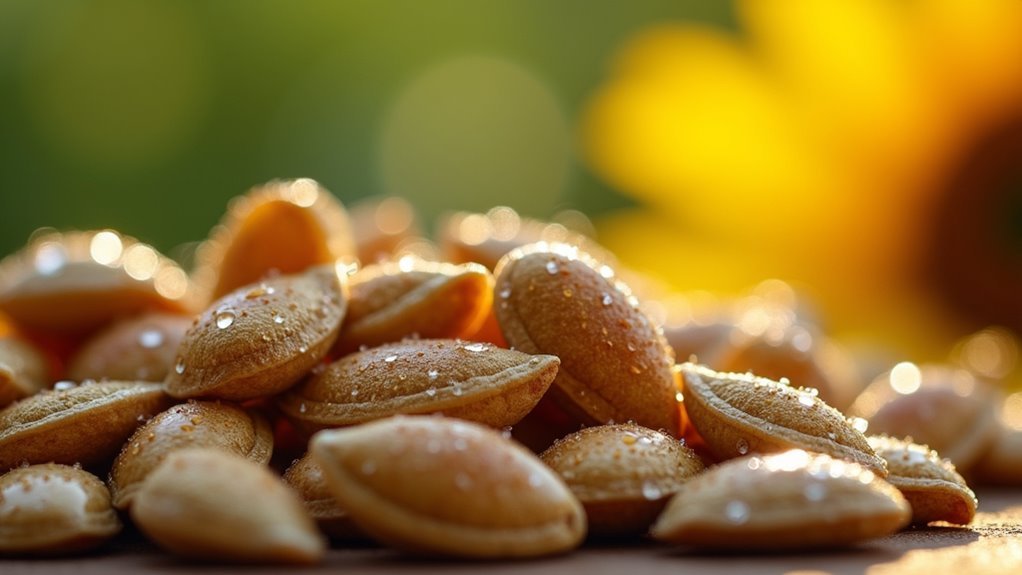
While sunflower seeds may appear unremarkable, these tiny powerhouses pack approximately 0.2 grams of tryptophan per ounce, delivering a significant boost to your body’s serotonin production.
Rich in healthy fats and magnesium, they’re essential for regulating serotonin levels and supporting mood enhancement.
You’ll benefit from their impressive nutritional benefits, including vitamin E antioxidants that combat oxidative stress and inflammation for superior brain health.
The magnesium content works synergistically with tryptophan to promote emotional well-being.
Consider these simple ways to incorporate sunflower seeds:
- Sprinkle them raw or roasted over salads and yogurt
- Blend into smoothies for added nutrition
- Mix into homemade granola or trail mix
Their nutrient density makes regular consumption an excellent strategy for maintaining balanced energy levels and supporting long-term emotional stability.
Sesame Seeds: Ancient Nutrition for Modern Wellness
Sesame seeds deliver an impressive 0.57 grams of tryptophan per 100 grams, making them one of nature’s most potent mood-supporting seeds. This essential amino acid directly fuels serotonin production in your brain, promoting better mood stability and enhanced mental health.
Beyond tryptophan, sesame seeds pack exceptional nutrition that supports overall wellness. You’ll get healthy fats, fiber, protein, and crucial minerals like calcium, iron, and magnesium.
These tiny powerhouses also contain potent antioxidants, including lignans such as sesamin and sesamol, which combat inflammation and support heart health.
You can easily incorporate sesame seeds into your daily routine by sprinkling them on salads, blending into smoothies, or making tahini spread. Regular consumption helps stabilize your mood while delivering thorough nutritional benefits for peak mental and physical wellness.
Chia Seeds: Omega-3s and Tryptophan for Brain Health

Chia seeds pack a powerful combination of tryptophan and omega-3 fatty acids that directly support your brain’s ability to produce mood-regulating serotonin. Each ounce delivers 0.2 grams of tryptophan while reducing inflammation for peak brain health.
These versatile seeds boost your emotional well-being through multiple pathways:
- Gut-brain connection: High fiber content promotes healthy gut bacteria, which influences serotonin levels
- Anti-inflammatory effects: Omega-3 fatty acids protect neural pathways essential for mood regulation
- Easy integration: Add them to smoothies, oatmeal, or salads for enhanced nutrient intake
You’ll maximize benefits by consuming chia seeds regularly alongside other tryptophan-rich foods. Their unique nutritional profile makes them an excellent choice for supporting both digestive health and mental clarity naturally.
Flaxseeds: Versatile Seeds for Emotional Balance
Though smaller than chia seeds, flaxseeds deliver nearly three times the tryptophan content at 0.57 grams per ounce, making them one of nature’s most concentrated plant-based sources for supporting serotonin production.
You’ll maximize mood boosting benefits by choosing ground flaxseeds over whole ones, as this form enhances nutrient absorption and allows your body to utilize their beneficial compounds effectively.
Beyond tryptophan, flaxseeds support emotional balance through their high fiber content, which promotes gut health—a vital factor in serotonin regulation.
You can easily incorporate them into smoothies, yogurt, or baked goods for versatile daily consumption.
Regular intake has shown promise in reducing anxiety and depression symptoms, thanks to their anti-inflammatory properties and dense nutritional profile that supports overall emotional well-being.
Incorporating Tryptophan-Rich Seeds Into Your Daily Diet
While incorporating tryptophan-rich seeds into your daily routine might seem challenging, you’ll find numerous simple strategies that seamlessly blend these mood-boosting powerhouses into your existing meals.
These nutrient-dense additions help boost serotonin levels while providing essential health benefits beyond mood enhancement.
- Breakfast Enhancement: Add chia seeds to your morning smoothie or sprinkle pumpkin seeds on yogurt for immediate serotonin production support.
- Snack Smart: Keep a handful of walnuts nearby as your go-to healthy snack that delivers 318mg of tryptophan per ounce.
- Meal Integration: Toss sunflower seeds into salads or create chia pudding paired with healthy carbohydrates for sustained energy.
Incorporating seeds regularly guarantees you’re getting adequate tryptophan-rich nutrition while enjoying the convenience of versatile, portable options that effortlessly complement any eating pattern.
Frequently Asked Questions
Which Seeds Have the Highest Tryptophan?
You’ll find sesame seeds contain the highest tryptophan levels at 30 mg per ounce, followed by pumpkin seeds at 25 mg. Sunflower seeds provide 23 mg, while chia and flaxseeds offer lower amounts.
What Seeds Are Best for Mood?
You’ll find pumpkin and sesame seeds offer the highest tryptophan content for mood support. Sunflower seeds also work well, while flaxseeds and chia seeds provide additional brain-healthy nutrients that enhance overall mood stability.
How Can I Get Tryptophan Naturally?
You can get tryptophan naturally from turkey, chicken, fish, eggs, dairy products, nuts, seeds, quinoa, oats, and legumes. These whole foods boost serotonin production effectively when you include them regularly in your diet.
What Plant Has the Most Tryptophan?
Soybeans contain the highest tryptophan levels among plants you’ll find. You’ll get around 535 mg per cup, which exceeds 191% of your daily recommended allowance for this mood-boosting amino acid.


Leave a Reply