
Beta-carotene in sweet potatoes converts to vitamin A in your small intestine, directly fueling your retinal cells for clearer vision. You’ll experience enhanced night vision as your body produces rhodopsin, the protein essential for low-light sight. The antioxidant properties protect your eyes from oxidative damage while reducing age-related macular degeneration risk by up to 25%. Sweet potatoes also strengthen your cornea and prevent dry eyes through consistent vitamin A supply. Discover how preparation methods maximize these vision-boosting benefits.
Understanding Beta-Carotene and Its Role in Vision

When you consume sweet potatoes, your body converts their abundant beta-carotene into vitamin A, an essential nutrient that directly supports your vision health. This conversion process happens in your small intestine, where beta-carotene transforms into retinol, the active form of vitamin A your eyes need to function properly.
Your retinal cells depend on this vitamin A to maintain healthy vision, particularly in low-light conditions.
Beta-carotene acts as a powerful antioxidant, protecting your eyes from oxidative damage that can compromise eye health over time. When you include sweet potatoes in your diet, you’re providing your body with a natural, bioavailable source of this vital nutrient that’s more effective than synthetic supplements for supporting ideal vision function.
Sweet Potatoes as a Powerhouse Source of Beta-Carotene
Among vibrant orange vegetables, sweet potatoes stand out as one of nature’s richest sources of beta-carotene, containing approximately 1,400 micrograms per 100 grams. That deep orange hue you see signals an impressive concentration of carotenoids that directly benefit your eye health.
When you consume sweet potatoes, you’re delivering essential nutrients that your body converts into vitamin A, supporting your vision’s fundamental processes.
Sweet potatoes contain considerably more beta-carotene than many other vegetables, making them particularly valuable for maintaining ideal eye function.
You’ll find that regular consumption helps preserve corneal moisture while supporting the conversion of light into electrical signals necessary for clear vision.
This nutritional powerhouse offers exceptional value for protecting your eyesight naturally through dietary choices.
How Beta-Carotene Converts to Vitamin A for Eye Health
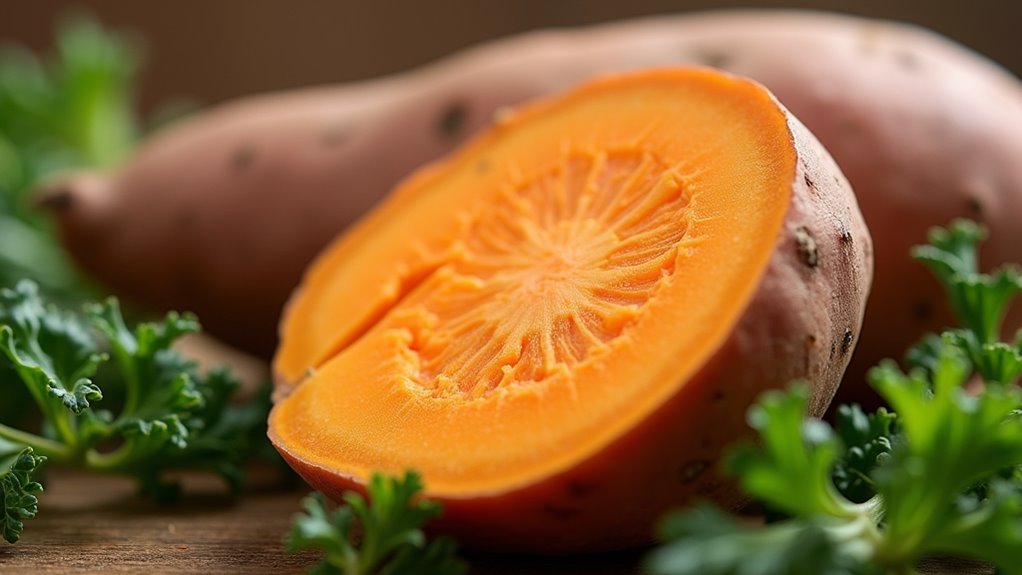
The remarkable transformation of beta carotene into vitamin A happens through a sophisticated enzymatic process within your small intestine and liver. When you consume sweet potatoes, enzymes break down beta carotene molecules, converting them into retinol – the active form of vitamin A your body needs for ideal eye health.
| Process Stage | Location | Function |
|---|---|---|
| Absorption | Small Intestine | Beta carotene uptake |
| Conversion | Liver & Intestinal Cells | Enzyme breakdown to retinol |
| Utilization | Retina | Rhodopsin formation |
This conversion efficiency improves when you eat beta carotene with healthy fats. Your body prioritizes this vitamin A production for vital eye functions, particularly forming rhodopsin – the protein enabling night vision adaptation and preventing vision-related deficiencies.
Protecting the Cornea and Preventing Dry Eyes
Your cornea relies heavily on vitamin A to maintain its transparent, protective barrier that shields your eye’s interior structures. When you consume sweet potatoes, the beta-carotene converts to vitamin A, directly supporting corneal health and moisture retention.
This nutrient guarantees adequate tear production, keeping your eye surface properly lubricated and preventing uncomfortable dry eyes.
Without sufficient beta-carotene intake, your cornea can become compromised, leading to reduced clarity and increased susceptibility to environmental irritants.
The antioxidant properties of beta-carotene also help your eyes resist wind, dust, and other stressors that typically cause dryness.
Beta-Carotene’s Impact on Night Vision Enhancement

Your eyes depend on vitamin A to function properly in low-light conditions, and sweet potatoes pack an impressive amount of beta-carotene that your body converts directly into this essential vitamin.
When you consume sweet potatoes regularly, you’re supplying your retinas with the raw materials needed to produce rhodopsin, a protein that enables your eyes to detect light in darkness.
This conversion process from beta-carotene to vitamin A creates a direct pathway for improving your ability to see clearly when the sun goes down.
Sweet Potato Beta-Carotene Content
Vision depends heavily on your body’s ability to convert beta-carotene into vitamin A, and sweet potatoes deliver this essential nutrient in abundance.
These vibrant orange vegetables contain exceptionally high concentrations of beta-carotene, making them one of nature’s most powerful sources for supporting your eye health.
Sweet potatoes’ impressive beta-carotene content offers significant benefits for your vision:
- Enhanced night vision through improved light conversion in low-light conditions
- Prevention of night blindness by maintaining adequate vitamin A levels
- Reduced risk of age-related macular degeneration development
- Antioxidant protection for overall eye function and health
The deeper the orange color in your sweet potato, the higher its carotenoid concentration.
Regular consumption maximizes absorption, ensuring your eyes receive ideal nutritional support for long-term visual health maintenance.
Vitamin A Conversion Process
When you consume sweet potatoes, your body initiates a remarkable biochemical transformation that directly impacts your ability to see in darkness. The beta-carotene within these orange vegetables converts into vitamin A through enzymatic processes in your small intestine and liver.
This converted vitamin A becomes the building block for rhodopsin, an essential protein in your retinal cells that enables light detection in low-light conditions.
Your body’s efficient conversion process guarantees adequate vitamin A levels, which directly prevents night blindness and enhances your visual acuity during nighttime activities.
The cornea also benefits from this vitamin A supply, maintaining its protective barrier function. This conversion mechanism optimizes your eyes’ adaptation to dim environments, considerably improving your ability to navigate and see clearly when natural light diminishes.
Night Vision Improvement
Beta-carotene’s transformation into vitamin A sets the stage for measurable improvements in your night vision capabilities. When you consume sweet potatoes rich in beta-carotene, your body converts this nutrient into vitamin A, which directly supports rhodopsin production in your eyes. This protein enables you to see effectively in low-light conditions.
Here’s how beta-carotene enhances your night vision:
- Rhodopsin Production – Vitamin A from beta-carotene creates this essential light-sensitive protein.
- Light Sensitivity Enhancement – Your eyes become more responsive to minimal light sources.
- Night Blindness Prevention – Adequate vitamin A levels protect against vision deficiencies.
- Visual Acuity Improvement – You’ll experience sharper sight in dim environments.
While sweet potatoes won’t give you superhuman abilities, they’re essential for maintaining ideal nighttime vision through consistent beta-carotene intake.
Reducing Risk of Age-Related Macular Degeneration
You’ll find that beta-carotene in sweet potatoes offers powerful protection against age-related macular degeneration (AMD), one of the leading causes of vision loss in older adults.
When you consume sweet potatoes regularly, you’re getting concentrated doses of beta-carotene that convert to vitamin A and help combat the oxidative stress that damages your retinal cells.
You can reduce your AMD risk by up to 25% simply by including these nutrient-dense vegetables in your daily diet.
Beta-Carotene AMD Protection
Since age-related macular degeneration affects millions of people worldwide, incorporating sweet potatoes into your diet can provide significant protection through their high beta-carotene content.
This powerful antioxidant converts to vitamin A in your body, creating a protective shield for your retinal cells against oxidative damage that leads to macular degeneration.
Beta-carotene offers extensive eye health benefits through:
- 25% reduction in AMD risk when consumed regularly
- Slowed progression of existing macular degeneration in high-risk individuals
- Antioxidant protection that shields retinal cells from harmful oxidative stress
- Synergistic effects when combined with lutein and zeaxanthin from other foods
You’ll achieve ideal results by eating whole sweet potatoes rather than taking supplements, ensuring better absorption while avoiding vitamin A toxicity risks.
Sweet Potato Prevention Benefits
Sweet potatoes deliver remarkable prevention benefits that can greatly reduce your risk of developing age-related macular degeneration before symptoms ever appear. When you consume these orange vegetables regularly, you’re providing your eyes with concentrated beta-carotene that converts to vitamin A, creating a protective shield against retinal damage.
Studies show this powerful antioxidant can reduce AMD risk by up to 25% in high-risk populations.
You’ll also find that sweet potatoes help prevent cataracts and other serious eye conditions through their anti-inflammatory properties. The beta-carotene works specifically to strengthen your cornea and support overall retinal health.
Unlike synthetic supplements, whole food sources like sweet potatoes provide superior absorption, making them your best defense against age-related vision decline.
Antioxidant Properties and Eye Tissue Protection
When free radicals attack your eye tissues, beta-carotene acts as a powerful shield, neutralizing these harmful molecules before they can cause oxidative damage.
Sweet potatoes deliver this protective compound directly to your visual system, where antioxidants work tirelessly to preserve your sight.
Your eye health benefits from beta-carotene’s defensive action through:
- Corneal protection – Maintains moisture and clarity for sharp vision
- AMD risk reduction – Lowers age-related macular degeneration risk by 25%
- Cataract prevention – Reduces oxidative stress that causes lens clouding
- Retinal enhancement – Improves light-to-signal conversion for better night vision
You’re fundamentally fortifying your eyes against daily environmental stressors when you consume sweet potatoes regularly.
This natural defense system helps preserve your vision long-term while supporting peak eye function today.
Sweet Potato Leaves Vs Sweet Potato Flesh for Eye Benefits
Although both parts of the sweet potato plant offer impressive eye-health benefits, you’ll find distinct nutritional advantages when comparing the leaves to the flesh. Sweet potato leaves pack a more concentrated punch of beta-carotene and lutein, making them exceptionally powerful for protecting against age-related macular degeneration.
| Aspect | Sweet Potato Leaves | Sweet Potato Flesh |
|---|---|---|
| Beta-carotene concentration | Higher levels | Moderate levels |
| Additional nutrients | Rich in lutein | Primarily vitamin A |
| Eye protection focus | AMD prevention, cataracts | Night blindness, general vision |
| Antioxidant density | More concentrated | Lower concentration |
While the flesh converts beta-carotene to vitamin A for maintaining good vision and preventing night blindness, you’ll get maximum eye health benefits by incorporating both parts into your diet.
Optimal Ways to Prepare Sweet Potatoes for Maximum Absorption
You’ll maximize beta-carotene absorption from sweet potatoes by choosing the right cooking method and pairing them with specific ingredients.
Boiling, steaming, or baking your sweet potatoes enhances nutrient bioavailability compared to eating them raw.
Adding healthy fats like olive oil or butter to your cooked sweet potatoes greatly boosts your body’s ability to absorb this fat-soluble vitamin.
Cooking Methods Matter
While raw sweet potatoes contain impressive amounts of beta-carotene, transforming them through proper cooking methods greatly increases your body’s ability to absorb this vision-protecting nutrient.
The cooking methods you choose directly impact how much beta-carotene your body can utilize for eye health:
- Steam or roast instead of boiling to prevent nutrient leaching into water
- Microwave for quick preparation while preserving maximum nutrient content
- Add healthy fats like olive oil or avocado to boost absorption rates
- Look for deep orange color after cooking, indicating high beta-carotene concentration
Heat breaks down cell walls, making beta-carotene more accessible to your digestive system.
Since beta-carotene is fat-soluble, pairing cooked sweet potatoes with oils greatly enhances absorption, maximizing the vision benefits you’ll receive.
Adding Healthy Fats
Since beta-carotene dissolves only in fat, you’ll access greatly more of this eye-protecting nutrient by pairing your sweet potatoes with healthy fats.
Drizzle olive oil or avocado oil before roasting to markedly boost absorption compared to plain steaming or boiling methods.
You can further enhance bioavailability by incorporating nuts, seeds, or other fat sources into your sweet potato dishes.
Consider preparing casseroles with olive oil or butter, or serving roasted sweet potatoes alongside eggs or dairy products.
These combinations don’t just improve beta-carotene absorption—they create nutrient synergies that amplify overall eye health benefits.
The key is adding even small amounts of quality fats during cooking or serving.
This simple strategy transforms your sweet potatoes into a powerhouse for supporting vision and eye function.
Potential Risks and Safety Considerations
Although beta-carotene from sweet potatoes offers significant eye health benefits, consuming excessive amounts can trigger carotenemia—a harmless but noticeable condition that turns your skin yellowish-orange.
While this discoloration isn’t dangerous, it signals you’re overdoing your beta-carotene intake.
Consider these potential risks when incorporating beta-carotene into your diet:
- Supplement dangers – High-dose beta-carotene supplements may increase lung cancer risk in smokers, according to AREDS 2 study findings.
- Nutrient imbalances – Excessive focus on beta-carotene can create deficiencies in other essential nutrients.
- Medical consultation needs – People with smoking history or lung issues should consult healthcare professionals before supplementing.
- Deficiency consequences – Insufficient beta-carotene intake can lead to serious eye health problems, though this rarely occurs in developed countries.
Moderation guarantees ideal eye health without unwanted side effects.
Combining Sweet Potatoes With Other Eye-Healthy Foods
Beyond managing your beta-carotene intake safely, you can amplify sweet potatoes’ eye-protecting power by pairing them with complementary foods. Adding healthy fats like olive oil or avocados enhances beta-carotene absorption considerably. Dark leafy greens provide lutein and zeaxanthin, while vitamin C from strawberries or bell peppers reduces cataract risk.
| Food Category | Examples | Eye Health Benefit |
|---|---|---|
| Healthy Fats | Olive oil, avocados | Enhances beta-carotene absorption |
| Leafy Greens | Spinach, kale | Provides lutein and zeaxanthin |
| Vitamin C Sources | Bell peppers, strawberries | Reduces cataract risk |
| Omega-3 Foods | Salmon, walnuts | Alleviates dry eye symptoms |
For maximum benefits, create balanced meals combining sweet potatoes with these complementary foods. This synergistic approach delivers thorough eye protection through multiple nutrients working together.
Frequently Asked Questions
Can Beta-Carotene Improve Eyesight?
Beta-carotene can improve your eyesight by converting to vitamin A, which prevents night blindness and maintains corneal health. You’ll also reduce AMD risk by 25% and protect against oxidative stress.
Can Sweet Potatoes Improve Eyesight?
You’ll improve your eyesight by eating sweet potatoes regularly. Their beta-carotene converts to vitamin A, preventing night blindness and reducing macular degeneration risk by 25% while protecting against cataracts.
What Is the Best Vitamin to Restore Eyesight?
You can’t truly “restore” eyesight through vitamins alone, but vitamin A from beta-carotene supports vision health best. It’ll help prevent night blindness and reduce macular degeneration risk considerably.
Which Is Better for Your Eyes, Sweet Potatoes or Carrots?
Sweet potatoes contain higher beta-carotene levels than carrots, making them slightly better for your eyes. However, you’ll get maximum eye health benefits by eating both vegetables regularly since they offer complementary nutritional properties.


Leave a Reply