

When choosing standardized curcumin for inflammation relief, you’ll want extracts containing at least 95% curcuminoids rather than regular turmeric powder, which only has 2-5%. Look for supplements that include piperine (black pepper extract) to boost absorption by up to 2000%. Aim for 500-1,500mg daily dosage and guarantee third-party testing by organizations like NSF or USP. Avoid products with vague ingredient lists or missing bioavailability enhancers. Understanding these key factors will help you maximize curcumin’s powerful anti-inflammatory benefits.
Understanding Standardized Curcumin Extracts and Inflammation

Inflammation wreaks havoc on your body, triggering a cascade of health problems from joint pain to heart disease.
When you’re seeking natural relief, standardized curcumin extracts offer superior anti-inflammatory power compared to regular turmeric powder. These concentrated extracts contain approximately 95% curcuminoids – the active compounds responsible for curcumin’s therapeutic effects – while standard turmeric powder contains only 2-5%.
This massive difference translates to notably enhanced anti-inflammatory properties that can effectively reduce harmful inflammation markers like C-reactive protein and interleukin-6.
However, curcumin’s absorption is notoriously poor on its own. That’s why the best standardized curcumin supplements include black pepper extract, which can boost absorption by up to 2000%, ensuring your body actually utilizes these powerful anti-inflammatory compounds.
The Science Behind Curcumin’s Anti-Inflammatory Properties
When scientists examine curcumin under the microscope, they’ve discovered it targets inflammation at the cellular level by blocking specific pathways that fuel chronic inflammatory responses.
You’ll find that curcumin effectively inhibits NF-kB and COX-2, key inflammatory molecules responsible for chronic conditions. Clinical research shows this turmeric compound reduces inflammatory markers like C-reactive protein and interleukin-6 as effectively as NSAIDs such as ibuprofen.
What’s remarkable is curcumin’s ability to cross your blood-brain barrier, offering anti-inflammatory protection for cognitive function and potentially preventing inflammation-related brain decline.
Curcumin’s unique ability to penetrate brain tissue delivers targeted anti-inflammatory protection that may safeguard cognitive health and prevent neurological decline.
However, you’ll need to address curcumin’s poor bioavailability. Combining it with black pepper extract increases absorption by up to 2000%, ensuring you receive maximum anti-inflammatory benefits from your supplementation.
Decoding Curcuminoid Percentages in Supplement Labels

How can you determine if a curcumin supplement will actually deliver the anti-inflammatory benefits you’re seeking? The answer lies in understanding curcuminoid percentages on supplement labels.
Look for standardized curcumin containing at least 95% curcuminoids – these active compounds are what provide inflammation relief and health benefits. Regular turmeric powder contains only 2-5% curcuminoids, making standardized extracts far more potent.
When evaluating curcumin extract products, avoid vague claims or proprietary blends that don’t reveal true potency. Clear labeling of curcuminoid content guarantees you’re getting effective doses.
Research shows that 500-1,500 mg of standardized extract reduces inflammation effectively. Higher curcuminoid percentages directly correlate to greater therapeutic potential, so prioritize products with transparent, high-percentage labeling for maximum anti-inflammatory impact.
Bioavailability Enhancement: Why Piperine Matters
Even the highest-quality standardized curcumin won’t deliver ideal results if your body can’t absorb it effectively.
Here’s where piperine becomes vital for inflammation relief. This black pepper extract dramatically enhances curcumin bioavailability by up to 2000%, transforming absorption from a mere 3-8% to considerably higher levels.
Piperine from black pepper can boost curcumin absorption by up to 2000%, making it essential for effective anti-inflammatory supplementation.
Piperine works through dual mechanisms: it enhances initial absorption and inhibits liver enzymes that normally break down curcumin quickly. This allows higher concentrations to remain in your bloodstream longer.
When you’re selecting standardized curcumin supplements, prioritize formulations that include piperine. Since curcumin’s fat-soluble, combining piperine with dietary fats creates an ideal absorption environment, ensuring you receive maximum anti-inflammatory benefits from your supplementation investment.
Optimal Dosage Guidelines for Chronic Inflammation Management
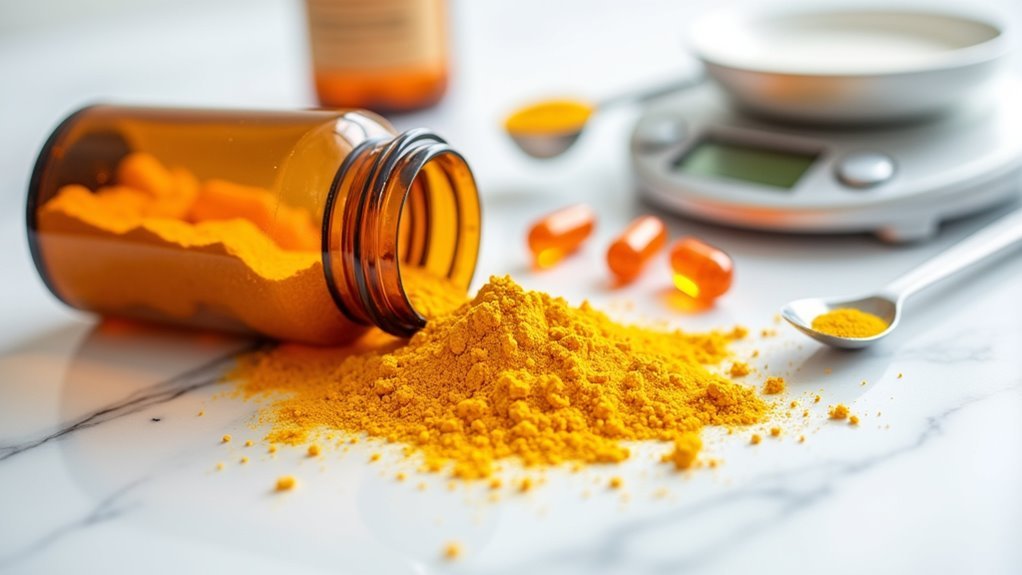
Why does dosage timing matter so much for chronic inflammation management?
You’ll need consistent daily intake to maintain effective curcuminoid content in your system. For ideal dosage guidelines, target 1,000-1,500 mg of standardized curcumin daily, split into 1-2 doses. This range effectively reduces inflammation markers while supporting joint health.
If you’re managing osteoarthritis specifically, take 500 mg two to three times daily for significant inflammation relief.
The WHO recommends 1.4 mg per pound of body weight as safe upper limits. You can safely use 500-2,000 mg daily when choosing quality standardized extracts.
Quality Indicators and Third-Party Testing Standards
Getting the right dosage means nothing if you’re taking a low-quality supplement that doesn’t deliver what’s promised on the label. When selecting standardized curcumin for inflammation relief, focus on these quality indicators: verify your supplement contains at least 95% curcuminoids for maximum potency. Third-party testing from organizations like NSF International or USP guarantees purity and prevents contamination concerns.
| Quality Factor | What to Look For | Why It Matters |
|---|---|---|
| Curcuminoid Content | Minimum 95% standardization | Guarantees therapeutic potency |
| Third-Party Testing | NSF, USP, or Informed Choice certification | Verifies label accuracy |
| Bioavailability Enhancers | Piperine (black pepper extract) | Increases absorption up to 2000% |
| Label Transparency | Clear ingredient listing | Avoids proprietary blend confusion |
Choose products with transparent labeling and bioavailability enhancers like piperine for best results.
Timing and Absorption Strategies for Maximum Effectiveness
You can maximize curcumin’s anti-inflammatory benefits by following strategic timing and absorption techniques that work with your body’s natural processes.
Since curcumin is fat-soluble, you’ll need to take it with meals containing healthy fats to guarantee proper absorption into your bloodstream.
Establishing a consistent daily schedule helps maintain steady therapeutic levels, making your supplementation more effective for long-term inflammation management.
Optimal Daily Dosing Schedule
When should you take curcumin to maximize its anti-inflammatory benefits? Your ideal daily dosing schedule requires strategic timing to help your body absorb and use curcumin effectively.
Take curcumin with meals that contain healthy fats, since standardized curcuminoid compounds are fat-soluble and need dietary fat for proper absorption. You’ll achieve better results by maintaining one to two daily servings at consistent times, allowing curcuminoid levels to build steadily in your system.
Choose curcumin supplements containing black pepper extract (piperine) to increase curcumin absorption by up to 2000%.
Never take curcumin on an empty stomach, as this drastically reduces bioavailability. Establishing a routine where you take your supplement with the same meals daily enhances effectiveness and guarantees your body consistently receives these powerful anti-inflammatory compounds.
Fat-Soluble Absorption Enhancement
Building on proper timing practices, maximizing curcumin’s fat-soluble properties becomes your next priority for enhanced absorption.
Since curcumin requires dietary fats for ideal bioavailability, you’ll want to strategically combine your supplements with the right nutrients.
Here’s how to dramatically boost your curcumin absorption:
- Take with healthy fats – Pair your curcumin supplements with avocados, nuts, or olive oil to access its fat-soluble potential.
- Choose piperine-enhanced formulas – Black pepper extract increases absorption by up to 2000%, transforming weak supplements into powerful tools.
- Time with fat-containing meals – Never take curcumin on an empty stomach when you could maximize its therapeutic impact.
- Cook at low temperatures – Gentle heating under 15 minutes preserves curcumin’s integrity while improving bioavailability.
These strategies guarantee you’re getting maximum anti-inflammatory benefits from every dose.
Consistent Intake Benefits
Since curcumin’s anti-inflammatory effects accumulate over time, establishing a consistent daily routine becomes critical for achieving therapeutic benefits.
You’ll maximize consistent intake benefits by taking your standardized curcumin at the same time each day, maintaining steady bloodstream levels for continuous inflammation relief.
Your curcumin supplements work best when paired with healthy fats during meals, as this fat-soluble compound requires dietary fat for peak absorption.
Taking 1000-1500 mg divided into 1-2 daily servings guarantees you’re building adequate curcuminoid levels in your body.
Never take curcumin on an empty stomach, as this greatly reduces absorption and limits anti-inflammatory effectiveness.
Consider supplements containing black pepper extract with 95% piperine, which can boost absorption by up to 2000%, greatly enhancing your supplement’s therapeutic potential.
Comparing Curcumin Forms: Extract vs. Whole Turmeric Root
When you’re deciding between curcumin extract and whole turmeric root, you’ll face a trade-off between concentrated potency and natural compound diversity.
Standardized extracts deliver up to 95% curcuminoids compared to turmeric root’s mere 2-5%, but you’ll miss out on the root’s additional antioxidants and essential oils.
Your choice depends on whether you prioritize maximum curcumin absorption or prefer the synergistic benefits of turmeric’s complete compound profile.
Concentration vs. Compound Diversity
Although both standardized curcumin extracts and whole turmeric root offer anti-inflammatory benefits, they deliver these effects through fundamentally different approaches.
Standardized extracts prioritize concentration, delivering 95% curcuminoids versus whole root’s 2-5%. This higher concentration translates to more potent inflammation relief for chronic conditions.
However, you’re facing a trade-off between potency and compound diversity. Consider these key differences:
- Extract power: You’ll get concentrated curcuminoids for targeted anti-inflammatory action
- Root complexity: You’ll receive diverse beneficial compounds working synergistically
- Bioavailability advantage: Extracts offer enhanced absorption, especially with piperine
- Therapeutic dosing: Higher concentration means you’ll need fewer capsules for effective relief
Your choice depends on whether you prioritize maximum curcuminoid concentration or prefer turmeric’s full spectrum of compounds.
Absorption and Bioavailability Differences
While curcumin’s therapeutic potential is well-established, your body’s ability to absorb and utilize it varies dramatically between extract forms and whole turmeric root.
Standardized turmeric extract offers superior bioavailability, especially when combined with piperine from black pepper, which can boost absorption by up to 2000%. This enhancement proves vital since curcumin naturally has poor absorption rates.
Whole turmeric root’s low curcumin concentration – only 2-5% compared to extract’s 95% – means you’d need massive quantities to achieve therapeutic levels for inflammation relief.
The absorption challenges make standardized extracts essential for consistent results. Without proper bioavailability enhancement, even high-quality curcumin won’t deliver the anti-inflammatory benefits you’re seeking, making extract formulations the clear choice for therapeutic applications.
Red Flags to Avoid When Selecting Curcumin Supplements
What should you watch out for when shopping for curcumin supplements? Several red flags signal poor quality products that won’t deliver inflammation relief.
Avoid these warning signs when selecting curcumin supplements:
- Missing curcuminoid percentages – Quality products must specify at least 95% standardization for maximum potency.
- Vague ingredient lists – Proprietary blends hide exact amounts of active ingredients, making effectiveness impossible to judge.
- No bioavailability enhancers – Products lacking piperine (black pepper extract) offer poor absorption rates.
- Absent third-party testing – Without independent verification, you can’t trust purity or safety standards.
You’ll also want to steer clear of supplements loaded with excessive fillers or unnecessary additives.
These dilute curcumin’s effectiveness and may introduce unwanted side effects that counteract your health goals.
Frequently Asked Questions
What Is the Best Curcumin Supplement for Inflammation?
You’ll want a standardized supplement with 95% curcuminoids plus black pepper extract for enhanced absorption. Take 1000-1500mg daily, choosing third-party tested products without fillers or proprietary blends for ideal inflammation relief.
What Form of Turmeric Is Best for Inflammation?
You’ll want standardized curcumin extracts containing 95% curcuminoids rather than regular turmeric powder. Look for formulations with piperine and healthy fats to boost absorption and maximize anti-inflammatory benefits.
How Much Curcumin Should I Take to Reduce Inflammation?
You should take 500-2,000 mg of curcumin daily for inflammation relief. Start with 500 mg three times daily, as studies show this effectively reduces inflammatory markers and osteoarthritis symptoms while staying within safe limits.
What to Look for When Buying Curcumin?
You’ll want curcumin standardized to 95% curcuminoids with black pepper extract for better absorption. Choose fat-soluble formulas, avoid unnecessary fillers, and select third-party tested products for quality assurance.


Leave a Reply