

You’ll likely experience digestive discomfort like bloating and gas when starting spirulina, so begin with 1 gram daily and increase gradually. Watch for contamination risks by choosing third-party tested products from reputable brands to avoid heavy metals. If you have autoimmune conditions, consult your healthcare provider since spirulina’s immune-boosting properties might trigger flare-ups. Be cautious about blood-thinning effects if you’re on medications like warfarin. Understanding these side effects and proper safety protocols will help you navigate spirulina supplementation more effectively.
Digestive Discomfort and Gastrointestinal Issues
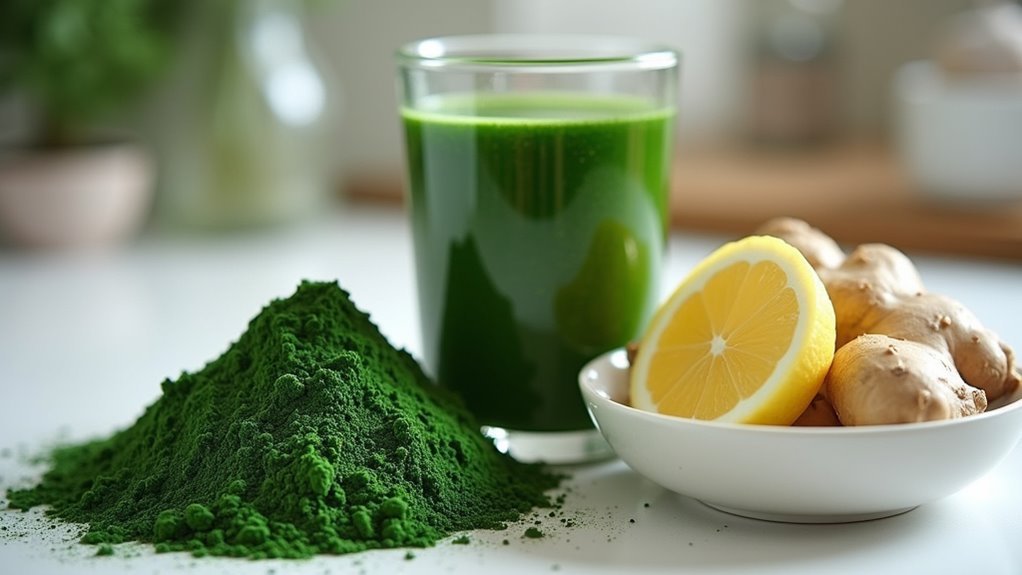
While spirulina offers numerous health benefits, you’ll likely experience some digestive discomfort when first introducing this nutrient-dense supplement to your routine.
Starting spirulina may cause temporary digestive discomfort, but these mild side effects typically subside as your body adjusts.
This mild gastrointestinal issues typically include bloating, gas, and diarrhea as your body adjusts to increased protein and fiber intake. These symptoms are generally temporary and occur more frequently with larger doses.
You can minimize these effects by starting with a low dose of approximately 1 gram and gradually increasing your intake.
Drinking plenty of water supports your body’s detoxification process and helps alleviate discomfort.
If you have a sensitive digestive system or existing gastrointestinal conditions, consult your healthcare provider before adding spirulina to your diet to ascertain it’s appropriate for your specific health needs.
Contamination Risks From Heavy Metals and Toxins
Beyond digestive concerns, you’ll face potential contamination risks when consuming spirulina, particularly from heavy metals and toxins that can accumulate in this blue-green algae.
Wild-harvested spirulina may contain dangerous heavy metals like lead, mercury, and cadmium, creating serious health risks despite the health benefits you’re seeking.
Here are essential safety tips to minimize contamination risks:
- Choose controlled cultivation – Select spirulina products grown in aquaculture systems rather than wild-harvested varieties.
- Verify third-party testing – Look for products tested by independent organizations for heavy metals and toxins.
- Buy from reputable brands – Purchase only from established companies with quality assurance protocols.
- Monitor for microcystins – Avoid products from polluted water sources that may contain liver-toxic compounds.
Proper consumption requires careful product selection to maximize benefits while protecting your health.
Autoimmune Condition Flare-ups and Immune System Concerns

Although spirulina’s immune-boosting properties benefit most people, they can trigger dangerous flare-ups if you have autoimmune conditions like lupus, rheumatoid arthritis, or multiple sclerosis.
Your immune system may become overactive, causing severe autoimmune responses that worsen your symptoms.
You’ll need extra caution if you have phenylketonuria (PKU) since spirulina contains phenylalanine, which can trigger life-threatening reactions.
Before starting spirulina supplementation, consult your healthcare provider to evaluate potential risks versus benefits for your specific condition.
If you decide to proceed, careful monitoring becomes essential.
Watch for adverse reactions like increased inflammation, joint pain, or symptom escalation.
These immune-boosting effects that help healthy individuals can backfire dramatically when your immune system already attacks your body’s tissues.
Blood Clotting Effects and Medication Interactions
Spirulina’s anticoagulant properties can dramatically interfere with your body’s blood clotting mechanisms, creating serious risks if you’re taking blood-thinning medications like warfarin, heparin, or aspirin.
These interactions can lead to dangerous bleeding complications that require immediate medical attention.
If you have bleeding disorders like hemophilia or take anticoagulant supplements, follow these safety tips:
- Consult your healthcare provider before starting spirulina to assess potential interactions with your current medications.
- Monitor bleeding symptoms closely, including unusual bruising, nosebleeds, or prolonged wound healing.
- Request dosage adjustments for your blood-thinning medications if your doctor approves spirulina use.
- Inform all medical professionals about your spirulina consumption during appointments and procedures.
Never assume spirulina interactions are harmless—proper medical oversight guarantees your safety.
Starting Safely With Proper Dosage and Medical Consultation

When you’re ready to begin spirulina supplementation, starting with the right dosage and professional guidance can prevent serious complications and guarantee your safety. You should consult with a healthcare provider before starting, especially if you’re pregnant, breastfeeding, or have autoimmune conditions. Begin with 1 gram daily and gradually increase to a maximum of 8 grams to minimize side effects.
| Starting Phase | Recommended Dosage |
|---|---|
| Week 1-2 | 1 gram daily |
| Week 3-4 | 2-3 grams daily |
| Maintenance | 3-8 grams daily |
| Maximum Safe Limit | 10 grams daily |
Monitor yourself for digestive discomfort or allergic reactions. Purchase your supplement from reputable brands with third-party testing to avoid contamination risks and ascertain quality. Never exceed recommended amounts on product labels.
Frequently Asked Questions
Are There Any Negative Side Effects of Spirulina?
You’ll likely experience mild digestive issues like bloating and nausea when starting spirulina. You’re also risking allergic reactions, heavy metal contamination, and headaches from high doses. You should consult doctors if you’ve autoimmune conditions.
What to Avoid When Taking Spirulina?
You should avoid wild-harvested spirulina containing toxins, don’t take it with autoimmune diseases without consulting doctors, avoid it if you’re allergic to algae, and be cautious when using blood thinners.
What Happens to Your Body When You Start Taking Spirulina?
When you start taking spirulina, you’ll likely experience increased energy from its rich nutrients. You might initially feel mild digestive discomfort, headaches, or fatigue as your body detoxifies and adjusts to the supplement.
How to Know if Spirulina Is Safe?
You’ll know spirulina’s safe by choosing reputable manufacturers, starting with low doses, staying within 3-10 grams daily, consulting doctors if you’re pregnant or have autoimmune conditions, and monitoring for allergic reactions.


Leave a Reply