
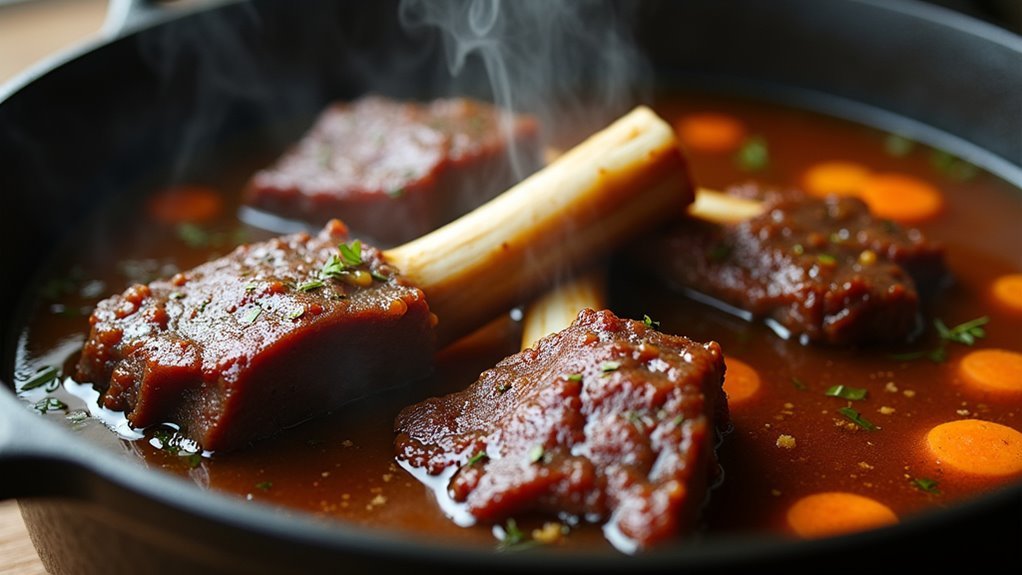
When you slow-cook cartilage-rich cuts at 150-163°F, you’re triggering precise molecular breakdown that transforms collagen’s triple helix structure into bioavailable gelatin without destroying essential amino acids like glycine and proline. This controlled temperature range maintains collagen’s nutritional integrity while enabling complete hydrolysis over 4-8 hours, releasing glycosaminoglycans that support joint repair. Unlike high-heat methods that damage delicate proteins, sustained low temperatures preserve therapeutic benefits while maximizing nutrient extraction for ideal cartilage healing.
Understanding Collagen Structure in Cartilage and Connective Tissues
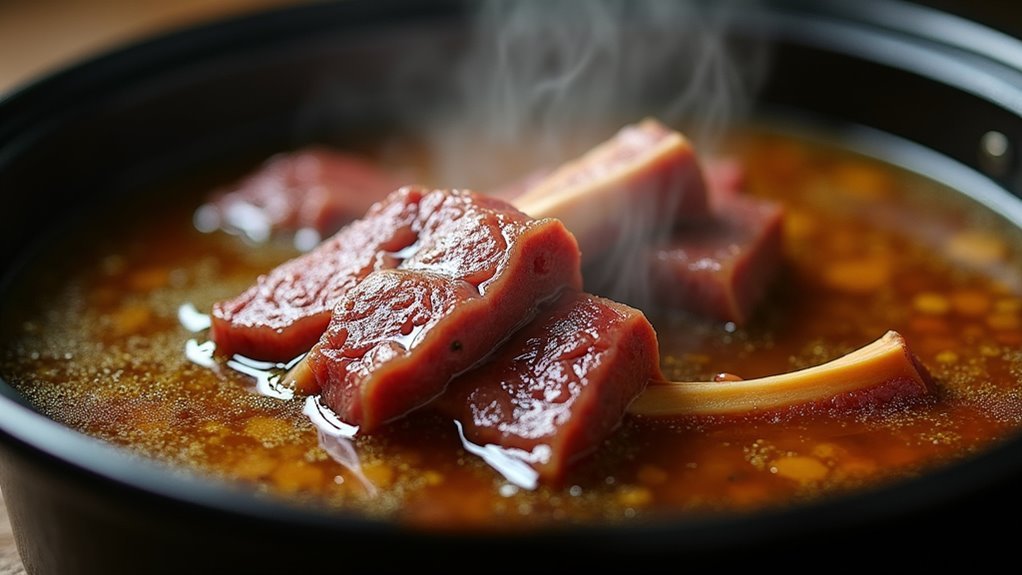
Cartilage serves as your body’s natural shock absorber, and its remarkable resilience stems from collagen’s unique triple helix structure. This specialized protein consists of three amino acid chains—glycine, proline, and hydroxyproline—wound together to create exceptional tensile strength and elasticity.
Within your cartilage, chondrocytes work continuously to synthesize collagen and maintain the surrounding matrix.
Your cartilage matrix contains glycosaminoglycans like chondroitin sulfate and glucosamine, which trap moisture and provide essential cushioning. This combination of collagen fibers and GAGs creates cartilage’s ability to withstand compression while maintaining flexibility.
When you slow cook cartilage-rich cuts, heat and moisture break down these connective tissues, transforming the structured collagen into bioavailable gelatin that your body can utilize.
The Science Behind Low-Temperature Collagen Breakdown
When you slow cook collagen-rich cuts, you’re triggering specific temperature thresholds that cause collagen proteins to denature without destroying their beneficial properties.
Your cooking method requires precise energy input to break down the complex protein chains through hydrolysis, transforming tough connective tissues into digestible nutrients.
This controlled breakdown process converts collagen into gelatin, creating a nutrient-dense foundation that your body can easily absorb and utilize for joint health.
Temperature Thresholds for Denaturation
| Cut Type | Cooking Time | Temperature Range |
|---|---|---|
| Oxtails | 6-8 hours | 150-163°F |
| Beef Shanks | 4-6 hours | 150-163°F |
| Chicken Bones | 8-12 hours | 150-163°F |
| Pork Trotters | 6-10 hours | 150-163°F |
| Fish Bones | 2-4 hours | 150-163°F |
You’ll need several hours of consistent heat exposure to break down connective tissues effectively. This slow transformation creates the gelatinous texture that indicates successful collagen extraction, providing both enhanced flavor and valuable nutrients for joint health.
Hydrolysis Energy Requirements
Although denaturation begins at 150°F, the complete hydrolysis process that transforms collagen into gelatin requires considerably more energy and time than you might expect.
While denaturation simply unwinds protein strands within minutes, hydrolysis demands sustained heat application over several hours to break molecular bonds effectively. You’ll need to maintain consistent temperatures between 150-163°F for extended periods, allowing enzymes and heat to gradually convert tough collagen fibers into digestible gelatin.
This energy-intensive process can’t be rushed without compromising nutrient quality.
When you slow-cook cartilage-rich cuts for 6-8 hours, you’re providing the sustained thermal energy necessary for complete hydrolysis. Quick cooking methods fail because they don’t supply adequate time for molecular transformation, leaving collagen partially converted and less bioavailable for joint health benefits.
Gelatin Formation Process
As collagen fibers encounter sustained low-temperature heat, they undergo a remarkable molecular transformation that fundamentally changes their structure and nutritional accessibility.
During the gelatin formation process, consistent heat between 150–163°F triggers hydrolysis, systematically breaking down collagen’s triple-helix structure. You’ll witness these protein chains unraveling and dissolving into water-soluble gelatin molecules.
This transformation doesn’t happen quickly—you need several hours of patient simmering to achieve ideal results. The prolonged exposure allows collagen strands to fully denature while preserving their nutritional integrity.
As this process unfolds, you’re extracting essential amino acids that support joint health and cartilage repair. The resulting gelatin not only enhances your dish’s mouthfeel but delivers concentrated nutrients that promote healing and overall wellness.
How Slow Cooking Preserves Collagen Integrity During Extraction
When you slow cook collagen-rich cuts, you’re maintaining temperatures that won’t destroy the delicate protein structure that makes collagen so valuable.
Your slow cooker’s gentle heat allows collagen to transform into gelatin without breaking down the beneficial compounds that support joint health and skin elasticity.
This controlled temperature approach guarantees you’ll extract maximum nutritional value while preserving the structural integrity that makes collagen effective in your body.
Temperature Control Prevents Degradation
Since collagen’s nutritional value depends entirely on preserving its structural integrity during extraction, you’ll find that slow cooking’s precise temperature control makes all the difference.
When you maintain temperatures between 150–163°F, you’re working within the ideal range where collagen denatures without losing its beneficial properties. This controlled environment prevents the protein strand damage that occurs with high-heat cooking methods.
You’ll maximize collagen extraction by avoiding temperature spikes that destroy delicate amino acids and glycosaminoglycans.
The steady, monitored heat allows complete breakdown of connective tissues while preserving healing compounds. Unlike faster cooking methods that risk overheating, slow cooking’s temperature control guarantees you’re getting nutrient-dense broth with ideal bioavailability for joint health and cartilage repair.
Gentle Heat Maintains Structure
This controlled temperature approach works because gentle heat actively preserves collagen’s molecular structure throughout the extraction process.
When you maintain temperatures between 150-200°F, you’re preventing rapid denaturation that destroys protein strands. Instead, you’re allowing collagen fibers to slowly unwind and transform into gelatin while keeping their nutritional integrity intact.
The gradual heat application guarantees collagen provides maximum therapeutic benefits by releasing amino acids and glycosaminoglycans systematically.
You’ll notice this preservation method maintains the structural components that support joint health, unlike high-heat cooking that damages these delicate proteins.
Temperature Ranges That Optimize Collagen to Gelatin Conversion
Although many home cooks assume higher temperatures speed up the cooking process, you’ll achieve better results by maintaining precise temperature ranges between 150°F and 163°F (66°C to 73°C) when converting collagen to gelatin. This controlled heat allows collagen fibers to break down gradually without damaging their beneficial properties.
| Temperature Range | Collagen Conversion | Cooking Method | Time Required | Result Quality |
|---|---|---|---|---|
| 140°F-149°F | Slow breakdown | Sous vide | 24+ hours | Excellent |
| 150°F-163°F | ideal conversion | Braising/simmering | 4-8 hours | Superior |
| 164°F-180°F | Moderate breakdown | Slow roasting | 3-6 hours | Good |
| 181°F-200°F | Rapid conversion | Traditional stewing | 2-4 hours | Fair |
| 200°F+ | Protein damage | High-heat cooking | 1-2 hours | Poor |
Unlike processed collagen supplements, slow-cooked natural sources provide complete amino acid profiles through gentle extraction.
Essential Amino Acids Released Through Extended Cooking Time
When you maintain cooking temperatures between 150-163°F for several hours, you’ll trigger the breakdown of collagen into its component amino acids, particularly glycine and proline.
These essential building blocks become more concentrated in your cooking liquid as extended heat exposure continues to break down cartilage and connective tissues.
Your body can then absorb these amino acids more efficiently from the gelatinized broth than it could from raw collagen sources.
Collagen Breakdown Temperature Range
Since collagen transforms most effectively within a specific temperature window, you’ll want to maintain your slow cooker between 150°F and 163°F (66°C to 73°C) for optimal results.
This precise range converts collagen into gelatin while preserving valuable amino acids that support joint health and tissue repair.
You’ll notice that temperatures above 170°F (77°C) can damage collagen quality and reduce nutrient availability.
While higher heat still breaks down collagen, it compromises the beneficial compounds you’re trying to extract from cartilage-rich cuts.
Stay within this ideal range, and you’ll maximize the release of glycine, proline, and hydroxyproline—essential amino acids that promote connective tissue healing.
Your slow cooker’s consistent, gentle heat creates the perfect environment for extracting these therapeutic nutrients.
Glycine and Proline Release
Within this ideal temperature range, extended cooking times trigger the release of glycine and proline—two amino acids that form the building blocks of healthy collagen. When you slow-cook cartilage-rich meats for 6-8 hours, you’re maximizing the breakdown of collagen into gelatin, which concentrates these essential nutrients.
| Cooking Time | Glycine Content | Proline Content | Benefits |
|---|---|---|---|
| 2-4 hours | Low | Low | Minimal release |
| 4-6 hours | Moderate | Moderate | Partial conversion |
| 6-8 hours | High | High | Prime release |
| 8+ hours | Maximum | Maximum | Peak concentration |
You’ll notice glycine’s anti-inflammatory properties supporting joint health, while proline promotes tissue repair. This extended cooking process transforms tough cartilage into a nutritional powerhouse that directly supports your body’s cartilage regeneration.
Amino Acid Absorption
As extended cooking times break down cartilage-rich proteins, your digestive system gains access to a concentrated pool of essential amino acids that would otherwise remain locked within tough connective tissues.
The slow cooking process transforms these proteins into bioavailable forms that your gut can efficiently process and absorb.
When you simmer cartilage-rich foods for hours, you’re creating ideal conditions for amino acid extraction. Your digestive tract benefits from this gradual release, as the amino acids enter your system in a gentle, sustained manner rather than overwhelming your absorption capacity.
The gelatin formed during this process acts as a prebiotic, feeding beneficial gut bacteria that enhance your body’s ability to utilize these amino acids effectively, maximizing their therapeutic potential for tissue repair.
Glycosaminoglycans and Their Role in Cartilage Repair
When you’re simmering beef bones for hours, you’re extracting powerful compounds called glycosaminoglycans (GAGs) that serve as building blocks for healthy cartilage.
These essential molecules, including chondroitin sulfate and glucosamine, maintain your cartilage’s structure and elasticity while keeping it properly hydrated.
GAGs work directly with collagen synthesis, creating the foundation your joints need for peak function.
They’re particularly effective at reducing inflammation and joint pain, making them invaluable if you’re dealing with arthritis or other joint issues.
- Steam rising from a pot as nutrients slowly release into golden broth
- Microscopic GAG molecules weaving through cartilage like protective mesh
- Joints moving smoothly like well-oiled hinges
- Inflammation cooling like ice on a warm surface
- Damaged cartilage rebuilding itself layer by layer
Bioavailability Benefits of Slow-Extracted Collagen Nutrients
The magic happens during those long, gentle cooking hours—your body can actually absorb far more nutrients from slow-extracted collagen than from quick-cooked alternatives.
When you simmer collagen-rich cuts for 6-12 hours, you’re converting tough collagen into gelatin, which your digestive system processes much more efficiently. This slow transformation preserves the protein’s structural integrity while releasing essential amino acids and GAGs directly into your broth.
You’ll get higher concentrations of chondroitin sulfate and glucosamine compared to faster cooking methods. The gentle heat prevents denaturation that destroys valuable nutrients.
Plus, this slow-extracted gelatin supports your gut health by restoring intestinal lining and encouraging probiotic growth, creating better conditions for nutrient absorption throughout your entire digestive system.
Traditional Cooking Methods That Maximize Nutrient Density
Since generations of cooks discovered these techniques through trial and error, you’re inheriting time-tested methods that extract every bit of nutritional value from cartilage-rich cuts.
These traditional approaches transform tough, collagen-dense beef into healing, nutrient-rich meals.
You’ll maximize collagen extraction by maintaining temperatures between 150–163°F for several hours.
This gentle heat converts cartilage into gelatin, releasing glycosaminoglycans that support joint health. Adding acidic ingredients like vinegar enhances this process considerably.
- Steam rising from a pot of oxtail stew simmering for eight hours
- Golden bone broth developing a rich, gelatinous consistency when cooled
- Tender meat falling off the bone after slow braising
- Aromatic vapors filling your kitchen during long cooking sessions
- Thick, nutrient-dense liquid coating your spoon
Comparing Slow Cooking to Other Collagen Extraction Methods
Although pressure cookers and instant methods promise convenience, they can’t match slow cooking’s ability to extract maximum collagen without damaging delicate protein structures.
When you pressure cook at high temperatures, you’ll risk breaking down collagen strands before they properly convert to gelatin. Slow cooking maintains that essential 150-163°F range, giving you ideal collagen extraction over 6-12 hours.
Pressure cooking’s high heat destroys collagen before proper gelatin conversion, while slow cooking’s gentle 150-163°F temperature maximizes extraction over time.
You’ll get markedly higher gelatin yields with slow cooking compared to quick methods. While pressure cooking might save time, it can’t release the same levels of glycosaminoglycans like chondroitin sulfate that your joints need.
When making bone broth, slow cooking delivers up to 10 grams of protein per cup while preserving nutrient integrity that faster methods simply can’t achieve.
Joint Health Benefits of Consuming Slow-Cooked Cartilage
When you consume slow-cooked cartilage from cuts like oxtail, beef tendons, or chicken feet, you’re delivering powerful building blocks directly to your joints.
The extended cooking process breaks down collagen into bioavailable gelatin while extracting essential glycosaminoglycans like chondroitin sulfate and glucosamine. These nutrients restore cartilage, maintain joint hydration, and reduce inflammation that causes stiffness and pain.
Your joint health improves markedly when you regularly include these cartilage-rich dishes in your diet. The extracted compounds enhance mobility and function, making this practice especially beneficial if you’re dealing with joint issues or engaging in high-impact activities.
- Creaky morning joints transform into smooth, pain-free movement
- Stiff knees regain their youthful bounce and flexibility
- Aching shoulders release tension and move freely again
- Swollen joints reduce inflammation and feel lighter
- Athletic recovery accelerates between intense training sessions
Optimal Cooking Times for Maximum Therapeutic Value
While you’re already extracting powerful nutrients through slow cooking, timing becomes critical for maximizing therapeutic benefits from collagen-rich cuts. You’ll need 4-8 hours at 150-163°F to effectively break down connective tissues and release healing gelatin.
| Cut Type | Minimum Cook Time |
|---|---|
| Oxtail | 6-8 hours |
| Beef Shank | 4-6 hours |
| Short Ribs | 4-5 hours |
| Marrow Bones | 6-8 hours |
| Chicken Feet | 3-4 hours |
During extended cooking, you’re dissolving cartilage completely, releasing glycosaminoglycans like chondroitin sulfate that support joint repair. Adding acidic ingredients like vinegar accelerates collagen extraction, making nutrients more bioavailable. You can’t rush this process—shorter cooking times leave valuable therapeutic compounds locked within tough connective tissues, reducing the healing potential of your carefully prepared meal.
Frequently Asked Questions
What Happens to Collagen During Cooking?
When you cook collagen, it denatures and breaks down into gelatin at temperatures between 150-163°F. You’ll get the best results through slow cooking, which transforms tough connective tissues into nutritious, easily digestible gelatin.
Does Eating Cartilage Give You Collagen?
You’ll get collagen when you eat cartilage since it’s primarily made of collagen-rich proteins. Your digestive system breaks down this cartilage into amino acids that help your body rebuild its own collagen.
Is Eating Cartilage Good for Your Joints?
Yes, eating cartilage benefits your joints. You’ll get collagen, glucosamine, and chondroitin sulfate that support cartilage repair, reduce inflammation, and improve joint lubrication. These nutrients help alleviate pain and enhance mobility.
Is It Healthy to Eat Beef Cartilage?
You’ll benefit from eating beef cartilage since it’s packed with collagen, glucosamine, and chondroitin that support joint health. You’re also getting essential minerals like calcium and magnesium for stronger bones.


Leave a Reply