
You’ll boost your immune system this winter with seven zinc-rich foods that fight seasonal infections. Oysters top the list with 74.1 mg per serving, while beef and pork provide warming proteins with substantial zinc content. Plant-based options like chickpeas, pumpkin seeds, and dark leafy greens offer versatile alternatives for comfort foods. Whole grains and oats create hearty meals, and dairy products deliver zinc through creamy soups and casseroles. These strategic choices will fortify your defenses when cold weather strikes most.
Oysters: The Ultimate Zinc Powerhouse for Cold Season Protection
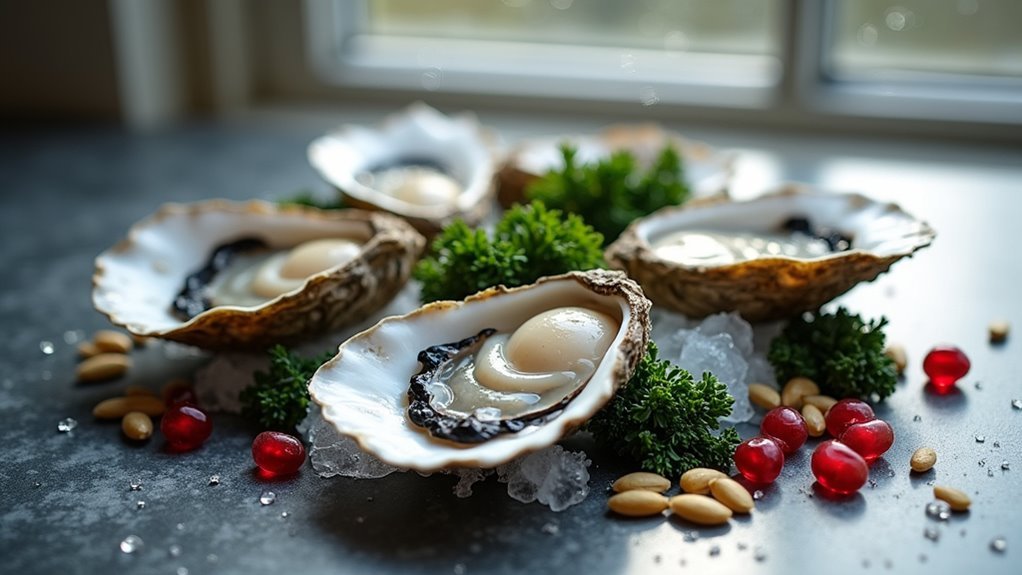
When winter’s chill sets in and cold season arrives, oysters stand out as nature’s most potent zinc-delivering food. You’ll get an impressive 74.1 mg of zinc per 3-ounce serving from this exceptional dietary source – far exceeding your daily requirements. This mineral powerhouse activates your T cells, boosting immune function when you need it most against seasonal infections.
Oysters don’t just support immune function; they accelerate wound healing and enhance your overall health during flu season.
Beyond zinc, you’re getting essential nutrients like omega-3 fatty acids and vitamin B12 for extensive immune support. Research shows zinc supplementation can shorten cold duration when taken early, making oysters your strategic ally against winter illness.
Beef and Pork: Warming Protein Sources Rich in Immune-Boosting Zinc
As cold weather settles in, beef and pork emerge as powerhouse protein sources that’ll fortify your immune system with substantial zinc content. A 3-ounce serving of beef chuck roast delivers an impressive 8.44 mg of zinc, while pork chops provide approximately 2 mg per 4-ounce portion.
This essential mineral enhances immune function by activating T cells vital for defending against winter illnesses.
You’ll find these warming protein sources particularly valuable if you’re pregnant or have dietary restrictions that increase deficiency risks.
Beyond zinc’s immune support benefits, beef and pork create satisfying winter meals that combat the cold while nourishing your body.
Including these meats regularly throughout colder months helps maintain peak health and strengthens your natural defense systems when you need them most.
Chickpeas and Legumes: Plant-Based Zinc for Winter Comfort Foods
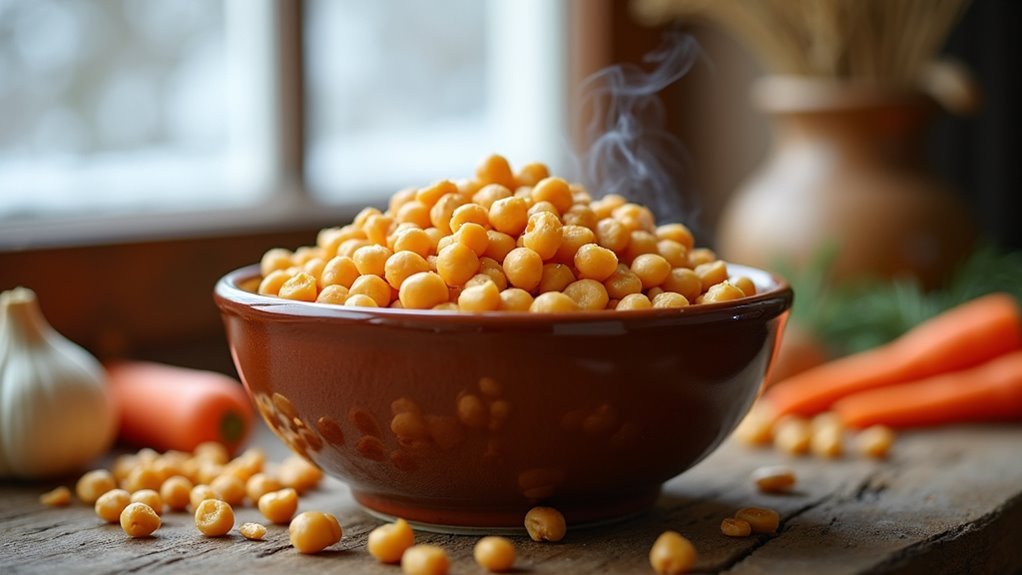
You’ll find chickpeas and legumes offer excellent plant-based zinc alternatives to meat, with chickpeas providing 1.5 mg per 100 grams compared to lentils’ 1.3 mg per half cup cooked.
These versatile ingredients transform into satisfying winter comfort foods that’ll boost your immune system while keeping you warm.
From hearty lentil soups to roasted chickpea snacks, you can easily incorporate these zinc-rich legumes into countless winter recipes.
Zinc Content Comparison
Three powerhouse legumes stand out as exceptional plant-based zinc sources that’ll transform your winter comfort foods into immune-boosting meals.
When comparing zinc content among legumes, you’ll discover significant differences that impact your nutritional planning:
- Chickpeas deliver 2.51 mg per cup – making them your strongest plant-based source for serious immune support during cold months.
- Lentils provide 1.3 mg per half-cup – perfect for hearty winter stews that comfort while protecting your health.
- Kidney beans offer 0.6 mg per half-cup – ideal for budget-friendly meals that still boost zinc intake effectively.
To maximize zinc absorption from these legumes, you’ll want to pair them with whole grains like brown rice or quinoa, creating balanced winter meals that support your immune system naturally.
Winter Recipe Ideas
Beyond understanding zinc content numbers, the real magic happens when you transform these nutrient-dense legumes into soul-warming winter dishes that’ll keep your immune system strong throughout the coldest months.
You can boost your zinc intake by creating chickpea curry that delivers 1.5 mg of zinc per 100 grams while providing ultimate comfort food satisfaction.
Hearty winter soups featuring lentils offer 1.3 mg of zinc per half-cup, making warm lentil soup perfect for maintaining immune health.
Plant-based dishes like creamy hummus transform chickpeas into versatile spreads.
Using canned legumes guarantees convenient preparation without sacrificing essential nutrients, allowing you to create nourishing winter meals that support your body’s defenses against seasonal challenges.
Pumpkin Seeds and Nuts: Portable Zinc-Rich Snacks for Winter Energy
You’ll find that pumpkin seeds pack about 2.2 mg of zinc per ounce while cashews deliver 1.6 mg, making both excellent portable options for winter immune support.
These snacks store well in airtight containers for months, so you can stock up during harvest season and enjoy them throughout the cold months.
Their combination of zinc, healthy fats, and natural energy compounds helps combat winter fatigue while supporting your body’s defense systems.
Zinc Content Comparison
When you’re searching for convenient zinc sources during winter, pumpkin seeds emerge as a clear winner among portable snacks.
These nutritional powerhouses pack approximately 2.2 mg of zinc per ounce, making them an exceptional source of this essential mineral for immune support. In comparison, almonds deliver only 0.9 mg of zinc per ounce—less than half the zinc content of pumpkin seeds.
Here’s why this zinc content comparison matters for your winter diet:
- Higher zinc intake means stronger immune defenses when you need them most
- Better energy levels to combat winter fatigue and sluggishness
- Enhanced overall health through superior mineral absorption
Winter Storage Tips
Proper storage techniques will preserve the zinc content and freshness of your pumpkin seeds and nuts throughout the winter months. Store your zinc-rich snacks in airtight containers in cool, dry places to maintain their nutritional value. Roasting these immune support foods with spices enhances flavor while extending shelf life for cold months storage.
| Storage Method | Duration | Benefits |
|---|---|---|
| Airtight containers | 6-12 months | Preserves zinc content |
| Refrigerator storage | 12+ months | Extended freshness |
| Freezer storage | 2+ years | Maximum longevity |
| Room temperature | 3-6 months | Convenient access |
| Vacuum sealed | 18+ months | Superior preservation |
Your balanced diet benefits from properly stored pumpkin seeds and nuts, ensuring consistent immune support throughout winter storage periods when you need these nutritious snacks most.
Energy Boosting Benefits
Although winter’s cold months can leave you feeling drained, pumpkin seeds and nuts deliver the perfect combination of zinc, healthy fats, and protein to fuel your energy levels throughout the day.
These portable snacks pack serious energy boosting power while providing essential nutrients your body craves during winter months.
Transform your winter wellness with these zinc-rich powerhouses:
- Combat winter fatigue with pumpkin seeds containing 2.2 mg of zinc per ounce
- Sustain energy naturally through cashews offering 1.6 mg of zinc plus healthy fats
- Support immune function while enjoying convenient, tasty nutrition
You’ll find that incorporating a variety of nuts into your daily routine enhances immune support and promotes overall health.
These snacks deliver sustained energy without the crashes typical of processed foods.
Whole Grains and Oats: Hearty Zinc Sources for Cold Weather Meals
As winter temperatures drop and you’re craving warm, satisfying meals, whole grains like oats emerge as excellent zinc sources that’ll fuel your immune system throughout the cold season. A cup of cooked oats delivers 2.3 mg of dietary zinc, making them a hearty addition to your winter meals.
The fiber content in whole grains actually enhances zinc absorption while supporting gut health. You can easily incorporate quinoa and brown rice into warming soups, stews, and casseroles. Steam or bake these grains to retain maximum zinc content.
For breakfast, fortified cereals offer an impressive boost—some provide over 25% of your daily zinc needs per serving. These versatile grains guarantee you’re getting consistent immune support during cold weather months.
Dark Leafy Greens: Seasonal Vegetables That Deliver Essential Zinc
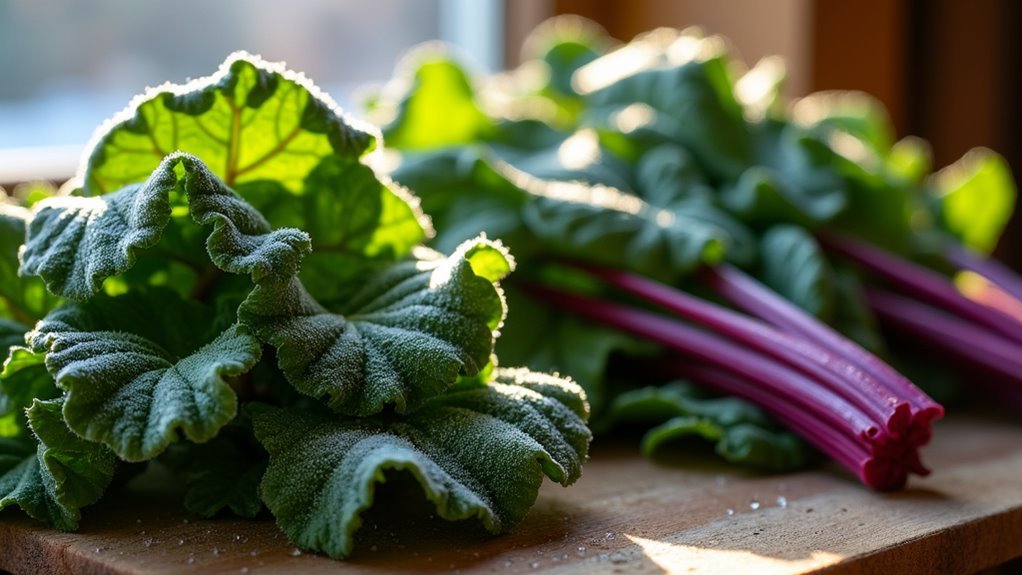
While dark leafy greens mightn’t top the charts for zinc content, they’re valuable winter allies that contribute meaningful amounts of this immune-boosting mineral to your diet. Spinach delivers approximately 0.53 mg of zinc per cooked cup, helping you reach the Recommended Dietary Allowance of 8 mg for adult women and 11 mg for adult men.
These nutritional powerhouses offer more than just zinc:
- Vitamins A and C boost immune function when you need it most during cold season
- Enhanced nutritional diversity creates a robust foundation for peak health
- Improved bioavailability through proper cooking methods like steaming maximizes nutrient absorption
Smart cooking methods reveal zinc’s potential in dark leafy greens. Steam kale, spinach, or collards to enhance bioavailability, then incorporate them into hearty winter meals for sustained immune support.
Dairy Products: Comforting Zinc Sources for Winter Wellness
When winter winds blow and you’re craving comfort food, dairy products deliver both warmth and substantial zinc content to fortify your immune system.
Cheese provides approximately 1.5 mg of zinc per 1.5 ounces, while yogurt offers around 1 mg per 6 ounces. Low-fat milk contributes about 1 mg per cup to your zinc intake.
The protein and fat in dairy products enhance zinc absorption while creating comforting meals during colder months.
You’ll find these versatile foods perfect for winter recipes like creamy soups and casseroles that boost both flavor and nutrition.
Regular consumption supports immune health since zinc helps activate T cells and combat infections, making dairy products essential allies in your winter wellness strategy.
Frequently Asked Questions
What to Eat in Winter to Increase Immunity?
You’ll boost immunity by eating zinc-rich oysters, beef, and pumpkin seeds. Include chickpeas for vegetarian options and choose fortified cereals. These foods strengthen your body’s defenses against winter colds and flu infections.
What Food Is Highest in Zinc?
Oysters contain the highest zinc levels you’ll find in food, delivering about 74.1 mg per 3-ounce serving. They’re considerably richer than other zinc sources like beef, crab, or vegetarian options.
How Do I Boost My Immune System in Winter?
You’ll boost your winter immune system by eating zinc-rich foods like oysters, beef, and pumpkin seeds. Pair them with vitamin C sources, add probiotics from yogurt, and include fiber-rich legumes for ideal gut health.
What Zinc Is Best for Immune System?
You’ll want zinc picolinate or zinc gluconate for best absorption. Take 8-11mg daily, or try zinc lozenges when you feel cold symptoms starting. Don’t exceed 40mg daily to avoid interfering with copper absorption.


Leave a Reply