

You’ll heal your gut by choosing naturally fermented vegetables over store-bought vinegar pickles, which lack beneficial probiotics. Start with just a couple tablespoons per serving to avoid digestive discomfort, then gradually increase to one-quarter or one-half cup daily. Rotate different fermented varieties like kimchi, sauerkraut, and pickled beets throughout your week since each contains unique probiotic strains that maximize gut microbiome diversity. These strategies will reveal even deeper gut restoration benefits.
Choose Naturally Fermented Varieties Over Store-Bought Vinegar Pickles
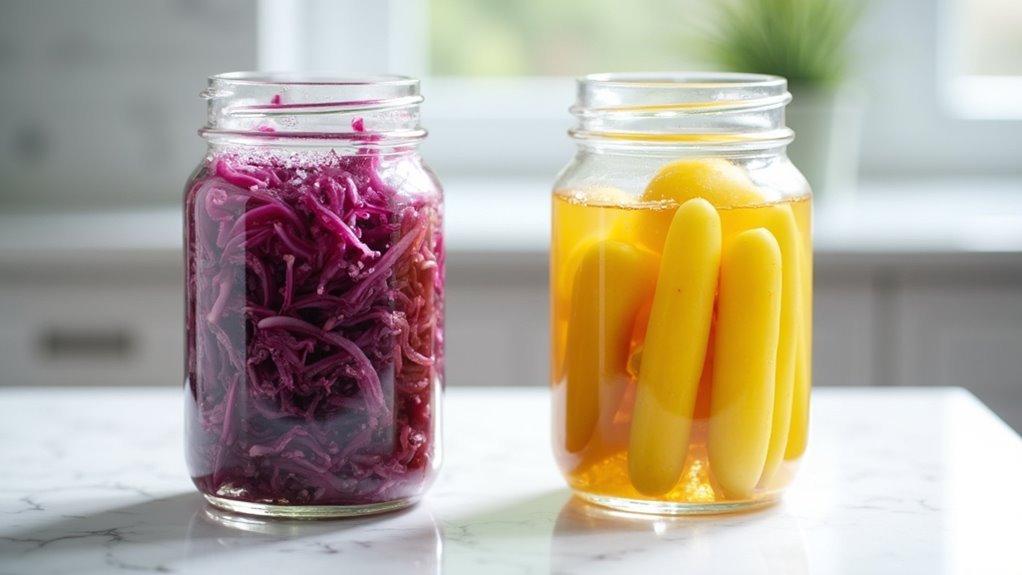
When shopping for fermented vegetables, you’ll want to skip the vinegar pickles and reach for naturally fermented varieties instead. Store-bought vinegar pickles lack the beneficial probiotics that naturally fermented options provide for gut health.
During natural fermentation, beneficial bacteria break down sugars, creating live cultures essential for digestive health. Look for labels reading “naturally fermented” or check for visible bubbles in jars, which indicate active microorganisms.
Fermented vegetables like kimchi and sauerkraut enhance gut microbiome diversity and produce short-chain fatty acids absent in vinegar pickles. These beneficial probiotics don’t just aid digestion—they can improve immune responses and reduce inflammation.
Regular consumption of naturally fermented varieties provides these health advantages that processed vinegar pickles simply can’t deliver.
Start Small and Gradually Increase Serving Sizes for Optimal Tolerance
While naturally fermented vegetables offer incredible gut health benefits, you’ll want to introduce them slowly to avoid overwhelming your digestive system. Start with just a couple tablespoons per serving to allow your gut to adjust to the influx of probiotics without causing digestive discomfort.
Over the next few days or weeks, gradually increase your serving size to one-quarter or one-half cup, monitoring how your body responds. This careful approach guarantees ideal tolerance while building up beneficial bacteria in your microbiome.
Aim for at least one serving daily once you’ve reached your target amount. Incorporating various fermented vegetables like kimchi and sauerkraut enhances probiotic diversity, supporting gut healing.
Consistent consumption stimulates butyrate-producing bacteria, promoting long-term digestive health.
Combine Multiple Fermented Vegetables for Maximum Probiotic Diversity
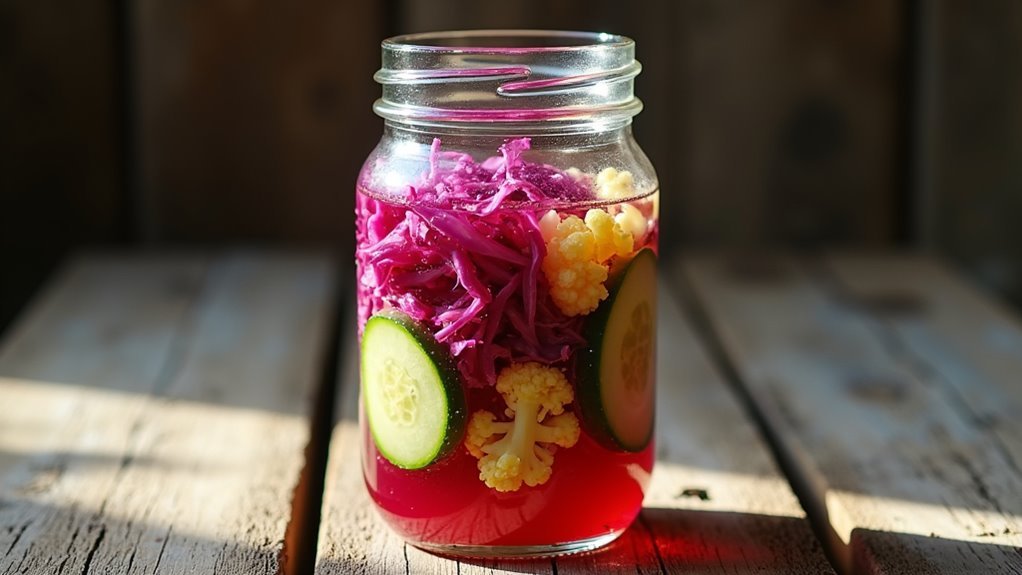
Since different fermented vegetables harbor unique strains of beneficial bacteria, you’ll maximize your probiotic diversity by combining multiple varieties in your daily routine. Each fermented food contributes distinct probiotics that enhance your gut microbiome’s complexity and health benefits.
| Fermented Vegetable | Probiotic Strains |
|---|---|
| Kimchi | Lactobacillus species |
| Sauerkraut | Leuconostoc mesenteroides |
| Pickled beets | Pediococcus pentosaceus |
| Fermented carrots | Lactobacillus plantarum |
| Pickled onions | Weissella species |
This diversity strengthens immune function and reduces inflammation throughout your body. When these beneficial bacteria thrive together, they’ll produce valuable short-chain fatty acids that support gut healing. You’ll experience superior results by consuming at least one serving of various fermented vegetables weekly, creating a robust microbiome foundation for lasting wellness.
Frequently Asked Questions
How to Ferment Vegetables for Gut Health?
You’ll pack fresh vegetables tightly in sterilized jars, cover completely with salt-water brine, ferment at room temperature for three-five days until bubbling, then refrigerate to preserve beneficial probiotics for gut health.
Is It OK to Eat Fermented Vegetables Everyday?
Yes, you can eat fermented vegetables daily as they’ll boost your gut microbiota diversity and provide beneficial probiotics. However, you should monitor your body’s response since excessive intake might cause digestive discomfort.
How Long Does It Take to Heal Your Gut With Fermented Foods?
You’ll typically see gut healing improvements within a few weeks of eating fermented foods daily. Significant changes in gut microbiome diversity and reduced inflammation usually occur within 10 weeks of consistent consumption.
What Is the Healthiest Vegetable to Ferment?
You’ll find cabbage is the healthiest vegetable to ferment since it’s packed with probiotics that dramatically boost gut health. It’s incredibly versatile, creating nutrient-dense sauerkraut and kimchi that support beneficial bacteria.


Leave a Reply