
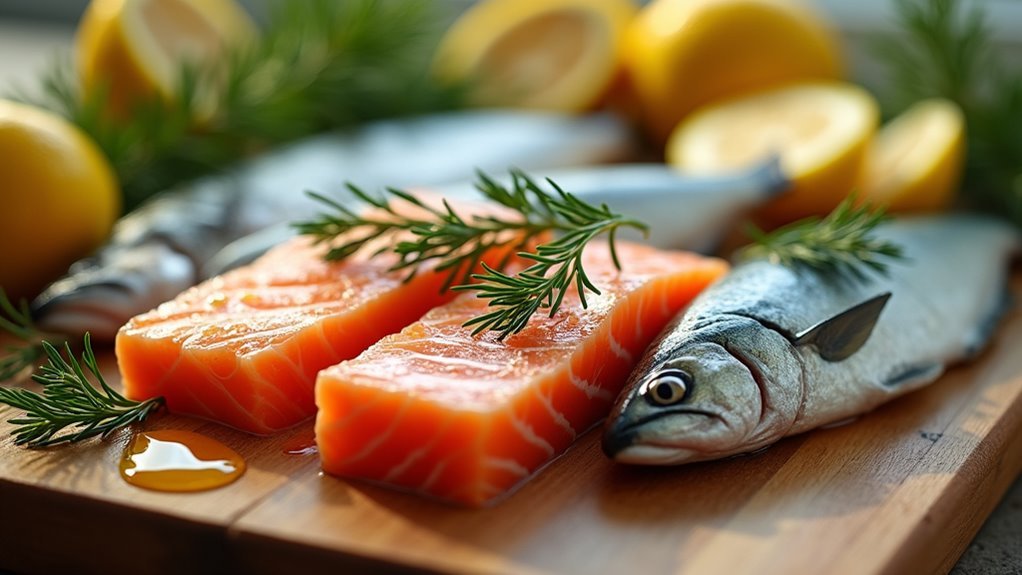
You’ll get 556-924 IU of vitamin D3 from a 3.5-ounce serving of wild-caught salmon, while mackerel provides around 643 IU per serving. Your body absorbs this natural D3 form more effectively than synthetic supplements, strengthening your bones through enhanced calcium absorption and supporting muscle function via improved protein synthesis. Wild varieties offer superior nutritional profiles compared to farmed fish, delivering omega-3s and high-quality protein alongside vitamin D. Discover how to maximize these benefits through proper preparation and weekly meal planning.
Why Salmon and Mackerel Are Superior Vitamin D Sources
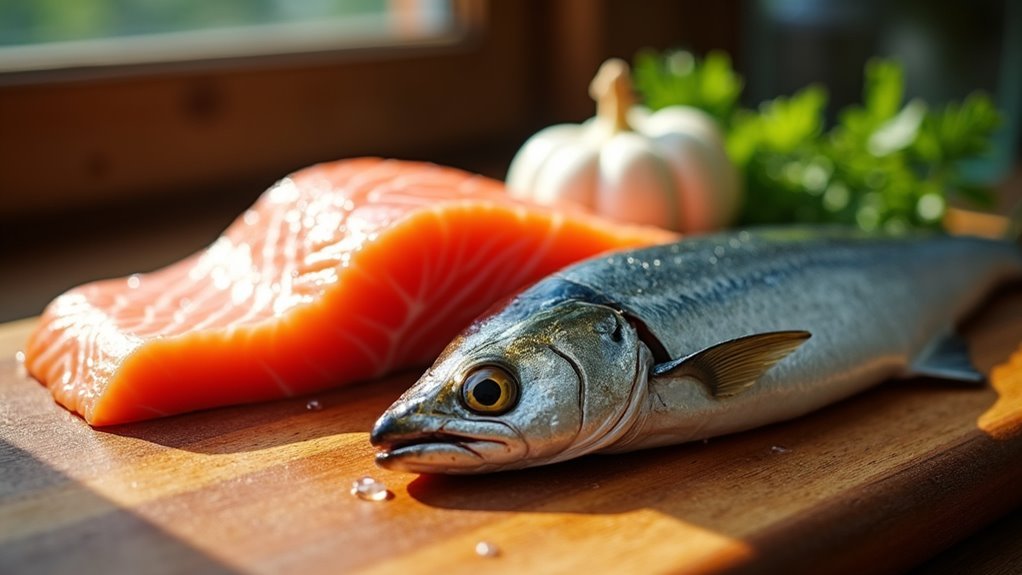
When you’re searching for the most potent dietary sources of vitamin D, salmon and mackerel stand out as exceptional choices that deliver impressive amounts of this crucial nutrient.
Wild-caught salmon provides 556 to 924 IU per 3.5-ounce serving, while mackerel offers approximately 643 IU in the same portion size. These fatty fish contain vitamin D3 (cholecalciferol), which raises your blood levels more effectively than plant-based D2 sources.
You’ll benefit from more than just daily vitamin D when consuming these fish.
Both salmon and mackerel are rich in omega-3 fatty acids, supporting your heart and brain health simultaneously. Regular consumption helps maintain ideal vitamin D levels essential for calcium absorption and bone health, making these fish superior nutritional powerhouses.
Vitamin D Content Comparison: Wild vs. Farmed Fish
Although both wild and farmed salmon provide valuable vitamin D, wild-caught varieties deliver considerably higher levels of this essential nutrient.
Wild-caught salmon contains 556 to 924 IU per 3.5-ounce serving, while farmed Atlantic salmon offers about 441 IU. This comparison reveals a significant difference in vitamin D content between these options.
Mackerel stands out as another nutrient-dense option, providing approximately 643 IU per serving.
The vitamin D levels in fish vary based on catch location, with wild varieties consistently showing superior nutritional profiles. Farmed fish typically contain lower omega-3 fatty acids and vitamin D due to controlled diets and environments.
You’ll meet your daily vitamin D requirements more effectively by choosing wild-caught fatty fish over farmed alternatives.
How Vitamin D Strengthens Bones and Muscles
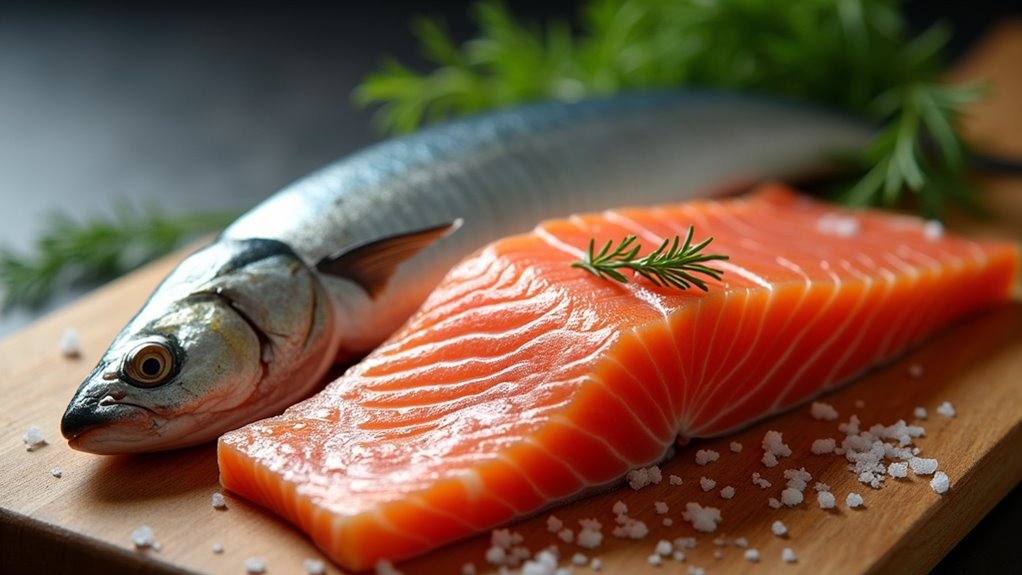
When you consume vitamin D from salmon and mackerel, it acts as an essential catalyst that helps your body absorb calcium from your digestive tract.
This enhanced calcium absorption directly strengthens your bones and reduces your risk of fractures and osteoporosis as you age.
Additionally, vitamin D supports your muscle function by improving protein synthesis and cellular communication, which translates to better strength and reduced fall risk.
Calcium Absorption Enhancement
Since your body can’t absorb calcium effectively without vitamin D, consuming salmon and mackerel becomes essential for maintaining strong bones and muscles.
These fatty fish rank among the best food sources of vitamin D, delivering nutrients your body desperately needs for ideal calcium absorption.
When you’re dealing with vitamin D deficiency, your calcium absorption drops considerably, weakening your skeletal system.
However, adequate vitamin D intake from these powerhouse fish enhances your body’s ability to utilize calcium efficiently.
- Enhanced calcium uptake – Vitamin D activates proteins that transport calcium through intestinal walls
- Improved muscle function – Better calcium absorption supports muscle contraction and coordination
- Stronger bone density – Ideal calcium utilization builds robust skeletal structure
- Better immune function – Adequate vitamin D supports overall health beyond bone strength
Muscle Function Support
Beyond strengthening your bones, the vitamin D found in salmon and mackerel directly powers your muscle function and physical performance. Your muscle health depends on adequate vitamin D levels, as deficiencies lead to weakness and reduced physical capability. These fatty fish serve as exceptional dietary sources, helping you maintain the strength needed for daily activities.
| Muscle Function Benefit | Low Vitamin D Impact | Salmon/Mackerel Solution |
|---|---|---|
| Enhanced muscle strength | Muscle weakness | Rich vitamin D content |
| Improved physical performance | Reduced mobility | Regular consumption |
| Better muscle mass | Increased fall risk | Natural supplementation |
Research consistently shows that vitamin D supplementation considerably improves muscle strength, especially in deficient populations. You’ll experience better muscle contraction through vitamin D’s regulation of calcium and phosphorus, making salmon and mackerel essential for ideal muscle function.
Essential Nutrients Beyond Vitamin D in These Fish
While salmon and mackerel earn recognition as vitamin D powerhouses, they’re nutritional goldmines packed with essential nutrients that’ll boost your overall health.
Beyond their vitamin D reputation, salmon and mackerel deliver powerhouse nutrition that transforms every meal into a health-boosting experience.
These exceptional fish offer far more than just vitamin D:
- Omega-3 fatty acids – These healthy fats support heart health and reduce inflammation throughout your body, making every bite count toward cardiovascular wellness.
- High-quality protein – With approximately 25 grams per serving, you’ll fuel muscle repair and growth while maintaining lean body mass.
- Selenium and vitamin B12 – Salmon delivers important selenium for metabolism and thyroid function, while mackerel provides nerve-supporting B12 for ideal brain health.
- Potassium and phosphorus – These essential minerals support muscle contraction and bone health, ensuring your body functions at peak performance.
You’re getting thorough nutrition with every delicious serving.
Optimal Serving Sizes for Maximum Vitamin D Benefits
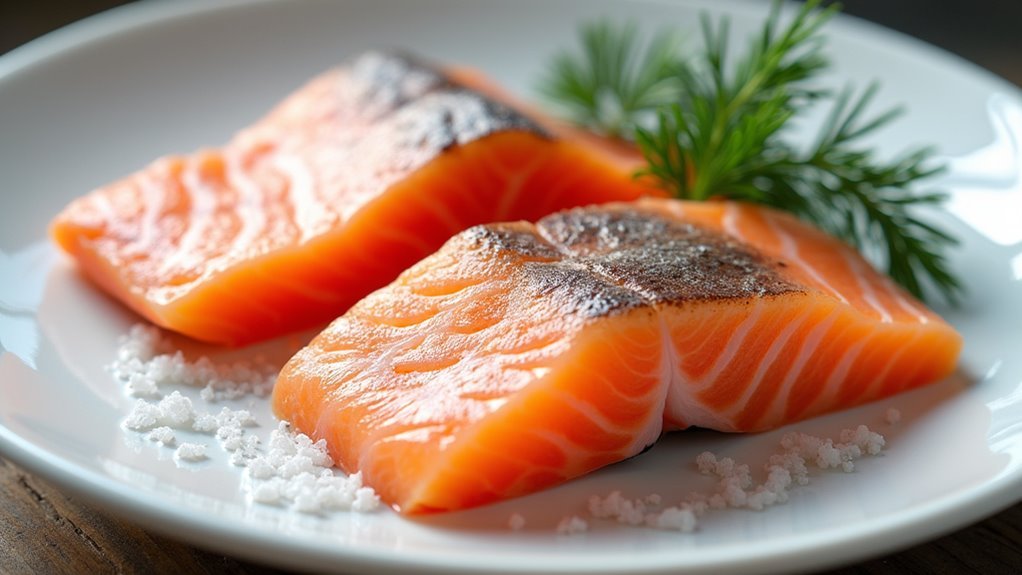
Understanding the right portion sizes guarantees you’ll maximize vitamin D absorption from these nutrient-dense fish.
A 3.5-ounce serving of salmon delivers 556 to 924 IU of vitamin D, meeting up to 116% of your daily value. Mackerel provides approximately 643 IU per 3.5-ounce serving, contributing 80% of your daily needs.
You’ll want to consume 8 to 12 ounces of fatty fish weekly to maintain adequate vitamin D levels. Even sardines contribute 193 IU per 3.5-ounce serving, supplying 24% of your daily value.
These ideal serving sizes not only boost your vitamin D intake but also deliver essential omega-3 fatty acids, supporting your overall health while strengthening bones and immune function.
Best Preparation Methods to Preserve Vitamin D Content
Since vitamin D is sensitive to high heat and prolonged cooking times, you’ll preserve the maximum nutritional value by choosing gentle preparation methods like baking, steaming, or grilling at moderate temperatures.
These cooking methods minimize nutrient loss while maintaining salmon and mackerel’s impressive vitamin D content.
Here are four essential tips for ideal preparation:
- Target 145°F internal temperature – Avoid overcooking with high heat, which greatly reduces vitamin D levels.
- Choose baking, steaming, or grilling – These methods retain more nutrients than frying.
- Add healthy fats like olive oil – Enhances absorption since vitamin D is a fat-soluble vitamin.
- Select wild-caught salmon – Properly prepared, it delivers 556–924 IU of vitamin D per serving.
These techniques guarantee you’re maximizing every nutritional benefit.
Combining Salmon and Mackerel With Fat-Soluble Vitamins
Because vitamin D is fat-soluble, you’ll absorb it most effectively when you pair salmon and mackerel with other healthy fats and fat-soluble vitamins A, E, and K. The omega-3 fatty acids naturally present in these fish create an excellent foundation for vitamin D absorption.
You can enhance this process by cooking your salmon or mackerel with olive oil or serving alongside avocado.
Creating a balanced diet that includes these fatty fish with vitamin-rich vegetables like leafy greens and colorful produce maximizes nutrient absorption. This combination supports your bone health while providing essential nutrients your body needs.
Pairing fatty fish with nutrient-dense vegetables creates optimal absorption while delivering comprehensive bone health support and essential vitamins.
Regular consumption of salmon and mackerel within this framework guarantees you’re getting the best vitamin D uptake alongside other critical fat-soluble vitamins for thorough nutritional benefits.
Seasonal Availability and Sustainable Sourcing Options
While maximizing nutrient absorption remains important, you’ll want to contemplate when and where your salmon and mackerel come from to confirm you’re getting the highest quality fish while supporting sustainable practices.
Understanding seasonal availability helps you source the freshest, most nutrient-dense options for peak vitamin D content:
- Wild-caught salmon peaks from May to September in the Northern Hemisphere, offering maximum omega-3 fatty acids and vitamin D levels during these months.
- Mackerel’s best season runs from late spring to early autumn, when these fish contain their highest nutritional density.
- Marine Stewardship Council certification guarantees you’re choosing sustainably sourced fish from well-managed fisheries with responsible farming practices.
- Canned wild-caught options provide year-round access to sustainable, nutrient-rich salmon and mackerel when fresh varieties aren’t seasonally available.
Signs Your Body Needs More Vitamin D From Fish
How can you tell if your body’s crying out for more vitamin D from fish sources? Several signs of vitamin D deficiency indicate you need more salmon and mackerel in your diet.
If you’re experiencing persistent fatigue, bone pain, or muscle weakness, these symptoms signal inadequate vitamin D levels. Your immune system also suffers when vitamin D drops—frequent illnesses or infections suggest you need vitamin D-rich dietary sources.
Mood changes, particularly depression, often link to low vitamin D levels. Adding mackerel to your meals provides approximately 643 IU per 3.5-ounce serving.
Watch for declining physical strength, as vitamin D directly impacts muscle function. During autumn, when serum 25(OH)D levels naturally decrease due to reduced sunlight exposure, incorporating these fatty fish becomes essential for maintaining peak health.
Weekly Meal Planning With Salmon and Mackerel
When you’re planning your weekly meal plan around vitamin D-rich fish, aim for at least two servings of salmon and mackerel to meet your body’s 600-800 IU daily requirement.
These dietary sources pack impressive nutritional value—wild-caught salmon delivers 556-924 IU per 3.5-ounce serving, while mackerel provides about 643 IU, supporting bone health and omega-3 fatty acids intake.
Here are four practical ways to incorporate these vitamin D powerhouses:
- Grilled salmon tacos with fresh vegetables for Tuesday dinner
- Baked mackerel with roasted vegetables for Thursday’s main course
- Canned salmon salad for convenient Wednesday lunch
- Mackerel pasta dishes using affordable canned options for weekend meals
This strategic approach guarantees you’re consistently meeting your vitamin D intake while enjoying diverse, appealing meals throughout the week.
Storage Tips to Maintain Nutritional Value
Since you’ve carefully planned your weekly salmon and mackerel meals, proper storage becomes essential for preserving those valuable vitamin D levels and omega-3 fatty acids you’re counting on.
Store your fresh salmon and mackerel in the refrigerator’s coldest section below 40°F. Use airtight containers or vacuum-sealed bags to prevent exposure to air, which destroys nutritional value through oxidation.
Keep salmon and mackerel in your fridge’s coldest spot using airtight containers to prevent nutrient-destroying oxidation.
For extended storage, freezing within two days maintains quality effectively. Wrap fish tightly to avoid freezer burn that compromises nutrients.
When you’re ready to cook, thaw frozen fish in the refrigerator rather than at room temperature to preserve both safety and nutritional integrity.
Consume your stored salmon and mackerel within three months for peak freshness and maximum vitamin D retention.
Alternative Fish Options When Salmon and Mackerel Are Unavailable
While salmon and mackerel top the charts for vitamin D content, you’ll find several excellent alternatives that deliver impressive nutritional benefits when your preferred fish aren’t available.
These alternative fish options provide reliable sources of vitamin D to boost vitamin D levels effectively:
- Herring – Fresh Atlantic herring delivers 167 IU per 3.5-ounce serving, offering a solid nutritional foundation with omega-3 fatty acids.
- Sardines – Canned sardines provide 193 IU per serving while being economical and protein-rich.
- Halibut – This white fish contains 190 IU per serving, making it a delicious vitamin D source.
- Canned Tuna – Light tuna offers 269 IU per serving as a convenient, cost-effective option.
For non-fish consumers, cod liver oil provides concentrated vitamin D at 450 IU per teaspoon, ensuring adequate intake regardless of dietary preferences.
Frequently Asked Questions
Is Salmon or Mackerel Better for Vitamin D?
You’ll get more vitamin D from salmon, especially wild-caught varieties providing 556-924 IU per serving compared to mackerel’s 643 IU. However, both fish effectively help you meet daily requirements.
Can You Get Enough Vitamin D From Salmon?
You can absolutely get enough vitamin D from salmon. A single 3.5-ounce serving of wild salmon provides up to 924 IU, covering your entire daily requirement and potentially exceeding it.
Which Fish Has the Highest Vitamin D?
Wild-caught salmon contains the highest vitamin D levels among fish, providing up to 924 IU per serving. You’ll get the most from wild sockeye salmon, which delivers more vitamin D than mackerel or other varieties.
How Can I Get 600 IU of Vitamin D Daily?
You can easily reach 600 IU daily by eating a 3.5-ounce serving of wild salmon or mackerel, which provide 556-924 IU and 643 IU respectively, exceeding your requirement.


Leave a Reply