
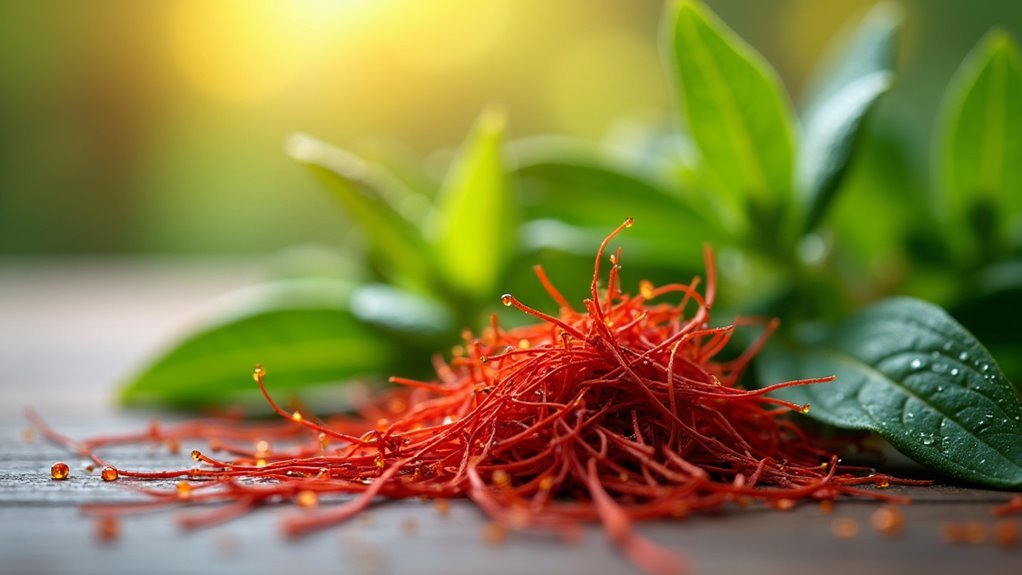
You can effectively combat depression naturally with saffron, a scientifically-backed herb that performs comparably to prescription antidepressants like fluoxetine. Saffron’s active compounds, crocin and safranal, boost serotonin levels and brain-derived neurotrophic factor while reducing inflammation. Clinical trials confirm that 30-60mg daily for 6-12 weeks considerably improves mood with fewer side effects than pharmaceuticals. This golden spice offers a gentler alternative to traditional antidepressants, and there’s much more to discover about optimizing its benefits.
What Makes Saffron a Powerful Mood Enhancer
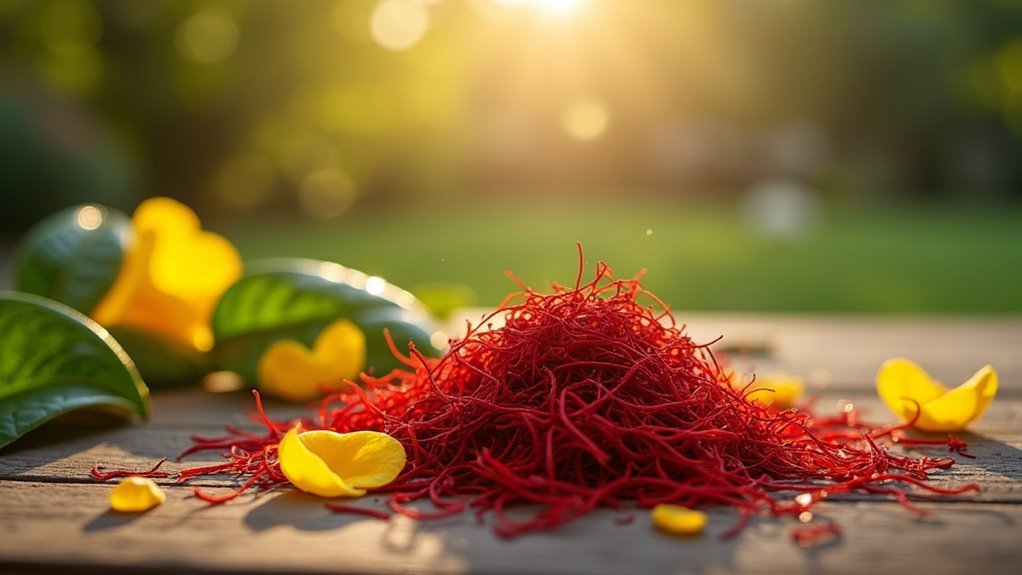
Depression affects millions worldwide, yet nature has provided a remarkably potent solution in the delicate crimson threads of saffron. When you’re seeking natural mental health support, this precious spice from Crocus sativus offers scientifically-backed mood enhancement through its unique bioactive compounds.
You’ll find that saffron’s power lies in its ability to modulate serotonin levels in your brain, directly targeting the neurotransmitter systems responsible for emotional well-being.
Clinical trials have demonstrated that saffron’s antioxidant properties, particularly from crocetin and safranal, work as effectively as conventional antidepressants like fluoxetine.
What’s remarkable is how this natural treatment for depression influences your brain-derived neurotrophic factor levels, supporting long-term neurological health while providing immediate mood benefits without the harsh side effects of pharmaceutical alternatives.
Scientific Evidence Behind Saffron’s Antidepressant Effects
You’ll find that multiple clinical trials have demonstrated saffron’s effectiveness in treating depression, with results showing it performs as well as conventional antidepressants like fluoxetine and citalopram.
The research reveals that saffron’s active compounds, crocin and safranal, work by modulating serotonin levels in your brain while providing powerful antioxidant protection.
These mechanisms explain why you can experience significant mood improvements with daily doses ranging from 30 mg to 200 mg of saffron supplementation.
Clinical Trial Results
Multiple clinical trials have established saffron’s effectiveness in treating mild to moderate depression, with research consistently showing that this golden spice can match the performance of conventional antidepressants.
Double-blind, randomized controlled trials demonstrate that saffron extract produces significant reductions in depressive symptoms comparable to fluoxetine and citalopram.
Meta-analysis of randomized studies confirms saffron’s antidepressant properties deliver substantial mood improvements.
Key findings from clinical research include:
- Efficacy of saffron matches standard antidepressants in treating mild to moderate depression
- Optimal dosing ranges from 30-60 mg daily of saffron extract for mood support
- Significant symptom reduction occurs within study duration compared to placebo groups
- Broad therapeutic potential extends beyond depression to various mental health problems
However, you’ll need longer-term studies to fully understand saffron’s sustained benefits and safety profile.
Mechanism of Action
Although saffron’s clinical effectiveness in treating depression has been well-documented, understanding how this ancient spice works at the molecular level reveals the sophisticated mechanisms behind its mood-enhancing properties.
Saffron’s active constituents, crocin and safranal, directly influence your brain’s neurotransmitter systems by modulating serotonin levels, which are essential for proper mood regulation. These compounds also boost your brain-derived neurotrophic factor (BDNF) production, promoting neurogenesis and neural plasticity that help alleviate depression symptoms.
The mechanism of action extends beyond neurotransmitter modulation. Saffron’s potent antioxidant effects reduce oxidative stress and inflammation in your brain, both contributing factors to depressive disorders.
Clinical studies suggest these compounds may also influence your gut-brain axis, affecting neurochemical pathways through microbiota modulation.
How Saffron Affects Brain Chemistry and Neurotransmitters
When you consume saffron, its bioactive compounds crocin and safranal work directly on your brain’s neurotransmitter systems to enhance mood regulation.
These compounds target monoaminergic pathways, influencing how your brain processes serotonin and norepinephrine – similar to conventional antidepressant medications.
Here’s how saffron transforms your brain chemistry:
- Neurotransmitter Reuptake Inhibition – Blocks the reabsorption of serotonin and norepinephrine, keeping mood-boosting chemicals active longer.
- Oxidative Stress Reduction – Powerful antioxidants protect brain cells from inflammation linked to depressive symptoms.
- BDNF Enhancement – Increases brain-derived neurotrophic factor production, promoting neuroplasticity and cognitive resilience.
- Synaptic Communication – Improves neural connectivity, supporting better emotional processing and stability.
This multi-target approach makes saffron particularly effective for thorough mood support.
Clinical Studies Comparing Saffron to Traditional Antidepressants
Several landmark clinical trials have positioned saffron as a legitimate competitor to conventional antidepressants, with research consistently showing comparable efficacy for treating mild to moderate depression.
You’ll find that double-blind studies demonstrate saffron’s antidepressant effects match those of fluoxetine, citalopram, and imipramine while producing fewer side effects. Meta-analyses confirm these findings, revealing significant mood improvements across multiple trials.
Double-blind studies reveal saffron matches conventional antidepressants like fluoxetine and citalopram in effectiveness while causing fewer adverse reactions.
What’s particularly impressive is saffron’s performance in placebo-controlled trials, where it consistently outperforms inactive treatments.
The active compounds crocin and safranal appear responsible for these effects, targeting the same neurotransmitter systems as traditional antidepressants. Research even shows saffron’s neuroprotective effects in Alzheimer’s patients, suggesting broader therapeutic potential beyond reducing depression symptoms in otherwise healthy individuals.
Active Compounds in Saffron That Combat Depression
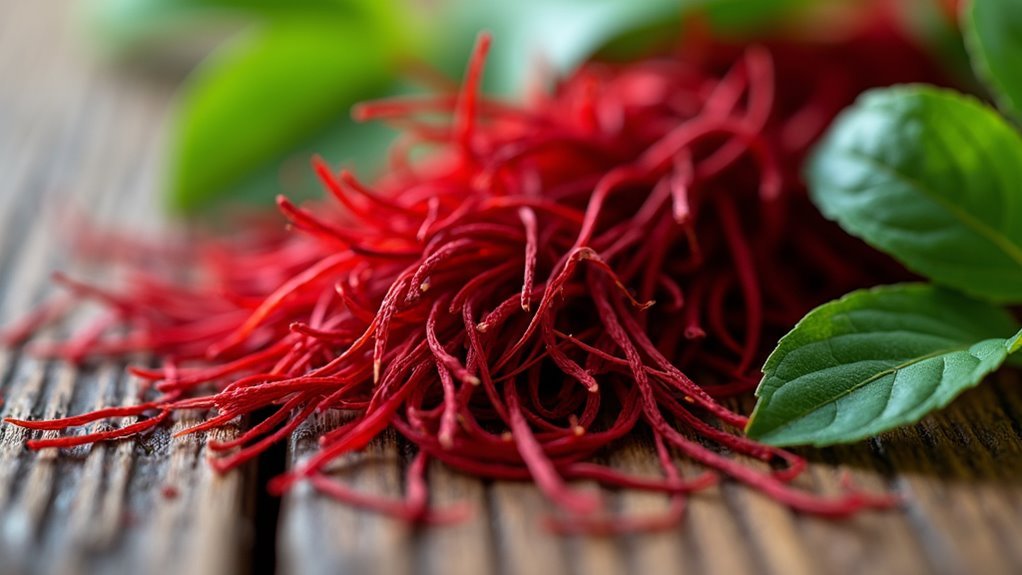
Since saffron’s therapeutic effects stem from its unique chemical composition, you’ll want to understand the three primary bioactive compounds responsible for its antidepressant effects: crocin, picrocrocin, and safranal.
These active compounds work synergistically to combat depressive symptoms through multiple pathways:
- Crocin enhances serotonin levels and improves the gut-brain axis while boosting neurotrophic factors that support brain health.
- Safranal delivers powerful anxiolytic properties that effectively reduce anxiety-related symptoms better than other compounds.
- Antioxidant mechanisms from all three compounds reduce oxidative stress and inflammation linked to mood disorders.
- Clinical trials demonstrate these compounds’ efficacy matches traditional antidepressants while potentially offering fewer side effects.
Together, these bioactive elements create saffron’s remarkable depression-fighting capabilities.
Recommended Dosage and Forms of Saffron for Mental Health
You’ll find that clinical research supports taking 30-60 mg of saffron extract daily for ideal mental health benefits.
You can choose from several forms including standardized capsules, traditional cooking spice, or brewed tea depending on your preferences.
You should follow established mental health protocols that recommend consistent daily intake for 6-12 weeks to experience meaningful mood improvements.
Standard Dosage Guidelines
Most clinical studies examining saffron’s antidepressant effects have established effective dosages between 30 mg and 60 mg of standardized saffron extract taken daily.
These standard dosages for mood support have shown consistent results across clinical trials spanning 6-12 weeks.
When considering saffron supplementation, you’ll want to follow these guidelines:
- Start with 30 mg daily – This lower dose allows you to assess tolerance before increasing
- Don’t exceed 200 mg daily – Higher amounts may increase side effects without additional benefits
- Consult your healthcare provider – They’ll check for potential interactions with existing medications
- Watch for allergies – Discontinue use if you experience reactions to saffron or related plants
Most people tolerate recommended doses well, making saffron a relatively safe natural option for depression relief.
Available Saffron Forms
Convenience and personal preference guide your choice among saffron’s various available forms for mental health support. You’ll find saffron as whole threads, powder, capsules, and teas, each offering unique consumption methods. Whole threads work perfectly for cooking or steeping into therapeutic tea, while powder integrates easily into dishes or capsule formats for maximum convenience.
| Form | Usage Method |
|---|---|
| Whole Threads | Cooking or tea steeping |
| Powder | Direct consumption or cooking |
| Capsules | Convenient daily supplementation |
| Tea Bags | Ready-to-brew convenience |
| Extract | Concentrated liquid form |
Recommended dosages for mental health range from 30-200mg daily, with 30-60mg proving most effective. Saffron’s generally well-tolerated at food doses, though higher amounts risk serious side effects. Consult your healthcare professional to determine ideal forms and dosages matching your individual health needs.
Mental Health Protocols
When establishing a saffron protocol for mental health support, clinical research consistently demonstrates that 30-60mg daily provides ideal therapeutic benefits for depression relief.
You’ll find this dosage range offers effective mood support while maintaining an excellent safety profile.
Here’s your thorough saffron treatment protocol:
- Start with 30mg daily – Begin with the lowest effective dosage to assess your body’s response and minimize potential side effects.
- Choose high-quality supplements – Select standardized extracts to guarantee consistent potency and avoid contamination risks.
- Maintain consistency for 6-12 weeks – Clinical trials show this duration is necessary to evaluate saffron’s full impact on mental health symptoms.
- Consult your healthcare provider – Professional guidance guarantees safe integration with existing depression treatments and identifies any medication interactions.
Monitor your mood changes throughout this evidence-based approach.
Safety Profile and Potential Side Effects of Saffron
Although saffron offers promising benefits for depression relief, you’ll need to understand its safety profile before incorporating it into your treatment plan.
While generally safe in culinary amounts, higher doses can trigger serious side effects including nausea, vomiting, and allergic reactions. Common adverse effects from saffron supplementation include anxiety, appetite changes, sedation, headaches, and hypomania.
You should exercise particular caution if you’re allergic to saffron or related plants. Saffron can interact with certain medications, especially mood-supporting drugs and sedatives, making health care professional consultation vital.
If you’re using saffron as complementary depression treatment, ongoing monitoring guarantees ideal results and safety while preventing potentially dangerous medication interactions.
Combining Saffron With Other Natural Depression Treatments
Saffron’s therapeutic potential becomes even more powerful when you strategically combine it with other natural depression treatments. Clinical trials demonstrate that integrating saffron with cognitive-behavioral therapy produces superior outcomes compared to standalone interventions. This holistic approach maximizes mood stabilization through multiple therapeutic pathways.
Consider these effective combinations:
- Lavender and curcumin – Saffron’s serotonergic effects complement lavender’s calming properties and curcumin’s anti-inflammatory benefits for enhanced mood support.
- Omega-3 fatty acids – Dietary changes incorporating these healthy fats work synergistically with saffron’s antioxidant properties to combat oxidative stress linked to mood disorders.
- St. John’s Wort – While potentially synergistic with saffron, exercise caution due to possible medication interactions.
- Traditional medicine protocols – Combining saffron with established therapeutic approaches creates thorough treatment strategies that address multiple aspects of depression naturally.
Choosing Quality Saffron Supplements for Maximum Benefits
Since therapeutic benefits depend heavily on supplement quality, selecting the right saffron product requires careful attention to specific criteria that guarantee potency and safety.
You’ll want to choose supplements that specify extraction of active compounds like crocin and safranal, which are directly linked to mood support benefits. Look for products from reputable suppliers with third-party testing for purity and potency verification.
For peak results, follow recommended dosage guidelines of 30-60 mg daily for depression relief. Higher doses can trigger unwanted side effects including anxiety and nausea.
You should consult with a healthcare professional before starting any saffron supplementation regimen, especially if you’re taking other medications. This guarantees proper dosage tailoring and monitoring for potential drug interactions that could compromise your treatment plan.
Frequently Asked Questions
What Is the Most Powerful Natural Antidepressant?
You’ll find St. John’s wort is often considered the most powerful natural antidepressant, showing effectiveness comparable to prescription medications in clinical studies. However, you should consult healthcare providers before starting any treatment.
Which Is Better for Depression, Saffron or Ashwagandha?
You’ll find saffron’s better for depression specifically, as studies show it’s comparable to fluoxetine for treating depressive symptoms. Ashwagandha’s more effective for stress and anxiety management rather than direct depression treatment.
How Long Does It Take Saffron to Affect Mood?
You’ll likely notice saffron’s mood-enhancing effects within 4-6 weeks of consistent daily supplementation, though some people report improvements as early as 4 weeks with proper dosing between 30-60mg.


Leave a Reply