

You’ll sleep better by consuming 1-2 ounces of pumpkin seeds 30-60 minutes before bedtime, as they’re packed with tryptophan, magnesium, and zinc that promote melatonin production. Soak raw seeds for several hours to reduce phytic acid and enhance nutrient absorption, or roast them at low temperatures around 170°F. Pair them with tart cherries or bananas for enhanced sleep benefits, blend into evening smoothies, or create a DIY sleep mix with dark chocolate. These simple strategies can transform your nightly rest naturally.
Understanding How Pumpkin Seeds Promote Natural Sleep
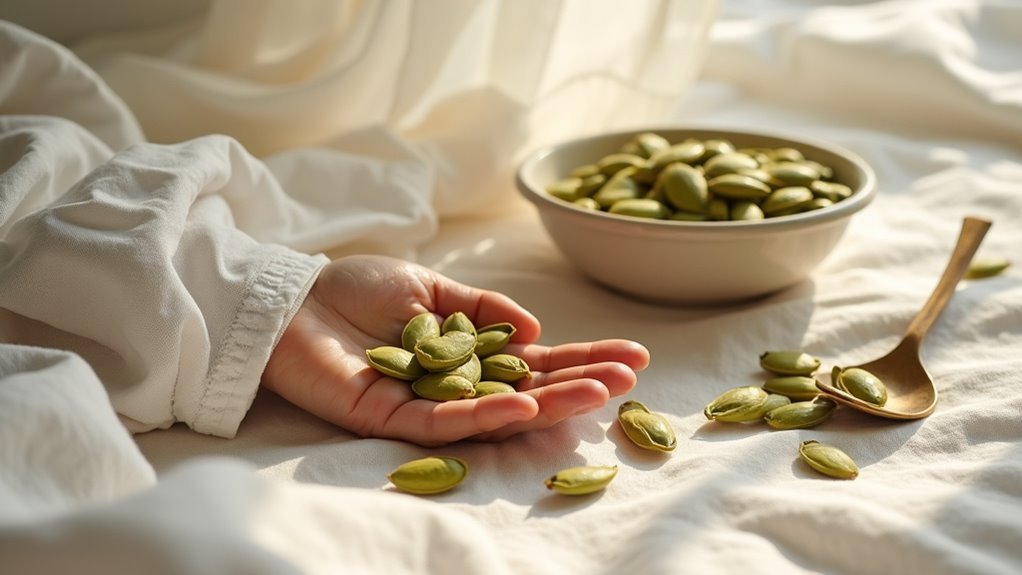
While you might reach for melatonin supplements when sleep eludes you, pumpkin seeds offer a natural alternative that works through multiple pathways to promote restful sleep.
These nutritional powerhouses contain tryptophan, an amino acid your body converts into serotonin and then melatonin. The zinc in pumpkin seeds enhances this conversion process, making the tryptophan more effective at signaling sleepiness.
Pumpkin seeds naturally boost your body’s melatonin production through tryptophan and zinc, creating an effective pathway to better sleep.
You’ll also benefit from their impressive magnesium content—nearly 40% of your daily requirement in just one ounce. This mineral relaxes your muscles and reduces anxiety, directly improving sleep quality.
Additionally, glycine found in pumpkin seeds lowers your body temperature and calms your nervous system. Beyond sleep benefits, you’re supporting heart health while naturally preparing your body for deeper, more restorative rest.
Optimal Timing and Serving Size for Sleep Benefits
Since timing considerably impacts the effectiveness of natural sleep aids, you’ll want to consume 1-2 ounces of pumpkin seeds about 30-60 minutes before bedtime. This ideal timing allows your body to process the magnesium and tryptophan content effectively. The ideal serving size is approximately 1/4 cup, providing maximum sleep benefits without excess calories.
When you consume pumpkin seeds as an evening snack, they boost serotonin production and promote relaxation through their natural glycine content. This amino acid helps lower your body temperature, signaling it’s time to sleep.
You’ll enhance these effects by pairing pumpkin seeds with other sleep-promoting foods like tart cherries or bananas. This strategic combination maximizes your natural sleep support system.
Best Preparation Methods to Maximize Magnesium Content
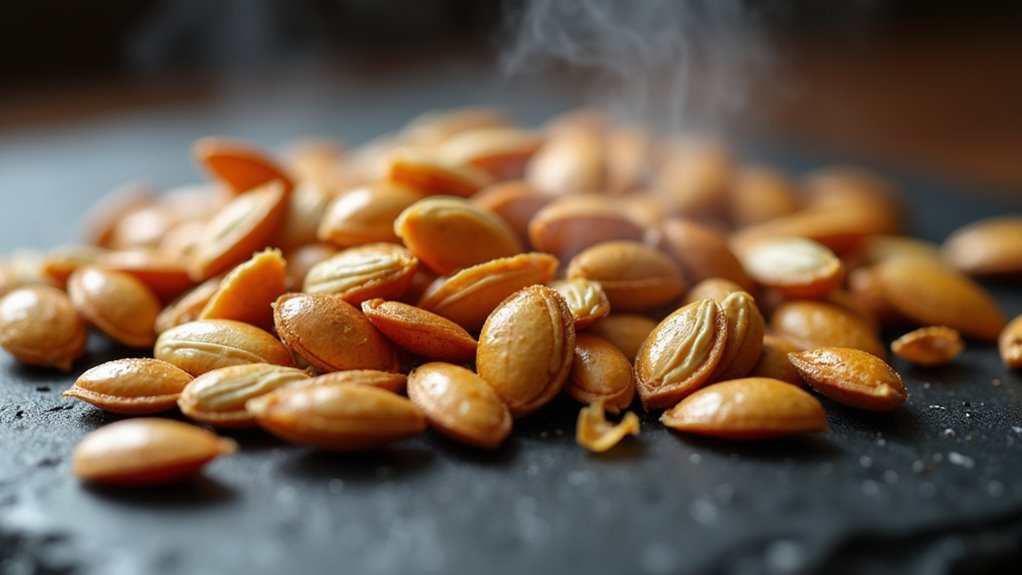
To maximize magnesium absorption from pumpkin seeds, you’ll need to prepare them properly before consumption. Different preparation methods greatly impact nutrient integrity and bioavailability.
Soaking pumpkin seeds for several hours reduces phytic acid levels, enhancing magnesium absorption. Raw pumpkin seeds maintain their natural nutrient profile, including healthy fats that support better sleep. For roasted pumpkin seeds, keep temperatures around 170°F to preserve magnesium content while improving digestibility.
| Preparation Method | Magnesium Retention |
|---|---|
| Raw consumption | Highest nutrient integrity |
| Soaked (2-4 hours) | Enhanced absorption |
| Low-temp roasting (170°F) | Good retention + flavor |
| Smoothie/yogurt addition | Improved digestibility |
| High-heat roasting | Reduced magnesium levels |
Your ideal serving size remains one ounce regardless of preparation methods chosen for promoting restful sleep.
Creative Ways to Include Pumpkin Seeds in Your Evening Routine
Once you’ve mastered the ideal preparation methods, incorporating pumpkin seeds into your evening routine becomes an enjoyable ritual that can enhance your sleep quality.
Snack on a handful of roasted pumpkin seeds 30-60 minutes before bedtime to benefit from their tryptophan content, which promotes sleep through serotonin and melatonin production.
Blend pumpkin seeds into evening smoothies with bananas and spinach for a nutritious snack that supports restful sleep.
Spread pumpkin seed butter on nighttime oatmeal or toast to gain essential magnesium.
Drizzle pumpkin seed oil over salads for omega-3 benefits that improve sleep quality.
Create a DIY sleep mix combining pumpkin seeds with tart cherries and dark chocolate for your evening routine.
Combining Pumpkin Seeds With Other Sleep-Supporting Foods
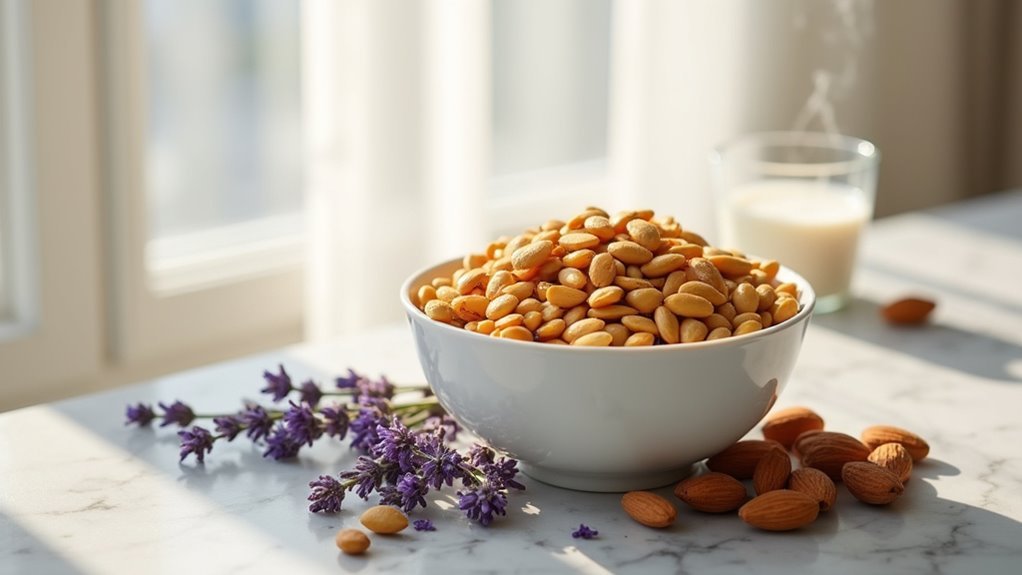
While pumpkin seeds offer impressive sleep benefits on their own, pairing them with complementary foods amplifies their natural sleep-promoting properties.
Combining pumpkin seeds with tart cherries creates a powerful duo—the seeds provide magnesium while cherries deliver melatonin to regulate your sleep cycle. You can also blend them with banana slices for extra potassium that helps relax muscles and support restful sleep.
Create a protein-rich parfait by mixing pumpkin seeds with Greek yogurt, which is rich in tryptophan and probiotics for better gut health.
Adding them to oatmeal with walnuts will reduce inflammation through omega-3 fatty acids.
For evening snacking, make a trail mix combining pumpkin seeds with dark chocolate and dried fruit—this combination provides antioxidants and natural sugars that improve your sleep while delivering impressive health benefits.
Frequently Asked Questions
How to Eat Pumpkin Seeds for Better Sleep?
You should eat roasted pumpkin seeds 30-60 minutes before bed, blend them into smoothies, layer in yogurt parfaits, spread as butter on toast, or mix with cherries for better sleep.
How Much Pumpkin Seeds to Help Sleep?
You’ll want to consume about 1 ounce or roughly 28 grams of pumpkin seeds before bedtime. Start with 1-2 tablespoons first to test your tolerance, then gradually increase to optimize sleep benefits.
Which Seed Is Best for Insomnia?
You’ll find pumpkin seeds are the best choice for insomnia. They’re packed with tryptophan, magnesium, and zinc that naturally boost melatonin production and promote deep, restful sleep better than other seeds.
Which Nut Is Best for Sleep?
Walnuts are your best choice for sleep since they’re naturally high in melatonin, which directly regulates your sleep-wake cycle. You’ll benefit from their ability to help you fall asleep faster and improve overall sleep quality.


Leave a Reply