

You can heal your gut with fermented vegetables by consuming ¼ to ½ cup at least five times weekly, starting with sauerkraut or kimchi for concentrated probiotics. These foods introduce beneficial Lactobacillus and Bifidobacterium strains that displace harmful bacteria, reduce inflammation, and stimulate butyrate production essential for digestive health. Gradually increase serving sizes to monitor tolerance and eat them with meals to maximize absorption. The strategies below will show you how to create a complete gut-restoration protocol.
Understanding the Role of Fermented Vegetables in Gut Health
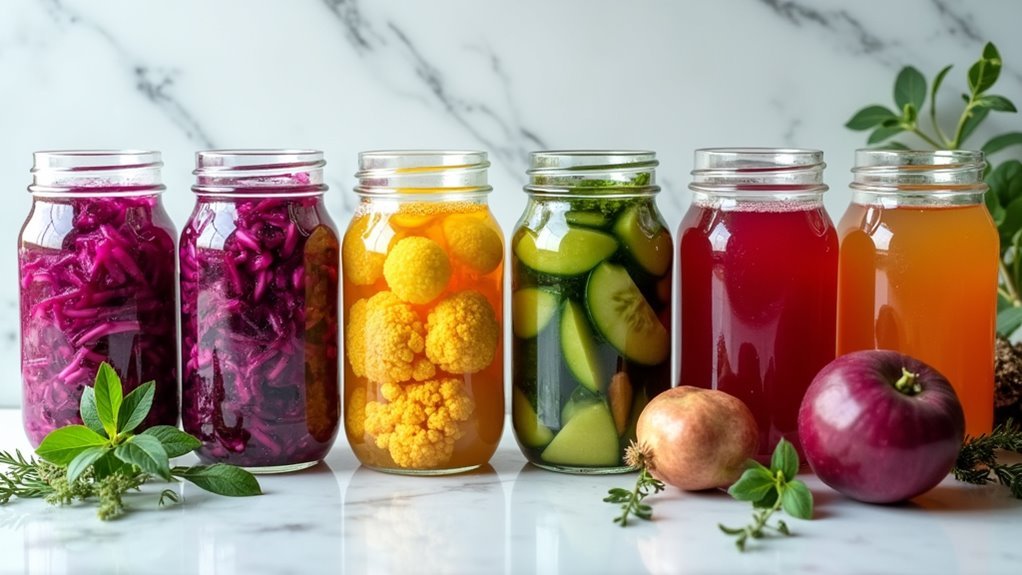
When you consume fermented vegetables like sauerkraut and kimchi, you’re introducing powerful probiotics into your digestive system that work to restore and maintain ideal gut health.
These live microorganisms increase beneficial bacteria populations while promoting microbial diversity throughout your digestive tract.
The fermentation process creates an environment where lacto-fermented vegetables stimulate butyrate-producing bacteria, which are essential for peak digestive health. This leads to reduced inflammation and enhanced immune function within your gut.
Lacto-fermented vegetables fuel butyrate-producing bacteria that reduce gut inflammation and strengthen your immune system naturally.
You’ll also benefit from increased bioavailability of essential vitamins and minerals, including iron, zinc, and vitamin C.
Regular consumption promotes the production of short-chain fatty acids, which protect against gastrointestinal disorders and chronic diseases linked to gut dysbiosis, making fermented vegetables a cornerstone of digestive wellness.
Essential Fermented Vegetables for Digestive Recovery
While numerous fermented vegetables offer digestive benefits, certain varieties stand out as particularly powerful allies in your gut recovery journey.
Sauerkraut delivers concentrated probiotics that boost microbial diversity while providing essential vitamins like vitamin K and B vitamins vital for nutrient absorption.
Kimchi combines probiotics with fiber, supporting digestion and reducing inflammation throughout your digestive system.
These fermented vegetables excel at breaking down complex carbohydrates, making them invaluable if you’re managing lactose intolerance or other digestive issues.
Both varieties enhance gut health by promoting beneficial bacteria growth and improving overall digestive function.
You’ll find that regular consumption helps address various digestive issues while strengthening your gut microbiome for long-term recovery.
How Probiotics From Fermented Vegetables Restore Gut Balance
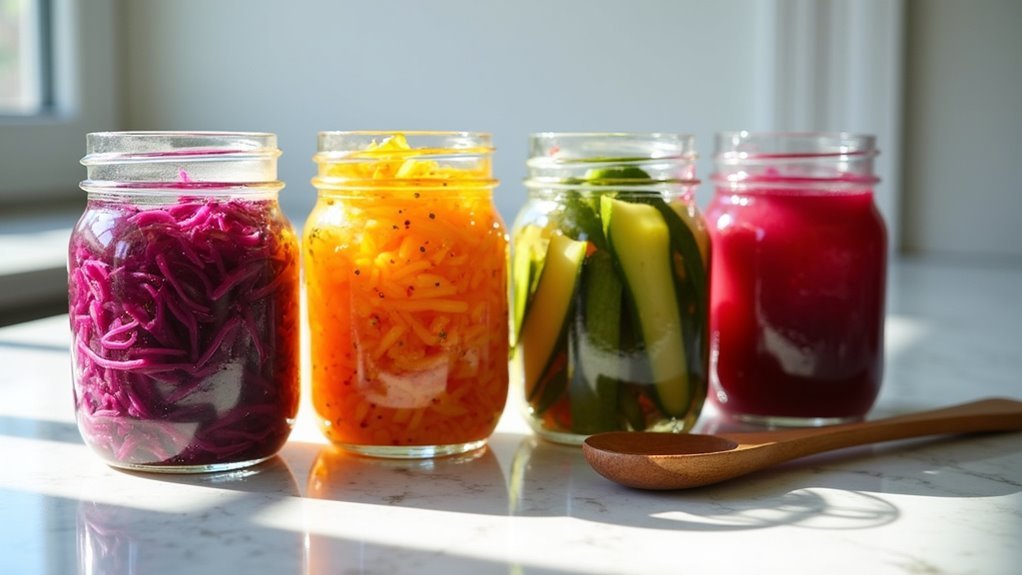
As you introduce fermented vegetables into your diet, the powerful probiotic strains like Lactobacillus and Bifidobacterium begin working immediately to rebalance your gut ecosystem.
These beneficial bacteria actively colonize your gut microbiome, displacing harmful microorganisms and restoring healthy bacterial diversity.
Your lacto-fermented vegetables enhance short-chain fatty acids production, particularly butyrate, which creates an acidic environment that favors beneficial bacteria growth.
This process directly improves your digestive function by helping break down complex carbohydrates and making nutrients more bioavailable.
The probiotics you’re consuming also reduce inflammation throughout your digestive tract, calming immune responses that contribute to gastrointestinal disorders.
Probiotics actively combat digestive inflammation while soothing immune responses that trigger common gastrointestinal disorders and gut dysfunction.
Regular consumption increases your fecal metabolite diversity, indicating a thriving gut microbiome that supports peak gut health and overall wellness.
Creating Your Daily Fermented Vegetable Protocol
You’ll need to establish clear daily serving guidelines and ideal timing to maximize the gut-healing benefits of fermented vegetables.
Start with ¼ to ½ cup servings and aim for at least five times per week to see meaningful improvements in your digestive health.
The key lies in finding the right frequency that works with your schedule while allowing your gut microbiome to consistently receive these beneficial probiotics.
Daily Serving Guidelines
Establishing a consistent daily protocol for fermented vegetables transforms these probiotic powerhouses from occasional additions into therapeutic allies for your gut health. Your daily serving should range from 1/4 to 1/2 cup of fermented foods to maximize probiotics while supporting digestion and nutrient absorption.
| Serving Size | Frequency | Best Timing |
|---|---|---|
| 1/4 cup | Daily | With meals |
| 1/2 cup | Daily | Split between meals |
| Start small | Gradual increase | Monitor tolerance |
Incorporate diverse fermented vegetables like sauerkraut and kimchi to enhance microbial diversity in your digestive system. If you’re new to fermented foods, start gradually to prevent gas or bloating. Always pair them with meals and avoid high heat that destroys beneficial probiotics.
Timing and Frequency
While establishing consistent consumption habits matters more than perfection, creating a strategic timing protocol amplifies the therapeutic benefits of fermented vegetables for your gut health. Aim for 3-5 servings weekly, consuming at least half a cup daily to maintain steady probiotic intake that supports beneficial gut bacteria.
Time your fermented vegetables alongside meals to enhance digestion and nutrient absorption. The probiotics work synergistically with your digestive enzymes, breaking down food more effectively. Start with 1-2 tablespoons if you’re new to fermented foods, then gradually increase portions as your system adapts.
Maximize frequency benefits by pairing fermented vegetables with prebiotic foods like garlic or onions daily. This combination creates an ideal environment where probiotics thrive, promoting diverse gut microbiome development and sustained digestive health improvements.
Maximizing Probiotic Benefits Through Proper Preparation and Storage
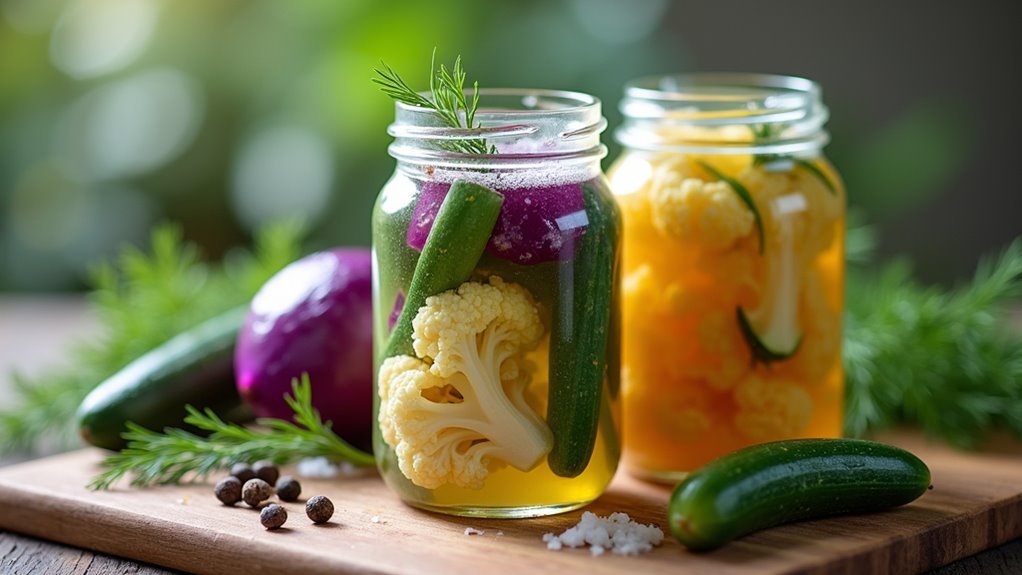
Since the potency of your homemade fermented vegetables depends entirely on how you prepare and store them, you’ll want to start with the freshest, highest-quality produce available. This guarantees maximum probiotic benefits and promotes healthy gut healing.
During preparation, use a 2-3% salt concentration to encourage beneficial bacteria growth while preventing harmful pathogens. Choose glass or food-grade plastic containers rather than metal to preserve live cultures and flavor.
Proper storage maximizes your fermentation investment. Keep finished vegetables in airtight containers in the refrigerator to slow fermentation and maintain culture viability. Consume within a few months for peak freshness.
Regularly inspect for signs of spoilage like off odors or color changes to guarantee your fermented vegetables remain safe and beneficial for gut health.
Building a Sustainable Gut-Healing Diet With Fermented Foods
Creating a sustainable gut-healing diet requires strategic integration of fermented vegetables into your daily meals rather than sporadic consumption. You’ll maximize probiotics and gut health benefits by including sauerkraut, kimchi, or other fermented foods several times weekly. This consistent approach promotes diverse gut microbiota, which enhances digestion and nutrient absorption while supporting your body’s natural healing processes.
Regular fermented vegetable consumption increases short-chain fatty acid production, reducing inflammation and strengthening your digestive system. You’re also accessing enhanced bioavailability of essential minerals like iron, zinc, and calcium through fermentation.
Start with one serving per meal to build your sustainable diet gradually. This systematic approach guarantees your gut receives continuous probiotic support, creating lasting improvements in your overall digestive health and well-being.
Frequently Asked Questions
How Long Does It Take to Heal Your Gut With Fermented Foods?
You’ll typically notice gut healing improvements within 2-6 weeks of eating fermented foods regularly. However, significant gut restoration can take 1-3 months, depending on your current health condition and consumption consistency.
Is It OK to Eat Fermented Vegetables Everyday?
Yes, you can eat fermented vegetables daily. They’ll boost your gut health and immune function through beneficial probiotics. However, watch your portions since they’re high in sodium and might cause digestive discomfort.
What Is the Healthiest Vegetable to Ferment?
You’ll find cabbage is the healthiest vegetable to ferment. It’s packed with vitamins C and K, plus when you make sauerkraut or kimchi, you’re maximizing probiotic benefits for ideal gut health.
What Is the Best Fermented Food for the Gut?
You’ll find kefir’s the best fermented food for gut health since it contains up to 61 strains of beneficial bacteria and yeast, making it more potent than yogurt for supporting digestive wellness.


