
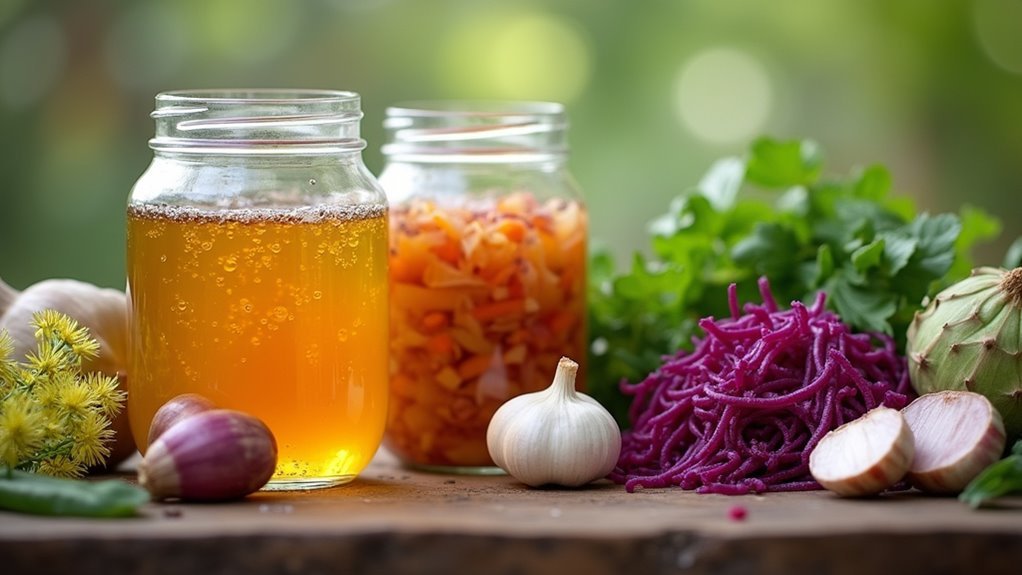
You’ll accelerate your gut healing by combining prebiotic and probiotic foods because prebiotics act as fuel that keeps the beneficial bacteria from probiotics alive and thriving in your digestive system. This synergistic partnership creates synbiotics, which restore gut flora balance, enhance immune function, and alleviate gastrointestinal symptoms more effectively than either component alone. Together, they promote microbiome diversity, improve nutrient absorption, and strengthen your gut’s natural defenses against harmful pathogens. These strategic food combinations offer targeted solutions for your specific digestive concerns.
Understanding the Science Behind Prebiotic and Probiotic Synergy
When it comes to gut health, prebiotics and probiotics work together like a perfectly orchestrated team—one can’t reach its full potential without the other.
Prebiotics act as specialized food for probiotics, fueling their growth and activity within your digestive system. This symbiotic relationship creates what scientists call synbiotics—a powerful combination that enhances your gut microbiome more effectively than either component alone.
Research shows that prebiotics provide essential nutrients probiotics need to survive and thrive in your digestive tract.
This partnership promotes a diverse gut microbiome, which strengthens your immune function and overall health.
Studies demonstrate that synbiotics can restore gut flora balance, potentially alleviating symptoms of gastrointestinal disorders like IBS while supporting ideal digestive health.
How Prebiotics Feed Beneficial Gut Bacteria for Optimal Growth
Since beneficial gut bacteria require specific nutrients to flourish, prebiotics act as their primary fuel source, creating an environment where these microorganisms can multiply and strengthen your digestive health.
Prebiotics serve as essential fuel for beneficial gut bacteria, creating optimal conditions for microorganisms to thrive and enhance digestive wellness.
When you consume prebiotic-rich foods like garlic, onions, and bananas, you’re delivering inulin and oligosaccharides directly to your gut. These compounds selectively feed beneficial bacteria, giving them a competitive advantage over harmful microorganisms.
This targeted nutrition allows probiotics to establish themselves more effectively in your digestive system. As prebiotics fuel their growth, beneficial bacteria produce metabolites that support intestinal wall integrity and immune function.
You’ll experience improved nutrient absorption and better bowel health. By consistently providing this nutritional foundation, you’re actively maintaining a balanced microbiome that promotes long-term digestive wellness and reduces gastrointestinal disorder risks.
The Role of Probiotics in Restoring Gut Microbiome Balance
Your gut microbiome thrives when you introduce live probiotic bacteria that actively colonize your digestive system and crowd out harmful microorganisms.
These beneficial bacteria don’t just survive the journey to your intestines—they establish themselves as permanent residents, creating a more diverse and resilient microbial community.
You’ll experience improved digestive function as probiotics restore the natural balance your gut needs to process food efficiently and maintain peak health.
Live Bacteria Benefits
Although gut health seems complex, probiotics offer a straightforward solution by introducing beneficial live microorganisms that actively restore balance to your digestive system.
When you consume probiotics are live microorganisms, you’re fundamentally reinforcing your healthy microbiome with good bacteria that work to improve the balance of your gut flora.
These live bacteria provide targeted benefits for your digestive wellness:
- Enhanced immune response – Probiotics strengthen your gut’s natural defense mechanisms against harmful pathogens
- Reduced IBS symptoms – Lactobacillus and Bifidobacterium strains help alleviate digestive discomfort
- Improved lactose digestion – Specific strains help you better process dairy products
- Infection prevention – Beneficial bacteria crowd out harmful microorganisms
- Strain-specific healing – Different probiotic types target conditions like IBD and antibiotic-associated diarrhea
Combined with the benefits of prebiotics, these live cultures create favorable conditions for gut restoration.
Microbiome Diversity Enhancement
When you introduce probiotics into your digestive system, you’re fundamentally seeding your gut with diverse bacterial strains that work together to create a more balanced and resilient microbiome.
Since probiotics are live bacteria, they actively colonize your intestinal tract and compete with harmful pathogens for space and resources.
This microbiome diversity enhancement occurs when beneficial strains like Lactobacillus and Bifidobacterium establish themselves within your gut microbiota.
You’ll experience improved resistance against inflammatory conditions like IBD and IBS as these diverse bacterial communities strengthen your digestive defenses.
When you consume prebiotics and probiotics together through foods like yogurt and kefir, you’re providing both the beneficial microorganisms and the fuel they need for healthy digestion and peak nutrient absorption.
Digestive Health Restoration
Since disruptions to your gut microbiome from antibiotics, stress, or poor diet can throw your digestive system into chaos, probiotics serve as powerful restoration agents that actively rebuild bacterial balance from the ground up.
When you combine prebiotic and probiotic foods, you’re creating ideal conditions for digestive health recovery. Specific strains like Lactobacillus and Bifidobacterium directly address gut imbalances while enhancing nutrient absorption and food digestion.
Your restoration strategy should include:
- Consuming fermented foods with live probiotic cultures daily
- Adding prebiotic-rich foods to nourish beneficial bacteria
- Targeting specific strains for your digestive concerns
- Maintaining consistent intake for sustained microbiome support
- Monitoring symptom improvements over time
This strategic combination accelerates gut health restoration by ensuring probiotics have the nutrients they need to establish lasting colonies in your digestive system.
Synergistic Effects of Combined Prebiotic and Probiotic Foods
While prebiotics and probiotics each offer distinct health benefits on their own, combining these powerhouse foods creates a synergistic relationship that amplifies their healing potential in your gut.
When you consume prebiotics from high-fiber foods like garlic and bananas alongside probiotics, you’re fundamentally feeding the beneficial bacteria, ensuring they survive and thrive in your digestive system.
This powerful combination enhances your gut microbiome diversity, which directly impacts your overall digestive health and immune function.
You’ll experience improved gut barrier function, reducing infection and inflammation risks.
The synergistic effects can particularly benefit those suffering from irritable bowel syndrome (IBS) and other gastrointestinal disorders while promoting better nutrient absorption throughout your digestive tract.
Best Food Sources for Prebiotic and Probiotic Combinations
You’ll find the most effective gut healing comes from pairing specific prebiotic and probiotic foods that work together as synbiotics.
These combinations create powerful synergistic effects when you integrate them into your daily meals rather than taking them separately.
Your gut microbiome thrives when you consistently choose foods that deliver both beneficial bacteria and the fiber needed to nourish them.
Synbiotic Food Combinations
When you combine prebiotic and probiotic foods into synbiotic combinations, you’re creating a powerful one-two punch for gut health that feeds beneficial bacteria while introducing new live microorganisms.
These strategic pairings maximize digestive benefits and strengthen your immune system more effectively than consuming prebiotics or probiotic foods separately.
Synbiotic combinations work by providing immediate bacterial support while nourishing existing gut flora. You’ll find these fermented foods naturally promote balanced microbiomes and reduce gastrointestinal disorder risks.
- Yogurt with oats or bananas – combines live cultures with fiber-rich prebiotics
- Kefir paired with apples – diverse probiotic strains meet prebiotic-rich fruit
- Kimchi with garlic and onions – fermented vegetables provide both benefits naturally
- Sauerkraut with whole grains – doubles prebiotic fiber intake
- Miso soup with seaweed – traditional combination supporting digestive wellness
Daily Meal Integration
Building these synbiotic combinations into your daily eating routine doesn’t require dramatic dietary overhauls or complicated meal planning.
Start your morning with yogurt topped with banana slices or oats to kickstart your gut health. For lunch, pair whole wheat bread with sauerkraut, creating foods high in both prebiotic fiber and beneficial bacteria.
Dinner becomes an opportunity to combine kimchi with garlic-rich dishes, supporting your healthy immune system through diverse microbial fuel.
Smoothies offer versatile daily integration – blend kefir with berries for a powerful prebiotic and probiotic combination.
These simple swaps maintain the balance of good bacteria while feeding them properly. You’ll notice improved digestion and enhanced nutrient absorption when you consistently incorporate these synbiotic pairs throughout your day.
Targeting Specific Digestive Issues Through Strategic Food Pairing
Strategic food pairing transforms general gut health recommendations into targeted solutions for specific digestive challenges. You can address particular digestive issues by combining prebiotics and probiotics strategically.
When you’re dealing with constipation, pair high-fiber prebiotic foods with probiotic-rich yogurt to improve gut motility. For IBS symptoms, you’ll benefit from combining gentle prebiotics like bananas with kefir to restore balance without triggering flare-ups.
- Constipation relief: Combine oats (prebiotic fiber) with Greek yogurt for enhanced gut motility
- IBS management: Pair bananas with kefir to soothe inflammation while feeding beneficial bacteria
- IBD support: Mix cooked garlic with fermented vegetables to reduce gut inflammation
- Bloating reduction: Combine fennel seeds with probiotic smoothies for digestive comfort
- Nutrient absorption: Pair asparagus with cultured buttermilk to maximize vitamin uptake
Creating a Sustainable Gut Healing Protocol With Whole Foods
Beyond addressing immediate digestive concerns, you’ll need a thorough approach that transforms short-term interventions into lasting gut health habits.
Building a sustainable protocol starts with incorporating prebiotics and probiotics through whole foods rather than supplements alone. Focus on diverse diet choices like garlic, onions, and bananas for prebiotics, paired with yogurt and kefir for probiotics. This combination creates synergistic effects that enhance digestive comfort while supporting long-term gut health.
Gradually increase your intake of high-fiber foods and fermented options to avoid overwhelming your system. Consistency matters more than perfection—aim for daily inclusion of both prebiotic and probiotic sources.
This whole foods approach guarantees you’re building sustainable habits that naturally support improved digestion, enhanced nutrient absorption, and stronger immune function over time.
Frequently Asked Questions
Should You Eat Prebiotic and Probiotic Foods Together?
You should eat prebiotic and probiotic foods together because prebiotics feed probiotics, enhancing their survival and effectiveness. This synbiotic combination improves digestion, strengthens your immune system, and promotes ideal gut health.
What Are the Benefits of Prebiotics and Probiotics Together?
When you combine prebiotics and probiotics, you’ll boost your immune function, improve digestion, enhance nutrient absorption, and maintain a balanced gut microbiome that supports better mood and reduces inflammation throughout your body.
What Happens if You Take Probiotics Without Prebiotics?
You’ll find probiotics pass through your digestive system more quickly without prebiotics to nourish them. They can’t establish lasting colonies or effectively compete against harmful bacteria, considerably reducing their health benefits.
What Is the Best Probiotic Prebiotic Combo?
You’ll find the best combo pairs yogurt with bananas or kefir with oats. These combinations provide Lactobacillus probiotics alongside inulin-rich prebiotics, maximizing gut microbiome diversity and digestive health benefits effectively.


Leave a Reply