
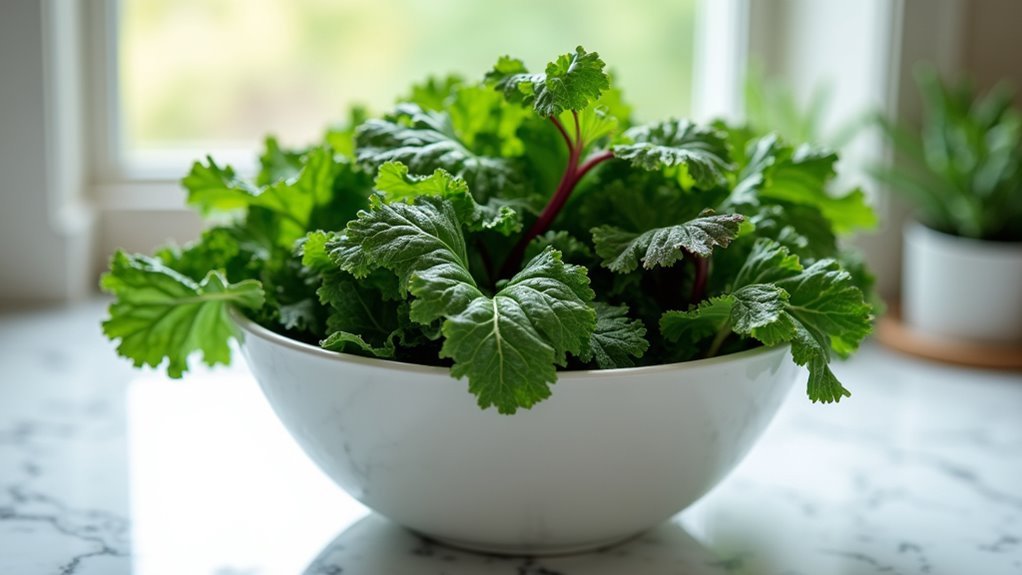
You’ll greatly improve your heart health by incorporating potassium-rich leafy greens into your daily diet. Swiss chard delivers 20% of your daily potassium needs in just one cooked cup, while spinach provides essential nutrients that naturally reduce blood pressure. Kale offers 329mg of potassium per serving along with inflammation-fighting antioxidants. These nutrient-dense greens counteract sodium’s harmful effects, promote better blood circulation, and reduce your stroke risk. Discover the specific preparation methods that maximize these cardiovascular benefits.
Why Potassium Matters for Cardiovascular Function
While sodium often gets the spotlight for its negative effects on blood pressure, potassium works as your cardiovascular system’s silent guardian, actively counteracting sodium’s harmful impact and keeping your heart functioning efficiently.
This essential mineral promotes vasodilation, allowing your blood vessels to relax and improve circulation throughout your body. When you don’t get enough potassium, your heart works harder to pump blood, potentially elevating your blood pressure and increasing stroke risk.
Most adults need 2,600-3,400 mg of potassium daily, yet many fall short of this target.
Incorporating potassium-rich leafy greens into your meals provides a natural solution for supporting cardiovascular health. These nutrient-dense vegetables deliver substantial potassium while offering additional heart-protective compounds that work synergistically.
Spinach: The Nutrient-Dense Powerhouse
Among the most potent potassium-rich leafy greens, spinach stands out as a nutritional champion that delivers exceptional cardiovascular benefits in every serving.
You’ll get 10.5% of your daily potassium needs from just 3 cups of raw spinach, making it an incredibly nutrient-dense choice for heart health.
This powerhouse green doesn’t stop at potassium—you’re also getting vitamins A and K, plus antioxidants like lutein and quercetin that fight inflammation and oxidative stress.
Regular spinach consumption can help reduce blood pressure naturally while supporting overall cardiovascular function.
Adding spinach to your daily diet provides a natural, effective way to maintain healthy blood pressure and strengthen your heart.
Here’s why spinach deserves a spot on your plate:
- Low calories, high fiber – Perfect for maintaining healthy weight
- Antioxidant protection – Reduces heart-damaging inflammation
- Blood pressure support – Potassium helps regulate cardiovascular function
Swiss Chard: Maximum Potassium in Every Bite
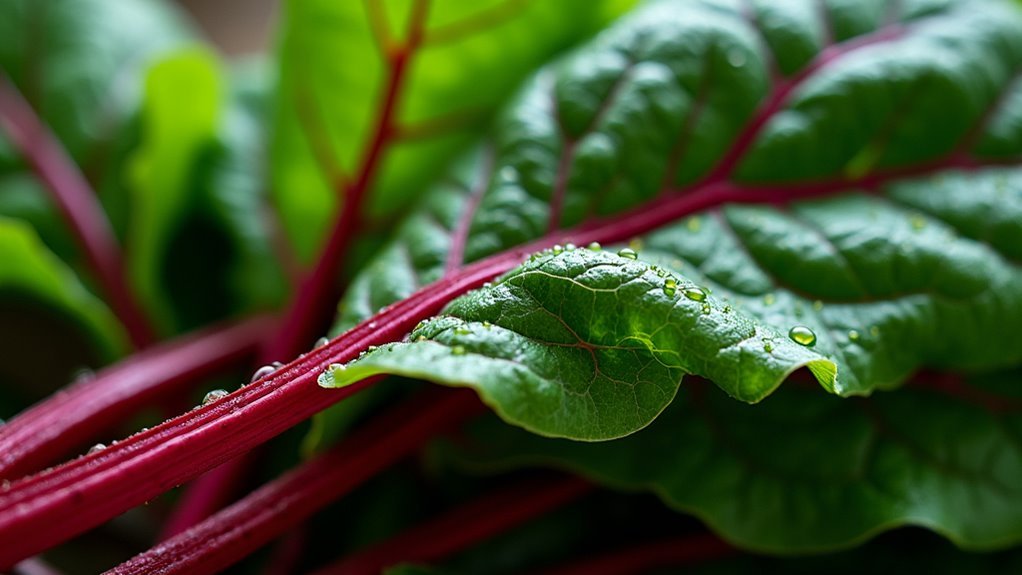
When you’re looking for maximum potassium content in leafy greens, Swiss chard delivers an impressive 20% of your daily value in just one cooked cup. This nutrient-dense powerhouse also provides 476% of your vitamin K needs, supporting bone health and blood clotting.
Swiss chard’s potassium content works actively to regulate your blood pressure by counteracting sodium levels, making it exceptional for cardiovascular health.
You’ll benefit from its low-calorie, high-fiber profile that supports heart-healthy weight management goals.
Whether you sauté Swiss chard or add it to soups, you’re considerably boosting your potassium intake while supporting ideal heart function.
This versatile green transforms ordinary meals into heart-protective powerhouses that actively contribute to your overall cardiovascular wellness.
Kale: The Ultimate Heart-Healthy Green
Kale stands out as the ultimate heart-healthy green, delivering 329 mg of potassium per cooked cup to support your cardiovascular system. This nutrient powerhouse doesn’t just stop at potassium—it’s packed with vitamins A, C, and K that work together to reduce inflammation and promote overall heart health.
The fiber content helps lower your cholesterol levels, while antioxidants like quercetin and kaempferol combat oxidative stress and improve heart function.
Here’s how kale maximizes your heart health benefits:
- Blood pressure regulation – High potassium content helps maintain healthy blood pressure levels
- Cholesterol reduction – Fiber binds to cholesterol, helping remove it from your body
- Inflammation fighter – Antioxidants reduce risk of heart disease by combating cellular damage
Arugula: Peppery Flavor With Potassium Benefits

You’ll find arugula’s distinctive peppery bite makes it a flavorful way to boost your potassium intake, with about 119 mg per 100 grams supporting your cardiovascular system.
This leafy green doesn’t just add zest to your meals—it actively helps regulate your blood pressure by counteracting sodium’s effects in your body.
When you combine arugula’s potassium content with its vitamins A, C, and K, you’re getting a powerful combination that promotes heart health while adding versatility to salads, sandwiches, and smoothies.
Arugula’s Potassium Content
Arugula’s distinctive peppery bite makes it a flavorful powerhouse that delivers 119 mg of potassium per 100 grams to your daily nutritional intake.
This nutrient-dense leafy green supports heart health by helping regulate blood pressure and reducing cardiovascular disease risk. The potassium in arugula counteracts sodium’s harmful effects, making it an essential addition to your heart-healthy diet.
Here are three ways to maximize arugula’s potassium benefits:
- Toss fresh arugula into salads – Raw consumption preserves maximum nutrient content and delivers the full potassium punch.
- Add arugula as a pizza topping – Sprinkle over hot pizza after cooking to maintain nutritional value while adding peppery flavor.
- Blend into green smoothies – Combine with fruits to mask the bitter taste while boosting your potassium intake effortlessly.
Heart Health Benefits
Beyond its impressive potassium content, arugula’s heart-protective benefits extend far deeper into cardiovascular wellness. When you consume this peppery green regularly, you’re actively supporting your body’s ability to regulate blood pressure and reduce risk of heart disease. The potassium works alongside arugula’s vitamins A, C, and K to enhance arterial health by improving blood vessel function and reducing inflammation.
| Heart Health Component | Arugula’s Contribution |
|---|---|
| Blood Pressure Control | 119mg potassium per 100g |
| Inflammation Reduction | Vitamins A, C, K |
| Arterial Function | Antioxidants + potassium |
| Hypertension Management | Natural potassium regulation |
You’ll find that incorporating arugula into salads, sandwiches, and smoothies makes meeting your potassium needs enjoyable while protecting against stroke and cardiovascular complications.
Collard Greens: Traditional Superfood for Modern Hearts
While many modern superfoods come and go with dietary trends, collard greens have stood the test of time as a nutritional powerhouse that directly benefits your heart health.
Collard greens deliver lasting nutritional value that transcends fleeting diet fads, offering proven cardiovascular benefits that truly matter.
This traditional superfood packs 357 mg of potassium per cooked cup, making it one of the most effective potassium-rich foods for managing blood pressure naturally.
You’ll also receive vitamins A, C, and K, plus inflammation-fighting antioxidants that support cardiovascular function.
The high fiber content promotes satiety while keeping calories low, supporting weight management essential for heart health.
Ways to enjoy collard greens:
- Steam them as a simple side dish with garlic and lemon
- Sauté with onions and add to pasta or grain bowls
- Add chopped leaves to soups and stews for extra nutrition
Bok Choy: Asian Green Rich in Essential Minerals
This Asian green delivers an impressive 636 mg of potassium per cooked cup, making bok choy one of the most potassium-dense vegetables you can add to your heart-healthy diet.
You’ll benefit from its ability to help maintain healthy blood pressure levels while supporting overall heart health.
Beyond potassium, you’re getting excellent sources of vitamins A, C, and K for immune support and bone health.
Since bok choy is remarkably low in calories, you can enjoy generous portions without compromising your dietary goals.
As a cruciferous vegetable, it provides powerful antioxidants and anti-inflammatory compounds that may reduce chronic disease risk.
You can easily incorporate bok choy through stir-frying, steaming, or adding it to soups for maximum nutritional benefits.
Romaine Lettuce: More Than Just Salad Base
You’ll find romaine lettuce packs 247 mg of potassium per 100 grams, making it a smart choice for heart health beyond its typical salad role.
This crisp green doesn’t just provide potassium—it’s loaded with vitamins A, C, and K while staying remarkably low in calories.
When you add romaine to wraps, smoothies, or sandwiches, you’re supporting healthy blood pressure and boosting your overall nutritional intake.
Potassium Content Analysis
Although romaine lettuce doesn’t top the charts for potassium content, it delivers a respectable 247 mg per 100 grams that shouldn’t be overlooked in your daily nutrition planning.
This leafy green offers more than just crunch for your salads—it’s a valuable contributor to your heart health strategy.
Understanding romaine lettuce’s nutritional profile helps you maximize its benefits:
- Potassium paired with hydration: The 95% water content supports healthy blood pressure while delivering essential minerals.
- Vitamin synergy: Vitamins A, K, and folate work alongside potassium to enhance cardiovascular function.
- Versatile consumption: Use in sandwiches, wraps, and salads to increase daily intake effortlessly.
Regular consumption of potassium-rich leafy greens like romaine lettuce can reduce risk of heart disease when part of a balanced diet.
Heart Health Benefits
Beyond its impressive mineral content, romaine lettuce delivers targeted cardiovascular benefits that make it a smart addition to your heart-healthy eating plan. The potassium in romaine lettuce actively counteracts sodium’s harmful effects on your blood pressure, helping maintain ideal levels naturally. This mineral supports your heart’s electrical system, ensuring proper muscle contractions and rhythm regulation.
You’ll reduce risk of hypertension and stroke by incorporating this leafy green into your regular meals. The vitamins A and K work alongside potassium to enhance overall cardiovascular health while fighting inflammation.
Since your body needs 2,600-3,400 mg of potassium daily, romaine lettuce provides a delicious way to meet these requirements. Every serving moves you closer to better heart health through natural, nutrient-dense nutrition.
Nutritional Profile Overview
Romaine lettuce packs remarkable nutritional density into every crisp leaf, delivering far more than the basic crunch you’d expect from a salad green. You’ll get approximately 10% of your daily potassium needs from just 100 grams, making it an excellent choice for cardiovascular health.
This versatile green doesn’t stop there—it’s loaded with vitamins A, C, and K that actively support heart health while fighting inflammation throughout your body.
Here’s what makes romaine lettuce nutritionally powerful:
- High water content and low calories – Perfect for hydration and weight management
- Antioxidants like lutein and zeaxanthin – Combat oxidative stress while protecting your eyes
- Multiple essential nutrients – Delivers thorough nutrition beyond just potassium for ideal heart function
Turnip Greens: Underrated Source of Heart Protection
While many people overlook turnip greens at the grocery store, you’re missing out on one of nature’s most potent heart-protective foods. These leafy powerhouses deliver an impressive 1,200 mg of potassium per cooked cup, making them exceptional for heart health maintenance and blood pressure regulation.
You’ll also benefit from their rich content of vitamins A, C, and K, plus antioxidants that shield your cardiovascular system from harmful oxidative stress. The high fiber content supports cholesterol management, directly contributing to better heart function.
When you incorporate turnip greens into your meals, you’re adding significant nutrient density while supporting balanced nutrition. Their low calorie profile helps you maintain healthy weight, which can reduce risk of developing heart disease over time.
Mustard Greens: Spicy Leaves With Serious Benefits
You’ll find that mustard greens pack an impressive nutritional punch with 312 mg of potassium per 100 grams, along with vitamins A, C, and K that work together to support your cardiovascular system.
Their spicy kick comes with serious heart health benefits, as the potassium helps regulate your blood pressure while antioxidants and anti-inflammatory compounds protect against chronic diseases.
These peppery leaves don’t just add bold flavor to your meals—they’re actively working to strengthen your heart and optimize your muscle and nerve function.
Nutritional Profile Breakdown
Mustard greens pack a powerful nutritional punch that’ll surprise you with their impressive potassium content and extensive vitamin profile.
These spicy leaves deliver substantial heart health benefits through their dense nutritional composition.
Here’s what makes mustard greens’ nutritional profile exceptional:
- Potassium Powerhouse – You’ll get 420 mg of potassium per cooked cup, supporting blood pressure regulation and cardiovascular function.
- Vitamin Trinity – Rich concentrations of vitamins A, C, and K boost immune function, bone health, and overall wellness.
- Anti-inflammatory Arsenal – Antioxidants and anti-inflammatory compounds help reduce chronic disease risk while promoting cellular health.
The fiber content aids digestion and potentially lowers cholesterol levels.
You’re getting maximum nutrient density with every serving, making mustard greens an excellent addition to heart-healthy meal plans.
Heart Health Benefits
With their remarkable potassium density of 470 mg per cooked cup, mustard greens become cardiovascular champions that actively support your heart’s daily functions. This essential mineral helps regulate blood pressure, working alongside nitrates to relax blood vessel walls and improve circulation throughout your body.
You’ll reduce risk of chronic heart conditions when you incorporate these leafy greens regularly into meals. The combination of vitamins A, C, and K fights inflammation while quercetin antioxidants combat oxidative stress that damages cardiovascular tissue.
Your heart health benefits tremendously from mustard greens’ ability to prevent hypertension through enhanced potassium intake. These spicy leaves deliver extensive cardiovascular protection, making them an intelligent choice for maintaining ideal heart function and reducing your overall risk of heart disease.
How Leafy Greens Lower Blood Pressure Naturally
How do leafy greens work their magic in lowering blood pressure naturally? These potassium-rich powerhouses directly counteract sodium’s harmful effects on your cardiovascular system.
When you consume leafy greens like spinach and Swiss chard, you’re flooding your body with essential potassium that supports peak heart health.
Here’s how leafy greens combat hypertension:
- Sodium Balance – Potassium neutralizes excess sodium, preventing blood pressure spikes and reducing strain on your heart.
- Vascular Relaxation – These greens help relax blood vessel walls, improving circulation and promoting smoother blood flow.
- Daily Protection – Just 3 cups of spinach provides 10.5% of your daily potassium needs, supporting long-term cardiovascular function.
Regular consumption of these nutrient-dense vegetables creates a natural defense against high blood pressure.
Daily Serving Recommendations for Optimal Heart Health
Understanding these natural blood pressure benefits leads to an important question: how much should you actually eat? For ideal heart health, you’ll want to consume 3 to 5 servings of potassium-rich leafy greens daily.
This intake considerably contributes to the recommended 4,700 mg of potassium needed for cardiovascular wellness. Swiss chard delivers 20% of your daily potassium value per serving, while spinach provides 10.5%.
You’ll reduce risk of heart disease by choosing varieties like kale, collard greens, and beet greens, which help counteract sodium’s effects. For ideal intake, pair your leafy greens with other potassium-rich foods like avocados and sweet potatoes to maximize heart-protective benefits.
Simple Ways to Incorporate More Greens Into Your Diet
Since you know the recommended daily servings, you’ll need practical strategies to reach those 3-5 servings of potassium-rich leafy greens.
These nutrient-dense vegetables support heart health by helping reduce sodium’s negative effects while providing essential minerals.
Here are three simple methods to boost your intake:
- Blend spinach into smoothies – Just 3 cups provide 10.5% of daily potassium needs without altering taste when combined with fruits and healthy fats like avocado.
- Cook Swiss chard for meals – Add it to stir-fries or soups, where 1 cup delivers 20% of your potassium requirements while enhancing flavor.
- Replace traditional wraps – Use large leafy greens like lettuce or chard instead of bread for sandwiches, reducing carbs while increasing potassium intake for better heart health.
Preparing Leafy Greens to Maximize Potassium Absorption
While eating leafy greens provides potassium, the way you prepare them greatly impacts how much your body actually absorbs. Cooking spinach and Swiss chard breaks down cell walls, enhancing potassium absorption and making nutrients more bioavailable.
When you sauté your greens in olive oil or another healthy fat, you’ll improve nutrient absorption of fat-soluble vitamins alongside potassium.
If you prefer raw leafy greens in salads, pair them with healthy fat sources like avocado or nuts. Adding acidic ingredients such as lemon juice or vinegar increases potassium bioavailability by improving nutrient solubility.
You can also boost potassium intake by blending leafy greens into smoothies with other potassium-rich fruits and vegetables for convenient, nutrient-dense meals.
Frequently Asked Questions
Does Potassium Improve Heart Health?
You’ll benefit from potassium’s heart-protective effects since it regulates blood pressure by counteracting sodium, improves blood vessel function, and reduces your risk of heart disease and stroke considerably.
Why Are Leafy Greens Good for Your Heart?
Leafy greens support your heart because they’re packed with potassium that regulates blood pressure, fiber that lowers cholesterol, and nutrients that promote healthy blood vessel function, reducing your cardiovascular disease risk.
Which Leafy Greens Are High in Potassium?
You’ll find Swiss chard tops the list with 20% daily potassium value per cup. Collard greens provide 13%, beet greens offer 11%, spinach delivers 10.5%, and kale contributes 9% per serving.
Does Potassium Clean Arteries?
Potassium doesn’t directly clean your arteries, but it improves your arterial health by enhancing blood vessel flexibility, reducing blood pressure, and supporting better circulation, which can help prevent plaque buildup over time.


Leave a Reply