

You can reverse arterial hardening with just 50 mL of daily pomegranate juice, which reduces carotid artery wall thickness by 35% within one year. The juice’s powerful antioxidants enhance your paraoxonase activity by 83%, preventing LDL oxidation while boosting nitric oxide production for better endothelial function. Punicalagins provide anti-inflammatory protection, and you’ll experience up to 21% systolic blood pressure reduction. These mechanisms directly modify arterial plaque and combat oxidative stress. Discover the complete science behind this remarkable cardiovascular transformation.
Pomegranate Juice Reduces Carotid Artery Wall Thickness by 35

One groundbreaking study reveals pomegranate juice’s remarkable ability to reverse arterial hardening in people with severe carotid artery stenosis.
Breakthrough research shows pomegranate juice can dramatically reverse hardened arteries in patients with severe carotid stenosis.
When you consume just 50 mL of pomegranate juice daily, you’ll experience a dramatic 35% reduction in carotid artery wall thickness within one year.
Meanwhile, those who don’t drink pomegranate juice see their artery walls thicken by 9%.
You’ll also boost your antioxidant status by 130% while reducing harmful oxidative stress markers.
The juice decreases antibodies against oxidized LDL by 19%, directly improving your vascular health.
These results demonstrate that pomegranate juice doesn’t just treat symptoms—it targets atherosclerosis at its core, offering you a natural way to restore arterial flexibility.
Powerful Antioxidants Combat Oxidative Stress and LDL Oxidation
When you drink pomegranate juice, its polyphenols act as molecular shields that neutralize free radicals before they can damage your arterial walls.
Your body’s natural paraoxonase enzyme gets a significant boost from these compounds, enhancing its ability to protect LDL cholesterol from oxidation by up to 83%.
This protection mechanism prevents your “bad” cholesterol from becoming the sticky, inflammatory substance that builds up in your arteries and causes hardening.
Polyphenols Neutralize Free Radicals
Since arterial hardening often begins with oxidative damage to your blood vessels, pomegranate juice’s extraordinary concentration of polyphenols offers a powerful defense mechanism against this destructive process.
These remarkable compounds, including punicalagins and ellagitannins, actively hunt down free radicals before they can damage your arterial walls or trigger LDL oxidation.
When you consume pomegranate juice regularly, you’re flooding your system with antioxidant power that increases your blood’s total antioxidant status by 130% within a year.
This dramatic boost helps prevent cardiovascular disease by stopping oxidative stress at its source.
Key benefits of pomegranate polyphenols include:
- Neutralizing harmful free radicals that damage arterial walls
- Preventing LDL cholesterol oxidation that leads to plaque formation
- Boosting paraoxonase enzyme activity by 83% for enhanced cardiovascular health protection
LDL Protection Mechanisms
Beyond simply neutralizing free radicals, pomegranate juice’s antioxidant arsenal creates multiple layers of protection specifically targeting LDL cholesterol—the primary building block of dangerous arterial plaque.
When you drink pomegranate juice regularly, you’re boosting paraoxonase activity by up to 83%, creating a powerful shield against LDL oxidation. This enhanced antioxidant capacity directly inhibits the transformation of healthy cholesterol into its dangerous oxidized form.
Clinical studies reveal that pomegranate juice consumption reduces serum antibodies against oxidized LDL by 19%, demonstrating measurable improvements in arterial health.
Your blood’s total antioxidant status increases by 130%, while oxidized lipid levels in arterial plaque decrease considerably. This multi-pronged approach effectively prevents atherosclerosis progression by maintaining cholesterol in its non-threatening state.
Enhanced Paraoxonase Activity
While your body naturally produces paraoxonase enzymes to protect against oxidative damage, pomegranate juice supercharges this critical defense system with remarkable efficiency.
Research demonstrates that pomegranate juice enhances paraoxonase activity by up to 83%, creating a powerful shield against LDL oxidation that directly prevents atherosclerosis development.
The antioxidants in pomegranate juice—including polyphenols, tannins, and anthocyanins—work synergistically with enhanced paraoxonase activity to combat oxidative stress.
This dual approach considerably improves your cardiovascular health by reducing serum antibodies against oxidized LDL by 19% and boosting total antioxidant status by 130% annually.
- Enzyme Enhancement: Pomegranate juice amplifies your body’s natural paraoxonase production for superior arterial protection
- Oxidation Defense: Enhanced enzyme activity blocks LDL cholesterol oxidation at the cellular level
- Endothelial Support: Improved paraoxonase function directly enhances endothelial function and arterial flexibility
Enhanced Nitric Oxide Production Improves Endothelial Function
Your cardiovascular system relies on nitric oxide as an important signaling molecule that triggers vasodilation and maintains healthy blood flow throughout your arteries.
When you consume pomegranate juice regularly, you’re boosting your body’s natural nitric oxide production, which directly strengthens your endothelial cells’ ability to regulate vascular tone and resist oxidative damage.
This enhanced NO synthesis creates a protective cascade that improves arterial flexibility while simultaneously optimizing circulation to essential organs and tissues.
Nitric Oxide Synthesis
When you drink pomegranate juice, you’re directly enhancing your body’s synthesis and activity of nitric oxide—a critical molecule that serves as your vascular system’s primary signaling agent for healthy blood flow.
This enhanced nitric oxide production transforms your endothelial function by preventing dysfunction that compromises vascular function. Your blood vessels respond by dilating more effectively, reducing arterial stiffness.
Studies demonstrate that regular pomegranate juice consumption increases your total antioxidant status by 130%, creating an ideal environment for nitric oxide to protect endothelial cells from oxidative damage. This protection translates into measurable health improvements—you’ll experience up to a 21% decrease in systolic blood pressure after one year of consistent intake.
- Boosts paraoxonase activity protecting against LDL oxidation by 83%
- Prevents endothelial dysfunction maintaining healthy arterial flexibility
- Increases antioxidant protection supporting long-term cardiovascular health
Vascular Protection Mechanisms
Beyond nitric oxide’s direct vascular benefits, pomegranate juice activates multiple protective mechanisms that shield your arteries from the oxidative damage responsible for arterial hardening.
You’ll experience enhanced paraoxonase activity that prevents cholesterol oxidation by up to 83%, stopping LDL particles from damaging your arterial walls. This protection greatly improves your endothelial function while reducing inflammation throughout your vascular system.
Your antioxidant status increases by 130% with daily consumption, creating a powerful defense against oxidative stress.
These combined mechanisms work together to preserve your vascular health by maintaining arterial flexibility and preventing the accumulation of oxidized cholesterol deposits.
The result is extensive protection that addresses the root causes of cardiovascular deterioration at the cellular level.
Blood Flow Enhancement
While your arteries depend on nitric oxide for ideal function, pomegranate juice directly enhances this critical molecule’s production within your endothelial cells.
This boost in nitric oxide synthesis leads to improved vasodilation, allowing your blood vessels to relax and widen more effectively. As a result, your blood flow increases considerably while arterial stiffness decreases.
The antioxidants in pomegranate juice also combat oxidative stress that typically damages your endothelial function.
When your endothelial cells operate at their best, they can better regulate blood pressure and maintain arterial health. Clinical studies demonstrate that regular pomegranate juice consumption creates measurable improvements in vascular function.
- Enhanced nitric oxide production promotes superior vasodilation and blood flow
- Reduced oxidative stress protects endothelial cells from inflammatory damage
- Improved arterial flexibility decreases blood pressure and cardiovascular strain
Punicalagins Provide Anti-Inflammatory Protection for Blood Vessels
As inflammation damages your blood vessels and accelerates arterial hardening, punicalagins—the dominant polyphenols in pomegranate juice—step in as powerful defenders of your cardiovascular system. These compounds combat oxidative stress in your arteries while boosting nitric oxide production for improved blood flow.
Your antioxidant capacity increases by 130% when you consume pomegranate juice regularly, creating a protective shield around your blood vessels. The anti-inflammatory effects deliver measurable results:
| Measurement | Improvement | Duration |
|---|---|---|
| Oxidized LDL antibodies | 19% reduction | 1 year |
| Carotid artery lesions | 35% reduction | 1 year |
| Total antioxidant status | 130% increase | Short-term |
| Inflammatory markers | Significant decrease | Ongoing |
Punicalagins specifically target arterial hardening by neutralizing inflammatory compounds that would otherwise stiffen your vessel walls.
Increased Paraoxonase Activity Prevents Arterial Plaque Formation
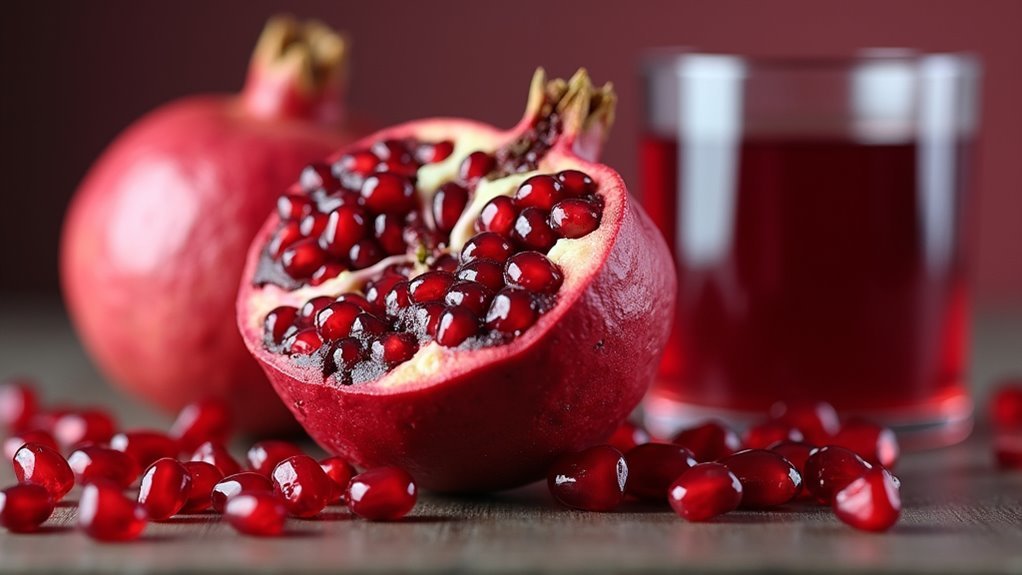
Pomegranate juice’s protective effects extend beyond reducing inflammation to include a remarkable boost in paraoxonase activity—a specialized enzyme that serves as your body’s frontline defense against dangerous LDL cholesterol oxidation.
When you drink pomegranate juice regularly, you’re enhancing this essential enzyme’s performance by up to 83%, creating powerful cardiovascular protection against arterial plaque formation.
The antioxidant properties in pomegranate juice directly amplify paraoxonase function, reducing oxidative stress markers while improving endothelial function.
This enhanced enzyme activity translates into measurably lower oxidized lipid levels within your carotid artery plaque specimens.
- Paraoxonase prevents LDL oxidation that triggers arterial plaque buildup
- Enhanced enzyme activity reduces oxidative stress throughout your cardiovascular system
- Improved endothelial function supports healthier blood vessel walls
Systolic Blood Pressure Reduction Supports Vascular Health
Beyond its enzyme-boosting capabilities, pomegranate juice delivers considerable blood pressure benefits that directly strengthen your cardiovascular system.
Daily consumption can reduce your systolic blood pressure by up to 21% within one year, creating measurable improvements in vascular health. The antioxidant properties enhance your endothelial function, which maintains healthy blood vessels and helps reduce blood pressure naturally.
Daily pomegranate juice consumption can reduce systolic blood pressure by up to 21% while naturally enhancing endothelial function and vascular health.
Research demonstrates that pomegranate juice markedly improves arterial health by decreasing carotid artery intima-media thickness by 35%.
This protective effect stems from the juice’s ability to increase your total antioxidant status by 130%, effectively combating oxidative stress linked to cardiovascular disease.
These remarkable benefits may reduce your dependence on antihypertensive medications, offering a natural approach to managing ideal vascular health.
Direct Plaque Modification Reverses Atherosclerotic Lesions

While blood pressure improvements provide considerable cardiovascular benefits, pomegranate juice’s most remarkable achievement involves directly modifying arterial plaque to reverse atherosclerotic damage.
When you consume pomegranate juice daily, you’re releasing powerful mechanisms that target atherosclerotic lesions at their source. Studies demonstrate a 35% reduction in carotid artery lesions after one year of consumption, proving pomegranate juice can reverse arterial hardening through direct plaque modification.
Your antioxidant status increases by 130% with daily intake, while oxidized lipid levels in arterial plaque decrease notably. Enhanced endothelial function occurs through improved nitric oxide production, helping restore arterial flexibility.
- Reduces carotid artery lesions by 35% within one year
- Decreases serum antibodies against oxidized LDL by 19%
- Increases total antioxidant status by 130% for enhanced plaque modification
Frequently Asked Questions
Can Pomegranate Juice Remove Plaque From Arteries?
You can potentially reduce arterial plaque by drinking pomegranate juice daily. Studies show it decreases carotid artery lesions by 35% while enhancing nitric oxide production and reducing oxidative stress that damages blood vessels.
What Drink Opens up Arteries, Pomegranate Juice?
You’ll find that pomegranate juice effectively opens arteries by boosting nitric oxide production, improving blood flow, and reducing arterial wall thickness. It’s one of the most researched drinks for reversing arterial hardening naturally.
Does Pomegranate Juice Help Get Hard?
You’re asking about erectile function. Pomegranate juice can improve blood flow by enhancing nitric oxide production and reducing arterial hardening, which may support better circulation needed for healthy erectile function.
What Juices Remove Plaque From Arteries?
You’ll find that pomegranate juice effectively removes arterial plaque by reducing oxidized LDL cholesterol by 83% and decreasing carotid thickness. Cranberry and grape juices also contain antioxidants that help combat plaque formation.


Leave a Reply