
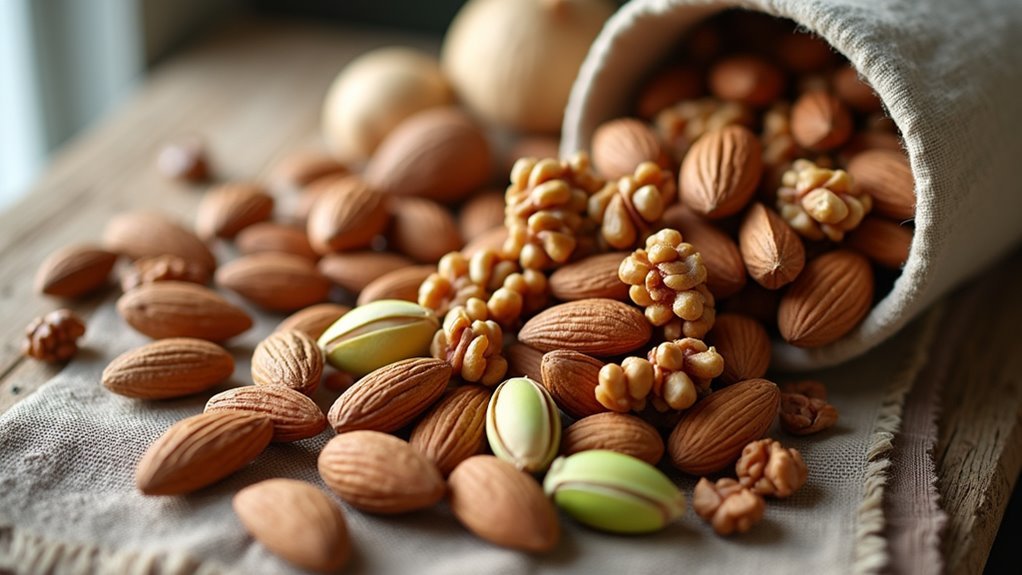
Nuts build muscle better because they’re packed with complete amino acid profiles and high-quality plant protein – peanuts deliver 25.8 grams per 100 grams while almonds provide 21.2 grams. You’ll get essential minerals like magnesium and zinc that support muscle function, plus healthy fats for sustained energy and antioxidants that reduce inflammation for faster recovery. Their bioavailable protein combines with vitamin E to enhance muscle synthesis and repair processes more efficiently than most plant sources, and there’s much more to discover about optimizing your intake.
Plant-Based Protein Powerhouses for Muscle Development
When you’re building muscle on a plant-based diet, nuts emerge as nutritional champions that deliver impressive protein content alongside essential nutrients.
Peanuts lead the pack with 25.8 grams of protein per 100 grams, making them an exceptional plant-based protein source for serious muscle development. Almonds follow closely at 21.2 grams, while pistachios offer 20 grams and stand out as a complete protein containing all nine essential amino acids your muscles need for ideal repair and growth.
Peanuts deliver 25.8g protein per 100g while pistachios provide complete amino acid profiles for optimal muscle synthesis.
You’ll find that consuming 1-2 ounces of these protein-rich nuts daily supports consistent muscle growth through their concentrated nutrient profiles.
Unlike many plant proteins, nuts provide the amino acid variety essential for effective muscle synthesis, making them indispensable for anyone pursuing plant-based muscle building goals.
Essential Amino Acids in Nuts for Muscle Repair
You’ll find that nuts contain complete protein sources, providing all nine essential amino acids your muscles need for effective repair and growth.
When you examine the amino acid profiles of different nuts, you’ll discover that peanuts lead with 25.8 grams of protein per 100 grams, while almonds and pistachios offer 21.2 grams and 20 grams respectively.
Your body can’t produce these essential amino acids on its own, making nuts an essential component for muscle synthesis and recovery after intense workouts.
Complete Protein Sources
Although many people assume nuts lack complete protein profiles, pistachios actually contain all nine essential amino acids your body can’t produce on its own, making them a surprisingly effective foundation for muscle repair and growth.
When you’re searching for complete protein sources beyond traditional options, nuts deliver exceptional protein content alongside essential nutrients that support muscle development:
- Peanuts pack 25.8 grams of protein per 100 grams, offering the highest concentration among nuts.
- Almonds provide 21.2 grams of protein with powerful antioxidants for enhanced recovery.
- Cashews deliver 15.3 grams of protein plus magnesium for peak muscle function.
- Pistachios contain all essential amino acids in one convenient package.
- Anti-inflammatory properties in nuts reduce exercise-induced inflammation.
This combination of complete proteins, healthy fats, and micronutrients creates an ideal environment for muscle growth and recovery.
Amino Acid Profiles
While complete proteins provide the foundation for muscle building, understanding the specific amino acid profiles in nuts reveals why certain varieties excel at supporting muscle repair and synthesis. You’ll find that different nuts offer varying concentrations of essential amino acids that directly impact your muscle health and recovery.
| Nut Type | Protein (per 100g) | Key Amino Acid Benefits |
|---|---|---|
| Peanuts | 25.8g | High leucine for muscle synthesis |
| Almonds | 21.2g | Rich arginine for blood flow |
| Pistachios | 20.2g | Complete amino acid profile |
| Cashews | 15.3g | Balanced essential amino acids |
| Walnuts | 15.2g | Anti-inflammatory support |
When you’re planning your protein intake, these high-protein nuts deliver essential nutrients that optimize muscle recovery through their unique amino acid compositions.
Healthy Fats That Fuel Workout Performance

When you’re pushing through that final set or grinding out the last mile, your body needs reliable fuel to maintain peak performance. Nuts deliver exactly what you need through their powerhouse combination of healthy fats that directly enhance your workout performance.
The calorie-dense nature of nuts makes them incredibly efficient energy sources, while their omega-3 fatty acids support muscle protein synthesis for ideal growth and repair.
Here’s how nuts supercharge your training:
- Monounsaturated and polyunsaturated fats provide sustained energy throughout intense sessions
- Antioxidants reduce inflammation and oxidative stress for faster recovery
- Omega-3s enhance muscle protein synthesis processes
- Dense caloric content fuels longer, more demanding workouts
- Improved cardiovascular health supports better endurance and strength output
Magnesium and Zinc: Critical Minerals for Muscle Function
Beyond providing energy and healthy fats, nuts pack two powerhouse minerals that directly impact your muscle-building success: magnesium and zinc.
You’ll find that magnesium is essential for muscle function, with just one ounce of Brazil nuts delivering 105 milligrams—that’s at least 25% of your daily allowance for ideal muscle power.
Meanwhile, zinc supports muscle strength by boosting insulin-like growth factor 1 production, vital for muscle growth and repair. Cashews and almonds are particularly rich sources, with cashews providing 1.6 milligrams of zinc per ounce.
Zinc from cashews and almonds fuels IGF-1 production, directly powering muscle growth and repair mechanisms in your body.
Without adequate magnesium, you’ll experience muscle spasms and weakness. Regular nut consumption helps you meet daily mineral requirements, ensuring your muscles function at peak performance levels.
Antioxidant Properties That Enhance Recovery
Your muscles face a barrage of free radicals during intense workouts, but nuts pack powerful antioxidants like vitamin E and polyphenols that neutralize these damaging compounds.
You’ll experience faster recovery times because these same antioxidants greatly reduce inflammation markers that typically slow muscle repair.
When you consume nuts post-workout, their antioxidant profile actively supports cellular repair processes, protecting your muscle fibers while they rebuild stronger.
Free Radical Combat
While your muscles work hard during intense training sessions, they’re simultaneously battling an invisible enemy: free radicals. These unstable molecules create oxidative stress that damages muscle tissue and increases inflammation, sabotaging your muscle recovery efforts.
Nuts provide powerful antioxidants like vitamin E that neutralize these harmful free radicals before they can wreak havoc on your muscle health. Here’s how nuts combat free radicals:
- Vitamin E acts as a cellular shield, protecting muscle membranes from oxidative damage.
- Regular nut consumption reduces overall free radical levels in your bloodstream.
- Antioxidants minimize post-workout inflammation that delays recovery.
- Walnuts and almonds offer concentrated doses of protective compounds.
- Lower oxidative stress translates to faster muscle repair and enhanced performance.
This natural defense system makes nuts essential for serious muscle-building goals.
Inflammation Reduction Benefits
Free radical neutralization represents just one piece of the recovery puzzle—the antioxidant powerhouse found in nuts delivers even broader inflammation-fighting benefits that directly accelerate your muscle repair process.
When you consume nuts regularly, you’re flooding your system with vitamin E and polyphenols that slash inflammatory markers like C-reactive protein. This targeted inflammation reduction translates into less muscle soreness after intense training sessions and faster recovery between workouts.
The antioxidants in walnuts and almonds specifically combat oxidative stress at the cellular level, allowing your muscle fibers to repair more efficiently.
You’ll notice improved athletic performance as chronic inflammation decreases, enabling your muscles to adapt and grow stronger. This enhanced muscle recovery creates a positive cycle where you can train harder and more frequently.
Cellular Repair Support
Beyond inflammation control, the antioxidant arsenal in nuts triggers powerful cellular repair mechanisms that directly enhance your muscle recovery at the microscopic level.
Your muscles undergo constant cellular damage during intense workouts, and nuts provide the essential toolkit for rapid restoration. Magnesium acts as a catalyst for cellular repair processes, ensuring your muscle fibers rebuild stronger and faster.
Key cellular repair benefits include:
- Vitamin E antioxidants neutralize exercise-induced free radicals
- Magnesium supports energy production for muscle regeneration
- Zinc facilitates protein synthesis and tissue growth
- Reduced inflammation markers accelerate healing processes
- Enhanced cellular communication improves recovery efficiency
When you consume nuts regularly, you’re supplying your muscles with concentrated repair nutrients.
These antioxidants don’t just prevent damage—they actively promote cellular regeneration, allowing you to bounce back from workouts faster and train more consistently for superior muscle development.
Optimal Timing for Nut Consumption Around Workouts
Timing your nut consumption strategically around workouts can greatly impact your muscle-building results.
You’ll maximize benefits by eating nuts during both pre- and post-workout periods. Before exercising, nuts provide essential protein and healthy fats that fuel your energy levels and enhance performance. Their protein content makes them ideal for sustaining workouts.
Nuts deliver essential protein and healthy fats that boost energy levels and sustain workout performance when consumed before exercise.
After training, incorporating nuts supports muscle recovery through protein and inflammation-reducing antioxidants.
Don’t worry about immediate consumption—the anabolic window extends several hours post-exercise, giving you flexibility with prime timing. You can enhance nutrient absorption by combining nuts with Greek yogurt or lean meats.
Regular incorporation into your routine guarantees consistent protein intake, whether you consume them before or after workouts, supporting ongoing muscle growth.
Top High-Protein Nuts Ranked by Muscle-Building Potential
When you’re selecting nuts for muscle building, protein content becomes your primary consideration since it directly impacts your body’s ability to repair and grow muscle tissue.
You’ll find that peanuts lead the pack with 25.8 grams of protein per 100 grams, followed by almonds at 21.2 grams and pistachios at 20 grams.
Beyond total protein numbers, you’ll want to examine each nut’s amino acid profile, as complete proteins containing all nine essential amino acids offer superior muscle-building benefits compared to incomplete protein sources.
Highest Protein Content Nuts
Five nuts stand out as protein powerhouses that’ll fuel your muscle-building goals.
These highest protein content nuts deliver impressive grams of protein per 100-gram serving, making them an excellent good source of protein for supporting muscle growth and recovery.
- Peanuts – 25.8g protein per 100g, the ultimate muscle building champion
- Almonds – 21.2g protein per 100g, packed with antioxidants for post-workout recovery
- Pistachios – 20g protein per 100g, complete protein containing all essential amino acids
- Cashews – 15.3g protein per 100g, high in magnesium for muscle function
- Walnuts – 15.2g protein per 100g, rich in omega-3s for muscle protein synthesis
You’ll maximize your gains by incorporating these protein-rich nuts into your daily nutrition plan for peak supporting muscle development.
Essential Amino Acid Profiles
Beyond total protein content, the amino acid composition of these nuts determines their true muscle-building potential.
You’ll find that peanuts deliver exceptional muscle building benefits through their complete amino acid profile, providing all essential building blocks your muscles need for growth.
Pistachios also offer complete protein status, containing all nine essential amino acids necessary for peak muscle development.
While almonds pack substantial protein levels, their amino acid profile supports muscle recovery through vitamin E and antioxidants.
Walnuts contribute unique omega-3 fatty acids that enhance muscle recovery by reducing post-workout inflammation.
Cashews provide solid amino acid content plus muscle-supporting magnesium for energy production.
When choosing nuts for muscle building, prioritize peanuts and pistachios for their complete amino acid profiles, while incorporating others for thorough nutritional support.
Combining Nuts With Other Foods for Maximum Protein Absorption
Although nuts contain impressive amounts of protein on their own, you’ll maximize their muscle-building potential by strategically pairing them with complementary foods.
Combining nuts with other nutrient-dense options greatly boosts your protein intake while enhancing nutrient absorption for ideal muscle growth.
Smart pairing strategies include:
- Greek yogurt or lean meats – Creates complete protein profiles supporting muscle repair
- Whole grains or fruits – Provides energy for workouts while improving nutrient uptake
- Vitamin C-rich foods – Oranges and bell peppers enhance iron absorption for better oxygen transport
- Dairy products – Adds calcium and extra protein for muscle function
- Protein smoothies – Convenient post-workout snacks delivering essential nutrients for recovery
These combinations transform simple nuts into powerful muscle-building tools that support your fitness goals more effectively.
Portion Control Strategies for Muscle Growth Goals
While nuts pack impressive nutritional benefits for muscle development, their calorie density demands careful portion management to avoid derailing your fitness goals.
You’ll want to stick to 1-2 ounces per serving, delivering 160-200 calories while supporting muscle growth without excessive intake. This portion control approach helps balance your protein intake effectively—one ounce of peanuts provides 7 grams of protein, while almonds offer 6 grams, enabling strategic protein planning within your daily limits.
Pre-portioning nuts into snack bags prevents overconsumption and keeps you aligned with your caloric goals. Pair controlled portions with high-protein foods like Greek yogurt to maximize muscle-building potential while maintaining disciplined eating habits.
Bioavailability of Nut Proteins Compared to Animal Sources
Smart portion management sets the foundation, but understanding how effectively your body uses nut proteins determines their true muscle-building value.
While animal proteins typically show higher bioavailability, nut proteins offer impressive muscle growth benefits that you shouldn’t overlook. Your body efficiently absorbs and utilizes nut protein for muscle repair, especially when you’re following plant-based diets.
Don’t underestimate nut proteins for muscle building—they deliver exceptional absorption and repair benefits, particularly for plant-based nutrition strategies.
Key advantages of nut proteins include:
- Complete essential amino acids profile when combined with other plant proteins
- Enhanced protein metabolism through healthy fats, vitamins, and minerals
- Antioxidants that reduce exercise-induced oxidative stress
- Improved recovery and muscle adaptation compared to animal-only approaches
- Expanded amino acid pool for ideal muscle synthesis
You’ll maximize muscle-building potential by incorporating nuts strategically, leveraging their unique nutritional synergies that support both immediate protein needs and long-term muscle health.
Daily Nut Intake Recommendations for Strength Training Athletes
Strategic nutrition timing transforms good training into exceptional results, and determining your ideal daily nut intake can greatly amplify your strength gains.
As a strength training athlete, you’ll want to consume 1-2 ounces of nuts daily to optimize muscle growth and recovery.
Prioritize peanuts for maximum protein content at 7 grams per ounce, while almonds and pistachios deliver 6 grams alongside essential nutrients like vitamin E and potassium.
Mix different varieties to maximize benefits—walnuts provide omega-3s and magnesium, while Brazil nuts offer selenium for muscle health.
Incorporate nuts into your pre- and post-workout snacks to enhance protein timing and energy replenishment.
This strategic approach guarantees you’re supporting your training goals while maintaining nutrient variety throughout your day.
Frequently Asked Questions
Do Nuts Help You Gain Muscle?
Yes, nuts help you gain muscle because they’re packed with plant-based protein, healthy fats, and essential minerals like magnesium and zinc that support muscle repair, growth, and recovery after your workouts.
Are Nuts for Bulking or Cutting?
You can use nuts for both bulking and cutting. They’re calorie-dense, making them excellent for bulking. During cutting, you’ll need strict portion control since they’re high-calorie but provide satiety.
What Foods Build Muscle Faster?
You’ll build muscle faster with lean meats, fish, eggs, and dairy since they’re complete proteins. Add beans, lentils, and nuts for plant-based options. Time protein-carb meals around workouts for ideal recovery.
Which Nut Is the Highest in Protein?
Peanuts contain the highest protein content among nuts, providing you with approximately 25.8 grams per 100 grams. You’ll get more protein from peanuts than almonds, pistachios, cashews, or walnuts for muscle-building purposes.


Leave a Reply