

You’ll find excellent plant-based probiotics in fermented cabbage like sauerkraut and kimchi, which provide Lactobacillus bacteria and essential vitamins. Cultured soy products including tempeh, miso, and natto offer complete proteins plus beneficial microorganisms. Kombucha and water kefir deliver invigorating probiotic beverages, while lacto-fermented vegetables like pickles boost gut health naturally. Plant-based yogurts and cultured nut cheeses provide dairy-free alternatives, and fermented condiments enhance every meal with live cultures. Discover how these powerful foods can transform your digestive wellness journey.
Fermented Cabbage: Sauerkraut and Kimchi for Digestive Health
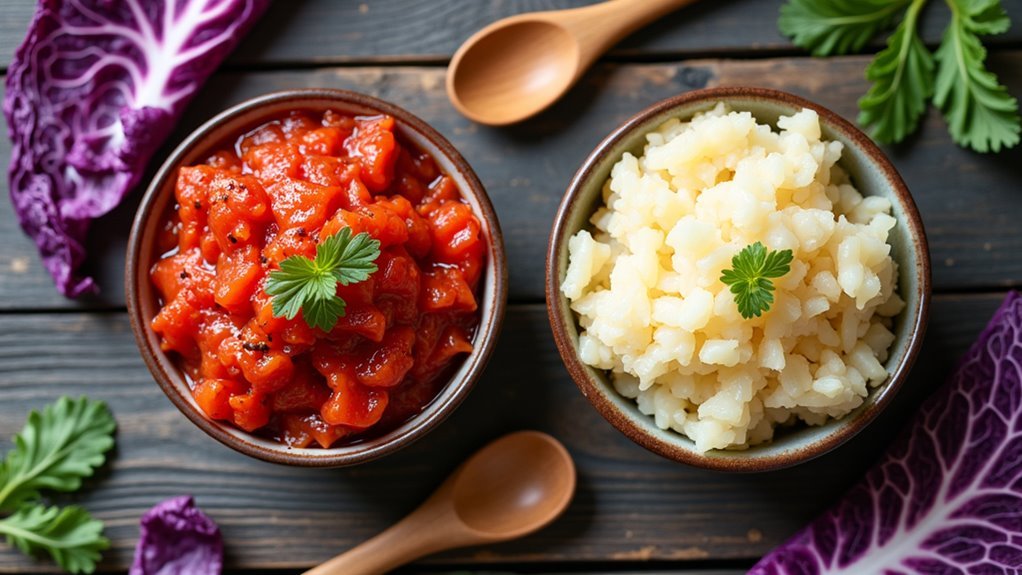
When you’re looking to boost your digestive health with plant-based probiotics, fermented cabbage dishes like sauerkraut and kimchi deliver powerful benefits that’ll transform your gut microbiome.
Sauerkraut’s tangy flavor comes from fermenting finely cut cabbage in brine, creating Lactobacillus bacteria that support gut health while providing potassium and vitamins C and K.
Kimchi offers similar probiotic advantages with added antioxidants from Korean spices that enhance digestive function.
You’ll maximize these benefits by choosing unpasteurized versions, since pasteurization destroys beneficial bacteria.
The fermentation process naturally enhances cabbage’s nutritional content, making both foods excellent additions to your vegan diet.
Regular consumption can improve digestion and help prevent gut-related issues while delivering delicious flavors to your meals.
Cultured Soy Products: Tempeh, Miso, and Natto Benefits
You’ll find tempeh stands out as one of the most complete protein sources in the plant-based world, delivering all essential amino acids your body needs while flooding your gut with beneficial probiotics.
This Indonesian fermented soybean cake doesn’t just build muscle—it actively supports your digestive system with every bite.
Meanwhile, miso’s fermentation process creates a savory paste that’s incredibly versatile, transforming everything from simple broths to complex marinades while delivering powerful probiotics and antioxidants.
Tempeh Protein Powerhouse
Powerhouses of nutrition, cultured soy products like tempeh, miso, and natto transform simple soybeans into protein-rich, probiotic-loaded foods that’ll revolutionize your vegan diet.
Tempeh stands out as the supreme protein source for vegans, delivering all nine essential amino acids your body needs. This fermented wonder doesn’t just provide complete protein—it’s packed with probiotics that support ideal gut health.
The beneficial bacteria formed during fermentation create a digestive powerhouse that helps maintain your microbiome balance. Unlike other soy products, tempeh’s fermentation process enhances nutrient absorption while creating those vital probiotics.
You’re not just getting plant-based protein; you’re fueling your body with living cultures that promote digestive wellness. This makes tempeh an exceptional choice for vegans seeking both nutritional completeness and gut-supporting benefits.
Miso Versatile Fermentation
Miso’s fermentation magic transforms humble soybeans into a umami-rich paste that’s brimming with probiotics, antioxidants, and essential B vitamins.
This fermented soybean powerhouse becomes your secret weapon for supporting gut health while adding incredible depth to your meals. You’ll find miso incredibly versatile—it dissolves beautifully into broths, marinades, and salad dressings, making it easy to incorporate into plant-based diets.
When you choose miso, you’re getting beneficial bacteria that actively support your digestive system while providing complete protein alternatives for your vegan diet.
The fermentation process breaks down proteins into easily digestible amino acids, ensuring your body absorbs maximum nutrition.
Whether you prefer white, red, or mixed varieties, miso consistently delivers probiotics that enhance your gut microbiome diversity.
Probiotic Beverages: Kombucha and Water Kefir Options
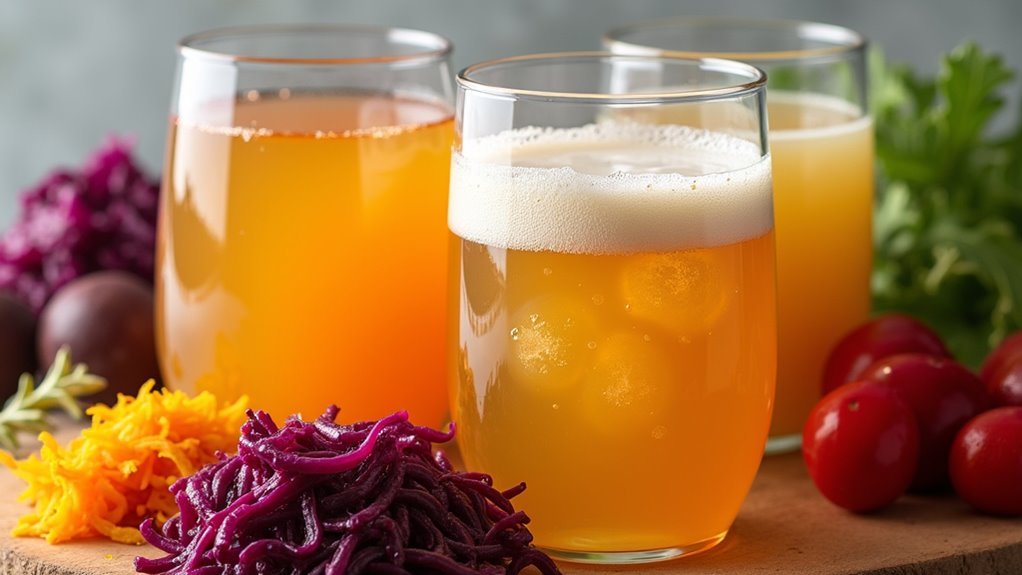
While solid fermented foods offer excellent probiotic benefits, beverages like kombucha and water kefir provide invigorating alternatives that’ll quench your thirst while supporting your gut health.
Fermented beverages like kombucha and water kefir deliver refreshing hydration while nourishing your digestive system with beneficial probiotics.
These probiotic beverages deliver beneficial bacteria through revitalizing, effervescent drinks that you can customize at home.
Key considerations for maximizing health benefits:
- Choose unpasteurized varieties to guarantee live probiotics remain active
- Make your own kombucha using SCOBY or water kefir with kefir grains for complete ingredient control
- Monitor fermentation time, as longer periods increase alcohol content and tanginess
- Avoid commercial versions with added sugars or artificial ingredients that diminish probiotic value
Both options undergo natural fermentation processes that create fizzy, flavorful drinks rich in organic acids and diverse microbial cultures supporting digestive wellness.
Lacto-Fermented Vegetables: Pickles and Seasonal Produce
You can easily create probiotic-rich snacks by fermenting fresh vegetables in a simple salt brine that encourages beneficial Lactobacillus bacteria to flourish.
The pickle-making process transforms ordinary cucumbers into gut-healthy powerhouses, while seasonal produce like carrots, radishes, and green beans offer endless variety for your fermentation experiments.
This ancient preservation method not only extends your vegetables’ shelf life but also increases their nutritional value and creates complex, tangy flavors you’ll crave.
Pickle-Making Fermentation Process
Although lacto-fermentation might sound complex, you’ll discover it’s actually a straightforward process that transforms ordinary vegetables into probiotic powerhouses.
When you submerge vegetables in saltwater brine, you’re creating the perfect environment for beneficial bacteria like Lactobacillus to flourish and convert sugars into lactic acid.
Here’s what happens during fermentation:
- Beneficial bacteria produce lactic acid, preserving vegetables naturally
- Live cultures multiply, boosting probiotics that support gut health
- The nutritional profile improves with enhanced vitamins and minerals
- Flavors develop complexity over 1-4 weeks depending on temperature
You’ll want to choose unpasteurized, naturally fermented vegetables to maximize probiotic benefits, since pasteurization destroys live cultures.
The resulting fermented vegetables offer superior gut health support compared to their pasteurized counterparts.
Seasonal Vegetable Options
When spring arrives with its tender asparagus spears and early radishes, you have the perfect opportunity to expand your fermentation repertoire beyond basic cucumber pickles.
These seasonal vegetables transform into probiotic-rich snacks through lacto-fermentation, creating unique flavors while preserving essential nutrients.
Summer brings zucchini and carrots that ferment beautifully in salt brine, allowing beneficial bacteria to develop over one to four weeks.
You’ll want to select unpasteurized lacto-fermented vegetables from refrigerated sections to guarantee they contain live cultures that support your digestive health.
Plant-Based Yogurts and Cultured Nut Cheeses
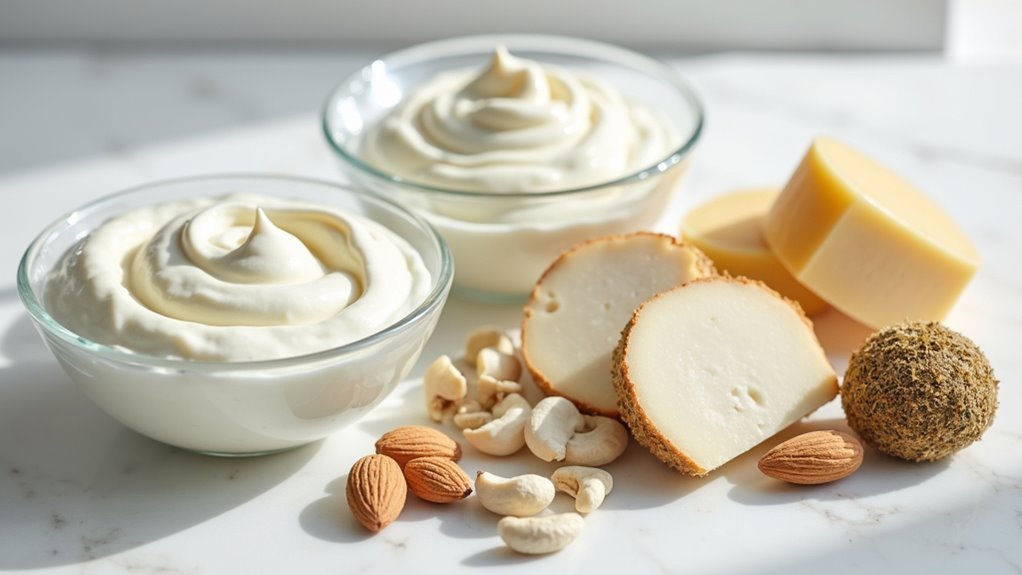
Since traditional dairy yogurt and cheese aren’t options for vegans, plant-based alternatives have emerged as excellent sources of probiotics that support digestive health.
Plant-based yogurts made from soy, almond, coconut, or oat milk can be fortified with live probiotic cultures like Lactobacillus and Bifidobacterium. Cultured nut cheeses, particularly from cashews or almonds, provide beneficial bacteria through fermentation.
When choosing these probiotic-rich foods:
- Read labels carefully on store-bought varieties to avoid excessive sugars and thickeners
- Look for products labeled with active probiotics rather than pasteurized options
- Consider homemade versions to customize flavor and guarantee higher live culture counts
- Prioritize options with multiple probiotic strains for peak gut health benefits
Homemade alternatives offer superior control over ingredients and probiotic potency.
Fermented Condiments and Flavor Enhancers
While you’re already incorporating plant-based yogurts and cultured cheeses into your diet, fermented condiments offer an effortless way to boost your probiotic intake with every meal.
These flavor enhancers transform ordinary dishes while delivering beneficial microorganisms for ideal gut health.
These tiny culinary additions pack powerful gut-healing benefits while elevating every bite with complex, satisfying flavors.
Miso and kimchi provide rich umami flavors alongside robust probiotic profiles. You’ll find fermented mustards and relishes add tangy complexity to salads and sandwiches while introducing live cultures.
Plant-based fermented sauces like unpasteurized soy sauce and tamari deliver depth without compromising your vegan lifestyle.
Consider making homemade chutneys from fermented fruits and vegetables—you’ll control ingredients while maximizing probiotic content.
These fermented condiments require zero preparation time yet greatly diversify your beneficial microorganism intake, making gut-healthy eating practically automatic.
Homemade Fermentation: Creating Your Own Probiotic Foods
Although store-bought fermented foods offer convenience, creating your own probiotic powerhouses at home puts you in complete control of ingredients, flavor profiles, and microbial diversity.
Homemade fermentation transforms simple vegetables into probiotic-rich foods using natural processes that cultivate beneficial bacteria.
Here’s what you’ll need for successful plant-based probiotics:
- Salt and vegetables: Mix cabbage or cucumbers with salt to create the foundation for fermented vegetables
- Starter culture: Use existing fermented foods to boost your microbial populations
- Proper environment: Maintain 60-75°F temperatures in anaerobic conditions for healthy fermentation
- Regular monitoring: Taste frequently to gauge probiotic potency and desired flavor development
You’ll discover that fermentation times vary based on environmental conditions, so trust your palate when determining best results for your homemade creations.
Frequently Asked Questions
What Vegan Foods Are High in Probiotics?
You’ll find high probiotics in unpasteurized sauerkraut, spicy Korean kimchi, lacto-fermented pickles, protein-rich tempeh, and kombucha tea. These fermented foods contain beneficial bacteria that’ll support your digestive health while maintaining your vegan lifestyle.
What Is the Best Probiotic for Vegans?
You’ll want Lactobacillus plantarum, Bifidobacterium bifidum, or Lactobacillus rhamnosus strains. Choose supplements labeled vegan with plant-based growth media and no animal-derived capsules. These strains effectively support your digestion and gut health.
What Are the Best Fermented Foods for Vegans?
You’ll find sauerkraut, kimchi, fermented pickles, tempeh, and kombucha are excellent fermented options. Choose unpasteurized varieties when possible, make kimchi without fish sauce, and enjoy tempeh’s protein benefits alongside probiotic advantages.
What Food Is Highest in Probiotics?
You’ll find the highest probiotic counts in unpasteurized sauerkraut and kimchi, which contain billions of live Lactobacillus bacteria per serving. Water kefir and kombucha also provide exceptionally high concentrations of beneficial microorganisms.


Leave a Reply