
Naturally fermented pickled vegetables boost your gut bacteria diversity by introducing live probiotic strains like Lactobacillus and Bifidobacterium directly into your digestive system. These beneficial bacteria multiply and create a balanced microbiome environment while the vegetables’ fiber acts as prebiotic fuel, feeding healthy flora and enhancing nutrient absorption. You’ll want to choose unpasteurized, naturally fermented options over vinegar-based pickles to guarantee you’re getting live cultures that reduce inflammation and support ideal digestive health through increased microbial variety.
The Science Behind Pickled Vegetables and Microbiome Enhancement
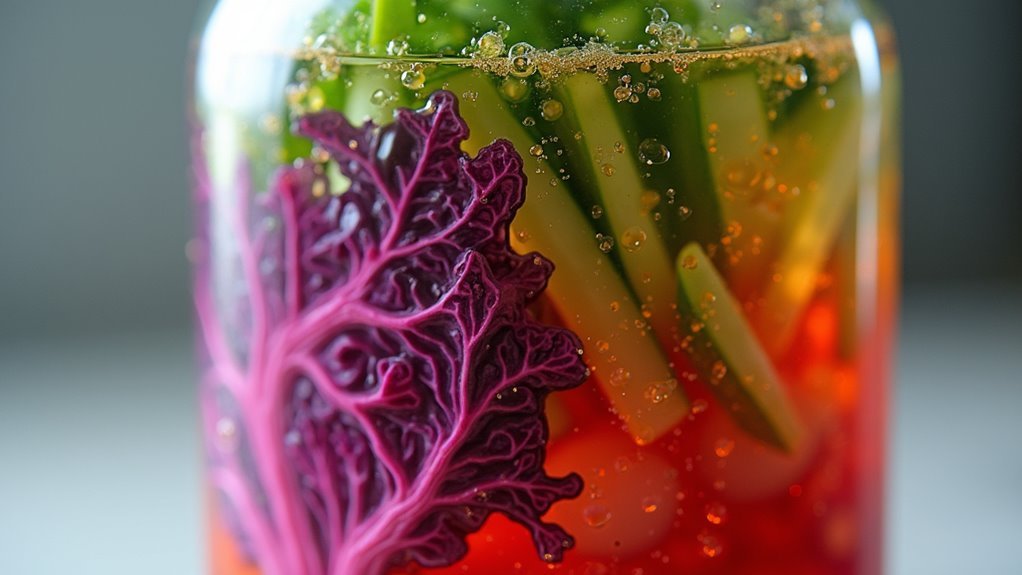
When you consume naturally fermented pickled vegetables, you’re introducing beneficial lactic acid bacteria into your digestive system that actively enhance your gut microbiome’s diversity.
These fermented foods contain beneficial probiotics that establish colonies within your intestinal tract, creating a more balanced bacterial environment. The lactic acid bacteria specifically target harmful microorganisms while promoting healthy flora growth, directly increasing microbial diversity.
Research demonstrates that this enhanced diversity reduces inflammation markers and lowers your risk of developing chronic diseases like obesity and diabetes.
The probiotics in pickled vegetables also optimize your digestive processes, improving how efficiently you absorb essential nutrients from food.
Fermented vs. Vinegar-Based Pickles: Understanding the Gut Health Difference
Not all pickled vegetables offer the same gut health benefits, and the preservation method makes all the difference. When you choose fermented pickles, you’re getting vegetables that underwent natural brining, encouraging beneficial bacteria growth that enhances your gut microbiome diversity.
These fermented options contain live probiotics essential for peak gut health, supporting improved digestion, nutrient absorption, and immune regulation.
In contrast, vinegar-based pickles use vinegar for preservation, which kills these beneficial bacteria during processing. You’ll miss out on probiotics and their associated health benefits when consuming vinegar-preserved vegetables.
Research demonstrates that fermented foods reduce inflammation and improve overall health through microbiome diversity.
Look for labels indicating “naturally fermented” or “live cultures” to make sure you’re selecting probiotic-rich pickles that truly support your gut health.
Key Probiotic Strains Found in Naturally Fermented Pickled Vegetables
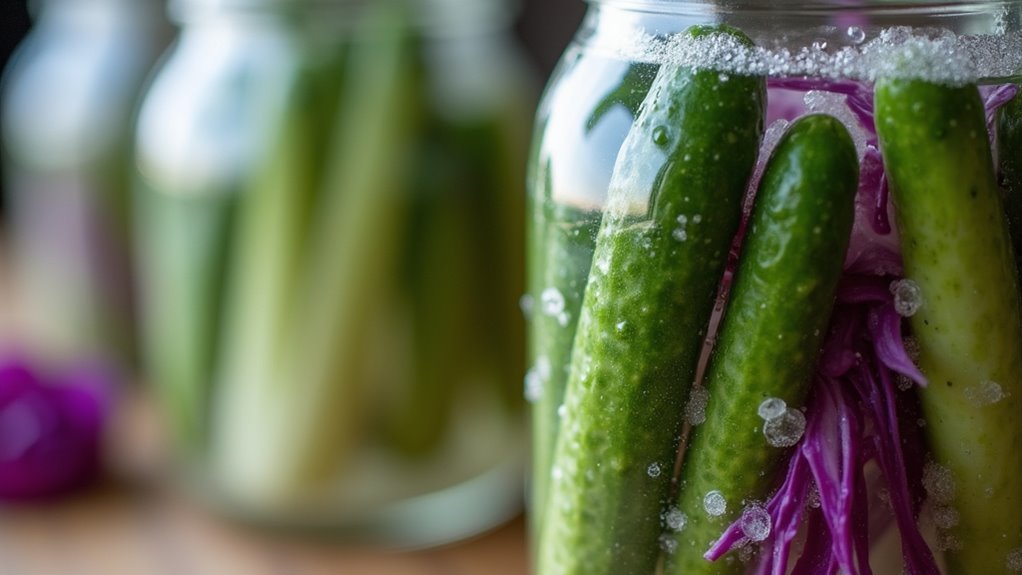
When you consume naturally fermented pickled vegetables, you’re introducing specific probiotic strains that directly impact your digestive health.
Lactobacillus species work to break down dietary fiber and produce beneficial short-chain fatty acids that strengthen your gut barrier.
Bifidobacterium strains enhance your immune system while promoting the growth of other beneficial bacteria in your microbiome.
Lactobacillus Species Benefits
Among the most powerful probiotics residing in naturally fermented pickled vegetables, Lactobacillus species stand out as true gut health champions.
These beneficial bacteria transform your gut microbiome by producing lactic acid during fermentation, creating an ideal pH environment that encourages other healthy microbes to flourish.
When you consume fermented vegetables regularly, specific Lactobacillus strains like L. rhamnosus and L. plantarum actively support your immune system while reducing inflammation throughout your body.
You’ll experience improved digestion as these probiotics break down complex carbohydrates, making nutrients more accessible to your system.
Research shows Lactobacillus can help prevent and manage gastrointestinal disorders, including irritable bowel syndrome and diarrhea, giving you thorough digestive support through simple dietary choices.
Bifidobacterium Strain Functions
While Lactobacillus species create the foundation for gut health through lactic acid production, Bifidobacterium strains work alongside them to complete your digestive ecosystem’s optimization.
These powerful probiotics in fermented pickles excel at breaking down dietary fibers you can’t digest alone, transforming them into valuable nutrients your body absorbs more efficiently.
Your gut microbiome benefits greatly when Bifidobacterium produces short-chain fatty acids, which reduce inflammation and strengthen your intestinal barrier.
This protective function prevents harmful substances from entering your bloodstream while supporting your immune system’s responsiveness.
When you consume naturally fermented pickles rich in Bifidobacterium, you’re fundamentally feeding beneficial bacteria that maintain microbial diversity.
Research shows higher Bifidobacterium populations correlate with reduced gastrointestinal disorders and improved overall digestive resilience.
How Pickled Vegetable Fiber Feeds Beneficial Gut Bacteria
Every bite of pickled vegetables delivers a powerful dose of fiber that acts as premium fuel for your gut’s beneficial gut bacteria. The fermentation process enhances soluble fiber availability, making it easier for your microbiome within to utilize these nutrients effectively.
Pickled vegetables provide fiber that supercharges your gut bacteria, with fermentation boosting nutrient absorption for optimal microbiome health.
This fiber serves as a prebiotic, feeding specific bacterial strains and promoting their growth throughout your digestive system.
When you regularly consume fiber-rich pickled vegetables, you’re directly supporting increased microbial diversity. This enhanced bacterial population improves metabolic functions, strengthens immune system regulation, and reduces inflammation markers.
The balanced microbiome you maintain through consistent fiber intake creates protective effects against chronic diseases like obesity and diabetes, demonstrating how simple dietary choices can considerably impact your long-term health outcomes.
Selecting the Right Pickled Vegetables for Maximum Microbiome Benefits
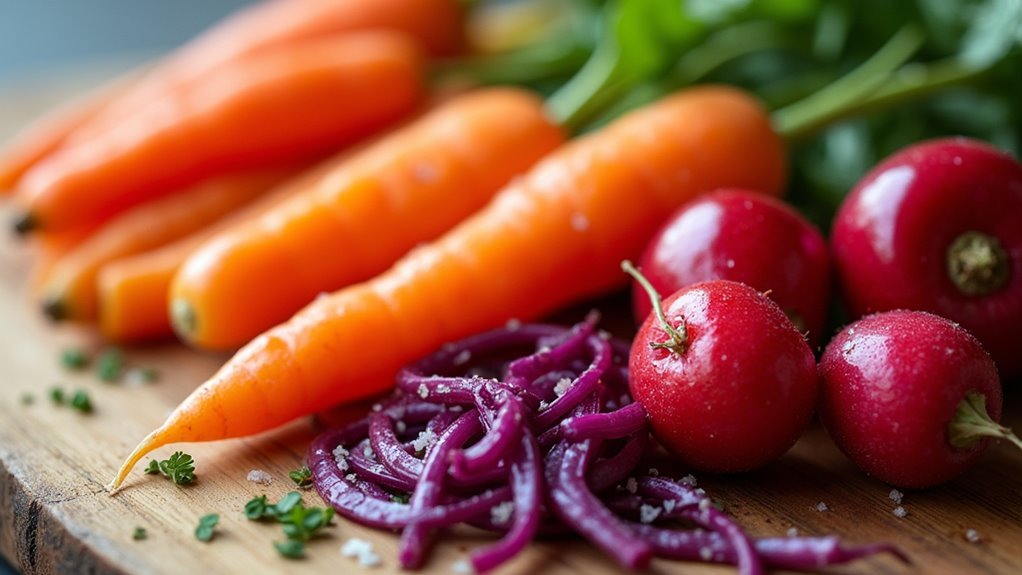
Not all pickled vegetables offer the same gut health benefits, so you’ll need to distinguish between fermented and vinegar-pickled options when shopping.
Fermented pickles contain live probiotics that support your microbiome, while vinegar-pickled varieties lack these beneficial bacteria.
Reading product labels carefully becomes essential to identify which type you’re purchasing and guarantee you’re getting maximum microbiome benefits.
Fermented Vs Vinegar Pickled
When you’re scanning grocery store shelves for pickled vegetables, the preservation method makes all the difference for your gut health. Fermented pickles undergo a natural brining process using salt and water, creating an environment where beneficial bacteria flourish. These naturally fermented varieties contain live cultures that boost your microbiome diversity and reduce inflammation. Vinegar pickles, however, are preserved with vinegar that kills off probiotics, eliminating gut health benefits.
| Feature | Fermented Pickles | Vinegar Pickles |
|---|---|---|
| Preservation Method | Salt brine fermentation | Vinegar preservation |
| Probiotic Content | Contains live cultures | No beneficial bacteria |
| Storage Location | Refrigerated section | Shelf-stable aisles |
Look for labels indicating “unpasteurized” or “naturally fermented” to guarantee you’re getting fermented foods that’ll enhance your digestive health rather than shelf-stable varieties lacking probiotic advantages.
Reading Product Labels
Since grocery stores stock both probiotic-rich and probiotic-free pickled vegetables side by side, you’ll need to become a savvy label reader to maximize your microbiome benefits.
Focus on pickled foods that showcase the natural fermentation process through specific labeling cues. Search for “naturally fermented,” “live cultures,” or “unpasteurized” on packaging to guarantee you’re getting active probiotics that support your immune system.
Key indicators of probiotic-rich pickles:
- Refrigerated section placement – Cold storage preserves live bacteria that boost nutritional value
- Visible bubbling activity – Active fermentation creating tiny bubbles signals thriving microorganisms
- Simple ingredient lists – Whole foods without artificial preservatives maintain beneficial bacterial cultures
Avoid products with added sugars or chemical preservatives that compromise the gut health benefits you’re seeking.
Creating Your Own Gut-Healthy Fermented Pickled Vegetables at Home
Although store-bought pickled vegetables offer convenience, you’ll gain greater control over ingredients and probiotic potency by fermenting your own gut-healthy pickles at home. Start with fresh, organic vegetables and create a brine using filtered water and sea salt. You can add vinegar for enhanced flavor.
| Step | Duration | Key Indicator |
|---|---|---|
| Submerge vegetables | Day 1 | No air exposure |
| Room temperature fermentation | 3-5 days | Bubbles appear |
| Monitor progress | Daily | Tangy aroma develops |
| Refrigerate | After fermentation | Preserves probiotics |
Ensure vegetables stay fully submerged to prevent mold growth. These beneficial foods support overall health by promoting microbiome diversity. Once fermented, refrigerate your pickles to maintain their health benefits and extend shelf life up to one month while preserving live cultures.
Frequently Asked Questions
Are Pickled Vegetables Good for the Gut?
Yes, pickled vegetables are excellent for your gut. They’re packed with probiotics that boost beneficial bacteria diversity, improve digestion, enhance nutrient absorption, and strengthen your immune system while reducing chronic inflammation risks.
How Do You Increase Microbial Diversity in the Gut?
You’ll increase gut microbial diversity by eating various fermented foods like yogurt, kimchi, and kefir, plus consuming fiber-rich fruits, vegetables, legumes, and whole grains that provide prebiotics for beneficial bacteria.
How Does Pickling Affect Bacterial Growth?
Pickling creates an anaerobic environment where salt inhibits harmful bacteria while promoting beneficial lactic acid bacteria growth. You’ll find these microbes convert sugars into lactic acid, lowering pH and preserving vegetables naturally.
Are All Pickled Vegetables Probiotic?
No, you’ll only get probiotics from naturally fermented pickles made with salt brine, not vinegar. Check labels for “unpasteurized” or “live cultures” since vinegar-pickled varieties lack beneficial bacteria.


Leave a Reply