
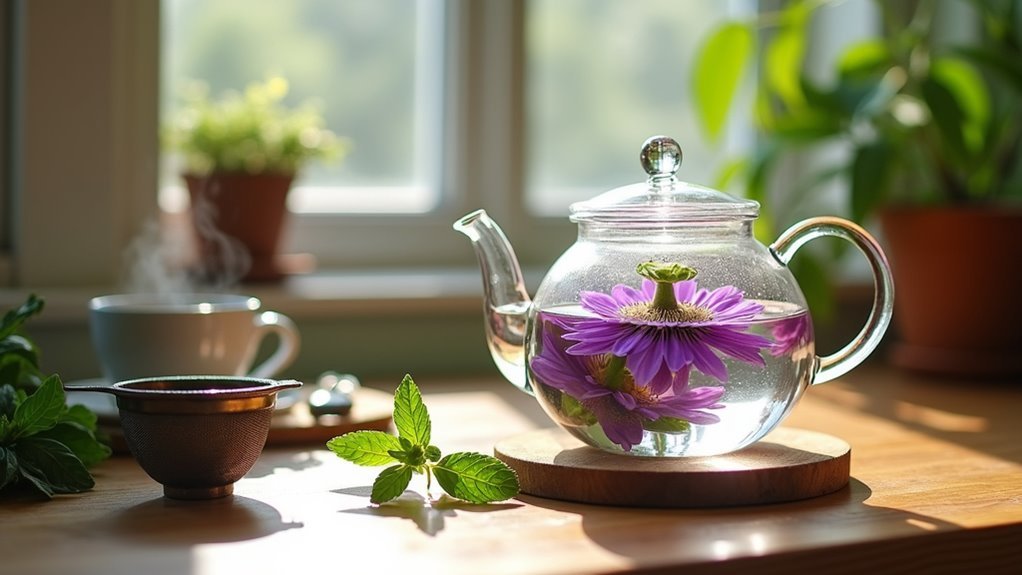
You can brew effective passionflower tea for anxiety relief by steeping one tablespoon of dried passionflower in a cup of boiling water for 10-15 minutes. Cover the tea while steeping to trap essential oils, then strain and enjoy warm. This natural remedy enhances your brain’s GABA function, acting like nature’s tranquilizer to reduce stress and promote relaxation. Start with smaller amounts to assess your tolerance, and discover ideal brewing techniques for maximum calming benefits.
What Makes Passionflower Effective for Anxiety Relief

When you’re searching for a natural remedy to calm anxiety, passionflower stands out due to its unique ability to enhance GABA function in your brain. This herb contains powerful flavonoids like chrysin that work with your body’s inhibitory neurotransmitter system to regulate mood and sleep cycles effectively.
Research demonstrates passionflower’s remarkable potential for anxiety relief through double-blind studies showing significant symptom reduction in patients facing preoperative stress.
You’ll experience calming effects that rival pharmaceutical sedatives but with fewer unwanted side effects. The herb’s ability to modulate neurotransmitter levels creates lasting improvements in your overall mood and relaxation.
Clinical trials consistently support passionflower as a reliable natural alternative, making it an excellent choice for managing anxiety disorders while promoting genuine feelings of calm and well-being.
Understanding GABA and Its Role in Relaxation
You’ve likely heard of GABA, but understanding how this neurotransmitter works can help you appreciate why passionflower tea is so effective for anxiety relief.
GABA acts as your brain’s natural “brake pedal,” reducing neuronal excitability and promoting the calm, relaxed state you’re seeking.
When passionflower increases your GABA levels, it enhances these calming effects and helps regulate your mood and sleep cycles.
What Is GABA?
Deep within your brain’s intricate network, gamma-aminobutyric acid (GABA) functions as nature’s built-in tranquilizer, orchestrating calm throughout your central nervous system. This essential neurotransmitter acts as your brain’s natural brake pedal, inhibiting nerve transmission to reduce anxiety and promote relaxation.
When GABA levels increase, you’ll experience decreased stress responses and enhanced well-being. This calming mechanism makes GABA vital for managing anxiety symptoms naturally.
| GABA Function | Effect on You |
|---|---|
| Inhibits nerve transmission | Reduces anxious thoughts |
| Promotes relaxation | Improves sleep quality |
| Decreases stress response | Enhances overall calm |
Research shows GABA’s calming effects rival low-dose anti-anxiety medications, offering you a natural alternative. Passionflower enhances your GABA levels, making it an effective herbal remedy for anxiety relief.
GABA’s Calming Effects
As GABA floods your neural pathways, it creates a cascade of calming effects that transform your mental state from anxious to tranquil. This powerful neurotransmitter slows down your brain’s electrical activity, reducing the overwhelming thoughts that fuel anxiety.
You’ll experience decreased muscle tension, slower heart rate, and a profound sense of mental clarity as your central nervous system shifts into relaxation mode.
When you drink passionflower herbal tea, you’re fundamentally giving your brain’s natural calming system a boost. The enhanced GABA activity promotes deeper, more restful sleep while providing sustained anxiety relief throughout the day.
Unlike pharmaceutical alternatives, this natural approach works with your body’s existing mechanisms, creating gentle yet effective calming effects without dependency or harsh side effects.
Passionflower Increases GABA
The science behind passionflower’s remarkable calming properties lies in its ability to boost your brain’s levels of gamma aminobutyric acid (GABA), the body’s primary inhibitory neurotransmitter. When you drink passionflower herbal tea, its bioactive compounds work to increase GABA availability in your neural pathways, directly targeting anxiety at its neurochemical source.
Research shows that passionflower inhibits monoamine oxidase, an enzyme that breaks down GABA, allowing more of this calming neurotransmitter to remain active in your system. This natural mechanism provides anxiety relief without the harsh side effects of pharmaceutical alternatives.
| GABA Effects | Passionflower Benefits | Tea Results |
|---|---|---|
| Reduces neural excitability | Increases GABA levels | Calmer mind |
| Promotes relaxation | Inhibits enzyme breakdown | Less anxiety |
| Improves mood stability | Natural compound action | Better mood |
| Enhances sleep onset | Sustained GABA activity | Improved sleep quality |
| Decreases stress response | Gentle nervous system support | Overall well-being |
Essential Ingredients for Brewing Passionflower Tea
You’ll need just a few simple ingredients to brew an effective cup of passionflower tea. The foundation requires one tablespoon of dried passionflower and one cup of boiling water for proper extraction. You can enhance your tea’s flavor and relaxation benefits by adding optional ingredients like honey, lemon, or complementary herbs such as chamomile.
Basic Passionflower Tea Ingredients
Brewing perfect passionflower tea starts with gathering just a few simple ingredients.
You’ll need one tablespoon of dried passionflower as your primary component, which you can find at health food stores or online retailers. For best extraction of compounds that provide anxiety relief, use one cup of boiling water at maximum temperature.
To enhance your tea’s flavor and health benefits, consider adding optional ingredients like honey and lemon, which offer additional soothing properties.
If you’re using fresh passionflower instead of dried, you’ll need to increase the quantity since fresh flowers are less concentrated.
Choose high-quality, preferably organic ingredients to maximize the therapeutic potential of your brew and guarantee you’re getting the most effective anxiety relief benefits from your passionflower tea.
Optional Flavor Enhancers
Several optional ingredients can transform your basic passionflower tea into a more flavorful and therapeutic experience. These optional flavor enhancers can amplify passionflower tea’s natural benefits while creating a more enjoyable drinking experience.
When you add honey or lemon, you’re not just improving taste. Honey provides soothing properties that enhance the calming effect, while lemon offers vitamin C and a revitalizing taste. Combining passionflower with chamomile creates a powerful relaxation blend, as both herbs traditionally alleviate anxiety.
| Enhancement | Flavor Profile | Additional Benefits |
|---|---|---|
| Fresh mint | Cooling, crisp | Aids digestion |
| Cinnamon | Warm, sweet | Anti-inflammatory |
| Ginger | Spicy, warming | Reduces inflammation |
These additions create customized blends that suit your taste preferences while maximizing therapeutic potential.
Step-by-Step Brewing Instructions for Maximum Potency

Five essential steps will guarantee you extract maximum potency from your passionflower tea.
First, bring water to a rolling boil, as this temperature maximizes extraction of beneficial compounds when you brew passionflower.
Second, measure one tablespoon of dried passionflower or 1-2 teaspoons for concentrated tea bags to guarantee consistent dosing.
Third, pour the boiling water over dried flowers in your cup and cover with a lid to trap essential oils.
Fourth, steep for at least 10 minutes—this duration allows adequate infusion of calming properties into your tea recipe.
Finally, strain out the flowers and enjoy warm. You’ll maximize the health benefits by following this precise method that preserves passionflower’s anxiolytic compounds.
Optimal Steeping Time and Water Temperature
Water temperature and steeping duration work together to determine your tea’s potency and taste profile. Getting these elements right guarantees you’ll extract passionflower tea’s beneficial compounds while maintaining pleasant flavor.
For ideal steeping time and perfect brewing process results, follow these guidelines:
- Heat water to 200°F (93°C) – just below boiling to prevent bitterness
- Steep for 10 minutes for milder taste and gentle calming properties
- Extend steeping to 15 minutes for stronger anxiety relief benefits
- Cover your cup during steeping to trap essential oils
- Use a tea infuser for easy removal after brewing
The right water temperature preserves delicate compounds while thorough steeping releases passionflower’s full therapeutic potential.
This combination maximizes both flavor and effectiveness for anxiety relief.
Enhancing Your Tea With Complementary Calming Herbs

You can amplify passionflower’s calming properties by blending it with complementary herbs that share similar relaxation benefits.
The right combinations, proper ratios, and smart flavor pairings will transform your basic passionflower tea into a more potent and enjoyable calming remedy.
Let’s explore which herbs work best with passionflower, how much of each to use, and ways to enhance the overall taste experience.
Best Herbal Combinations
While passionflower makes an excellent tea on its own, blending it with complementary calming herbs can amplify its relaxing effects and create more complex, therapeutic brews.
These herbal combinations will transform your passionflower tea into powerful anxiety-fighting blends:
- Passionflower + Chamomile – Combines gentle sedative effects with anti-inflammatory properties for enhanced stress reduction and relaxation.
- Passionflower + Lemon Balm – Elevates mood while providing additional calming benefits, suitable for both children and adults.
- Passionflower + Valerian Root – Creates a potent blend supporting deep sleep and emotional well-being (requires different brewing methods).
- Passionflower + Lavender – Adds soothing aroma to further alleviate anxiety and promote tranquility.
- Passionflower + St. John’s Wort/Hops – Produces synergistic effects that enhance overall calming properties.
Blending Ratios Guide
Getting the proportions right makes all the difference between a mediocre herbal blend and a perfectly balanced therapeutic tea. When creating your passionflower tea blends, start with equal ratios for gentle calming effects.
Mix 1 part passionflower with 1 part chamomile for enhanced relaxation, or combine it equally with lavender for anxiety reduction.
For mood-lifting benefits, try 2 parts passionflower to 1 part lemon balm. This blend delivers both calming properties and uplifting effects.
If you’re targeting sleep issues, combine equal parts passionflower and valerian root for maximum sedative health benefits.
For deeper relaxation, experiment with 3 parts passionflower to 1 part hops. This potent ratio creates an effective stress-relief blend that’s perfect for evening consumption.
Flavor Enhancement Tips
The art of flavor enhancement transforms basic passionflower tea into a complex, therapeutic experience that’s both delicious and deeply calming.
You’ll discover countless ways to amplify your herbal tea’s therapeutic potential while creating unique flavor profiles.
Here are five powerful combinations to enhance your passionflower experience:
- Chamomile blend – Mix equal parts passionflower and chamomile for enhanced calming effects with anti-inflammatory benefits.
- Lemon balm addition – Add citrusy lemon balm to lift your mood while maintaining relaxation properties.
- Valerian root nighttime – Combine with valerian root for deeper sleep (requires separate brewing method).
- Lavender aromatherapy – Pair with lavender for amplified soothing aroma and enhanced relaxation.
- Nervine combinations – Experiment with hops or rose for unique flavors while preserving calming benefits.
Best Times to Drink Passionflower Tea for Anxiety
When should you drink passionflower tea to maximize its anxiety-relieving benefits? Timing plays an essential role in harnessing the health benefits of this calming brew.
You’ll find that brewing a cup of passionflower herbal tea in the evening works exceptionally well for bedtime anxiety and relaxation preparation. During high-stress situations like exams or meetings, sipping this tea beforehand helps calm racing thoughts effectively.
For daily anxiety management, afternoon consumption provides gentle support without drowsiness. Regular brewing in late afternoon or evening enhances your stress resilience over time.
You’ll maximize the tea’s calming effects by enjoying it in quiet, mindful settings where you can focus on relaxation. This approach helps reduce anxiety triggers while allowing the passionflower’s natural properties to work effectively.
Dosage Guidelines for Anxiety Management
Since proper dosing determines passionflower tea’s effectiveness for anxiety relief, you’ll want to start with 1-2 teaspoons of dried passionflower per cup of hot water. This dosage can be consumed up to four times daily for best anxiety management.
- Start with lower amounts and gradually increase your dosage while monitoring your body’s response to the tea.
- Limit continuous use to eight weeks maximum for safe consumption.
- Consider that 500 mg of passionflower extract has proven effective in clinical studies for reducing anxiety.
- Consult a healthcare professional before use if you’re taking medications or have underlying health conditions.
- Adjust ratios carefully when combining with other calming herbs like chamomile or valerian root.
Monitor the effects closely to determine your ideal dosage for managing anxiety symptoms effectively.
Potential Side Effects and Safety Considerations
While passionflower tea offers natural anxiety relief, you should understand its potential side effects before incorporating it into your routine. Common side effects include drowsiness, dizziness, and confusion, particularly when you’re taking central nervous system depressants. These effects can impact your daily activities and overall health.
Pregnant women must avoid passionflower entirely, as it may stimulate uterine contractions and pose serious pregnancy risks.
If you’re currently taking medication like sedatives, antispasmodics, anxiolytics, or MAOIs, passionflower can dangerously enhance their effects or cause adverse interactions.
Before starting any passionflower regimen, you should consult a healthcare provider, especially if you have pre-existing medical conditions or take prescription medications. This precaution guarantees safe usage tailored to your specific health needs.
Creating a Relaxing Tea Ritual for Stress Relief
Beyond simply brewing and drinking passionflower tea, you can transform this healthy habit into a powerful stress-relief ritual that amplifies the herb’s natural calming properties.
Creating an intentional tea ritual enhances mindfulness and maximizes anxiety relief. Here’s how to establish your perfect relaxation routine:
- Set the mood – Dim lights or light candles to create a calming atmosphere that signals it’s time to unwind.
- Eliminate distractions – Put away screens and devices to fully engage in the present moment.
- Practice deep breathing – Take three slow breaths while holding your passionflower tea to center your thoughts.
- Sip mindfully – Drink slowly to savor flavors and allow the herb’s effects to settle racing thoughts.
- Add gentle activities – Pair your tea ritual with journaling, reading, or light stretching for deeper relaxation.
Storing and Preserving Passionflower for Long-Term Use
Proper storage techniques can extend your passionflower’s shelf life up to twelve months, ensuring you’ll always have this calming herb ready when stress strikes.
For dried passionflower, store it in an airtight container in a cool, dark location to preserve potency. Fresh passionflower requires refrigeration in a sealed bag and should be used within a week to maintain quality.
| Storage Method | Duration | Key Requirements |
|---|---|---|
| Dried passionflower | Up to 1 year | Airtight container, cool/dark place |
| Fresh passionflower | 1 week | Refrigerated, sealed bag |
| Frozen passionflower | Several months | Ice cube trays with water |
Protect your passionflower from moisture and direct sunlight to prevent degradation. Consider freezing leaves and flowers in ice cube trays for convenient portioning. Regularly inspect stored herbs for mold or unusual odors, discarding any compromised material immediately.
Frequently Asked Questions
How to Take Passion Flower for Anxiety?
You can take passionflower as tea by steeping 1-2 teaspoons of dried flowers in boiling water for 20-30 minutes. Drink it before stressful situations or in the evening for relaxation.
How to Brew Passionflower Tea?
You’ll steep 1-2 teaspoons of dried passionflower in boiling water for 20-30 minutes, covering the cup to trap essential oils. Strain before drinking, and you can add honey or lemon for enhanced flavor.
How Many Passion Flowers for a Cup of Tea?
You’ll need about 1 tablespoon of dried passionflower per cup of tea. If you’re using fresh passionflower, increase that to 2-3 tablespoons since it’s less concentrated than dried.
How Long Does Passion Flower Tea Take to Work?
You’ll typically feel passionflower tea’s calming effects within 30 to 60 minutes after drinking it. The relief can last several hours, depending on your personal sensitivity and how much you’ve consumed.


Leave a Reply