

Seeds like sunflower, pumpkin, and flax contain pantothenic acid (vitamin B5), which directly supports your adrenal glands in producing and regulating cortisol during stress. Sunflower seeds provide the highest concentration at 1.5mg per 100 grams, while pumpkin and flax seeds offer additional stress-fighting nutrients like magnesium and omega-3s. You’ll need about 5mg daily for basic support, though chronic stress may require higher therapeutic doses. Strategic combinations with other B vitamins can optimize your body’s natural stress recovery mechanisms.
Understanding Pantothenic Acid’s Role in Stress Management
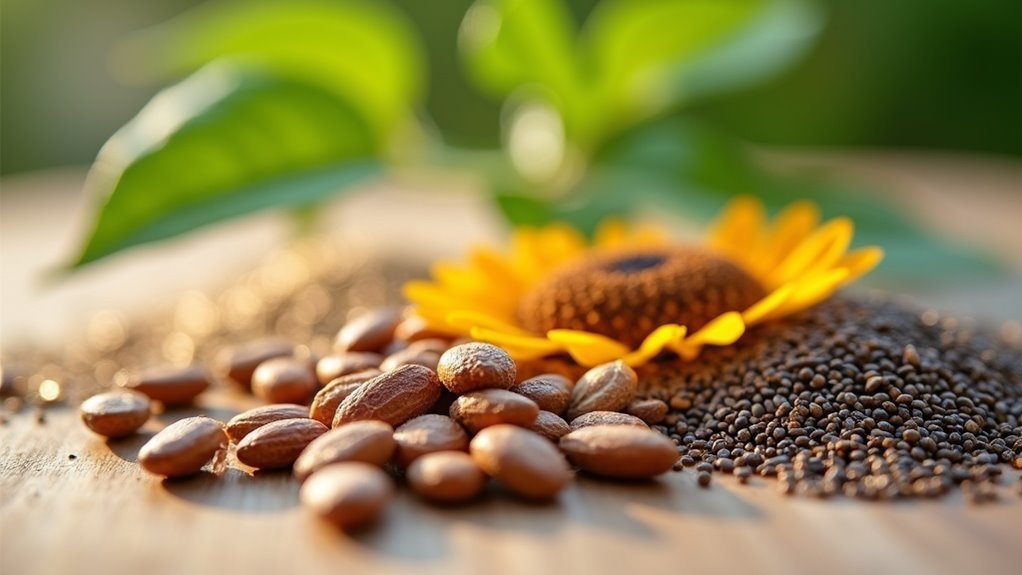
When stress overwhelms your system, pantothenic acid steps in as an important regulator of cortisol production, helping your body maintain balance during challenging times.
This crucial B-vitamin directly influences adrenal function, ensuring your stress response operates effectively. Without adequate levels, deficiency can severely impact your ability to cope with stress, leading to fatigue and mood disturbances.
Your daily intake should reach approximately 5 mg, though chronic stress may require higher amounts. Foods rich in pantothenic acid provide natural support, while dietary supplements offer targeted assistance for stress management.
Top Seeds Rich in Vitamin B5 for Natural Stress Relief
Building on pantothenic acid’s stress-fighting benefits, you can find this essential nutrient in several powerhouse seeds that make convenient, natural additions to your daily routine.
Powerhouse seeds packed with pantothenic acid offer convenient, natural stress-fighting benefits for your daily wellness routine.
Sunflower seeds top the list with 1.5mg of vitamin B5 per 100 grams, making them exceptional for stress recovery.
Pumpkin seeds deliver 0.5mg of pantothenic acid while providing magnesium that supports adrenal function.
Flaxseeds offer 0.3mg alongside omega-3 fatty acids that boost mental health.
Sesame seeds also contain 0.3mg of vitamin B5 plus antioxidants for overall wellness.
You’ll maximize natural stress relief by incorporating this variety of seeds into your diet, enhancing your body’s ability to manage stress effectively.
How Pantothenic Acid Supports Adrenal Function and Cortisol Balance

Since your adrenal glands rely on pantothenic acid to produce cortisol and other stress hormones, this essential B vitamin acts as a cornerstone nutrient for your body’s stress response system.
When you’re deficient in vitamin B5, your adrenal function becomes compromised, leading to fatigue, mood swings, and weight fluctuations that interfere with stress recovery.
Pantothenic acid supports adrenal glands by optimizing cortisol production, helping you maintain proper cortisol balance throughout the day.
This nutrient support becomes especially important if you’re dealing with chronic stress or adrenal fatigue.
Daily Intake Guidelines and Therapeutic Dosages for Stress Recovery
Understanding your daily pantothenic acid requirements helps you achieve ideal stress recovery without risking unnecessary side effects. The daily recommended intake for adults is 5 mg, while pregnant and breastfeeding women need 6-7 mg respectively.
However, therapeutic dosages for stress recovery can be considerably higher. You’ll find recommendations of 500 mg for adrenal support and up to 900 mg for managing chronic stress through cortisol regulation.
If you’re experiencing adrenal fatigue, combining Pantothenic Acid with other B vitamins enhances overall recovery outcomes. High doses around 400-1,200 mg may benefit specific conditions, but you should consult a healthcare provider before exceeding standard amounts.
This prevents potential gastrointestinal discomfort while addressing any underlying deficiency affecting your stress response.
Combining Seeds With Other B Vitamins for Maximum Stress-Fighting Benefits

While pantothenic acid from seeds provides substantial stress-fighting benefits on its own, you’ll maximize these effects by combining them with other B vitamins in your daily nutrition plan.
Creating synergistic combinations enhances adrenal function and supports thorough stress recovery:
Strategic nutrient combinations work synergistically to optimize adrenal health and accelerate your body’s natural stress recovery mechanisms.
- Pair sunflower seeds with leafy greens – This combination delivers pantothenic acid alongside B6 for ideal neurotransmitter synthesis.
- Mix pumpkin seeds with legumes – You’ll get B5 plus B12 for improved energy metabolism and mental clarity.
- Combine seeds with whole grains – This pairing supports overall well-being through extensive B vitamin coverage.
- Add seeds to vegetable-rich meals – Multiple B vitamins work together for enhanced mood regulation.
This strategic approach helps combat adrenal fatigue more effectively than isolated nutrients, creating a powerful foundation for sustained stress resilience.
Frequently Asked Questions
Does Pantothenic Acid Help With Stress?
Yes, pantothenic acid helps with stress by regulating your cortisol production and supporting adrenal function. You’ll experience improved stress management, better mental performance, and reduced fatigue when you’re getting adequate amounts.
Which Seeds Are Rich in Vitamin B5?
You’ll find sunflower seeds contain the highest vitamin B5 levels at 1.13mg per ounce. Pumpkin seeds offer 0.4mg, while sesame seeds provide 0.2mg, and flaxseeds contain 0.1mg per ounce.
Does Pantothenic Acid Increase Cortisol?
Pantothenic acid doesn’t increase cortisol directly. Instead, it supports your adrenal glands’ ability to produce and regulate cortisol properly, helping you maintain balanced levels during stress rather than causing excessive production.
What Does Pantothenic Acid Do for the Body?
Pantothenic acid converts your food into energy, produces red blood cells for oxygen transport, synthesizes stress hormones, enhances neurotransmitter production for mental health, manages cholesterol levels, and strengthens your immune system’s antibody production.


Leave a Reply