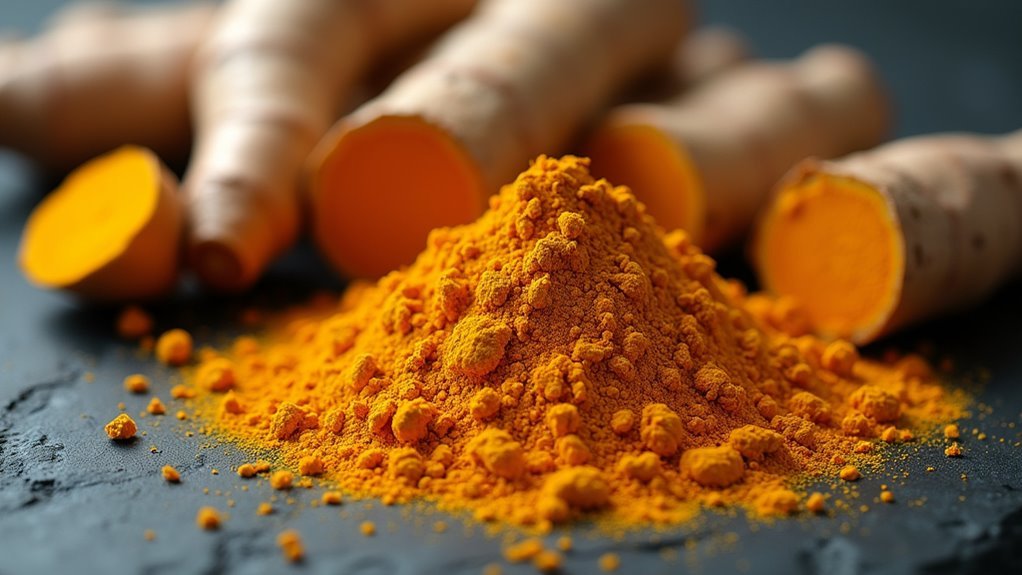
Organic turmeric powder’s anti-inflammatory power comes from curcumin, which blocks key inflammatory molecules like cytokines and COX-2 enzymes while disrupting the NF-kB signaling pathway that triggers inflammatory responses. You’ll benefit from curcumin’s ability to reduce C-reactive protein and neutralize harmful free radicals, delivering effects comparable to NSAIDs without harsh side effects. However, your body only absorbs 1-6% of curcumin naturally, though combining it with black pepper can boost absorption by 2,000% for maximum therapeutic potential.
The Science Behind Curcumin’s Anti-Inflammatory Properties
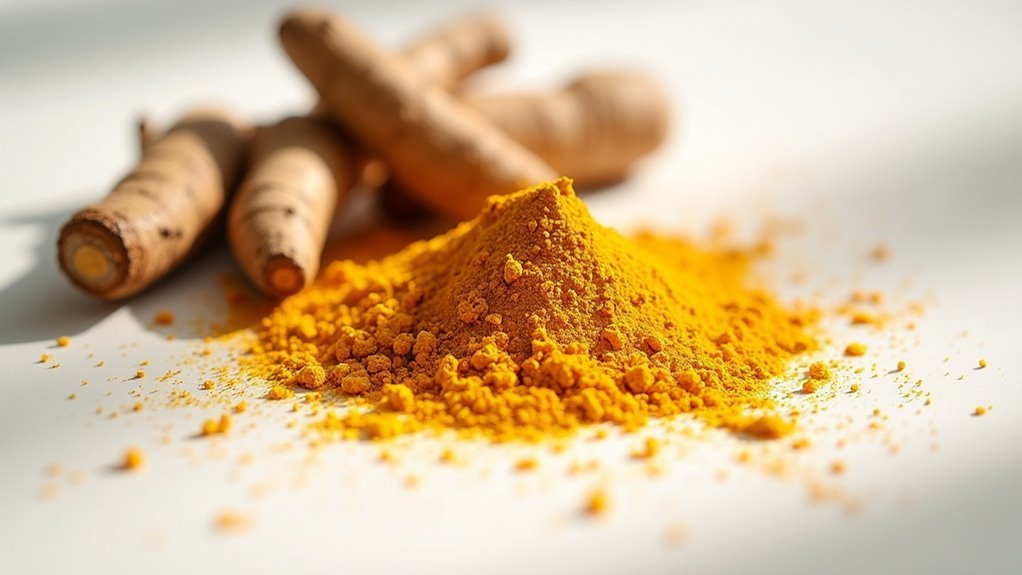
While inflammation serves as your body’s natural defense mechanism, chronic inflammation can wreak havoc on your health. Curcumin, turmeric’s powerhouse compound, tackles this problem through its remarkable anti-inflammatory properties. It directly inhibits key inflammatory molecules, including cytokines and COX-2 enzymes that fuel chronic inflammation.
Your body benefits from curcumin’s dual-action approach. Its antioxidants neutralize harmful free radicals while simultaneously reducing oxidative stress. This combination effectively lowers inflammation markers like C-reactive protein in your bloodstream.
However, curcumin’s bioavailability presents a challenge. Your body struggles to absorb it efficiently on its own. That’s where black pepper becomes essential. Adding piperine from black pepper can boost curcumin’s bioavailability by an impressive 2,000%, maximizing its anti-inflammatory impact in your system.
How Organic Turmeric Powder Inhibits Inflammatory Pathways
When you consume organic turmeric powder, its curcumin compounds launch a targeted assault on your body’s inflammatory pathways. Curcumin blocks pro-inflammatory cytokines and enzymes like COX-2 and LOX that trigger inflammation. It disrupts the NF-kB signaling pathway, preventing your cells from expressing inflammatory genes. This anti-inflammatory action reduces markers like C-reactive protein and interleukin-6 in your bloodstream.
Curcumin’s antioxidant properties neutralize free radicals that worsen inflammation.
However, your body struggles to absorb curcumin effectively. That’s why combining turmeric powder with black pepper dramatically improves bioavailability. Piperine in black pepper enhances curcumin absorption, allowing more compounds to reach your inflammatory pathways and deliver stronger anti-inflammatory benefits throughout your system.
Bioactive Compounds That Make Turmeric Effective Against Inflammation
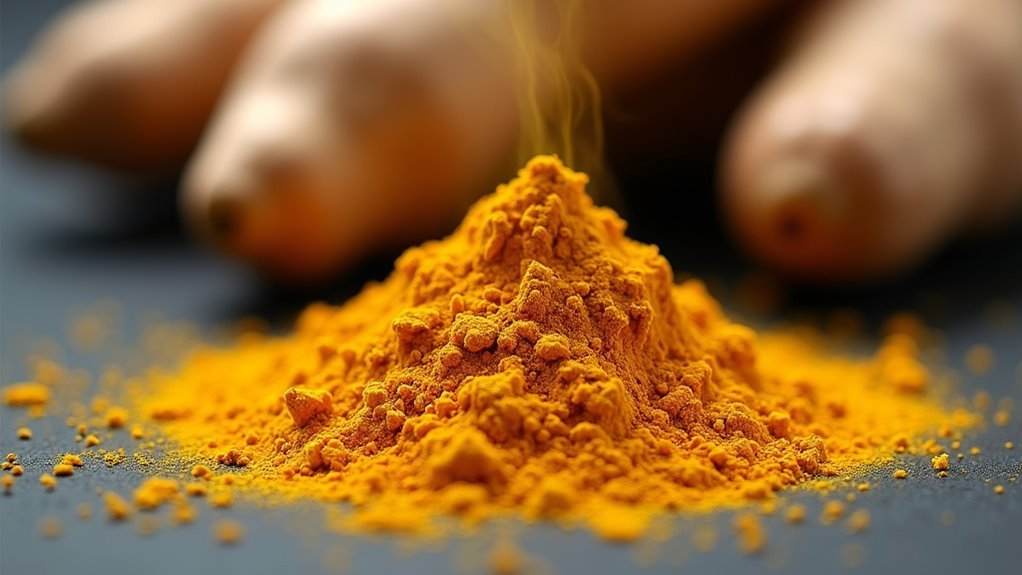
You’ll find that curcumin serves as turmeric’s primary anti-inflammatory powerhouse, working alongside other curcuminoids to create a synergistic effect against inflammation.
These compounds target specific inflammatory pathways in your body, but their effectiveness depends heavily on how well you’re able to absorb them.
That’s where bioavailability factors come into play—certain combinations and preparation methods can dramatically increase how much of these beneficial compounds your body actually uses.
Curcumin’s Anti-Inflammatory Mechanism
Although turmeric’s golden color catches your eye, it’s the powerhouse compound curcumin that delivers the real anti-inflammatory punch.
When you consume curcumin, it actively inhibits inflammatory molecules like cytokines and enzymes that trigger your body’s inflammatory response. You’ll see reduced levels of C-reactive protein and other inflammation markers, especially if you’re dealing with chronic inflammatory conditions.
Curcumin works by modulating multiple signaling pathways in your body, particularly the NF-kB and COX-2 pathways that control inflammation.
To maximize curcumin’s bioavailability, you should pair it with black pepper’s piperine, which increases absorption by up to 2,000%.
Research shows curcumin provides anti-inflammatory effects comparable to NSAIDs without harsh side effects.
Supporting Curcuminoid Compounds
While curcumin receives most of the spotlight, turmeric’s anti-inflammatory power stems from a trio of curcuminoids working together in your body. These bioactive compounds create a synergistic effect that amplifies turmeric’s therapeutic potential beyond what curcumin alone can achieve.
| Curcuminoid | Anti-Inflammatory Role |
|---|---|
| Curcumin | Primary inflammation blocker |
| Demethoxycurcumin | Enhances antioxidant activity |
| Bisdemethoxycurcumin | Supports cellular protection |
| Turmeric oils | Improves compound stability |
| Natural co-factors | Boosts absorption rates |
You’ll find that organic turmeric powder naturally contains all three curcuminoids in their ideal ratios. This whole-food approach guarantees better absorption and utilization compared to isolated curcumin supplements. The supporting compounds work as natural enhancers, helping your body maximize the anti-inflammatory benefits from each dose of turmeric you consume.
Enhanced Bioavailability Factors
How can your body release turmeric’s full anti-inflammatory potential when curcumin’s absorption rate remains frustratingly low on its own?
You’ll need strategic enhancement factors to maximize bioavailability. Piperine, black pepper’s active compound, transforms curcumin absorption by blocking metabolic breakdown in your liver and intestines. This powerful combination increases bioavailability by up to 2,000%, ensuring more curcumin reaches your bloodstream to deliver anti-inflammatory benefits.
When you consume organic turmeric powder with piperine, you’re creating ideal conditions for curcumin utilization.
Your body can now access considerably higher concentrations of this bioactive compound, amplifying its ability to inhibit inflammatory pathways and neutralize harmful free radicals. This enhanced absorption makes turmeric powder exponentially more effective against chronic inflammation.
Absorption and Bioavailability of Curcumin in Organic Turmeric
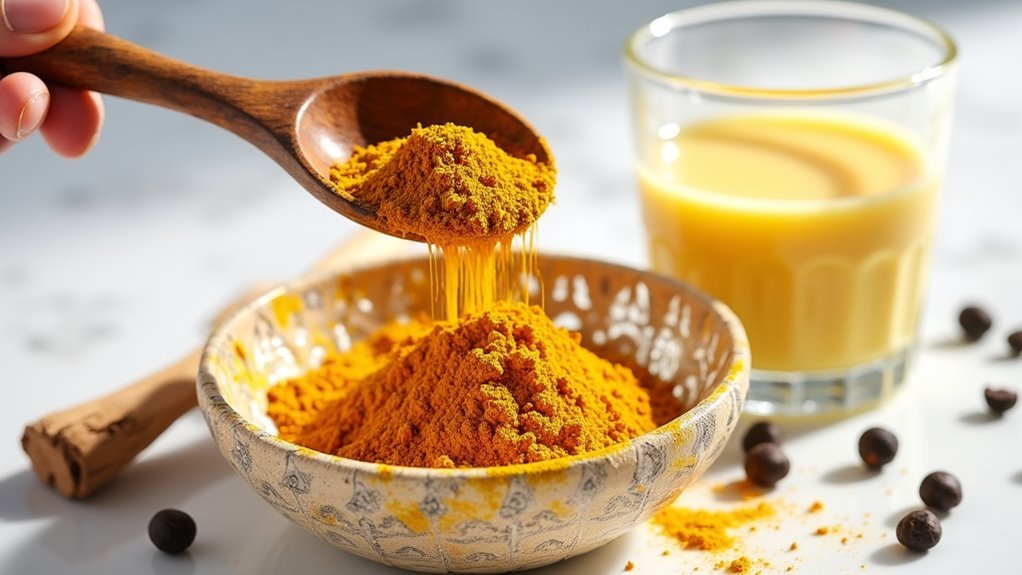
You’ll face a significant challenge when consuming organic turmeric powder: your body naturally absorbs only about 1% of curcumin without enhancement methods.
You can dramatically boost absorption by up to 2,000% when you combine turmeric with black pepper, which contains the compound piperine.
You’ll also improve curcumin’s bioavailability by consuming it with fats during meals, since curcumin is fat-soluble and requires dietary fats for ideal absorption.
Low Natural Absorption Rate
Despite turmeric’s reputation as a powerful anti-inflammatory spice, your body absorbs only 1-6% of the curcumin you consume from organic turmeric powder. This poor bioavailability means most of turmeric’s anti-inflammatory compounds pass through your system without providing therapeutic benefits.
| Absorption Challenge | Impact on Your Body |
|---|---|
| Low curcumin concentration | Minimal anti-inflammatory effect |
| Rapid metabolism | Quick elimination from bloodstream |
| Poor water solubility | Difficult intestinal absorption |
| Large molecular size | Limited cellular uptake |
| No absorption enhancers | Wasted therapeutic potential |
The low absorption rate explains why you’d need massive quantities of organic turmeric powder to achieve meaningful anti-inflammatory effects. Without enhancement methods, the curcumin simply doesn’t reach sufficient blood levels to combat inflammation effectively in your body.
Black Pepper Enhancement
While organic turmeric powder alone struggles with absorption, adding black pepper transforms curcumin’s bioavailability dramatically.
You’ll increase curcumin absorption by up to 2,000% when you combine turmeric with black pepper’s active compound, piperine. This partnership isn’t just about better absorption—it maximizes turmeric’s anti-inflammatory and antioxidant effects in your body.
You can further enhance bioavailability by consuming this combination with healthy fats.
This triple approach—turmeric, black pepper, and fats—creates ideal conditions for curcumin to reach therapeutic levels in your bloodstream. Without black pepper, you’re missing out on curcumin’s full anti-inflammatory potential.
The synergistic effect between these compounds is essential for achieving the health benefits that make turmeric so valuable for managing inflammatory conditions.
Fat-Soluble Absorption Methods
Since curcumin is fat-soluble, you can dramatically improve its absorption by pairing organic turmeric powder with healthy dietary fats. This simple strategy transforms turmeric’s bioavailability, allowing your body to access more of curcumin’s anti-inflammatory compounds.
| Fat Source | Best Application |
|---|---|
| Coconut oil | Golden milk lattes |
| Olive oil | Salad dressings |
| Avocado | Smoothie bowls |
| Nuts/seeds | Turmeric energy balls |
When you consume turmeric with dietary fats, you’re facilitating curcumin’s transport across your intestinal barrier. This enhanced absorption means better systemic circulation and increased anti-inflammatory action throughout your body. The fat acts as a vehicle, carrying curcumin into your bloodstream more effectively than consuming turmeric powder alone.
Clinical Evidence Supporting Turmeric’s Anti-Inflammatory Effects
Clinical trials have consistently validated turmeric’s reputation as a powerful natural anti-inflammatory agent, with researchers discovering that curcumin can match the effectiveness of conventional NSAIDs in reducing inflammation.
Multiple clinical studies demonstrate curcumin’s remarkable ability to combat inflammation through targeted mechanisms.
Key research findings include:
- Pain Relief Studies – Patients with osteoarthritis experienced significant pain reduction and improved function when taking 500 mg of curcumin twice daily in randomized controlled trials.
- Inflammatory Marker Reduction – Meta-analyses show curcumin supplementation significantly decreases C-reactive protein levels and inhibits inflammatory cytokines like TNF-alpha and IL-6.
- Metabolic Benefits – Individuals with metabolic syndrome showed decreased inflammation and improved metabolic parameters following turmeric supplementation, proving its anti-inflammatory effects extend beyond joint health.
Optimal Dosage and Forms of Organic Turmeric for Maximum Benefits
Although clinical research validates turmeric’s anti-inflammatory power, you’ll achieve peak benefits only when you understand the best dosage and choose the right form for your specific needs.
Understanding proper dosage and selecting the right turmeric form is essential for maximizing its proven anti-inflammatory benefits.
For osteoarthritis management, the ideal dosage ranges from 500 milligrams taken two to four times daily. When targeting high cholesterol, you’ll need 1.4 grams daily divided into two doses.
Turmeric supplements contain up to 95% curcumin compared to culinary powder’s 2%-9%, delivering superior anti-inflammatory effects.
However, you can dramatically boost curcumin absorption by combining turmeric with black pepper, increasing bioavailability by 2,000%.
For daily use, choose whole food forms like fresh root or organic powder to maximize the health benefits of turmeric while minimizing potential side effects from concentrated supplements.
Enhancing Turmeric’s Anti-Inflammatory Power With Natural Combinations
While organic turmeric powder delivers impressive anti-inflammatory benefits on its own, you can multiply its therapeutic potential by pairing it with specific natural compounds that enhance absorption and create synergistic effects.
Black pepper transforms turmeric’s effectiveness dramatically. The piperine in black pepper boosts curcumin absorption by up to 2,000%, making this simple combination incredibly powerful for reducing inflammation.
Here are three proven enhancement strategies:
- Add healthy fats like coconut oil or olive oil to improve curcumin bioavailability.
- Combine with ginger to create synergistic anti-inflammatory effects through gingerol compounds.
- Mix with vitamin C-rich foods like citrus fruits to amplify antioxidant properties.
When you use turmeric as a spice alongside cinnamon or garlic, you’ll create potent anti-inflammatory blends that harness each ingredient’s unique benefits while maximizing overall therapeutic impact.
Frequently Asked Questions
What Does the Mayo Clinic Say About Taking Turmeric?
You should know the Mayo Clinic says turmeric’s curcumin reduces inflammation and may help arthritis. However, you’ll likely need supplements for therapeutic effects, and you should consult your healthcare provider first.
What Chemical Is in Turmeric That Is an Anti-Inflammatory?
You’ll find curcumin as turmeric’s primary anti-inflammatory chemical, making up 1-6% of the spice’s weight. It’s what gives turmeric its potent inflammation-fighting properties by blocking inflammatory molecules and enzymes.
How to Make Natural Anti-Inflammatory With Turmeric Powder?
You can combine 1 teaspoon turmeric powder with black pepper to enhance absorption. Mix it into warm milk for golden milk, or add it to soups and marinades for daily anti-inflammatory benefits.
What Is the Active Anti-Inflammatory Agent in Turmeric?
You’ll find curcumin is turmeric’s active anti-inflammatory agent, comprising 1-6% of the spice’s weight. It effectively inhibits inflammatory cytokines and enzymes, making it as potent as many NSAIDs for reducing inflammation.


Leave a Reply