

You can maximize turmeric’s anti-inflammatory power by focusing on soil health with organic compost and excellent drainage, which triples curcumin levels. Use chemical-free cultivation methods, harvest at 9-12 months when leaves brown, and implement drip irrigation to reduce water usage by 50%. Practice regular crop rotation, gently dry rhizomes using low-temperature methods, and store in airtight containers away from light and heat. These seven proven techniques will reveal turmeric’s full therapeutic potential.
Soil Health Management Enhances Curcumin Content in Turmeric Rhizomes
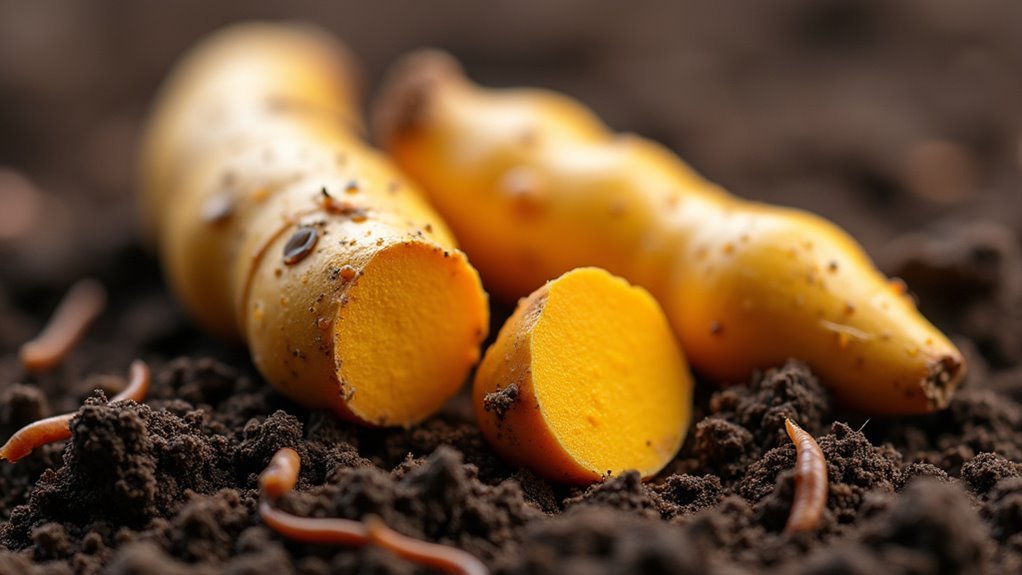
When you prioritize soil health in your turmeric cultivation, you’re directly investing in the curcumin content of your harvest.
Healthy soil with high humus content and excellent drainage creates ideal growing conditions that can triple your turmeric’s curcumin levels compared to poor soil environments.
Implementing organic practices like using organic fertilizers and cover crops improves soil structure while boosting biodiversity.
This enhanced soil ecosystem directly translates to higher curcumin content in your rhizomes. Regular crop rotation maintains nutrient balance and prevents soil depletion.
You’ll also want to establish efficient irrigation systems to reduce water stress on your plants.
Well-managed, nutrient-rich soils combined with proper watering techniques result in healthier turmeric growth and considerably elevated curcumin concentrations in your final harvest.
Chemical-Free Cultivation Methods Preserve Natural Anti-Inflammatory Compounds
You’ll enhance your soil’s health by incorporating organic compost and practicing crop rotation, which directly boosts curcumin production in your turmeric rhizomes.
Natural pest control methods like companion planting and beneficial insect habitats protect your crops without compromising the plant’s bioactive compounds.
These chemical-free approaches maintain the integrity of turmeric’s anti-inflammatory properties while creating a sustainable growing environment.
Soil Health Enhancement
Since healthy soil forms the foundation of exceptional turmeric cultivation, you’ll want to focus on building rich, organic matter that naturally enhances your plants’ ability to produce potent curcumin.
Incorporating organic manure and compost creates nutrient-dense conditions that boost soil health while supporting superior curcumin development. You’ll achieve better results by implementing crop rotation strategies that prevent nutrient depletion and maintain balanced soil chemistry.
Adding organic fertilizers like bone meal and kelp enriches the earth with essential minerals your turmeric plants crave. This approach creates an environment where beneficial microorganisms thrive, breaking down organic materials into readily available nutrients.
Enhanced soil health directly translates to robust turmeric growth and maximum anti-inflammatory compound production in your harvest.
Natural Pest Control
Protecting your turmeric crop from pests while preserving its powerful anti-inflammatory compounds requires a strategic shift away from synthetic pesticides toward natural control methods.
Implementing natural pest control techniques guarantees your organic turmeric maintains its potent curcumin content and anti-inflammatory effects without chemical contamination.
Effective natural pest control strategies include:
- Beneficial insect introduction – Release ladybugs, lacewings, and other predatory insects to eliminate harmful pests naturally
- Organic spray applications – Use neem oil and garlic-based sprays to deter pests without compromising medicinal qualities
- Companion planting – Grow pest-repelling plants alongside turmeric to create natural barriers
These chemical-free methods protect your crop while maintaining turmeric’s therapeutic integrity, assuring consumers receive maximum health benefits from your organically grown harvest.
Proper Harvesting Timing Maximizes Therapeutic Potency of Organic Turmeric
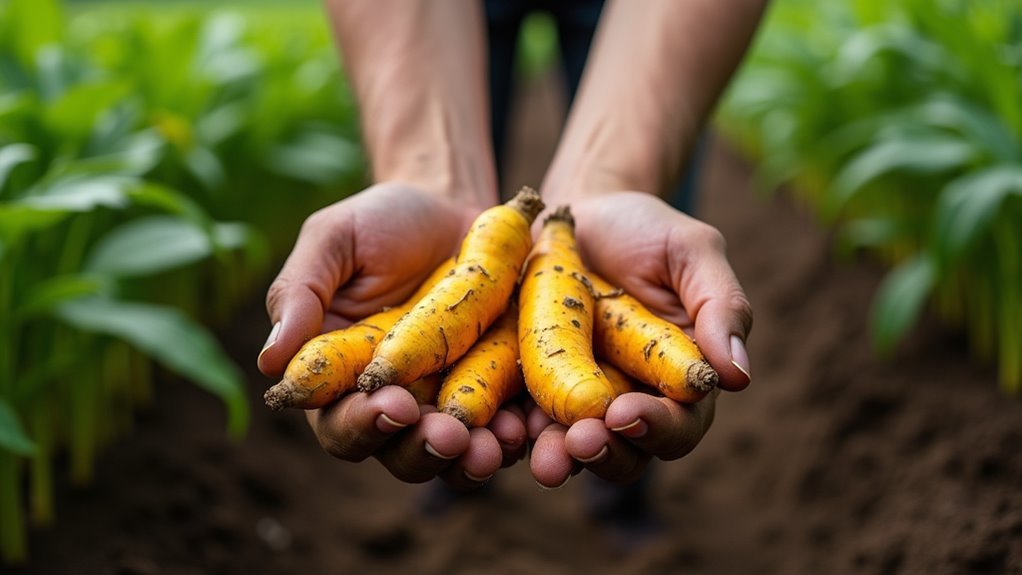
When you harvest organic turmeric at the perfect time—typically 9 to 12 months after planting—you’ll maximize its curcumin content and therapeutic potency. Proper harvesting timing directly impacts the health benefits your turmeric provides as an anti-inflammatory agent.
Watch for key readiness indicators: browning and drying leaves and stems signal that rhizomes have reached peak therapeutic strength.
Don’t rush the process—early harvesting before complete plant wilting reduces curcumin content, diminishing the spice’s medicinal effectiveness.
Once you’ve harvested, wash the rhizomes thoroughly to preserve their therapeutic properties. Residual dirt can compromise quality and reduce health benefits.
Sustainable Water Management Techniques Boost Plant Nutrient Density
After securing your harvest through proper timing, you’ll want to focus on water management practices that enhance your turmeric’s nutritional value throughout the growing season.
Sustainable water management directly impacts your organic turmeric’s therapeutic compounds and overall plant growth quality.
Effective water strategies boost nutrient density while conserving resources:
- Implement drip irrigation systems – Reduce water usage by 50% while providing consistent moisture that prevents waterlogging and supports optimal plant growth.
- Install rainwater harvesting – Collect up to 100,000 liters annually for reliable irrigation during dry periods, ensuring continuous organic cultivation.
- Apply organic mulching – Improve soil moisture retention and increase nutrient density by 20-30%, while enhancing microbial activity that supports healthier rhizome development.
These sustainable water management techniques create perfect growing conditions for maximizing your turmeric’s anti-inflammatory properties.
Crop Rotation Strategies Improve Antioxidant Levels in Turmeric Production

Strategic crop rotation planning transforms your turmeric’s antioxidant potential by creating nutrient-rich soil conditions that maximize curcumin production.
When you rotate turmeric with legumes or cover crops, you’ll boost soil nitrogen content essential for high-quality turmeric development. This practice disrupts pest and disease cycles, reducing your reliance on chemical interventions while preserving turmeric’s natural anti-inflammatory properties.
Research demonstrates that turmeric grown in rotated systems produces notably higher curcumin levels compared to monoculture farming.
You’ll achieve enhanced antioxidant levels by incorporating diverse crops into your planting schedule, which improves ecosystem biodiversity. This biodiversity directly links to improved phytochemical profiles in your turmeric harvest.
Crop rotation fundamentally enhances soil health, increasing nutrient availability that directly translates to superior antioxidant concentrations in your turmeric rhizomes.
Processing and Drying Methods That Retain Maximum Curcumin Value
The processing phase determines whether your carefully cultivated turmeric retains its valuable curcumin content or loses these beneficial compounds through improper handling. Proper techniques protect against oxidative stress that degrades this potent anti-inflammatory compound.
Start processing by boiling your fresh turmeric rhizomes before drying. This vital step reduces enzyme activity that would otherwise break down curcumin during subsequent handling. After boiling, choose gentle drying methods like air drying or low-temperature dehydrators to preserve essential oils alongside curcumin.
Key processing guidelines:
- Avoid sun drying, which causes significant curcumin loss through UV exposure and excessive heat
- Wash turmeric thoroughly but don’t oversoak to prevent moisture retention
- Store dried turmeric in airtight containers away from light and heat
These methods guarantee your turmeric maintains maximum therapeutic value.
Storage Practices for Maintaining Long-Term Anti-Inflammatory Properties
Once you’ve properly processed your turmeric, implementing correct storage practices becomes essential for preserving its anti-inflammatory potency over months or even years.
You’ll need to guarantee your rhizomes are thoroughly dried before storage to retain their anti-inflammatory properties and prevent spoilage.
Store your turmeric in airtight containers within cool, dark locations. Light and heat degrade curcumin, the compound responsible for turmeric’s therapeutic benefits.
Don’t place containers near strong-smelling substances, as turmeric absorbs odors that can alter its effectiveness and flavor.
Minimize air and humidity exposure through proper sealing, which prevents oxidation that diminishes health benefits.
You should regularly inspect stored turmeric for mold or rancid odors.
These storage practices guarantee you’ll maintain maximum curcumin levels and anti-inflammatory properties throughout extended storage periods.
Frequently Asked Questions
How Powerful Is Turmeric as an Anti-Inflammatory?
You’ll find turmeric’s anti-inflammatory power rivals pharmaceutical drugs. Its curcumin actively blocks inflammatory molecules and considerably reduces pro-inflammatory cytokines, making it highly effective for treating arthritis and other inflammatory conditions naturally.
What Does Mayo Clinic Say About Taking Turmeric?
Mayo Clinic says you’ll benefit from turmeric’s curcumin for anti-inflammatory effects, but you should consult your healthcare provider before taking supplements since higher doses can cause gastrointestinal issues.
What Happens to Your Body When You Start Taking Turmeric?
When you start taking turmeric, you’ll experience reduced inflammation throughout your body, improved antioxidant protection against cellular damage, enhanced heart health, better cognitive function, and potentially stronger defenses against chronic diseases.
What Is the Most Effective Way to Take Turmeric for Inflammation?
You’ll maximize turmeric’s anti-inflammatory effects by combining it with black pepper and healthy fats like olive oil. Take 500-2000mg daily through supplements or incorporate it into meals like soups and smoothies consistently.


Leave a Reply