
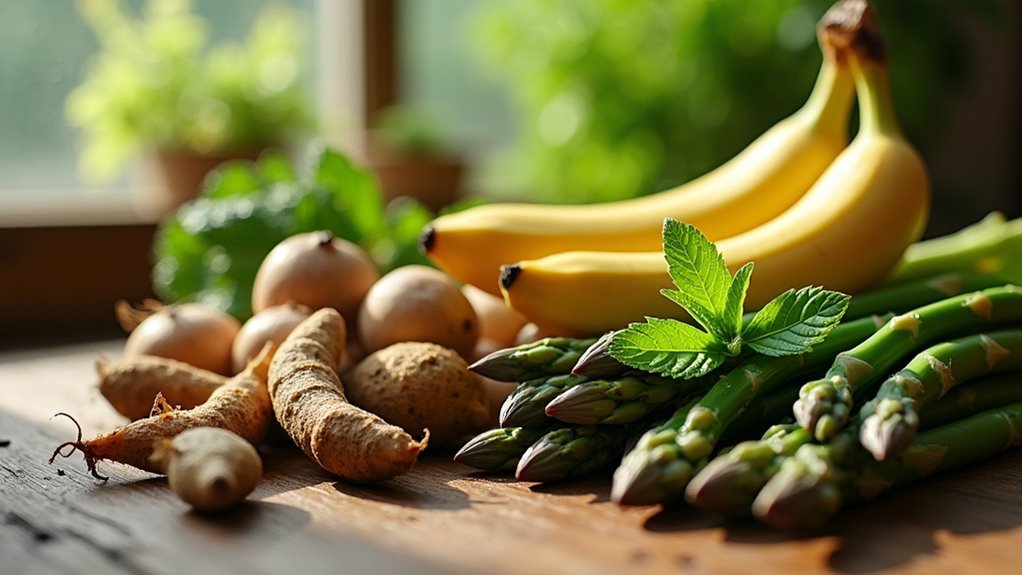
Prebiotic foods boost beneficial gut bacteria because they contain indigestible fibers that pass unchanged through your small intestine and reach your colon, where they serve as specialized fuel for healthy microbes. When beneficial bacteria like Bifidobacteria and Lactobacilli ferment these fibers, they produce short-chain fatty acids that create an acidic environment hostile to harmful bacteria while allowing good bacteria to multiply and dominate available resources, strengthening your entire gut ecosystem and enhancing immune function.
What Are Prebiotics and How Do They Work

While your body can’t digest them, prebiotics serve as crucial fuel for the beneficial bacteria living in your gut. These specialized plant fibers pass through your small intestine unchanged and reach your colon, where they’re fermented by beneficial microorganisms. This fermentation process produces short-chain fatty acids that support your digestive health.
You’ll find prebiotic foods in high-fiber options like garlic, onions, bananas, and whole grains. These contain complex carbohydrates and oligosaccharides that your gut bacteria thrive on.
When you regularly consume these foods, you’re fundamentally feeding your beneficial bacteria, helping them multiply and outcompete harmful microorganisms. This creates a healthier gut environment that improves digestion, strengthens your immune system, and may reduce your risk of certain diseases.
The Science Behind Prebiotic Fiber and Gut Bacteria
When you consume prebiotic fibers, they travel undigested to your colon where specific bacteria break them down through fermentation.
This process creates an ideal environment for beneficial microorganisms to multiply and flourish throughout your digestive tract.
The fermentation produces short-chain fatty acids that fuel your colon cells and help maintain your gut’s protective barrier.
Fiber Fermentation Process
As prebiotic fibers like inulin and oligosaccharides pass through your digestive system, they remain largely intact until they reach your colon, where resident gut bacteria enthusiastically begin breaking them down through fermentation.
This process transforms prebiotic fibers into short-chain fatty acids, which serve as crucial fuel for your colon cells and enhance overall gut health.
During fermentation, beneficial bacteria such as Bifidobacteria and Lactobacilli multiply rapidly, improving your gut microbiome’s balance.
You’ll experience increased SCFA levels, which boost immune function and reduce gut inflammation.
The fermentation process also stimulates mucus production in your gut lining, strengthening barrier integrity and protecting against harmful pathogens while supporting digestive wellness.
Bacterial Growth Mechanisms
Beyond the fermentation process itself, the specific mechanisms that drive bacterial growth reveal fascinating insights into how your gut microbiome responds to prebiotic fibers.
When you consume prebiotics, they create an environment where beneficial bacteria can outcompete harmful microorganisms through several targeted pathways.
Your beneficial bacteria utilize these growth mechanisms:
- Selective feeding – Prebiotics and probiotics work together as beneficial bacteria preferentially consume specific fiber types
- pH manipulation – SCFA production lowers colon pH, creating hostile conditions for pathogenic bacteria
- Nutrient competition – Beneficial species monopolize available resources, starving harmful microbes
- Biofilm formation – Healthy bacteria establish protective colonies along intestinal walls
- Cross-feeding networks – Different bacterial species share metabolic byproducts, strengthening the entire ecosystem
This targeted approach explains why prebiotic supplementation consistently increases beneficial bacterial populations.
Short-Chain Fatty Acids
The powerhouse molecules known as short-chain fatty acids (SCFAs) represent one of the most significant benefits your gut derives from prebiotic fiber consumption. When beneficial bacteria ferment prebiotic fibers, they produce three primary SCFAs: acetate, propionate, and butyrate. These compounds serve as essential energy sources for your colon cells while actively promoting gut health.
Butyrate stands out as particularly important, strengthening your intestinal lining and reducing your risk of leaky gut syndrome and inflammatory bowel disease. Short-chain fatty acids also regulate inflammation and enhance your gut barrier function.
Beyond digestive benefits, they improve your insulin sensitivity, potentially reducing obesity and diabetes risk. These molecules influence appetite regulation through specialized signaling pathways, helping maintain your overall energy balance and metabolic health.
Key Differences Between Prebiotics and Probiotics
While both prebiotics and probiotics play essential roles in gut health, they function in fundamentally different ways within your digestive system.
Prebiotics and probiotics work differently in your gut, each supporting digestive health through distinct mechanisms and pathways.
Prebiotics are indigestible fibers that feed your existing beneficial bacteria, while probiotics introduce live microorganisms directly into your gut. Understanding these differences helps you make informed dietary choices.
Here’s how prebiotic and probiotic foods differ:
- Source: Prebiotics come from high-fiber foods like garlic and onions, while probiotics are found in fermented foods like yogurt.
- Function: Prebiotics nourish existing gut bacteria; probiotics add new bacterial strains.
- Stability: Prebiotics remain stable during digestion; probiotics require careful handling for viability.
- Accessibility: Prebiotics are easier to incorporate through natural foods.
- Synergy: Together, they form synbiotics for enhanced gut health benefits.
Health Benefits of Supporting Your Gut Microbiome

When you support your gut microbiome with prebiotic foods, you’re investing in multiple aspects of your health that extend far beyond digestion.
Your immune system becomes stronger as beneficial bacteria flourish, while your digestive processes improve and your body absorbs nutrients more effectively.
These interconnected benefits work together to create a foundation for better overall wellness and disease prevention.
Enhanced Immune System Function
Because your gut houses approximately 70% of your immune system, supporting beneficial bacteria through prebiotic foods creates a powerful defense network that actively protects you from pathogens and disease.
When you consume prebiotics, they ferment in your digestive tract and produce short-chain fatty acids that reduce inflammation throughout your body. This process strengthens your gut barrier function, preventing harmful substances from entering your bloodstream and triggering unnecessary immune responses.
Your enhanced gut microbiome delivers these immune benefits:
- Stronger vaccine responses – diverse bacteria help your body mount robust defenses
- Reduced autoimmune reactions – balanced microbes prevent immune system overactivity
- Lower allergy risk – healthy gut bacteria regulate inflammatory responses
- Faster pathogen elimination – beneficial microbes crowd out harmful invaders
- Improved barrier integrity – strengthened intestinal walls block toxins
Improved Digestive Health
As prebiotic foods nourish your beneficial gut bacteria, they create a foundation for ideal digestive function that transforms how your body processes and absorbs nutrients. These specialized fibers help regulate bowel movements, making them especially valuable if you’re dealing with constipation or diarrhea-predominant IBS symptoms.
| Prebiotic Food | Primary Benefit | Secondary Effect |
|---|---|---|
| Garlic | Reduces inflammation | Strengthens immunity |
| Onions | Improves calcium absorption | Supports bone health |
| Bananas | Regulates bowel movements | Controls blood sugar |
| Asparagus | Produces beneficial acids | Enhances metabolism |
| Chicory root | Promotes regular digestion | Reduces constipation |
When your gut bacteria ferment prebiotic foods, they produce short-chain fatty acids that reduce inflammation throughout your digestive system. You’ll also experience better nutrient absorption and improved blood sugar control, creating lasting digestive wellness.
Better Nutrient Absorption
Beyond creating smoother digestive function, prebiotics fundamentally transform how your body extracts and utilizes nutrients from the foods you eat. When beneficial bacteria ferment these specialized fibers, they create an ideal environment for nutrient uptake throughout your digestive tract.
Prebiotics enhance your body’s ability to absorb essential nutrients by:
- Increasing calcium bioavailability, strengthening your bones and teeth
- Producing short-chain fatty acids that fuel your intestinal cells
- Stabilizing blood sugar levels for improved nutrient metabolism
- Strengthening your intestinal barrier to reduce inflammatory nutrient loss
- Supporting immune function that protects your absorption mechanisms
This enhanced absorption means you’ll get more nutritional value from every meal, making your dietary choices more effective and supporting your overall health goals.
Top Prebiotic-Rich Fruits and Vegetables
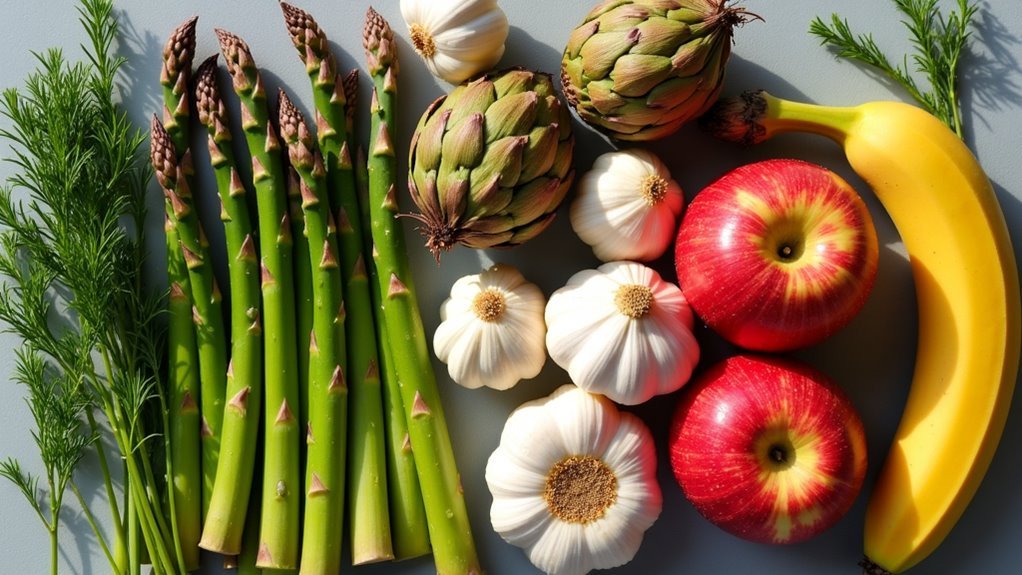
When you’re looking to boost your gut health naturally, certain fruits and vegetables pack an impressive prebiotic punch that’ll transform your digestive wellness.
Bananas stand out as an accessible source of fructooligosaccharides, which actively stimulate beneficial bacteria growth in your gut.
You’ll find garlic loaded with inulin, a soluble fiber that enhances immune function while promoting healthy flora.
Onions deliver similar benefits through their inulin and oligofructose content, supporting both good bacteria and digestive health.
Jerusalem artichokes reign supreme as one of nature’s richest inulin sources, making them powerhouse prebiotics for nutrient absorption enhancement.
Don’t overlook asparagus, which contains specialized prebiotic fibers that simultaneously encourage beneficial bacteria growth and improve your body’s ability to absorb essential nutrients effectively.
Whole Grains as Powerful Prebiotic Sources
Three powerhouse whole grains—oats, barley, and whole wheat—deliver exceptional prebiotic benefits that’ll revolutionize your gut microbiome’s diversity and function.
These fiber-rich champions contain beta-glucan and resistant starch that ferment in your colon, producing essential short-chain fatty acids.
Beta-glucan and resistant starch from whole grains ferment in your colon, creating powerful short-chain fatty acids that fuel optimal gut health.
When you consume these prebiotics, your beneficial bacteria feast and multiply, creating:
- A thriving ecosystem of beneficial microbes coating your intestinal walls
- Robust digestive pathways processing nutrients with enhanced efficiency
- Strengthened immune barriers protecting against harmful pathogens
- Improved calcium flowing seamlessly into your bloodstream
- Balanced blood sugar levels maintaining steady energy throughout your day
Research consistently shows that eating at least 48 grams of whole grains daily noticeably reduces gastrointestinal disorder risks while supporting ideal gut health and overall wellness.
Garlic and Onions: Natural Gut Health Boosters
You’ll find that garlic and onions pack impressive amounts of inulin and fructooligosaccharides, making them excellent prebiotic powerhouses for your gut health.
These sulfur-rich vegetables don’t just add flavor to your meals—they’re actively feeding the beneficial bacteria in your digestive system.
You can easily incorporate them into your daily routine by adding raw garlic to salad dressings, sautéing onions as a base for soups, or roasting both as side dishes.
Prebiotic Fiber Content
Among nature’s most potent prebiotic powerhouses, garlic and onions deliver exceptional gut health benefits through their rich fiber content.
You’ll find garlic packed with inulin, while onions contain abundant fructooligosaccharides (FOS) – both essential prebiotic fibers that fuel your beneficial gut bacteria.
When you consume these flavorful ingredients, you’re feeding your microbiome with premium nutrition that creates:
- Thriving colonies of healthy bacteria multiplying throughout your digestive system
- Short-chain fatty acids flowing through your gut like natural healing compounds
- Enhanced calcium absorption transforming your bones into stronger foundations
- Improved nutrient uptake maximizing every vitamin and mineral you consume
- Strengthened immune defenses protecting your body from harmful invaders
This remarkable prebiotic fiber content makes garlic and onions indispensable allies for ideal digestive wellness and overall health enhancement.
Daily Consumption Methods
While maximizing garlic and onion’s prebiotic benefits requires consistent daily intake, you can easily incorporate these gut health champions into your routine through simple, practical methods.
Start your morning by adding minced garlic to scrambled eggs or omelets. Toss raw onions into lunch salads for a satisfying crunch and prebiotic boost.
During dinner preparation, sauté both ingredients as flavor bases for soups, stews, and stir-fries. You’ll enhance taste while feeding beneficial gut bacteria.
Raw consumption provides maximum prebiotics, so consider adding thin onion slices to sandwiches or mixing minced garlic into dressings.
Roasted versions work perfectly as side dishes or mixed into grain bowls. By consuming just small amounts daily, you’ll easily meet the recommended 5 grams of prebiotic fiber needed for ideal gut health.
Jerusalem Artichokes and Other High-Inulin Foods
Jerusalem artichokes stand out as nutritional powerhouses in the prebiotic world, packing an impressive 13-18% inulin content by weight. This soluble fiber bypasses your small intestine and ferments in your colon, feeding beneficial bacteria that strengthen your digestive system.
You’ll find these potent prebiotics in several delicious foods:
- Chicory root – earthy and robust, perfect for coffee blends
- Garlic – aromatic cloves that transform any savory dish
- Onions – sweet and pungent layers adding depth to meals
- Leeks – mild, buttery stalks ideal for soups and stews
- Asparagus – tender spears with a fresh, grassy flavor
Regular consumption enhances calcium absorption, supporting bone health while improving blood sugar control and cholesterol levels for better metabolic function.
Daily Fiber Requirements for Optimal Gut Health
Understanding how much prebiotic fiber you need daily helps you maximize the gut health benefits these foods provide.
Children should consume their age plus 5 to 10 grams of fiber daily, while adult women need at least 25 grams and men require 38 grams. Of your total intake, at least 5 grams should come from prebiotic sources to effectively support beneficial bacteria growth.
Whole foods offer the best prebiotics since they deliver essential nutrients alongside fiber.
You’ll want to gradually increase your intake to avoid digestive discomfort and build tolerance. Including prebiotic foods in each meal enhances gut health while improving digestion and nutrient absorption.
This strategic approach guarantees you’re feeding your beneficial bacteria consistently throughout the day.
Managing Digestive Sensitivity When Adding Prebiotics
Although prebiotic foods offer significant gut health benefits, introducing them too quickly can trigger uncomfortable digestive symptoms like gas, bloating, and abdominal discomfort.
You’ll need to approach prebiotics strategically, especially if you have digestive sensitivities or conditions like diarrhea-predominant IBS.
Start your prebiotic journey gradually to help your gut bacteria adjust:
- Begin with small portions of prebiotic-rich foods like garlic or onions
- Monitor your body’s response for 2-3 days before increasing intake
- Avoid large quantities of inulin-containing foods initially
- Consider consulting a healthcare provider if you’re following a low FODMAP diet
- Track symptoms in a food diary to identify problematic prebiotics
This careful approach allows your digestive system to adapt while maximizing the benefits of prebiotics for your gut health.
Combining Prebiotic Foods With Probiotic Sources
When you combine prebiotic foods with probiotic sources, you create a powerful synergy that amplifies your gut health benefits beyond what either component can achieve alone.
This partnership, called synbiotics, works because prebiotics serve as essential fuel for beneficial bacteria to flourish.
You can maximize these benefits by pairing prebiotic-rich foods like garlic, onions, and bananas with probiotic sources such as yogurt or sauerkraut.
This combination enhances digestion and increases short-chain fatty acid production, which directly supports your gut health.
The synergistic effect improves your gut microbiome balance, leading to stronger immune function and reduced inflammation.
Simple Ways to Include More Prebiotics in Meals
Now that you understand the power of combining prebiotics with probiotics, implementing practical strategies to boost your prebiotic intake becomes your next step toward ideal gut health.
Incorporating prebiotics into your daily meals doesn’t require complicated recipes or expensive ingredients. Simple kitchen staples can transform your gut microbiome when used strategically:
- Sauté garlic and onions as aromatic bases for stir-fries, soups, and pasta dishes
- Slice bananas onto oatmeal, yogurt, or blend into morning smoothies
- Choose whole grain oats, brown rice, and whole wheat pasta over refined alternatives
- Toss legumes like chickpeas, black beans, or lentils into salads and tacos
- Roast Jerusalem artichokes or asparagus as flavorful side dishes rich in inulin
These accessible ingredients seamlessly enhance both flavor and digestive wellness.
Building a Sustainable Gut-Healthy Eating Plan
Since sustainable gut health requires consistency rather than perfection, your eating plan should prioritize gradual changes that become lasting habits.
Start by targeting fiber intake that matches your child’s age plus 5 to 10 grams daily, ensuring at least 5 grams come from prebiotic sources like garlic, onions, bananas, and whole grains.
Incorporate prebiotics into each meal by adding beans or raw garlic to dishes. This regular inclusion supports balanced gut microbiome and enhances immune function.
You’ll want to increase prebiotic foods gradually to minimize digestive discomfort, allowing your gut bacteria to adjust without causing gas or bloating.
Pair these prebiotics with probiotic sources like yogurt or fermented vegetables. This combination works synergistically to enhance gut flora balance and improve nutrient absorption effectively.
Frequently Asked Questions
How Do Prebiotics Help Gut Health?
Prebiotics feed your beneficial gut bacteria, helping them thrive and produce short-chain fatty acids. You’ll experience improved digestion, better calcium absorption, enhanced blood sugar control, and stronger immune function through a balanced microbiome.
Why Prebiotics Are Better Than Probiotics?
You’ll find prebiotics more effective because they feed your existing beneficial bacteria, helping them multiply and produce anti-inflammatory compounds, while probiotics often can’t survive your digestive system long enough.
How Do You Increase Beneficial Bacteria in the Gut?
You’ll increase beneficial gut bacteria by eating prebiotic-rich foods like garlic, onions, and bananas. Gradually add fiber from whole grains and legumes, consume diverse prebiotics, and include fermented foods for ideal results.
What Are the Benefits of Eating Prebiotics?
You’ll experience improved calcium absorption for stronger bones, better blood sugar control, enhanced immune function, and reduced colorectal cancer risk when you eat prebiotics that nourish your beneficial gut bacteria.



Leave a Reply