

Miso soup heals your gut flora because it’s packed with live probiotics like Lactobacillus that crowd out harmful bacteria and restore digestive balance. The fermentation process breaks down complex nutrients into easily absorbed forms while creating beneficial enzymes and vitamins. You’ll also get prebiotic fibers that feed existing good bacteria, plus anti-inflammatory isoflavones that reduce gut inflammation and promote microbiome diversity. These powerful compounds work together to enhance nutrient absorption and support your digestive system’s natural healing processes.
What Makes Miso Soup a Gut Health Powerhouse

Why has miso soup earned its reputation as a digestive powerhouse? The answer lies in its unique fermentation process, which transforms simple soybeans into a gut health goldmine.
Fermentation transforms humble soybeans into a probiotic-rich elixir that revolutionizes digestive health from the inside out.
When you consume miso, you’re getting live probiotics that directly enhance your beneficial bacteria population. This fermentation creates an environment where good microorganisms thrive, improving your digestive health considerably.
Miso’s rich dietary fiber content feeds your existing gut flora, promoting diversity that’s essential for ideal function. The prebiotics naturally present stimulate beneficial bacteria growth, enhancing nutrient absorption while reducing inflammation.
You’ll experience improved bowel regularity and decreased bloating as your microbiome becomes more balanced. This combination of probiotics, prebiotics, and fiber makes miso soup an exceptional choice for supporting your gut flora diversity and overall digestive wellness.
The Fermentation Process Behind Miso’s Healing Properties
When soybeans undergo miso’s intricate two-step fermentation process, they’re transformed from simple legumes into a digestive healing powerhouse. This fermentation involves koji mold and salt, breaking down complex proteins and sugars into easily absorbed nutrients while cultivating beneficial bacteria like Lactobacillus species.
During this transformation, your gut receives concentrated probiotics that establish a balanced microbiome. The fermentation develops vital enzymes that enhance digestive health by improving nutrient absorption and producing fundamental vitamins B12 and K.
These enzymes work alongside miso’s natural antioxidants and isoflavones to reduce oxidative stress in your digestive tract. Regular miso consumption increases your beneficial bacteria population, strengthening your immune response and reducing inflammation.
This fermentation process fundamentally pre-digests nutrients, making them more bioavailable for ideal gut function.
How Probiotics in Miso Soup Restore Intestinal Balance
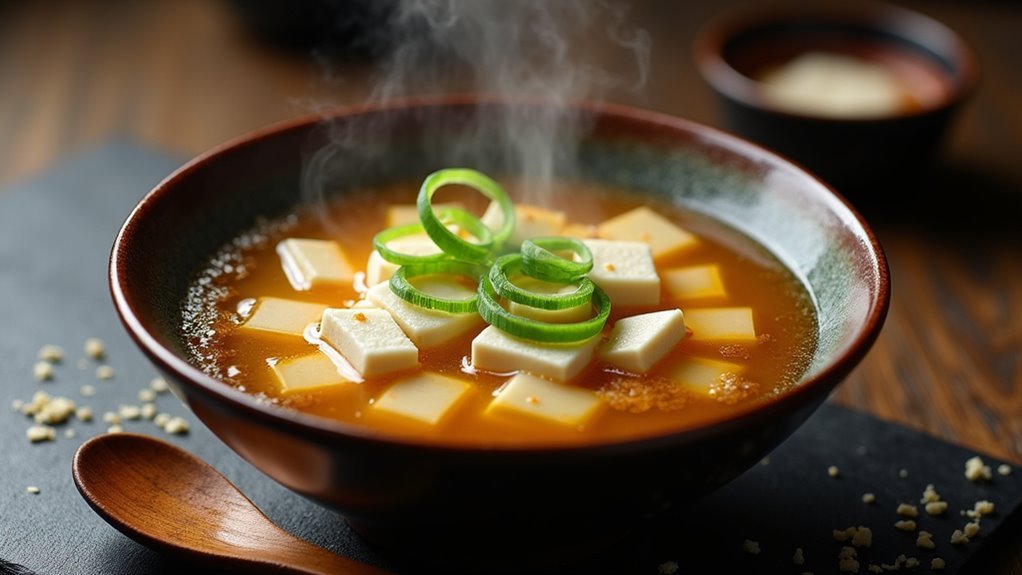
When you consume miso soup, you’re introducing live beneficial bacteria into your digestive system that actively work to crowd out harmful microorganisms.
These probiotics don’t just pass through—they establish colonies in your gut and begin producing compounds that create an environment where good bacteria can thrive.
You’ll experience enhanced gut microbiome diversity as these beneficial strains multiply and communicate with your existing intestinal flora, ultimately restoring the delicate balance your digestive system needs to function efficiently.
Beneficial Bacteria Production
Although your digestive system houses trillions of microorganisms, maintaining the right balance between beneficial bacteria and harmful bacteria can be challenging in today’s world of processed foods and stress.
Miso soup delivers targeted probiotics that actively enhance your gut microbiome by promoting the growth of beneficial strains while inhibiting harmful microorganisms. These fermented foods contain live cultures that improve digestive health by supporting diverse microbial populations essential for peak nutrient absorption.
The isoflavones and antioxidants in miso further stabilize your gut flora, reducing inflammatory response and supporting overall gastrointestinal function.
Regular consumption helps restore intestinal balance, creating an environment where beneficial bacteria thrive and effectively protect against digestive disorders.
Gut Microbiome Enhancement
Your intestinal microbiome functions as a complex ecosystem where billions of microorganisms work together to maintain digestive harmony. Miso soup’s fermentation-derived probiotics deliver precisely the beneficial bacteria strains needed to restore this delicate balance.
The fermentation process creates diverse probiotic cultures that actively enhance your gut flora composition, promoting robust digestive health through improved microbiota diversity. These beneficial bacteria work synergistically with miso’s dietary fiber content to reduce inflammation throughout your digestive tract while supporting regular bowel movements.
This thorough gut microbiome enhancement strengthens your body’s natural defenses, as a well-balanced intestinal environment directly influences immune function and overall health, making miso soup an effective tool for long-term digestive wellness.
Essential Nutrients That Support Digestive Recovery
Beyond probiotics, you’ll find that miso soup contains essential vitamins and minerals that actively support your digestive recovery process.
The vitamin K and B vitamins in miso help maintain ideal gut function, while minerals like manganese and copper play vital roles in enzyme production and nutrient absorption.
These nutrients work alongside the beneficial bacteria to create an extensive foundation for restoring your digestive health.
Probiotics and Gut Bacteria
When you consume miso soup regularly, you’re introducing millions of beneficial bacteria into your digestive system that work actively to restore and maintain your gut’s delicate microbial balance.
These probiotics enhance your gut microbiome diversity through miso’s unique fermentation process, which cultivates live microorganisms that directly support digestive health.
Your healthy gut benefits from miso’s natural digestive enzymes, which break down food more efficiently and reduce uncomfortable bloating or gas.
This improved digestion leads to better nutrient absorption, allowing your body to extract maximum value from meals.
The probiotics in miso soup also boost immune function by strengthening your gut’s protective barrier and reducing inflammation throughout your digestive tract, creating an ideal environment for long-term wellness.
Key Vitamins and Minerals
While probiotics form miso’s foundation for gut health, the soup’s impressive array of vitamins and minerals creates the nutritional framework your digestive system needs for complete recovery and perfect function.
Miso soup delivers vitamin K, which maintains healthy gut flora while strengthening your bones. You’ll also get manganese, boosting your antioxidant defenses and metabolism for enhanced digestive health.
The copper content aids iron absorption and red blood cell production, creating an optimal gut environment. Essential vitamins like B12 and folate drive energy production and cellular repair, accelerating your digestive recovery.
Finally, zinc provides immune-boosting properties that balance your gut flora and support healing from digestive issues, making miso soup a complete nutritional powerhouse.
Anti-Inflammatory Compounds That Heal Gut Lining

Each spoonful of miso soup delivers a powerful arsenal of anti-inflammatory compounds that actively work to repair and strengthen your gut lining.
The fermentation process creates these healing compounds, which directly target inflammation linked to digestive disorders. You’re getting concentrated antioxidants, particularly isoflavones, that combat oxidative stress throughout your digestive tract.
These anti-inflammatory compounds work synergistically with probiotics to establish a healthy gut microbiome while simultaneously healing damaged intestinal walls.
When you consume miso soup regularly, you’re providing your gut with the tools it needs to reduce inflammation and restore proper barrier function.
This dual action supports healthy digestion and helps prevent harmful substances from penetrating your gut lining, ultimately promoting superior gut health.
Scientific Evidence for Miso’s Impact on Microbiome Diversity
Research consistently demonstrates that miso consumption greatly enhances microbiome diversity, with multiple studies revealing measurable improvements in beneficial bacterial populations.
When you regularly consume miso soup, the fermentation process delivers powerful probiotics that directly boost your gut microbiota composition. These beneficial bacteria flourish in your digestive system, creating ideal conditions for digestive health.
Scientific studies show miso’s isoflavones specifically promote healthy bacterial growth while suppressing harmful strains. You’ll experience reduced gut inflammation as these compounds work synergistically with miso’s natural enzymes and prebiotics.
Miso’s isoflavones create powerful synergistic effects, actively promoting beneficial bacteria while reducing inflammation through natural enzymes and prebiotics.
This combination remarkably improves nutrient bioavailability, allowing your body to absorb essential vitamins and minerals more efficiently. The documented increases in microbiome diversity translate to measurable health benefits, making miso soup a scientifically-backed solution for gut restoration.
Maximizing Gut Benefits Through Proper Miso Soup Preparation
Since preparation methods directly influence miso soup’s probiotic potency, you’ll need to master specific techniques that preserve the beneficial bacteria essential for gut health. Never add miso paste directly to boiling water, as high temperatures destroy probiotics. Instead, let your soup cool slightly before stirring in the paste to maintain peak probiotic content.
| Miso Type | Flavor Profile | Probiotic Benefits |
|---|---|---|
| White miso | Mild, sweet | High beneficial bacteria count |
| Red miso | Rich, salty | Complex probiotic diversity |
| Yellow miso | Balanced taste | Moderate probiotic levels |
Choose unpasteurized, live miso for maximum gut health benefits. Enhance your miso soup preparation by adding prebiotic ingredients like seaweed and tofu, which feed healthy gut bacteria. Regular consumption of properly prepared fermented foods supports microbiome balance and digestive wellness.
Frequently Asked Questions
Does Miso Soup Heal Your Gut?
You’ll find that miso soup can heal your gut through its live probiotics and prebiotics. These beneficial bacteria balance your gut flora, reduce digestive issues, and improve nutrient absorption when you consume it regularly.
What Happens if You Eat Miso Soup Everyday?
You’ll boost your gut health with daily probiotics, improve digestion, and reduce bloating. You’re likely to absorb nutrients better, produce more vitamins, and lower your risk of digestive disorders.
Why Do I Feel Better After Having Miso Soup?
You’re feeling better because miso soup’s live probiotics quickly rebalance your gut bacteria, reducing inflammation and bloating. The beneficial microorganisms improve digestion and nutrient absorption, giving you immediate digestive relief and comfort.
Why Does Miso Soup Make My Stomach Feel Better?
Miso soup’s probiotics restore your gut bacteria balance while its enzymes help break down food more efficiently. The warm liquid soothes your digestive tract, and fiber promotes regular bowel movements, reducing bloating.


Leave a Reply