
Leafy greens strengthen your bones through their exceptional nutrient profile that directly supports bone formation and maintenance. You’ll get substantial calcium from these vegetables – one cup of collard greens provides 270mg – plus vitamin K1 that activates osteocalcin, a protein essential for binding calcium to your bone matrix. The magnesium content helps convert vitamin D for better calcium absorption, while potassium prevents calcium loss through urine. Explore how these mechanisms work together for ideal bone health.
Calcium Content in Dark Leafy Vegetables Supports Bone Formation
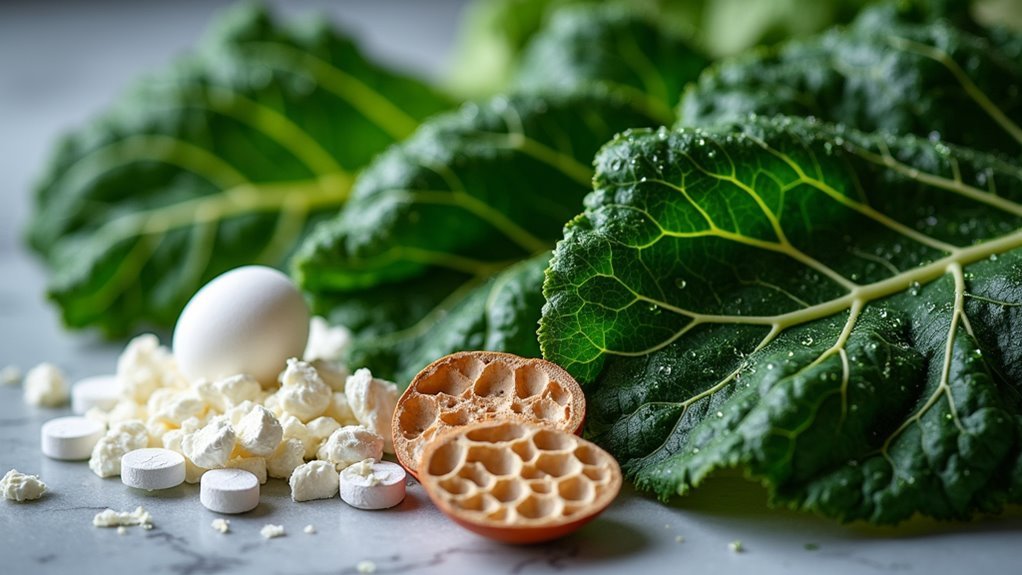
When you’re looking to strengthen your bones naturally, dark leafy vegetables offer an impressive calcium punch that rivals traditional dairy sources. One cup of boiled collard greens delivers approximately 270 mg of calcium—matching what you’d get from 8 oz of Greek yogurt.
Dark leafy greens pack as much calcium as dairy, with one cup of collard greens matching Greek yogurt’s bone-building power.
Since over 99% of your body’s calcium is stored in bones, incorporating these leafy greens becomes vital for bone health.
You’ll want to choose wisely among your options. While spinach contains nutrients, its high oxalic acid levels block calcium absorption. Instead, reach for collard greens, kale, bok choy, and turnip greens to maximize your calcium intake.
These vegetables also provide vitamin K, which guarantees proper osteocalcin function—a protein essential for binding calcium within your bone matrix.
Vitamin K Promotes Osteocalcin Production for Stronger Bones
When you consume leafy greens rich in vitamin K1, you’re triggering essential mechanisms that directly strengthen your bones through osteocalcin regulation.
Your body uses this vitamin K1 to carboxylate osteocalcin, a critical protein that can’t function properly without this chemical modification process.
Once carboxylated, osteocalcin integrates effectively into your bone matrix, creating the foundation for robust bone mineralization and reduced fracture risk.
Vitamin K1 Mechanisms
Although you may not realize it, the vitamin K1 in your leafy greens acts as an essential catalyst in your bones’ ability to bind calcium effectively. This vitamin K1 facilitates the carboxylation of osteocalcin, a protein that’s vital for incorporating calcium into your bone matrix.
When you don’t consume enough leafy greens, you’ll have higher levels of undercarboxylated osteocalcin, which can’t properly bind calcium, weakening your bone strength.
Just one cup of boiled collard greens delivers nearly 800 mcg of vitamin K1—that’s over 800% of your daily needs.
This abundant intake decreases both total and undercarboxylated osteocalcin levels in your blood, indicating better calcium incorporation into bones and reduced osteoporosis risk.
Osteocalcin Carboxylation Process
As vitamin K1 from your leafy green vegetables enters your bloodstream, it triggers a sophisticated biochemical process that transforms osteocalcin from an inactive protein into a powerful bone-building molecule.
This carboxylation process requires vitamin K as an essential cofactor, enabling osteocalcin to bind calcium effectively and incorporate it into your bone matrix.
The carboxylation process unfolds in three critical stages:
- Vitamin K activation – Your body converts vitamin K1 into its active form, vitamin K hydroquinone
- Gamma-carboxylation – Specific glutamic acid residues in osteocalcin receive carboxyl groups, creating binding sites for calcium
- Bone integration – Carboxylated osteocalcin successfully attracts calcium ions, promoting mineralization and improving bone density
Without adequate vitamin K from leafy greens, osteocalcin remains undercarboxylated and ineffective at strengthening bones.
Bone Matrix Integration
Once carboxylated osteocalcin forms through vitamin K1’s catalytic action, it seamlessly integrates into your bone matrix where it orchestrates the precise placement of calcium and phosphate minerals.
This integration process strengthens your skeletal framework by ensuring minerals bind properly within bone tissue. When you consume leafy greens rich in vitamin K, you’re dramatically improving this integration efficiency.
Studies show that increased vegetable intake creates a higher ratio of carboxylated to undercarboxylated osteocalcin, indicating superior bone matrix incorporation. Your serum total osteocalcin levels drop by approximately 14% with regular leafy green consumption, demonstrating that more osteocalcin successfully embeds into bone rather than circulating unused.
This enhanced integration directly translates to improved bone density and structural integrity.
Magnesium and Potassium Work Together to Preserve Bone Density
Your bones need more than just calcium to stay strong—they require a dynamic duo of minerals working behind the scenes.
Magnesium acts as your body’s helper by converting vitamin D into its active form, which guarantees you’ll actually absorb the calcium you consume.
Meanwhile, potassium serves as your bone’s protector by neutralizing acids that would otherwise steal calcium from your skeletal system.
Magnesium Supports Vitamin D
When your body has sufficient magnesium levels, it can effectively convert vitamin D into its active form, creating a powerful partnership that’s essential for calcium absorption and strong bones.
Without adequate magnesium, vitamin D remains inactive, severely limiting your body’s ability to absorb calcium properly.
This disruption leads to significant consequences for bone health:
- Decreased calcium absorption – Your intestines can’t efficiently take up calcium from food
- Impaired bone mineralization – Existing bone tissue becomes weaker and less dense
- Increased fracture risk – Compromised bone structure makes you more vulnerable to breaks
Leafy greens provide an excellent source of magnesium, helping maintain this critical vitamin D conversion process.
Potassium Neutralizes Body Acid
While magnesium enables vitamin D activation for calcium absorption, potassium tackles bone health from another angle by neutralizing harmful acids in your body.
When you consume acidic foods or your metabolism produces acid byproducts, your body pulls calcium from bones to buffer these acids. Potassium prevents this calcium theft by neutralizing acids before they can damage your skeletal system.
Leafy greens like collard greens provide 222 mg of potassium per cooked cup, making them excellent allies for bone preservation.
This mineral works synergistically with magnesium to create a protective environment for your bones. When you’re deficient in either nutrient, vitamin D balance suffers, compromising calcium absorption.
Antioxidants in Greens Reduce Inflammation That Weakens Bones

Inflammation acts as a silent saboteur to your bone health, gradually weakening the structural foundation your body depends on.
Fortunately, leafy greens pack powerful antioxidants that combat this destructive process. These compounds neutralize free radicals and reduce inflammatory markers that compromise bone density.
The antioxidants in leafy greens work through three key mechanisms:
- Vitamins C and E protect bone cells from oxidative damage
- Anti-inflammatory compounds decrease markers linked to osteoporosis risk
- Cellular protection promotes healthy bone remodeling processes
When you regularly consume antioxidant-rich leafy greens, you’re actively fighting inflammation that weakens bones.
This consistent intake enhances bone density and strength while minimizing inflammation-related bone loss, supporting your long-term bone health through natural protective mechanisms.
Bioavailable Nutrients in Leafy Greens Enhance Calcium Absorption
Beyond simply containing calcium, leafy greens deliver a sophisticated network of nutrients that work synergistically to maximize your body’s calcium absorption and utilization.
Dark varieties like collard greens provide 270 mg of calcium per cooked cup, but it’s the vitamin K content that transforms this into a bone-building powerhouse. With nearly 800 mcg of vitamin K, these leafy greens activate osteocalcin, the protein that binds calcium directly into your bone matrix for ideal bone health.
Collard greens deliver 270 mg calcium plus 800 mcg vitamin K that activates bone-binding proteins for superior skeletal strength.
You’ll also benefit from 222 mg of potassium per cup, which prevents calcium loss through urine.
The fiber content improves your digestive system’s ability to absorb minerals efficiently, while antioxidants like lutein protect against oxidative stress that could otherwise interfere with calcium metabolism.
Daily Consumption of Greens Improves Long-Term Bone Health Markers
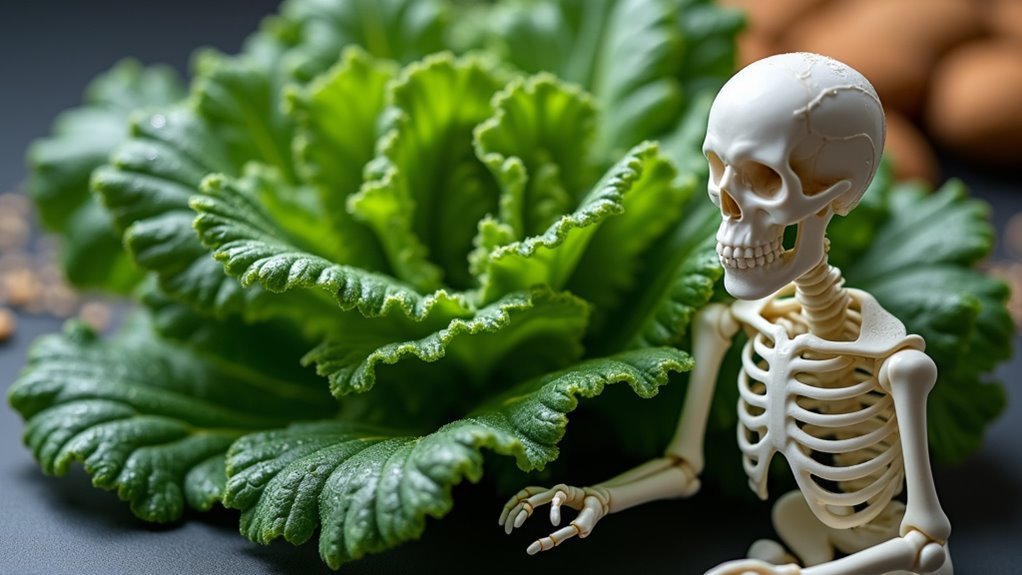
When you consume leafy greens daily, your body’s bone health markers undergo measurable improvements that translate into stronger, more resilient skeletal structure over time.
Your vitamin K intake greatly increases when you eat collard greens, which provide nearly 800 mcg per cup—over 800% of the recommended daily allowance.
Daily consumption creates three key improvements:
- Reduced osteocalcin markers – Your serum total and undercarboxylated osteocalcin levels decrease considerably.
- Enhanced bone matrix integration – Osteocalcin incorporates more effectively into your bone structure.
- Improved calcium balance – Your body maintains ideal calcium levels for bone strength.
When you consume around 200 grams of leafy greens daily for four weeks, you’ll see favorable changes in your bone metabolism markers, reducing osteoporosis risk factors long-term.
Frequently Asked Questions
Why Are Leafy Greens Good for Bones?
You’ll strengthen your bones by eating leafy greens because they’re packed with calcium, vitamin K, and potassium. These nutrients work together to build bone density and prevent calcium loss from your skeletal system.
What Food Makes Your Bones the Strongest?
You’ll build strongest bones by eating calcium-rich dairy products, leafy greens like kale and collard greens, fatty fish with vitamin D, and nuts. These foods provide essential nutrients that directly support bone density and strength.
What Is the Fastest Way to Increase Bone Density?
You’ll increase bone density fastest by combining weight-bearing exercises with calcium-rich leafy greens, fortified plant milks, and magnesium sources. This dual approach stimulates bone remodeling while providing essential nutrients for ideal bone formation.
Which Superfood Is Good for Your Bones?
You’ll find collard greens are an exceptional superfood for bones. They’re packed with calcium, vitamin K, and potassium that strengthen bone density, enhance calcium absorption, and reduce bone loss effectively.


Leave a Reply