
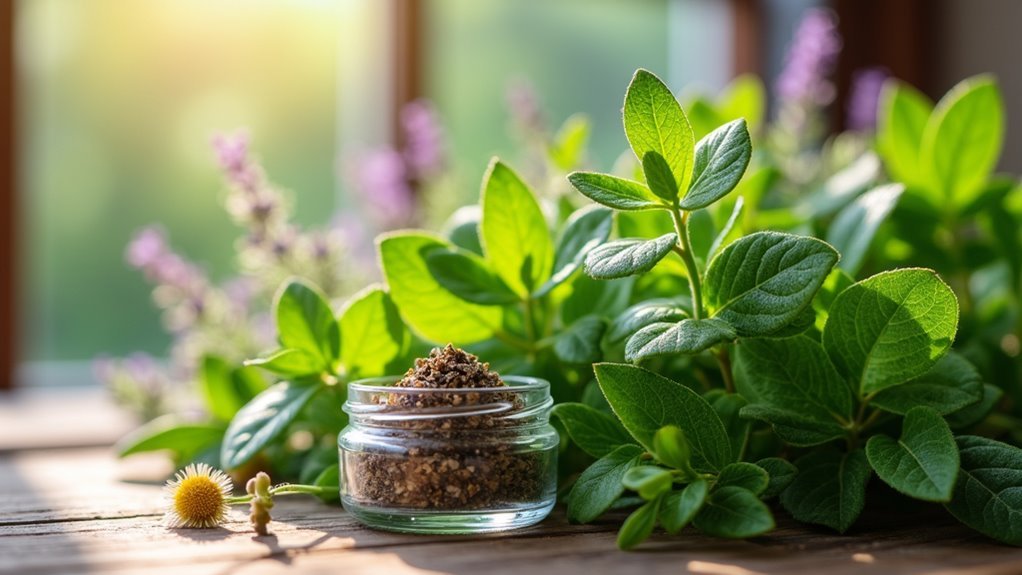
You’ll find sweet marjoram essential oil provides targeted relief for tension headaches through its powerful compounds like terpinen-4-ol and linalool, which reduce inflammation and relax tight muscles causing your pain. You can dilute it with a carrier oil and massage into your temples, add drops to a diffuser, or create warm compresses for relief. It’s natural antispasmodic properties break the stress-tension cycle while improving sleep quality. Discover how combining marjoram with other remedies amplifies its healing potential.
Understanding Marjoram’s Therapeutic Properties for Headache Management

Tension headaches can transform an ordinary day into a struggle, but marjoram’s natural therapeutic compounds offer a gentle path to relief. When you’re dealing with head pain caused by stress or muscle tension, marjoram’s key components work specifically to address these issues.
The herb contains terpinen-4-ol and linalool, powerful compounds that deliver anti-inflammatory and calming effects directly where you need them most. These essential oils don’t just mask your pain—they target the underlying causes of tension headaches.
Marjoram’s mild sedative properties help relax tense muscles around your head and neck, while its antispasmodic qualities reduce the muscle contractions that often trigger headache pain. You’ll find that marjoram’s therapeutic approach differs from conventional treatments by addressing both the physical tension and stress-related factors contributing to your discomfort.
The Science Behind Marjoram’s Anti-Inflammatory and Analgesic Effects
When researchers analyze marjoram’s chemical composition, they discover a sophisticated blend of bioactive compounds that work together to combat headache pain at the cellular level.
Terpinen-4-ol leads this therapeutic arsenal, delivering potent anti-inflammatory and pain relief properties that directly target tension headache symptoms.
Sabinene hydrate complements these effects by reducing swelling and discomfort, while linalool provides calming benefits that lower your pain perception during headache episodes.
Gamma-terpinene enhances marjoram’s overall analgesic impact by working synergistically with other compounds, creating a more powerful pain-relieving effect than individual components could achieve alone.
This scientific backing validates sweet marjoram’s traditional use, as its mild sedative and antispasmodic properties help relax tense muscles while promoting the calm state necessary for headache recovery.
How Marjoram Targets Muscle Tension and Stress-Related Headaches
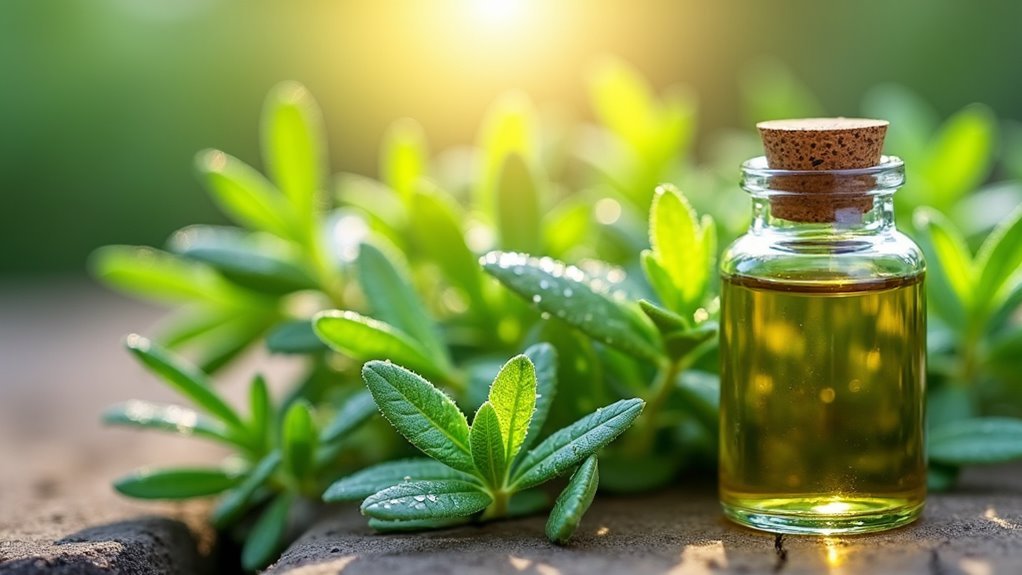
Because tension headaches typically stem from tight, constricted muscles in your neck, shoulders, and scalp, marjoram’s antispasmodic properties directly address these root causes by relaxing muscle fibers and reducing the physical stress that triggers pain.
Marjoram’s antispasmodic compounds target tight neck and shoulder muscles that cause tension headaches by relaxing constricted muscle fibers naturally.
When you inhale marjoram oil through a diffuser or steam inhalation, its active compounds terpinen-4-ol and linalool work together to calm your nervous system and promote deep relaxation.
This aromatherapy approach helps break the cycle where stress creates muscle tension, which then generates headaches.
You’ll also benefit from marjoram’s ability to improve sleep quality, as better rest reduces your stress levels and prevents tension headache triggers.
Regular use supports your overall well-being by managing chronic stress patterns that contribute to recurring headaches.
Effective Methods for Using Marjoram Oil in Headache Treatment
To maximize marjoram oil’s headache-fighting potential, you’ll want to choose the right application method based on your specific symptoms and preferences.
For localized pain management, dilute sweet marjoram oil with a carrier oil and massage it directly onto your temples or neck. This targeted approach helps reduce muscle tightness where you need it most.
Alternatively, add a few drops to your diffuser for aromatic benefits that combat stress and tension before headaches develop.
When dealing with severe discomfort, create a warm compress by adding sweet marjoram oil to hot water, then apply it to your forehead or neck. The oil’s antispasmodic properties work alongside the heat to relax tense muscles and provide soothing relief.
Combining Marjoram With Other Natural Remedies for Enhanced Relief

You can amplify marjoram’s headache-fighting power by strategically combining it with complementary natural remedies that target different aspects of tension headache relief.
Blending marjoram with peppermint creates a potent synergy where peppermint’s circulation-boosting properties enhance marjoram’s muscle-relaxing effects.
These thoughtful aromatherapy combinations don’t just smell pleasant—they work together to address multiple headache triggers simultaneously for more thorough relief.
Marjoram and Peppermint Synergy
When marjoram’s anti-inflammatory compounds meet peppermint’s cooling menthol, they create a powerful partnership that tackles tension headaches from multiple angles.
The terpinen-4-ol and linalool in marjoram work synergistically with peppermint’s menthol to enhance analgesic effects while reducing pain perception. This dual-action approach targets both muscle tension and sinus congestion simultaneously.
The combination’s minty-herbal scent profile doesn’t just provide physical relief—it elevates your mood and reduces stress that often triggers headaches.
- Experience immediate cooling relief as peppermint opens congested sinuses while marjoram melts away muscle tension
- Feel stress dissolve as the aromatic blend calms your mind and soothes frayed nerves
- Enjoy lasting comfort through enhanced pain reduction that addresses headache triggers at their source
Essential Oil Blending Techniques
The art of blending marjoram extends far beyond its partnership with peppermint, opening doors to countless therapeutic combinations that can amplify your headache relief.
When you’re creating your own blends, start with a simple ingredients list: marjoram as your base, then add complementary oils like lavender for stress reduction or rosemary for enhanced anti-inflammatory effects.
You’ll want to dilute these potent combinations with carrier oils such as coconut or jojoba, which make topical application safe while enabling soothing massage techniques.
Consider crafting a roll-on blend using marjoram, chamomile, and frankincense for portable relief. This holistic approach combines multiple calming and anti-inflammatory properties, giving you a powerful tool against tension headaches that’s both natural and effective.
Aromatherapy Combination Benefits
While marjoram stands as a powerful headache remedy on its own, pairing it with complementary essential oils creates synergistic effects that can dramatically enhance your relief.
Combining marjoram with peppermint delivers targeted sinus pressure relief through menthol’s circulation-boosting properties. The calming partnership of marjoram and lavender reduces stress-induced headaches by promoting deep relaxation and anxiety relief.
You’ll find these combinations generally safe and remarkably effective:
- Marjoram + chamomile + ginger diffuser blend – Creates an anti-inflammatory sanctuary that melts away tension
- Marjoram + eucalyptus warm compress – Provides soothing topical relief while opening airways
- Marjoram + rosemary inhalation – Enhances mental clarity while dissolving muscle tension
These strategic pairings amplify marjoram’s natural pain-relieving abilities, offering you thorough headache management through aromatherapy’s proven therapeutic benefits.
Safety Guidelines and Precautions When Using Marjoram for Pain Management
When you’re using marjoram for tension headache relief, you’ll need to follow specific safety protocols to protect yourself from potential adverse reactions.
You must always dilute marjoram essential oil with a carrier oil before applying it to your skin, as undiluted oils can cause severe irritation or burns.
Additionally, you should consult with a healthcare professional before starting any marjoram-based treatment, especially if you’re pregnant, breastfeeding, or planning to use it on children.
Proper Dilution Methods
Although marjoram essential oil offers promising natural relief for tension headaches, you must follow proper dilution protocols to confirm safe and effective use. The oil contains potent compounds that can irritate your skin when applied undiluted.
Always mix marjoram oil with a carrier oil like coconut or jojoba at a minimum 1:3 ratio before topical application.
Here’s your essential dilution checklist:
- Protect your skin – Never apply undiluted marjoram oil directly to prevent painful burns or irritation
- Test first, apply later – Conduct a patch test on a small skin area to avoid unexpected allergic reactions
- Measure carefully – Use proper ratios to confirm you’re getting therapeutic benefits without risking harm
Monitor your skin’s response and discontinue use if any adverse reactions occur.
Medical Consultation Requirements
How can you guarantee marjoram essential oil won’t interfere with your existing medications or health conditions? You can’t without proper medical consultation.
Always speak with your healthcare professional before using marjoram for pain management, particularly if you’re pregnant, breastfeeding, or managing pre-existing health conditions.
Use caution when considering marjoram for children – consult a pediatrician first for appropriate usage guidelines. Your doctor can assess potential drug interactions and determine if marjoram’s suitable for your specific situation.
Monitor yourself closely for adverse reactions while using marjoram, as individual responses vary considerably. Discontinue use immediately if you experience negative effects.
Frequently Asked Questions
Is Marjoram Good for Headaches?
You can use marjoram for headaches since it contains anti-inflammatory compounds like terpinen-4-ol and linalool. Its muscle-relaxing properties help ease tension headaches when you inhale the essential oil through aromatherapy.
What Helps Tension Headaches Asap?
Apply a cold or warm compress to your head and neck. Drink water immediately to combat dehydration. Massage your temples gently, practice deep breathing, and rest in a dark, quiet room.
What Tea Is Best for Tension Headaches?
You’ll find chamomile, peppermint, and ginger teas most effective for tension headaches. They’re anti-inflammatory and calming. Green tea’s antioxidants also help, while valerian root with lemon balm reduces stress-related headaches.
What Is the Best Pain Relief for Tension Headaches?
You’ll find over-the-counter pain relievers like ibuprofen or acetaminophen most effective for tension headaches. They reduce inflammation and block pain signals. Apply cold compresses, practice relaxation techniques, and make certain you’re staying hydrated.


Leave a Reply