

You’ll sleep better by eating magnesium-rich foods like dark leafy greens (spinach, kale), nuts and seeds (almonds, pumpkin seeds), and legumes (black beans, edamame). These foods help regulate GABA neurotransmitters and reduce cortisol levels for natural relaxation. Dark chocolate with 70-85% cocoa content provides an additional 64mg of magnesium per ounce while easing muscle tension. Aim for 310-420mg daily through whole food sources rather than supplements for maximum absorption and sleep enhancement. Below you’ll discover specific serving sizes and timing strategies.
Why Magnesium Matters for Quality Sleep
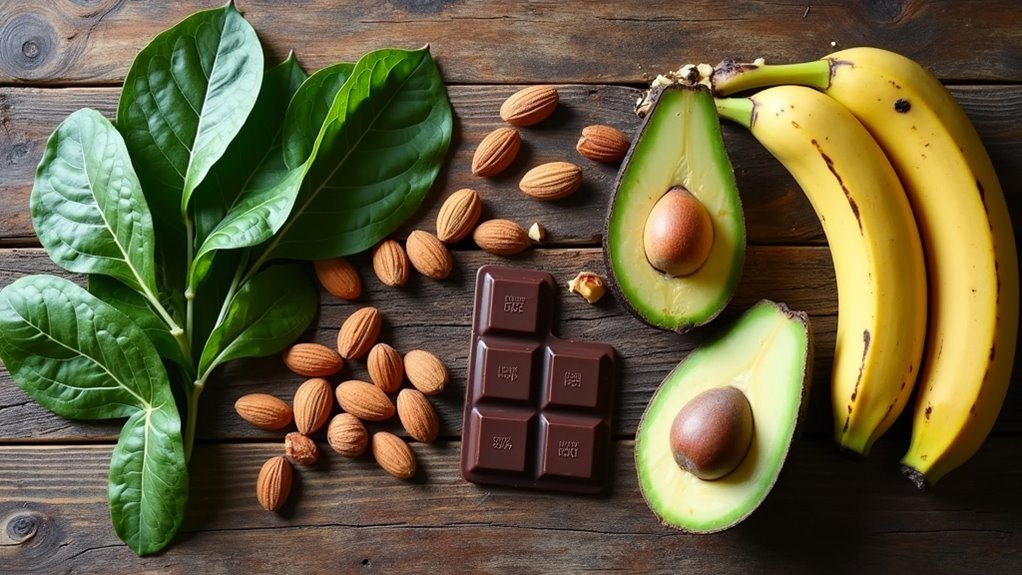
Sleep eludes millions of people each night, but the solution might lie in a simple mineral deficiency. Magnesium serves as your body’s natural sleep regulator, controlling neurotransmitters like GABA that promote relaxation and sleep onset.
Magnesium deficiency could be the hidden culprit behind your restless nights and chronic sleep struggles.
When you’re magnesium-deficient, your sleep quality suffers dramatically. This essential mineral supports melatonin production, the hormone that governs your sleep-wake cycles. Research consistently shows that low magnesium intake correlates with increased insomnia and sleep disturbances.
Additionally, magnesium helps lower cortisol levels, reducing stress and anxiety that often prevent restful sleep. Adults need 310-420 mg daily to maintain peak sleep health.
Rather than relying on supplements, incorporating magnesium-rich foods into your diet provides a natural, effective approach to achieving better sleep quality and breaking the cycle of sleepless nights.
Dark Leafy Greens: Spinach, Kale, and Swiss Chard
Dark leafy greens pack a powerful magnesium punch that can transform your nightly rest. These nutritional powerhouses deliver substantial amounts of this sleep-supporting mineral while offering additional vitamins, minerals, and antioxidants for overall wellness.
Here’s what makes dark leafy greens exceptional for better sleep:
- Spinach delivers approximately 78 mg of magnesium per half-cup when cooked – making it one of nature’s top magnesium sources.
- Swiss chard provides about 75 mg of magnesium per cooked half-cup – nearly matching spinach’s impressive content.
- Kale offers significant magnesium levels alongside other sleep-promoting nutrients that support muscle relaxation.
- Regular consumption enhances dietary diversity while reducing stress and supporting neurotransmitter regulation for improved sleep quality.
Incorporating these greens into your daily meals creates a natural pathway to better sleep through their exceptional magnesium content.
Nuts and Seeds: Almonds, Pumpkin Seeds, and Cashews
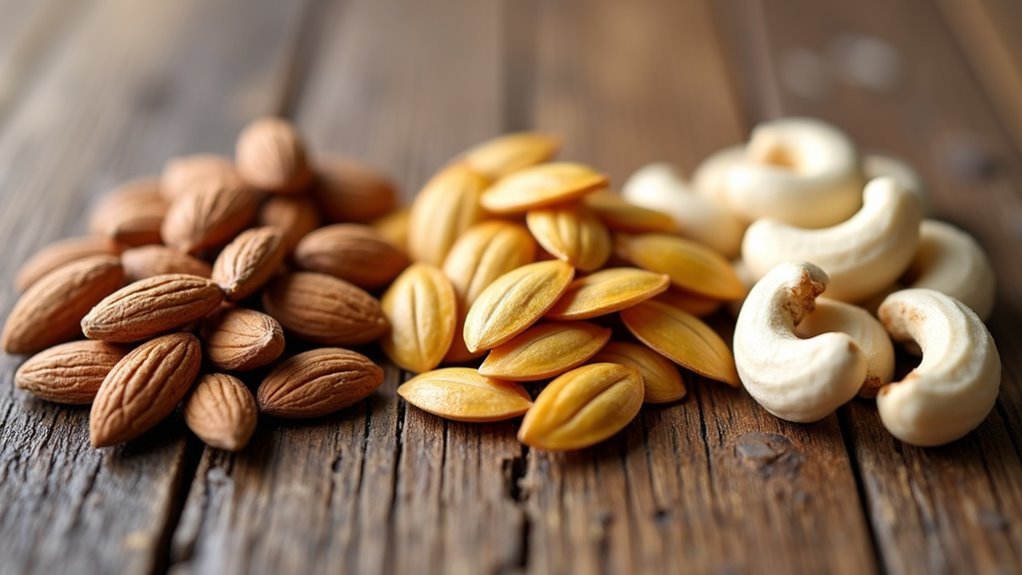
While dark leafy greens offer excellent magnesium content, nuts and seeds provide an even more concentrated source of this essential sleep-promoting mineral.
Pumpkin seeds lead the pack with an impressive 156 mg of magnesium per ounce, nearly double that of other options. Almonds follow with 80 mg per ounce, while cashews contribute 74 mg, making all three excellent choices for boosting your magnesium intake.
These nuts and seeds don’t just deliver magnesium—they’re packed with plant-based protein and healthy fats that support overall well-being.
Legumes: Black Beans, Edamame, and Lima Beans
Legumes offer another powerhouse category of magnesium-rich foods that’ll greatly boost your sleep-supporting mineral intake.
These versatile protein sources don’t just deliver essential nutrients—they’re specifically packed with magnesium that helps regulate your sleep cycles naturally.
Consider adding these magnesium-rich legumes to your meals:
- Black beans – Provide 60mg of magnesium per half-cup, making them perfect for enhancing your daily mineral intake.
- Edamame – Deliver 50mg of magnesium per half-cup while offering a satisfying protein-rich snack.
- Lima beans – Contribute 40mg of magnesium per half-cup along with beneficial fiber and protein.
- Versatile preparation – You can incorporate these legumes into salads, soups, or side dishes for consistent magnesium consumption.
Including these legumes helps you meet recommended daily magnesium requirements while supporting better sleep quality through improved overall well-being.
Whole Grains: Quinoa, Brown Rice, and Oatmeal
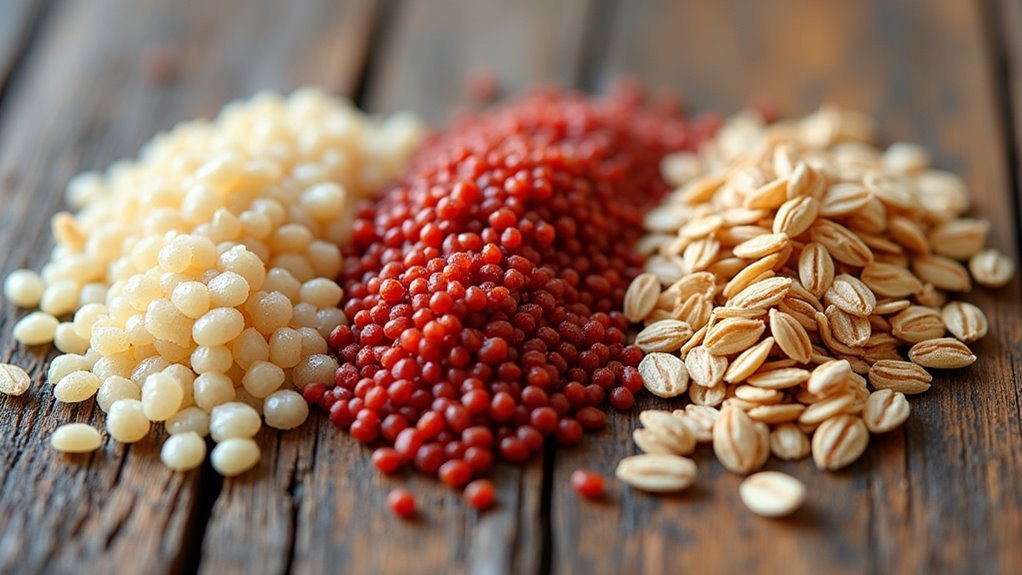
You’ll find quinoa stands out among whole grains with its impressive 118 mg of magnesium per cooked cup, making it a powerhouse for sleep support.
This gluten-free grain not only delivers substantial magnesium but also provides complete protein to keep you satisfied throughout the night.
Meanwhile, oatmeal offers a comforting 61 mg of magnesium per cup while creating the perfect foundation for a sleep-promoting evening meal.
Quinoa’s Magnesium Content
When you’re looking to boost your magnesium intake for better sleep, quinoa stands out as a nutritional powerhouse among whole grains. This gluten-free superfood delivers approximately 118 mg of magnesium per cooked cup, supporting muscle function and relaxation.
Here’s why quinoa deserves a spot on your dinner plate:
- Complete protein profile – Contains all nine essential amino acids alongside magnesium
- Significant contribution – Provides roughly 28-38% of your daily magnesium needs
- Enhanced digestion – High fiber content works with magnesium to promote relaxation
- Incredible versatility – Easily incorporated into salads, soups, or side dishes
You’ll find that quinoa’s unique combination of magnesium, protein, and fiber creates an ideal foundation for evening meals that naturally prepare your body for quality sleep.
Oatmeal Sleep Benefits
Beyond quinoa’s impressive magnesium profile, oatmeal offers another compelling whole grain option for enhancing your nightly rest. This nutritious breakfast staple delivers 56 mg of magnesium per cooked cup, promoting muscle relaxation that’s essential for quality sleep. You’ll also benefit from oatmeal’s complex carbohydrates, which boost serotonin production in your brain, creating a natural calming effect.
| Benefit | Impact on Sleep |
|---|---|
| Magnesium content | Relaxes muscles naturally |
| Complex carbohydrates | Increases serotonin for calmness |
| Blood sugar stability | Prevents midnight awakenings |
| Whole grain fiber | Supports healthy digestion |
When you eat oatmeal before bed, you’re stabilizing blood sugar levels, which prevents those disruptive nighttime awakenings. Among whole grains, oatmeal stands out for its sleep-supporting properties that work throughout the night.
Magnesium-Rich Fruits: Bananas, Avocados, and Blackberries
Although most people reach for supplements when seeking better sleep, nature’s own magnesium sources can be just as effective and far more delicious. These magnesium-rich fruits help you sleep naturally while satisfying your taste buds.
Nature’s magnesium-rich fruits offer a delicious alternative to supplements for better sleep while delivering essential nutrients your body craves.
Consider adding these nutrient-packed options to your evening routine:
- Bananas – Each medium fruit delivers 32 mg of magnesium plus tryptophan and potassium for enhanced muscle relaxation.
- Avocados – A whole medium avocado provides 58 mg of magnesium, making it an exceptional source of magnesium alongside heart-healthy fats.
- Blackberries – One cup offers 29 mg of magnesium plus powerful antioxidants for overall health.
- Versatile preparation – Enjoy them fresh, blended in smoothies, or paired with other sleep-promoting foods.
These fruits regulate sleep-related neurotransmitters while providing essential fiber and vitamins for thorough wellness support.
Low-Fat Dairy Products: Milk, Yogurt, and Cheese
While fruits provide excellent magnesium sources, low-fat dairy products offer another delicious pathway to better sleep through their unique combination of magnesium, calcium, and sleep-promoting compounds.
You’ll get 24-27 mg of magnesium from one cup of nonfat milk, while an 8 oz serving of plain low-fat yogurt delivers about 42 mg. These low-fat dairy options support bone health through calcium content while contributing to your daily magnesium goal of 310-420 mg.
Cheese varieties like Parmesan and cheddar contain tryptophan, an amino acid that enhances sleep quality alongside magnesium.
Unlike sources with healthy fats, these dairy products provide soothing effects when consumed before bedtime, promoting relaxation and better rest through their nutrient profile.
Dark Chocolate: A Sweet Sleep Aid
You’ll be pleased to learn that dark chocolate can serve as both a satisfying treat and an effective sleep aid due to its impressive magnesium content.
The 64 mg of magnesium per ounce in dark chocolate (70-85% cocoa) works alongside the chocolate’s natural compounds to promote relaxation and support your body’s sleep mechanisms.
Timing your chocolate consumption and choosing the right amount can maximize these sleep-enhancing benefits while satisfying your sweet tooth.
Magnesium Content in Chocolate
When you’re craving something sweet before bed, dark chocolate offers an unexpectedly beneficial choice for sleep support. Dark chocolate containing 70%-85% cocoa packs about 64 mg of magnesium per ounce, making it a surprisingly nutritious nighttime treat.
Here’s what makes dark chocolate’s magnesium content particularly valuable:
- Muscle relaxation benefits – The magnesium helps ease muscle tension throughout your body.
- Calming effects – This essential mineral promotes a sense of calm that enhances sleep quality.
- Antioxidant bonus – You’ll get additional health benefits beyond just magnesium intake.
- Pairing potential – Combine with magnesium-rich nuts or fruits for an even more effective sleep-supporting snack.
Moderate consumption gives you a satisfying treat while contributing meaningfully to your daily magnesium needs.
Sleep-Inducing Properties
Beyond its impressive magnesium content, dark chocolate contains several compounds that work together to encourage restful sleep. The magnesium in dark chocolate helps regulate neurotransmitters like GABA, which are vital for promoting relaxation and reducing stress levels. This creates a calming effect that prepares your body for better sleep quality.
| Component | Sleep Benefit |
|---|---|
| Magnesium (64mg/oz) | Regulates neurotransmitters for relaxation |
| Antioxidants | Support overall well-being and sleep quality |
| Natural compounds | Provide calming effects before bedtime |
When you consume a small amount of dark chocolate as a bedtime snack, you’re giving your body these sleep-promoting nutrients. However, moderation remains essential—excessive consumption can add unwanted calories and sugar, potentially counteracting the relaxation benefits that make dark chocolate an effective sleep aid.
Optimal Timing and Amount
Although dark chocolate offers valuable magnesium for sleep support, timing your consumption properly maximizes its benefits while avoiding potential disruptions.
For ideal timing and effective magnesium intake, follow these guidelines:
- Consume 1 hour before bedtime – This allows your body to absorb the 64 mg of magnesium per ounce while giving time for relaxation to begin.
- Limit to 1 ounce daily – Choose 70-85% cocoa varieties to get maximum magnesium without excess calories or sugar that could interfere with sleep.
- Balance with other magnesium-rich foods – Don’t rely solely on chocolate; incorporate leafy greens, nuts, and seeds throughout your day.
- Monitor your response – Some people may be sensitive to chocolate’s mild caffeine content, so adjust timing accordingly for proper sleep support.
Magnesium-Enhanced Bedtime Snack Ideas
How can you satisfy late-night cravings while setting yourself up for better sleep? Choose foods that contain magnesium to create the perfect bedtime snack for relaxation.
Try sugar-free yogurt topped with almonds—this combination delivers protein and magnesium when eaten about an hour before bed. A medium banana provides both tryptophan and magnesium, potentially enhancing sleep duration.
For something indulgent, reach for dark chocolate with 70%-85% cocoa, offering approximately 64 mg of magnesium per ounce. Whole grain bran flakes with milk create a fiber-rich option that supports restful sleep.
You can also enjoy a small baked potato with skin, containing about 48 mg of magnesium for a hearty, satisfying choice.
Daily Magnesium Intake Guidelines and Tips
You’ll need to understand how much magnesium your body requires daily and the factors that affect how well you absorb it from food sources.
Men should target 400-430 mg daily while women need 310-320 mg, but your body only absorbs 30-50% of the magnesium you consume.
Certain groups face higher risks of deficiency, making it essential to monitor your intake and recognize early warning signs.
Recommended Daily Amounts
Getting the right amount of magnesium daily isn’t just about improving sleep—it’s essential for your overall health and wellbeing. The recommended daily amounts vary by gender: men need 400-430 mg while women require 310-320 mg.
Unfortunately, many people become magnesium deficient because they don’t consume enough variety in their diets.
Here’s what you should know about meeting your magnesium needs:
- Focus on whole food sources like nuts, seeds, and dark leafy greens rather than relying solely on supplements.
- Consider your absorption rate – your body only absorbs 30-50% of magnesium per serving.
- Assess your risk factors – older adults and those with digestive issues need extra attention.
- Plan balanced meals that include multiple magnesium-rich options throughout the day.
Absorption Rate Factors
Understanding your daily magnesium requirements is only half the equation—your body’s ability to actually use that magnesium depends on several key absorption factors.
Your absorption rate typically ranges from 30-50%, meaning you’ll only utilize a portion of consumed magnesium. Your gastrointestinal health plays an important role in this process, as digestive disorders can greatly impair absorption and increase magnesium deficiency risk.
Age also affects how efficiently you absorb magnesium, with older adults often experiencing reduced absorption rates. You can enhance absorption by pairing magnesium-rich foods with fiber-containing meals, which helps your body better utilize this essential mineral.
If you have alcohol use disorders or chronic gastrointestinal conditions, you’ll need extra attention to prevent deficiency, as these factors considerably compromise your body’s magnesium absorption capabilities.
Deficiency Risk Groups
While most adults can meet their magnesium needs through a balanced diet, certain groups face markedly higher risks of deficiency that require special attention.
If you’re wondering whether you’re at increased risk for magnesium deficiency, consider these vulnerable populations:
- Older adults – Your body’s absorption capacity decreases with age, and dietary changes often reduce magnesium intake below adequate levels.
- People with gastrointestinal conditions – If you have irritable bowel disease or similar disorders, your body struggles to absorb magnesium effectively.
- Individuals with alcohol use disorders – Excessive drinking substantially depletes your magnesium stores and impairs absorption.
- Those on restrictive diets – Limited food variety can prevent you from getting enough magnesium-rich whole foods like nuts, seeds, and leafy greens.
Frequently Asked Questions
What Is the Best Source of Magnesium for Sleep?
You’ll get the most magnesium from pumpkin seeds at 150mg per ounce. They’re your best bet for sleep support, delivering twice the magnesium of other top sources like quinoa or spinach.
What Is the Best Form of Magnesium for Deep Sleep?
You’ll find magnesium glycinate works best for deep sleep since it’s highly absorbable and calms your nervous system effectively. It won’t cause digestive upset like other forms can.
Is 1 Banana a Day Enough Magnesium?
No, one banana daily won’t meet your magnesium needs. You’ll get only 32 mg from a banana, but you need 310-430 mg daily. You’ll want additional magnesium-rich foods for ideal sleep support.
Which Food Is Good for Deep Sleep?
You’ll find bananas excellent for deep sleep since they contain both magnesium and tryptophan, which promote relaxation. Dark chocolate with 70-85% cocoa also provides sleep-enhancing magnesium while satisfying cravings.


Leave a Reply