

You’ll find the most effective magnesium sources for restless leg syndrome in dark leafy greens like spinach and Swiss chard, which provide 150-157 mg per cooked cup. Pumpkin seeds deliver an impressive 168 mg per ounce, while almonds and sunflower seeds offer 76-91 mg respectively. Whole grains such as brown rice contribute 84 mg per cup, and legumes like black beans provide 60-70 mg. Dark chocolate and avocados round out these muscle-relaxing options that’ll ease your nighttime discomfort naturally.
Dark Leafy Greens: Spinach and Swiss Chard for Natural Magnesium

When you’re searching for natural magnesium sources to help manage restless leg syndrome, dark leafy greens like spinach and Swiss chard should top your list.
These powerhouse vegetables deliver impressive magnesium content—one cup of cooked spinach provides approximately 157 mg, while Swiss chard offers about 150 mg per cooked cup. This substantial magnesium intake supports nerve function and muscle relaxation, potentially alleviating RLS symptoms linked to magnesium deficiency.
Dark leafy greens like spinach and Swiss chard provide substantial magnesium content that supports nerve function and muscle relaxation for RLS relief.
Beyond magnesium, these dark leafy greens pack additional nutritional benefits through iron and folate, further supporting your overall health.
You can easily incorporate them into your diet by adding sautéed spinach or Swiss chard to meals, blending them into smoothies, or tossing them fresh into salads for maximum restless legs syndrome management.
Nuts and Seeds: Almonds, Pumpkin Seeds, and Sunflower Seeds
Nuts and seeds offer some of the most concentrated sources of magnesium available in whole foods, making them ideal choices for managing restless leg syndrome naturally.
Almonds provide approximately 76 mg of magnesium per ounce, supporting muscle relaxation and potentially reducing RLS symptoms. Pumpkin seeds pack an impressive 168 mg per ounce, ranking among the top plant-based magnesium sources. Sunflower seeds contribute about 91 mg per ounce and easily integrate into your daily meals.
You’ll benefit from including various nuts and seeds in your diet to guarantee adequate magnesium intake for best nerve function.
These nutrient-dense foods don’t just boost magnesium levels—they also deliver healthy fats and protein, creating a balanced approach to managing RLS while supporting overall health.
Whole Grains: Brown Rice, Quinoa, and Oats for Sustained Relief
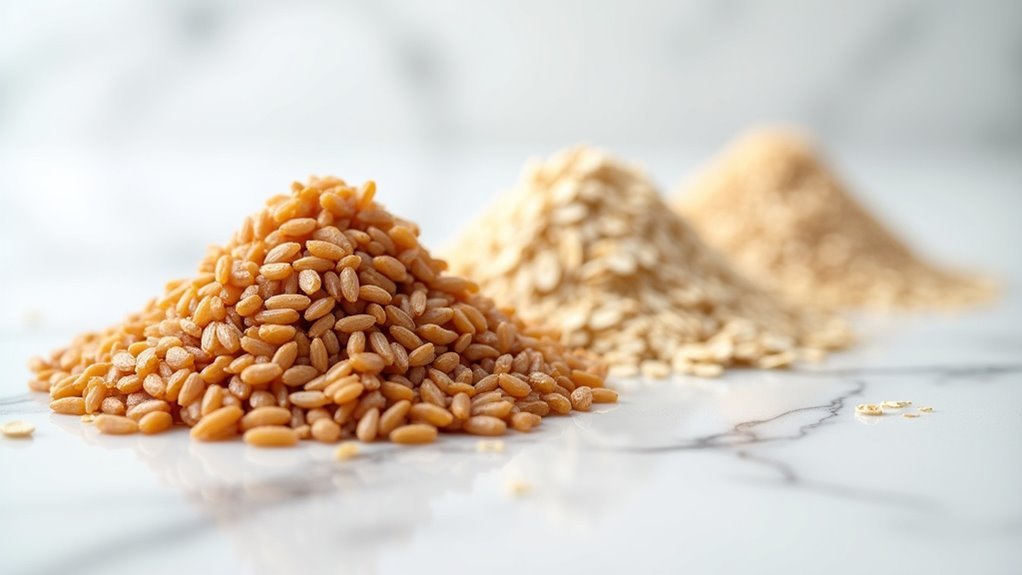
Beyond nuts and seeds, whole grains offer another powerful category of magnesium-rich foods that can provide sustained relief from restless leg syndrome symptoms. These nutrient-dense options deliver magnesium essential for muscle relaxation and nerve function, potentially reducing RLS symptoms.
| Whole Grain | Magnesium Content (per cup, cooked) | Additional Benefits |
|---|---|---|
| Brown Rice | 84 mg | Complete nutrition profile |
| Quinoa | 30 mg | Complete protein source |
| Oats | 61 mg | High fiber for digestive health |
You’ll find that incorporating brown rice, quinoa, and oats into your daily meals helps maintain adequate magnesium levels. These whole grains contribute considerably to your recommended daily intake while supporting overall health. Regular consumption can help reduce Restless Legs Syndrome severity naturally.
Legumes: Black Beans, Lentils, and Chickpeas for Muscle Relaxation
Legumes stand out as exceptional magnesium powerhouses that can greatly ease restless leg syndrome symptoms through natural muscle relaxation. Black beans, lentils, and chickpeas deliver approximately 60-70 mg of magnesium per cooked cup, supporting proper nerve function and muscle contraction control.
This magnesium content directly targets RLS symptoms by promoting muscle relaxation throughout your legs.
Black beans provide additional iron and potassium, essential nutrients that enhance muscle health and reduce RLS severity. Lentils offer high fiber content alongside magnesium, stabilizing blood sugar levels while supporting muscle function.
Chickpeas’ versatility makes them easy additions to salads, soups, and main dishes.
You’ll find these legumes seamlessly integrate into any healthy diet, providing sustained relief from restless leg discomfort while delivering extensive nutritional benefits.
Dark Chocolate and Avocados: Delicious Sources of Magnesium

While meeting your daily magnesium needs doesn’t require sacrificing taste, dark chocolate and avocados prove you can enjoy delicious foods while naturally combating restless leg syndrome.
Dark chocolate containing 70% cocoa or higher delivers 64 mg of magnesium per 100 grams, supporting muscle relaxation and nerve function essential for managing Restless Legs Syndrome symptoms.
You’ll find avocados equally beneficial, providing 58 mg of magnesium per medium fruit alongside healthy fats that enhance nutrient absorption.
These magnesium-rich foods integrate seamlessly into smoothies, desserts, and salads. Dark chocolate’s satisfying nature helps reduce cravings for unhealthy snacks, while avocados offer additional potassium and fiber.
Both foods work together to ease RLS symptoms through improved muscle and nerve support.
Frequently Asked Questions
Which Form of Magnesium Is Best for Restless Legs?
You’ll find magnesium glycinate works best for restless legs since it’s easily absorbed and won’t upset your stomach. It’s gentler than magnesium oxide while providing calming effects that help reduce RLS symptoms effectively.
What to Eat to Get Rid of Restless Leg Syndrome?
You should eat magnesium-rich leafy greens, nuts, seeds, and legumes alongside iron-rich lean meats and fortified cereals. Include potassium-packed bananas and avocados, plus whole grains to help reduce restless leg symptoms naturally.
What to Drink for Restless Legs?
You should drink plenty of water to stay hydrated, sip chamomile or peppermint tea before bed, try tart cherry juice for natural melatonin, and avoid caffeinated beverages that worsen symptoms.
What Am I Lacking if I Have Restless Legs?
You’re likely lacking iron, magnesium, or folate if you have restless legs. These nutrient deficiencies affect nerve and muscle function, contributing to RLS symptoms. Consider consulting your healthcare provider for testing.


Leave a Reply