
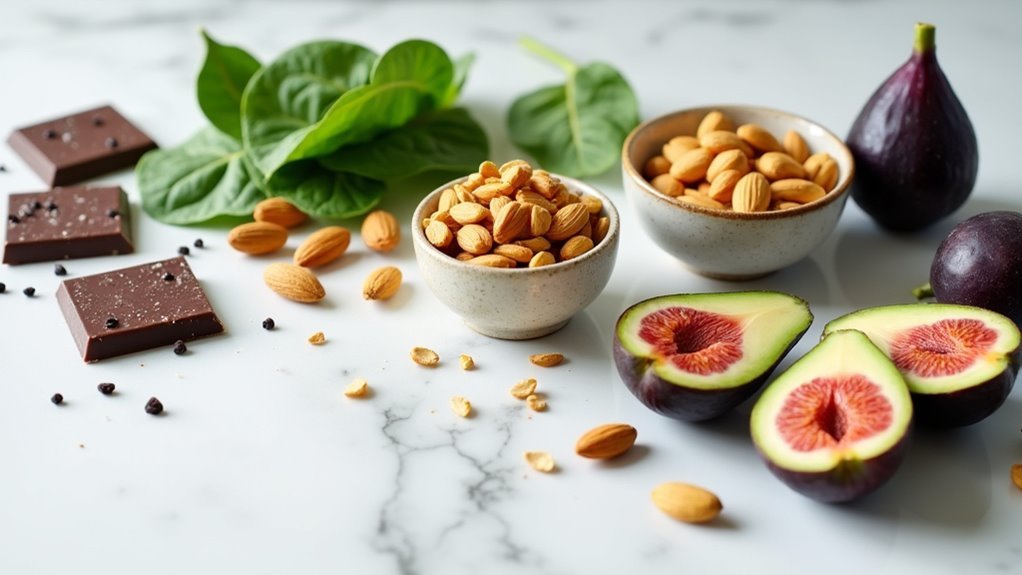
You can improve your sleep by eating magnesium-rich foods like pumpkin seeds, quinoa, almonds, and spinach throughout the day. Magnesium influences brain chemicals like GABA and melatonin that regulate your sleep cycles and promote relaxation. For best results, consume these foods about an hour before bedtime and pair them with carbohydrates. Target 310-420 mg daily through consistent consumption, as your body only absorbs 30-50% of dietary magnesium. Discover the complete strategy below.
Understanding Magnesium’s Role in Sleep Quality
While you mightn’t think much about the minerals in your diet, magnesium quietly orchestrates some of your body’s most essential sleep processes. This powerful mineral influences vital brain chemicals like GABA and melatonin, which promote relaxation and regulate your sleep cycles.
When you maintain adequate magnesium levels, you’ll experience better sleep quality and longer sleep durations.
Magnesium deficiency disrupts these processes, contributing to insomnia and conditions like restless legs syndrome that prevent restful sleep. Beyond sleep quality, magnesium supports muscle function and heart health, making it doubly important for overall wellness.
You can boost your magnesium intake through magnesium-rich foods like leafy greens, whole grains, almonds, and bananas, naturally supporting your body’s sleep mechanisms.
Top Magnesium-Rich Foods for Better Rest
Since your body can’t produce magnesium on its own, you’ll need to obtain this sleep-supporting mineral through your diet. Incorporating magnesium-rich foods into your meals can greatly improve your sleep health and promote better sleep naturally.
| Food | Magnesium Content |
|---|---|
| Pumpkin seeds (1 oz) | 156 mg |
| Quinoa (1 cup cooked) | 118 mg |
| Almonds (1 oz) | 80 mg |
| Spinach (½ cup cooked) | 78 mg |
| Bananas (1 medium) | 32 mg |
Pumpkin seeds offer the highest magnesium content, making them an excellent nutritious snack for evening consumption. Quinoa serves as a versatile base for dinner dishes, while almonds provide a convenient portable option. Spinach easily integrates into various meals, and bananas support muscle relaxation alongside their magnesium benefits.
Creating Sleep-Promoting Meals and Snacks

Once you know which foods contain the most magnesium, you can strategically combine them into satisfying meals and snacks that’ll naturally prepare your body for rest.
Create sleep-promoting meals by incorporating spinach into dinner salads or serving quinoa as a side dish alongside magnesium-rich salmon. These combinations support muscle relaxation while providing essential nutrients for healthy sleep.
Combine spinach salads and quinoa sides with salmon to create magnesium-rich dinners that naturally support muscle relaxation and better sleep quality.
For effective pre-bedtime snacks, try sugar-free yogurt topped with almonds, which balances protein and carbohydrates to promote calmness.
Baked potatoes with skin offer substantial magnesium content and can be enjoyed earlier in the evening.
Consider blending a smoothie with banana and spinach about an hour before bed. These magnesium-rich foods work together to reduce sleep disturbances and enhance your body’s natural preparation for restful sleep.
Magnesium Absorption and Timing for Optimal Sleep
Understanding how your body absorbs magnesium becomes vital when you’re trying to maximize its sleep-promoting benefits. Your body only absorbs 30-50% of dietary magnesium, making consistent consumption of magnesium-rich foods essential for maintaining adequate levels.
To achieve ideal sleep benefits, consume these food sources about an hour before bedtime to calm the nervous system and promote relaxation.
Create evening snacks by pairing magnesium-rich options like almonds or spinach with carbohydrates. This combination enhances sleep quality by supporting faster sleep onset.
You’ll need to maintain a balanced diet throughout the day, targeting the recommended daily intake of 310-420 mg. Regular consumption from various food sources guarantees your body has sufficient magnesium absorption to support consistent relaxation and improved sleep patterns nightly.
Addressing Sleep Disorders Through Dietary Magnesium
Sleep disorders like insomnia, restless leg syndrome, and sleep apnea respond positively to strategic dietary magnesium intake. When you’re magnesium deficient, your sleep quality suffers because this mineral regulates muscle contractions and brain chemicals that promote relaxation.
Boosting your magnesium levels through dietary sources helps address these sleep disorders more effectively than supplements alone.
Getting magnesium from whole foods provides superior absorption and sleep benefits compared to taking isolated supplements.
You’ll want to reach the recommended daily intake of 310-420 mg by incorporating magnesium-rich foods throughout your day. Focus on spinach, almonds, and black beans during meals, then choose pre-bedtime snacks like bananas or warm milk.
These foods contain both magnesium and tryptophan, creating a powerful sleep-promoting combination. Consistent dietary magnesium intake supports your overall health while naturally addressing the root causes of common sleep disorders.
Frequently Asked Questions
How Can I Sleep Better With Magnesium?
You can improve your sleep by eating magnesium-rich foods like spinach, almonds, and quinoa daily. Try snacking on sugar-free yogurt with almonds or a banana before bed to boost relaxation and sleep quality.
What Foods Are High in Magnesium for Sleep?
You’ll find excellent magnesium sources in leafy greens like spinach, nuts such as almonds and pumpkin seeds, black beans, edamame, quinoa, and bananas for better sleep quality.
How Can I Restore My Magnesium Levels Quickly?
You’ll restore magnesium levels quickly by eating magnesium-rich foods daily, aiming for 310-420 mg. Include almonds, spinach, quinoa, and black beans while drinking mineral water to boost your intake efficiently.
Is 1 Banana a Day Enough Magnesium?
One banana won’t meet your daily magnesium needs since it provides only 32mg of the required 310-420mg. You’ll need additional magnesium-rich foods like leafy greens, nuts, and legumes for adequate intake.


Leave a Reply