
You’ll maximize your liver’s natural detoxification capacity by selecting cruciferous vegetable supplements that contain standardized levels of sulforaphane, indole-3-carbinol, or DIM—the bioactive compounds that specifically enhance your liver’s phase I and phase II detox pathways. Look for third-party tested products with clear potency percentages, preferably sourced from broccoli sprouts or standardized cabbage extracts. Aim for 200-400mg daily of sulforaphane or follow manufacturer guidelines, and consult your healthcare provider about potential medication interactions before starting any supplementation regimen to discover ideal liver support strategies.
Understanding How Cruciferous Vegetables Support Liver Detoxification

When searching for effective liver detox supplements, you’ll find that cruciferous vegetables stand out as nature’s most powerful detoxification allies.
These vegetables contain glucosinolates that enhance your liver’s detoxification enzymes, enabling more efficient toxin elimination. You’re getting concentrated antioxidants, particularly vitamin C, which reduce oxidative stress and inflammation that can damage liver cells.
Studies show that consuming cruciferous vegetables leads to lower liver enzyme levels, indicating improved liver function.
The high fiber content supports digestion while regulating cholesterol, creating additional benefits for liver health.
When you incorporate these vegetable supplements into your routine, you’re enhancing your body’s natural ability to process harmful substances and improve overall liver function through multiple pathways.
Key Compounds in Cruciferous Vegetables That Enhance Phase I and Phase II Detox
The molecular powerhouses within cruciferous vegetables work through specific compounds that directly target your liver’s two-phase detoxification system.
Glucosinolates convert into bioactive compounds that enhance both phase I and II liver detoxification processes. These cruciferous vegetables boost glutathione S-transferases activity, helping your body conjugate and eliminate harmful toxins effectively.
Sulforaphane stands out as a key player, reducing liver inflammation while supporting carcinogenic substance excretion during detoxification.
You’ll also benefit from indole-3-carbinol, which promotes hormonal balance and assists in detoxifying estrogen metabolites for peak liver health.
Regular consumption of these vegetables improves liver enzyme levels and reduces liver disease risk.
When choosing supplements, you’re targeting these specific compounds that directly enhance your liver’s natural detoxification capabilities.
Evaluating Sulforaphane Content in Broccoli and Broccoli Sprout Supplements
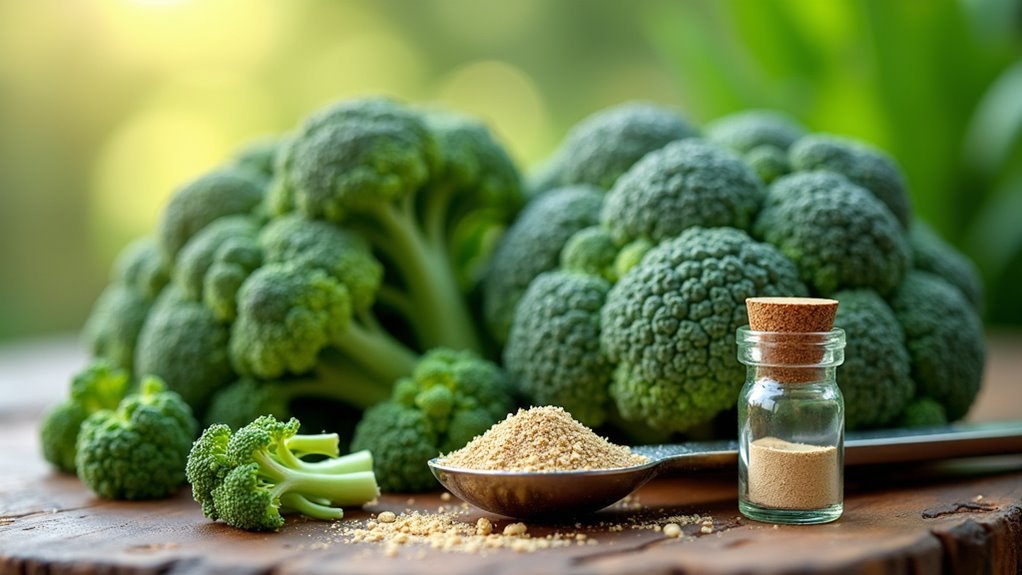
Since broccoli sprouts pack up to 100 times more sulforaphane than mature broccoli, you’ll want to prioritize sprout-based supplements when targeting maximum liver detoxification benefits. This potent antioxidant enhances phase II detoxification enzymes while reducing liver damage from toxins and oxidative stress.
When selecting supplements, always verify standardized content on labels. You’ll need 200-400 mg daily intake for ideal liver health support.
| Supplement Type | Sulforaphane Content |
|---|---|
| Mature broccoli extract | 5-15 mg per serving |
| Broccoli sprouts extract | 50-150 mg per serving |
| Standardized sprout powder | 100-200 mg per serving |
| Fresh broccoli sprouts | 20-50 mg per ounce |
| Combination formulas | Variable (check labels) |
Look for third-party testing certificates and avoid products without clear sulforaphane measurements for reliable detoxification support.
Indole-3-Carbinol and DIM: Cabbage-Based Liver Support Options
You’ll find indole-3-carbinol (I3C) and its metabolite DIM in cabbage-based supplements that specifically target liver detoxification pathways.
These compounds work by enhancing your liver’s enzyme systems responsible for breaking down toxins and processing hormones like estrogen.
Understanding proper dosages and potential interactions becomes essential when you’re considering these concentrated forms versus getting I3C naturally from cruciferous vegetables.
What Are I3C/DIM
Cruciferous vegetables like cabbage, broccoli, and kale contain powerful compounds called indole-3-carbinol (I3C) and diindolylmethane (DIM) that can greatly support your liver’s detoxification processes.
These compounds work together to enhance your body’s natural ability to eliminate toxins and maintain peak liver health.
Here’s what you should know about I3C and DIM for liver support:
- Conversion Process: Your stomach converts I3C into DIM, which actively promotes liver detoxification pathways.
- Anti-Inflammatory Benefits: DIM helps reduce liver inflammation and protects against potential liver damage.
- Enzyme Improvement: Supplementation can improve liver enzyme levels, indicating better liver function.
- Safety Profile: These dietary supplements are generally safe, though you should consult your healthcare provider for personalized guidance.
Liver Detoxification Benefits
When you incorporate I3C and DIM supplements into your routine, your liver gains powerful allies that actively enhance its natural detoxification capabilities. These compounds from cruciferous vegetables promote the metabolism of carcinogens while boosting your liver’s ability to process harmful toxins effectively.
| Compound | Primary Benefit |
|---|---|
| I3C | Enhances liver enzyme activity |
| DIM | Provides antioxidant properties |
| Glucosinolates | Support detoxification processes |
| Combined Effect | Reduces fatty liver disease risk |
Your liver detoxification becomes more efficient as I3C influences enzyme activity, leading to improved liver health. DIM’s anti-inflammatory and antioxidant properties protect against cellular damage while supporting regeneration. Regular supplementation creates a healthier liver environment, making these cabbage-derived compounds valuable additions to your wellness routine for superior detoxification processes.
Dosage and Safety
Although I3C and DIM supplements offer impressive liver support benefits, you’ll need to follow proper dosing guidelines to maximize their effectiveness while maintaining safety.
These cabbage-derived compounds require careful attention to recommended amounts and potential interactions.
Here are essential dosage and safety considerations:
- I3C dosage: Take 200-400 mg daily, as this range provides ideal liver support while maintaining tolerability.
- DIM recommended amounts: Stick to 100-300 mg per day for effective liver protection.
- Consult your healthcare provider: Always discuss these supplements before starting, especially if you’re taking medications.
- Monitor for adverse effects: Watch for gastrointestinal discomfort or other reactions during supplementation.
Both supplements are generally well-tolerated, but excessive intake can cause digestive issues.
Start with lower doses and adjust as needed.
Quality Markers to Look for in Cruciferous Vegetable Extract Supplements
Since the supplement market offers countless options with varying quality levels, you’ll need specific criteria to identify the most effective cruciferous vegetable extract supplements for liver support.
Focus on standardized extracts from broccoli, kale, or Brussels sprouts that guarantee consistent sulforaphane concentrations for maximum detoxification benefits.
Standardized broccoli, kale, and Brussels sprouts extracts deliver consistent sulforaphane levels essential for optimal liver detoxification support.
Prioritize supplements with third-party testing certifications that verify purity and safety standards.
Look for GMP manufacturing practices, which guarantee contamination-free production environments.
You’ll want products free from allergens, artificial additives, and unnecessary fillers that could compromise liver health.
Check dosage recommendations and bioavailability factors to verify you’re getting therapeutic levels of active compounds.
Quality cruciferous extract supplements should clearly display their standardization percentages and provide sufficient potency for effective liver support.
Organic vs. Conventional Sourcing for Cruciferous Liver Detox Products

Beyond examining quality markers and manufacturing standards, the source of your cruciferous vegetables—whether organic or conventional—significantly impacts both the purity and potency of your liver detox supplements.
Organic vegetables offer superior health benefits for liver health compared to conventional vegetables. While conventional options remain affordable, they may contain pesticide residues that compromise detoxification processes when consumed regularly.
Consider these key differences when choosing supplements:
- Antioxidant levels: Organic vegetables typically contain higher concentrations of liver-supporting antioxidants.
- Chemical exposure: Organic sourcing eliminates synthetic pesticides that could burden your liver.
- Potency: Enhanced detoxification compounds in organically-grown cruciferous vegetables.
- Environmental impact: Sustainable farming practices support ecosystem health.
When selecting liver detox supplements, prioritize products specifying organic sourcing to maximize therapeutic potential while minimizing toxin exposure.
Standardized Extracts vs. Whole Food Powder Formulations
When you’re comparing liver detox supplements, you’ll encounter two main formulation types that differ considerably in their extract concentration potency and how your body processes them.
Standardized extracts pack higher concentrations of specific active compounds like silymarin, while whole food powders maintain the complete nutritional matrix of the original vegetable.
The processing methods used to create these formulations directly impact their bioavailability and how well your digestive system can absorb the beneficial compounds.
Extract Concentration Potency
Although both standardized extracts and whole food powders offer liver support benefits, understanding their concentration differences helps you make informed supplement choices.
Standardized extracts deliver superior potency for liver health through concentrated active compounds. When evaluating extract concentration for detoxification support, consider these key factors:
- Percentage specifications – Look for supplements listing exact percentages of active compounds like silymarin or curcumin rather than vague proprietary blends.
- Dosage efficiency – Concentrated extracts require smaller doses to achieve therapeutic levels compared to whole food powders.
- Research backing – Evidence-based studies typically focus on standardized extracts, providing clearer efficacy data for liver function.
- Consistency guarantee – Standardized extracts provide reliable potency across batches, unlike variable whole food formulations.
Choose extracts with clearly labeled concentration levels for best liver detoxification results.
Bioavailability and Absorption
Potency alone doesn’t guarantee effectiveness – your body’s ability to absorb and utilize these liver-supporting compounds determines their true impact.
Bioavailability becomes the deciding factor when choosing between standardized extracts and whole food powder formulations.
Standardized extracts typically offer superior bioavailability due to their concentrated active compounds and specialized extraction process.
This enhanced solubility means your body absorbs more of the liver-supporting nutrients, delivering targeted health benefits more efficiently.
Whole food powder formulations provide broader nutritional profiles with potential synergistic effects.
While individual compound concentrations may be lower, the presence of complementary nutrients can actually improve absorption of key liver support ingredients.
Consider your specific health goals when selecting supplement forms, as absorption dynamics vary greatly between these two approaches.
Processing Method Differences
Since manufacturers use dramatically different processing methods, the form of your liver detox supplement directly impacts how your body receives and utilizes its therapeutic compounds.
Understanding these extraction method differences helps you choose the most effective option for your liver health goals.
Key differences between processing methods:
- Standardized extracts use solvents to isolate specific active ingredients like silymarin, delivering concentrated therapeutic compounds with enhanced bioavailability.
- Whole food powders preserve the complete nutrient spectrum and fiber content but provide lower concentrations of targeted compounds.
- Therapeutic effects vary considerably, with standardized extracts showing superior results for improving liver function markers.
- Bioavailability typically favors standardized extracts due to concentrated active ingredients, making them preferable for targeted liver support.
Third-Party Testing and Certification Requirements for Vegetable Supplements
When you’re selecting liver detox vegetable supplements, third-party testing and certification serve as your primary safeguards against substandard products.
These quality and safety standards verify that supplements contain listed ingredients without harmful substances like heavy metals or microbial contaminants.
You’ll want certifications from reputable organizations such as NSF International or US Pharmacopeia, which confirm rigorous testing for purity and potency.
These certification labels demonstrate that products have been evaluated for effectiveness and adhere to good manufacturing practices.
Third-party testing protects you from health risks while ensuring the supplement delivers its claimed benefits.
Proper Dosage Guidelines for Cruciferous Vegetable Liver Support
Cruciferous vegetables like broccoli, kale, and Brussels sprouts pack powerful glucosinolates that enhance your liver’s natural detoxification processes.
Following proper dosage guidelines guarantees you maximize their liver health benefits while maintaining ideal bioavailability.
For effective liver support, aim for:
- Daily recommended intake: 1-2 cups of whole cruciferous vegetables through meals or snacks
- Weekly variety: Include at least three different types to diversify beneficial compounds
- Ideal cooking methods: Steam or lightly sauté rather than boil to preserve nutrients
- Supplementation dosage: 200-1,000 mg daily of cruciferous vegetable extracts, depending on product concentration
You’ll achieve better liver support by combining whole vegetables with targeted supplementation.
Always follow specific product guidelines since extract potency varies considerably between manufacturers.
Potential Interactions Between Cruciferous Supplements and Medications
While following proper dosage guidelines helps maximize liver detox benefits, you must understand how cruciferous supplements can interact with your medications.
Cruciferous vegetables contain glucosinolates that induce liver enzymes like CYP450, accelerating drug metabolism and potentially reducing therapeutic effects. This can interfere with medications requiring precise dosing, particularly blood thinners and cancer treatments like tamoxifen.
You shouldn’t assume these health supplements are harmless when combined with prescription drugs. The enhanced liver enzyme activity can notably alter how your body processes medications, making them less effective or requiring dosage adjustments.
Before increasing your cruciferous vegetable supplement intake, consult a healthcare provider. They’ll evaluate potential interactions based on your specific medications and help you safely incorporate these supplements into your health regimen.
Frequently Asked Questions
Which Vegetable Is Best for Liver Detox?
You’ll find beetroot’s your best choice for liver detox. It’s packed with betaine and antioxidants that prevent fat accumulation while improving liver function, making it more effective than other vegetables for detoxification support.
What Is the Best Thing to Take for a Liver Detox?
You’ll want to take milk thistle with silymarin, artichoke leaf extract, or turmeric supplements for liver detox. These’ve shown the strongest clinical evidence for reducing liver inflammation and improving enzyme levels effectively.
What Is the Best Supplement to Take for Liver Detox?
You’ll find milk thistle with silymarin most effective for liver detox, typically taking 400-600 mg daily. It’s proven to improve liver function and reduce inflammation better than other supplements available.
What Is the Best Nutrient to Detox the Liver?
You’ll find glutathione is the best nutrient for liver detox since it’s your body’s master antioxidant. Take N-Acetylcysteine to boost glutathione production, or consider milk thistle’s silymarin for proven hepatoprotective benefits.


Leave a Reply