
Legumes and beans boost your blood production by delivering exceptional amounts of iron, folate, and essential amino acids vital for hemoglobin synthesis and red blood cell formation. You’ll get 37% of daily iron needs from one cup of lentils, while chickpeas provide 71% of your folate requirements. These nutrients work together to prevent anemia and enhance oxygen transport throughout your body. Strategic pairing with vitamin C sources can amplify these blood-building benefits even further.
Iron-Rich Legumes for Hemoglobin Production
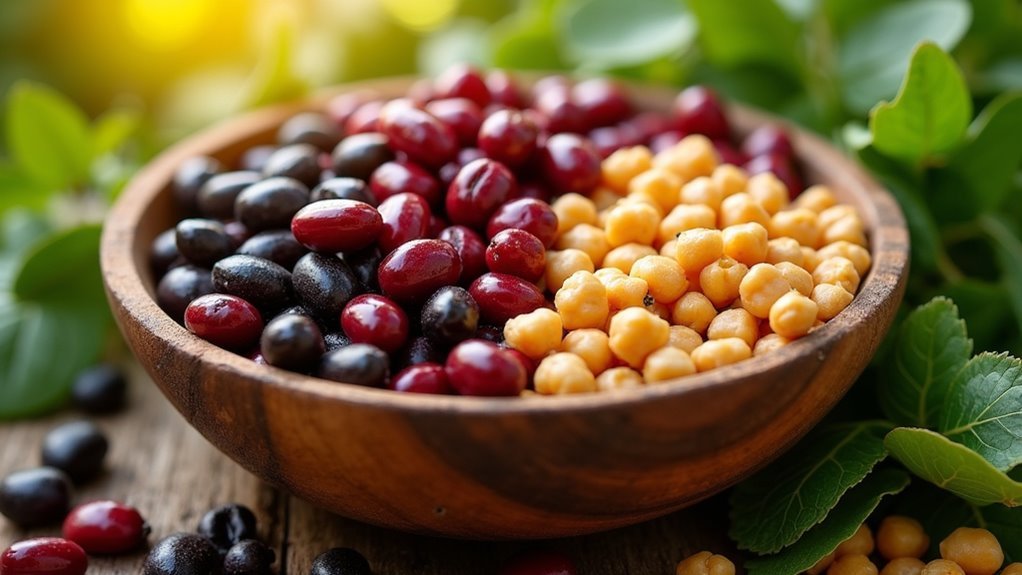
When you’re looking to boost your hemoglobin levels naturally, legumes stand out as nutritional powerhouses that deliver impressive amounts of non-heme iron.
Lentils pack a remarkable punch—one cup provides 37% of your daily iron needs, making them exceptional for combating iron deficiency anemia. Chickpeas aren’t far behind, offering 26% of daily iron requirements per cooked cup.
Lentils deliver 37% of daily iron needs per cup, while chickpeas provide 26%—both powerhouse legumes for fighting iron deficiency.
These beans work by supplying essential nutrients that support red blood cells maturation and hemoglobin production.
You’ll maximize their benefits by pairing legumes with vitamin C-rich foods, which dramatically enhances iron absorption in your body.
Kidney beans and black beans also contribute crucial compounds necessary for peak blood health.
Regular consumption guarantees your body receives consistent iron supply for maintaining healthy hemoglobin levels.
Folate Content in Beans for Red Blood Cell Formation
Beyond iron, beans deliver exceptional amounts of folate—a B-vitamin that’s absolutely critical for red blood cell formation and maturation. This essential nutrient prevents folate-deficiency anemia and enhances hemoglobin production for better oxygen transport throughout your body.
- Lentils: One cup provides 90% of your daily folate needs
- Chickpeas: Deliver 71% of daily folate value per cooked cup
- Kidney beans: Support ideal folate levels for blood production
- Black beans: Help maintain consistent red blood cell formation
- Regular consumption: Reduces anemia risk through sustained folate intake
When you include these legumes in your diet, you’re giving your body the folate it needs to produce healthy red blood cells efficiently.
This vitamin works alongside iron to maximize your blood production capabilities.
Maximizing Iron Absorption From Plant-Based Sources

Although plant-based iron requires more strategic planning than its heme counterpart, you can dramatically boost absorption rates through smart food combinations and timing. Pairing iron-rich legumes and beans with vitamin C sources like citrus fruits and bell peppers can enhance absorption by 85%. You’ll maximize benefits by combining legumes with grains for complete proteins while diversifying nutrient intake.
| Iron-Rich Foods | Absorption-Enhancing Foods | Foods to Avoid |
|---|---|---|
| Lentils | Bell peppers | Coffee |
| Chickpeas | Citrus fruits | Tea |
| Black beans | Tomatoes | Dairy products |
| Kidney beans | Strawberries | Calcium supplements |
| Quinoa | Broccoli | Whole grain cereals |
Cook with cast iron cookware to increase iron content naturally. Time your consumption strategically—avoid coffee, tea, and dairy with iron-rich meals to optimize plant-based iron absorption.
Essential Amino Acids in Legumes for Blood Health
Legumes deliver all nine essential amino acids your body can’t produce on its own, making them powerhouse ingredients for robust blood health.
These protein building blocks directly support hemoglobin synthesis, ensuring your red blood cells efficiently transport oxygen throughout your system.
Amino acids from legumes fuel hemoglobin production, empowering your red blood cells to deliver oxygen efficiently throughout your body.
Your blood production gets a significant boost when you regularly consume legumes because they provide multiple nutrients working together:
- Folate-rich varieties like lentils and chickpeas prevent anemia by supporting red blood cell maturation
- Iron content supplies vital minerals for hemoglobin formation
- Complete protein profiles deliver amino acids for tissue repair and enzyme production
- Daily protein requirements get substantially met through consistent legume consumption
- Blood health optimization occurs when amino acids support hormone production and cellular repair
This nutrient combination makes legumes essential for maintaining healthy blood production and preventing deficiencies.
Combining Beans With Vitamin C Foods for Enhanced Uptake

When you eat beans alongside vitamin C-rich foods, you’ll dramatically increase your body’s iron absorption and maximize the blood-building benefits of these nutritional powerhouses.
Legumes contain non-heme iron, which your body absorbs less efficiently than iron from meat sources. However, vitamin C can boost this iron absorption by up to 300%, transforming ordinary beans into blood production enhancers.
You’ll want to pair black beans with bell peppers, lentils with strawberries, or chickpeas with oranges to enhance uptake considerably. This combination prevents iron-inhibiting compounds from forming while promoting better iron utilization.
Regular consumption helps combat iron deficiency anemia, especially if you’re vegetarian or vegan. Beyond iron absorption benefits, you’re also getting valuable dietary fiber and other health benefits that support overall blood health.
Daily Serving Recommendations for Blood Building Benefits
Three cups of legumes per week forms the foundation of the U.S. Dietary Guidelines for supporting blood production.
However, you’ll maximize iron levels and hemoglobin synthesis by consuming daily servings of beans and legumes. One cup of cooked legumes daily provides essential nutrients like iron and folate that boost red blood cells formation.
Daily legume consumption maximizes iron absorption and hemoglobin production, delivering essential nutrients that directly support optimal red blood cell formation.
Here’s your ideal legume strategy for blood building:
- Consume at least one cup of cooked beans daily for iron maintenance
- Eat legumes four times weekly to enhance cardiovascular health
- Choose varied options like chickpeas, black beans, and lentils
- Prioritize daily servings if you’re following vegetarian diets
- Focus on consistent intake rather than sporadic large portions
Regular legume consumption guarantees efficient oxygen transport throughout your body while maintaining prime hemoglobin levels for sustained energy.
Specific Legume Varieties With Highest Nutrient Density
Powerhouse performers in the legume family deliver exceptional concentrations of blood-building nutrients that’ll supercharge your hemoglobin production.
Soybeans lead the pack with an impressive 49% daily value of iron per cup, making them the prime choice for boosting blood production.
Lentils follow closely, providing 37% DV iron and a remarkable 90% DV folate, creating the perfect nutrient density combination for red blood cell formation.
Kidney beans offer 29% DV iron alongside 58% DV folate, while chickpeas contribute 26% DV iron and 71% DV folate.
These specific legumes and beans outperform others in delivering concentrated amounts of essential nutrients your body needs for peak hemoglobin synthesis and healthy blood levels.
Frequently Asked Questions
What Are the Benefits of Eating Beans and Legumes?
You’ll gain essential nutrients like protein, fiber, and B vitamins when eating beans and legumes. They’ll help stabilize your blood sugar, lower cholesterol, support heart health, and provide iron for better energy levels.
Do Beans and Legumes Raise Blood Sugar?
Beans and legumes won’t spike your blood sugar like other carbs. They’re low-glycemic and packed with fiber, so they’ll actually help stabilize your glucose levels and prevent dramatic spikes.
What Foods Make You Produce More Blood?
You’ll produce more blood by eating iron-rich foods like lean meats, leafy greens, and beans. Add vitamin C sources like citrus fruits to boost iron absorption, and include folate-rich legumes for healthy red blood cell formation.
Which Legumes Increase Hemoglobin?
You’ll boost hemoglobin with soybeans offering 49% daily iron, lentils providing 37%, kidney beans containing 29%, and chickpeas delivering 26%. These legumes supply essential iron and folate for red blood cell production.


Leave a Reply