

You’ll want to prioritize watercress, which scores a perfect 100 on nutrient-density scales, followed by Swiss chard with over 100% daily vitamin K per cup. Beet greens deliver 127% vitamin K needs, while spinach provides essential iron for blood health. Kale offers an impressive 400% vitamin K plus powerful antioxidants, and mustard greens pack nearly 50% daily vitamin C. Dandelion greens, arugula, romaine lettuce, and collard greens round out this nutritional powerhouse lineup with their unique vitamin profiles and health benefits.
Watercress: The Nutrient Powerhouse Leading the Pack

When you’re seeking the ultimate nutritional bang for your buck, watercress stands unrivaled at the top of the leafy greens hierarchy with a perfect 100 score on the nutrient-density scale.
You’ll get 71% of your daily vitamin K needs and 16% of vitamin C from just one cup of this aquatic powerhouse.
This nutrient-dense green delivers impressive health benefits through its rich antioxidant content, particularly beta-carotene, which helps combat oxidative stress and may reduce DNA damage.
Research suggests watercress offers promising therapeutic effects, especially in oral cancer studies, though human trials remain ongoing.
Emerging research shows watercress may help fight oral cancer, though more human studies are needed to confirm these promising findings.
You’ll love its slightly spicy kick that transforms ordinary salads into flavorful, nutrition-packed meals while supporting your overall wellness goals.
Swiss Chard: Colorful Stems and Maximum Vitamin Content
You’ll immediately notice Swiss chard’s stunning white, yellow, and red stems that make it as visually striking as it’s nutritious.
This colorful vegetable delivers an impressive punch with over 100% of your daily vitamin K needs in just one cup of raw leaves.
You’re also getting nearly 100% of your daily vitamin A requirement for women, plus abundant vitamin C to support your immune system and skin health.
Vibrant Stem Colors
While most leafy greens display uniform green coloring, Swiss chard stands out with its distinctively vibrant stems that paint your plate in brilliant reds, sunny yellows, and crisp whites.
These colorful stems aren’t just for visual appeal—they’re packed with the same nutritious leafy green benefits as the leaves themselves.
You’ll get maximum nutrition from every part of this powerhouse vegetable:
- Red stems contain betalains, natural pigments with anti-inflammatory properties
- Yellow stems offer carotenoids that support healthy immune function
- White stems provide clean, mild flavor perfect for beginners
- One cup delivers 100% daily vitamin K for ideal bone health
- Rich vitamins A and C content boosts your body’s natural defenses
Swiss chard transforms ordinary meals into colorful, nutrient-dense experiences.
Vitamin K Powerhouse
Beyond its eye-catching appearance, Swiss chard delivers an extraordinary vitamin K punch that surpasses nearly every other leafy green. You’ll get over 300% of your daily vitamin K needs from just one cup of raw leaves, making this nutrient-dense powerhouse essential for proper blood clotting and strong bone health.
This leafy green doesn’t stop there. You’re also getting significant amounts of vitamins A and C, which boost your immune system and promote healthy skin.
The substantial magnesium content helps regulate your blood pressure while supporting muscle and nerve function.
At only 7 calories per cup, Swiss chard gives you maximum nutritional impact without compromising your calorie goals. It’s this low-calorie, high-nutrient profile that makes it indispensable.
Beet Greens: The Overlooked Superfood in Your Garden

You’ve probably tossed beet greens in the trash without realizing you’re discarding a nutrient powerhouse that delivers 127% of your daily vitamin K needs in just one cup.
These overlooked leaves pack more nutrition per calorie than many popular greens, offering essential antioxidants like lutein and zeaxanthin alongside crucial minerals.
Whether you’re growing your own beets or buying them fresh, you can easily harvest these tender greens when they’re young for maximum flavor and nutritional impact.
Nutrient Density Profile
When you toss beet greens into the compost bin, you’re discarding one of nature’s most nutrient-packed vegetables.
These leafy greens deliver exceptional nutrient density that rivals any superfood on your plate.
A single cup of raw leaves provides an incredible 127% of your daily vitamin K needs, supporting bone health and blood clotting.
You’ll also get substantial amounts of vitamins A and C, boosting your overall health and immune function.
The antioxidants zeaxanthin and lutein protect your vision from age-related disorders.
Here’s what makes beet greens nutritionally superior:
- 127% daily vitamin K in one cup
- 13% daily vitamin A content
- 12% daily vitamin C boost
- Eye-protecting antioxidants
- Versatile preparation options
Incorporating these into your healthy diet maximizes nutritional benefits.
Growing and Harvesting
Growing beet greens in your home garden couldn’t be simpler, and you’ll wonder why you haven’t been cultivating this nutritional powerhouse all along.
This nutrient-dense vegetable thrives in both cool and warm weather conditions, making it perfect for year-round production in most home gardens. You’ll enjoy continuous harvests throughout the growing season by picking outer leaves first while allowing inner leaves to keep developing.
When harvesting these vitamin K-rich leafy greens, you’re getting 127% of your daily value plus significant vitamins A and C in every cup.
The versatile nature of beet greens means you can use them fresh in salads or cook them in soups and sautés, maximizing their nutritional benefits while reducing garden waste.
Spinach: Iron-Rich Leaves for Optimal Blood Health
Spinach stands out as a nutritional powerhouse among leafy greens, delivering about 9% of your daily iron needs in just two cups of fresh leaves. This essential mineral supports ideal blood health and oxygen transport throughout your body.
You’ll also get an impressive vitamin K boost—121% of your daily value in just one cup of raw spinach, supporting blood clotting and bone health. The antioxidants in spinach help reduce heart disease risk, making it perfect for your health-conscious diet.
- Rich in vitamins B6, C, and K for thorough nutrition
- Contains disease-fighting polyphenols and flavonoids
- May help prevent certain cancers
- Best consumed raw to preserve beneficial compounds
- Essential for oxygen transport and blood function
Kale: the Popular Green With Exceptional Antioxidant Power
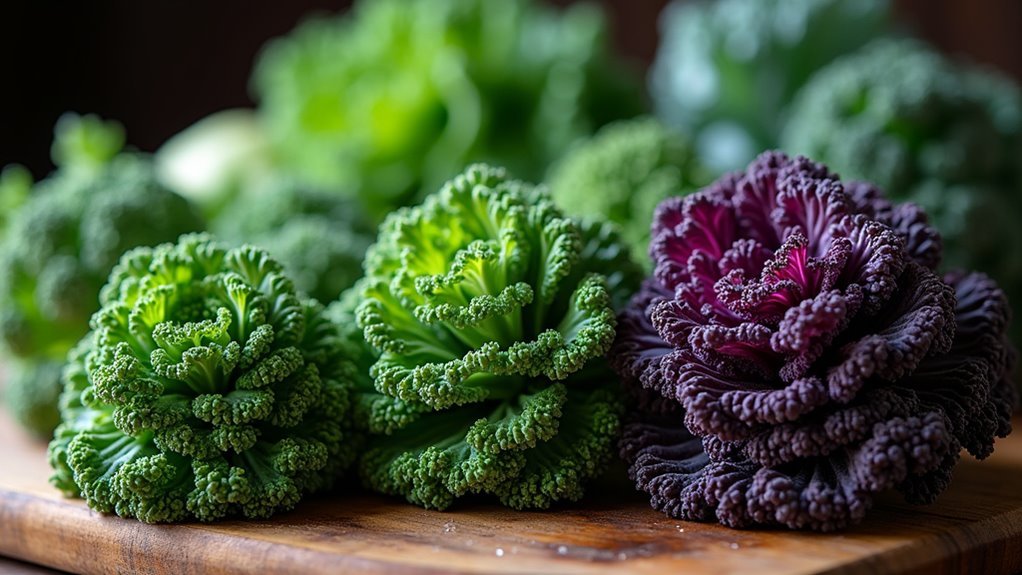
You’ll find kale stands out as a vitamin K powerhouse, delivering over 400% of your daily needs in just one cup while flooding your body with potent antioxidants like beta-carotene and lutein.
These compounds don’t just boost your immune system and support bone health—they’re also working to protect your eyes and reduce your disease risk.
How you prepare this nutrient-dense green matters greatly, since raw or lightly steamed kale retains far more vitamins than boiled versions.
Vitamin K Powerhouse Benefits
When you’re looking to maximize your vitamin K intake, kale stands out as an exceptional choice that delivers over 400% of your daily value in just one cup of raw leaves. This nutrient-dense powerhouse supports vital bodily functions while keeping calories remarkably low at just 31 per cup.
Your body benefits from kale’s vitamin K in multiple ways:
- Blood clotting support – Essential for proper wound healing and preventing excessive bleeding
- Bone health enhancement – Works with calcium to strengthen your skeletal system
- Chronic diseases protection – Teams up with antioxidants to reduce health risks
- Vitamins A and C boost – Delivers 19% and 23% daily values respectively
- Weight management aid – Provides maximum nutrients with minimal calories
Among leafy greens, kale’s exceptional vitamin profile makes it indispensable for peak health.
Antioxidant Content Analysis
Beyond its impressive vitamin K content, kale’s antioxidant profile sets it apart as a true nutritional champion among leafy greens. You’ll find exceptional levels of vitamins A, C, and K working together to combat oxidative stress throughout your body. This powerful nutrient profile includes lutein and beta-carotene, which may greatly reduce your risk of chronic diseases like heart disease and certain cancers.
| Antioxidant | Amount per Cup | Health Benefit |
|---|---|---|
| Vitamin A | 206% DV | Eye health support |
| Vitamin C | 134% DV | Immune system boost |
| Lutein | 23mg | Vision protection |
| Beta-carotene | 2,873mcg | Cancer prevention |
| Manganese | 26% DV | Metabolic function |
When you consume kale raw or lightly steamed, you’ll maximize these antioxidant benefits compared to other leafy greens.
Preparation Methods Comparison
How you prepare kale directly impacts whether you’ll reap those impressive antioxidant benefits or lose them in the cooking process. This powerhouse among leafy green vegetables delivers vitamins A and K while staying remarkably low in calories, but your cooking method determines how many beneficial compounds survive.
Here’s how different preparation methods affect kale’s nutritional value:
- Raw consumption – Preserves maximum antioxidants and water-soluble vitamins
- Steaming – Best cooked method for retaining nutrients while softening texture
- Smoothie blending – Maintains raw benefits while improving digestibility
- Blanching/boiling – Destroys valuable vitamins and minerals through water leaching
- Sautéing briefly – Acceptable alternative that maintains most beneficial compounds
Smart meal planning incorporates various preparation methods to maximize both nutrition and culinary variety from this exceptional green.
Collard Greens: Calcium-Dense Traditional Southern Staple
Although collard greens mightn’t grab headlines like trendy superfoods, they’re quietly delivering some of the most impressive nutritional benefits you’ll find in the produce aisle.
These nutritious powerhouses pack 14% of your daily calcium needs per cup, making them exceptional for bone health. You’ll also get a massive 131% of your vitamin K requirements, supporting blood clotting and bone metabolism.
At just 12 calories per cup, collard greens are perfect for weight management while providing substantial vitamins A and C for immune support and skin health.
Their high fiber content promotes digestive health and keeps you feeling full longer. This low calorie vegetable transforms simple meals into nutrient-dense feasts without compromising flavor.
Mustard Greens: Peppery Flavor With Impressive Vitamin C
When you’re seeking a leafy green that delivers bold flavor alongside exceptional nutrition, mustard greens stand out as a peppery powerhouse worth adding to your plate.
These nutrient-dense members of the Brassica family pack impressive vitamin C levels, with one cup providing nearly 50% of your daily needs for exceptional immune support.
You’ll also benefit from their rich vitamins A and K content, plus powerful antioxidants that may reduce inflammation and potentially inhibit cancer cell growth, contributing to your overall health.
- Raw mustard greens add spicy kick to salads
- Cooking mellows their bitter, peppery flavor considerably
- They’re relatives of kale and collard greens
- Perfect for versatile dishes from soups to stir-fries
- Antioxidants support your body’s natural defenses
Dandelion Greens: Wild Weeds With Serious Nutritional Benefits
What many people dismiss as pesky yard weeds actually represent some of nature’s most nutritionally dense greens you can find. Dandelion greens pack impressive nutritional benefits into just 25 calories per cup, making them an excellent low-calorie option for health-conscious eaters.
You’ll get 20% of your daily vitamin C needs, plus substantial calcium and iron. These wild greens contain prebiotic fiber that supports gut health and improves digestion.
Their slightly bitter flavor resembles arugula, working perfectly in fresh salads or cooked side dishes. The antioxidant properties in dandelion greens help combat inflammation throughout your body, potentially improving your overall health.
Dandelion greens offer a pleasantly bitter taste similar to arugula while delivering powerful anti-inflammatory antioxidants for better health.
Don’t overlook these free, nutrient-dense powerhouses growing right in your backyard.
Arugula: Peppery Bite Packed With Heart-Healthy Nitrates
If you’re looking for a leafy green that delivers bold flavor alongside impressive nutritional benefits, arugula stands out as an exceptional choice. This peppery rocket packs serious heart health benefits through its rich dietary nitrates content, which enhances blood flow and may help reduce blood pressure.
Here’s what makes arugula exceptional among leafy greens:
- Vitamin K powerhouse – One cup provides 18% of your daily vitamin K needs
- Heart-healthy nitrates support improved circulation and blood pressure management
- Antioxidant vitamins A and C boost your immune system and fight cellular damage
- Ultra low-calorie at just 5 calories per cup for guilt-free nutrition
- Versatile flavor enhancer perfect for salads, sandwiches, and pizza toppings
You’ll get maximum nutritional impact with minimal calories.
Romaine Lettuce: Crisp Texture With Substantial Vitamin a
While arugula brings bold flavor to your plate, romaine lettuce offers a different appeal with its satisfying crunch and impressive vitamin A content. You’ll get 23% of the daily value for vitamin A in just one cup, supporting your vision and immune system. This versatile green also delivers 40% of your vitamin K needs while keeping calories remarkably low at only 15 per cup.
| Nutrient | Per Cup | Health Benefit |
|---|---|---|
| Vitamin A | 23% DV | Vision support |
| Calories | 15 | Weight management |
| Fiber | 1.0g | Digestive health |
The fiber content supports your digestive health and helps reduce risks of heart disease and type 2 diabetes. Whether you’re building salads or adding crunch to sandwiches, this low-calorie option delivers essential nutrition.
Frequently Asked Questions
Which Leafy Green Is the Most Nutritious?
You’ll find watercress tops the nutrition charts with a perfect score of 100. It’s packed with vitamin K and powerful antioxidants that’ll help reduce DNA damage and combat oxidative stress in your body.
What Is the King of Green Leafy Vegetables?
You’ll find watercress holds the title as king of green leafy vegetables. It’s earned this crown by achieving a perfect nutrient-density score, packed with vitamins A, C, and K.
Which Is Healthier, Romaine or Arugula?
You’ll find both offer unique benefits. Romaine gives you more vitamin A and fiber, while arugula provides higher antioxidants and nitrates for blood flow. Choose based on your specific nutritional needs.
What Leafy Green Can You Eat Every Day?
You can eat spinach every day since it’s nutrient-dense and provides 121% of your daily vitamin K needs, plus iron and folate. It’s gentle enough for daily consumption while delivering essential nutrients.


Leave a Reply