

You’ll maximize mineral intake by choosing collard greens and kale for calcium (150mg and 144mg per cooked cup), while Swiss chard delivers 38% daily magnesium needs. Cook your greens to boost iron absorption—spinach jumps from 0.8mg raw to 6.4mg cooked. Pair leafy vegetables with vitamin C foods to increase non-heme iron uptake by 300%. Steam cooking reduces anti-nutrients that block mineral absorption. These strategic choices reveal the full nutritional potential hiding within your favorite greens.
Understanding Mineral Density Variations Across Different Leafy Greens
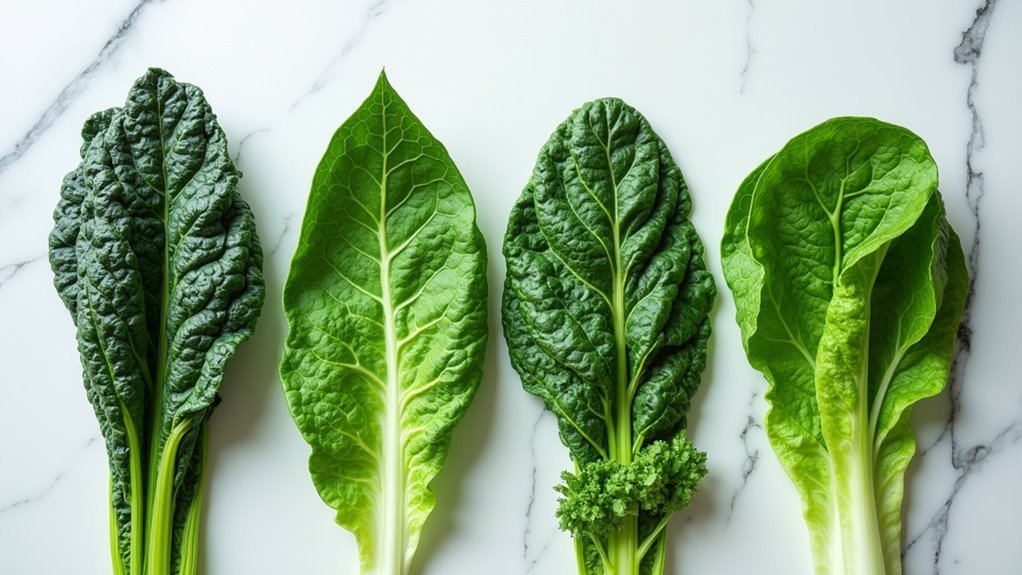
When you’re choosing leafy greens for ideal nutrition, you’ll discover that mineral content varies dramatically between different varieties.
Kale and collard greens deliver exceptional calcium levels at 144mg and 150mg per cooked cup respectively.
If you need magnesium, spinach provides an impressive 157mg per cooked cup, making it your top choice.
For potassium requirements, watercress stands out with 299mg per raw cup, supporting your cardiovascular health.
When you’re concerned about iron intake, beet greens offer 1.4mg per raw cup, helping prevent anemia and boost energy.
Swiss chard contributes valuable phosphorus at 21mg per cooked cup, supporting bone health.
Understanding these mineral variations helps you select the most beneficial leafy greens for your specific nutritional needs.
Calcium Champions: Which Greens Deliver the Most Bone-Building Minerals
Which leafy greens pack the most calcium punch for your bones?
Collard greens reign supreme among leafy green vegetables, delivering an impressive 144 mg of calcium per cooked cup—making them your top choice for bone health.
Kale and beet greens tie for second place, each providing about 90 mg per cup when cooked, offering excellent nutrient density for your mineral intake.
Watercress contributes 41 mg of calcium per cup, while spinach lags behind at just 30 mg due to oxalates that block calcium absorption.
If you’re prioritizing bone-building minerals, collard greens should top your shopping list, followed by kale and beet greens.
These calcium champions outperform other leafy options considerably.
Iron Content Analysis: Comparing Absorption Rates in Raw Vs Cooked Greens
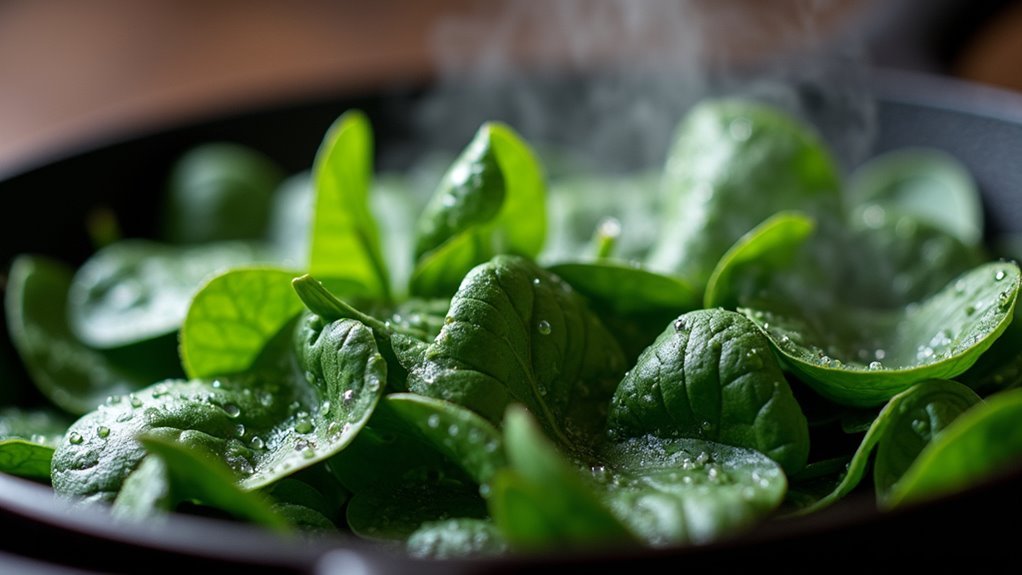
Although leafy greens aren’t the most efficient iron sources compared to meat, you can greatly boost your body’s absorption of this essential mineral through smart preparation and pairing strategies.
Raw greens contain non-heme iron, which your body absorbs less efficiently than iron from animal sources. However, cooking leafy vegetables considerably improves bioavailability by reducing oxalates that block absorption.
You’ll get eight times more iron content from cooked spinach—6.4mg per cup versus just 0.8mg raw. To maximize absorption rates from both raw greens and cooked greens, pair them with vitamin C-rich foods like citrus fruits or bell peppers during meals.
This combination optimizes non-heme iron uptake in your balanced diet.
Magnesium and Potassium Powerhouses Among Popular Leafy Vegetables
Why do nutritionists consistently recommend leafy greens for heart health and muscle function? The answer lies in their exceptional magnesium and potassium content. These minerals are essential for cardiovascular wellness and proper muscle contraction.
When you’re choosing leafy greens for maximum mineral content, prioritize these powerhouses:
- Swiss chard delivers an impressive 38% daily value of magnesium per cup
- Beet greens provide 29% magnesium DV and lead in potassium with 299mg per cup
- Spinach offers 24% magnesium DV and 167mg potassium per cup
- Collard greens contribute 230mg potassium per cup for heart support
- Variety is key – rotating different greens maximizes your dietary mineral intake
You’ll enhance your health benefits considerably by incorporating these nutrient-dense vegetables into your daily meals.
Optimizing Mineral Bioavailability Through Proper Preparation Methods
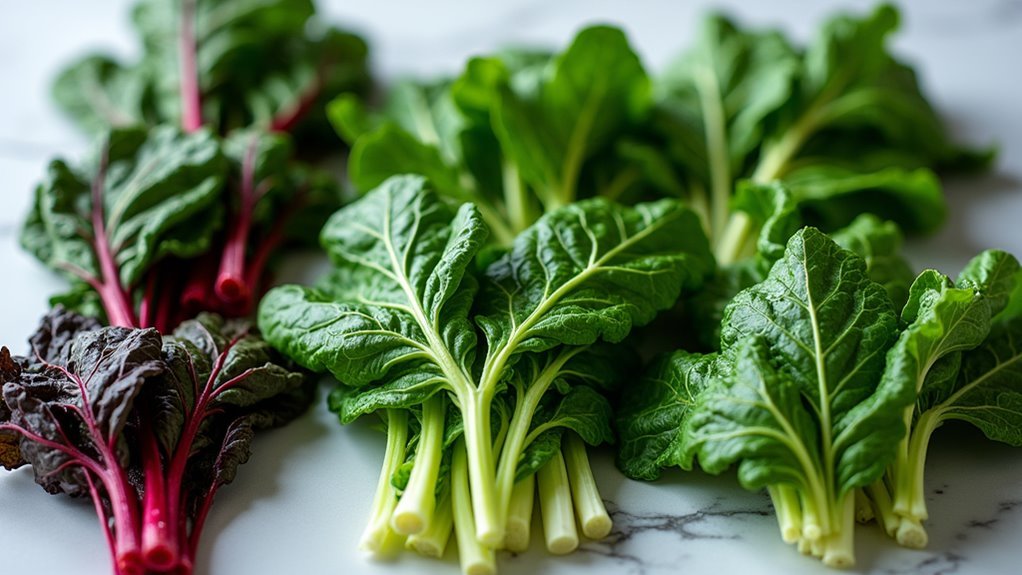
Getting the most minerals from your leafy greens isn’t just about choosing the right varieties—how you prepare them makes a significant difference in what your body actually absorbs.
| Preparation Method | Mineral Absorption Impact | Your Body’s Reward |
|---|---|---|
| Steam cooking | Reduces anti-nutrients blocking calcium/iron | Stronger bones, better energy |
| Pair with vitamin C foods | Boosts non-heme iron uptake by 300% | Enhanced oxygen transport |
| Add healthy fats | Increases fat-soluble vitamin absorption | Ideal nutrient utilization |
Proper preparation transforms ordinary leafy greens into mineral powerhouses. Cooking methods like steaming enhance bioavailability by breaking down oxalates. Fermentation creates additional benefits through anti-nutrient breakdown. Always rinse thoroughly to remove pesticide residues while preserving essential nutrients. Smart pairing guarantees maximum nutrient preservation and absorption.
Frequently Asked Questions
Which Is the Most Nutritious Leafy Green?
Kale’s your best choice for maximum nutrition. You’ll get over 600% daily vitamin K, plus exceptional vitamins A and C levels. It consistently outperforms other leafy greens in nutrient density and health benefits.
What Is the King of Green Leafy Vegetables?
Kale’s often called the “king of green leafy vegetables” because you’ll get exceptional nutrient density from it. You’re consuming 68% of your daily vitamin K needs in just one cup.
Which Mineral Is Abundant in Green Leafy Vegetables?
You’ll find several minerals abundant in green leafy vegetables, but potassium stands out markedly. You’re getting substantial amounts in kale and watercress, plus calcium, magnesium, iron, and vitamin K.
What Are the Most Nutrient-Dense Salad Greens?
You’ll find collard greens, beet greens, and spinach are the most nutrient-dense salad greens, providing over 120% daily vitamin K. Kale and watercress also offer exceptional nutrition with substantial vitamins A and C.


Leave a Reply