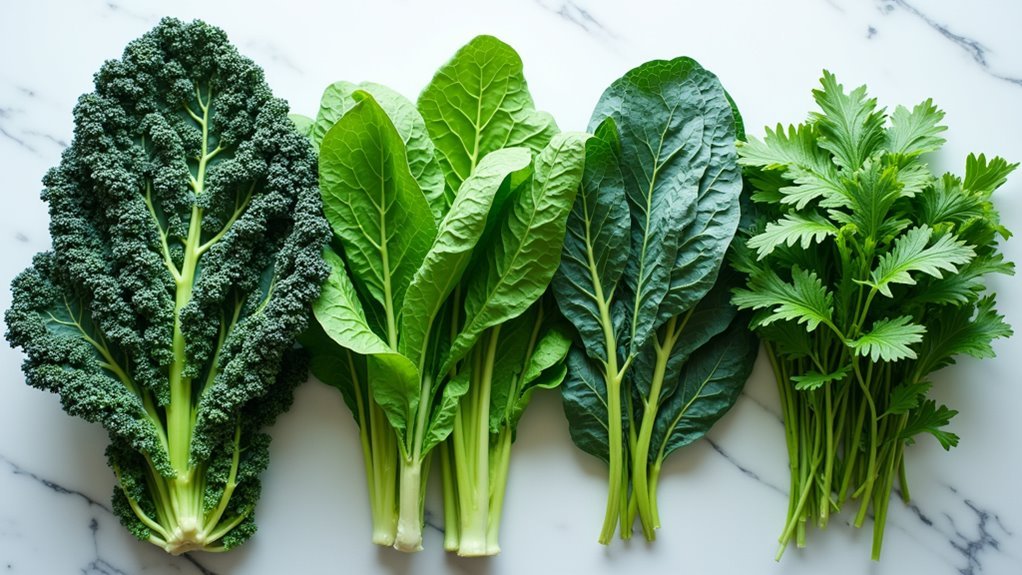
You’ll find the highest vitamin K concentrations in kale, which delivers over 800 mcg per cooked cup, followed by collard greens at 530 mcg per half-cup and dandelion greens with 536 mcg per 100 grams. Spinach, turnip greens, and mustard greens also pack impressive amounts, while watercress and Swiss chard round out the top vitamin K sources. These dark leafy greens support bone health and blood clotting when you pair them with healthy fats for ideal absorption and discover their versatile culinary applications.
Kale: The Vitamin K Powerhouse
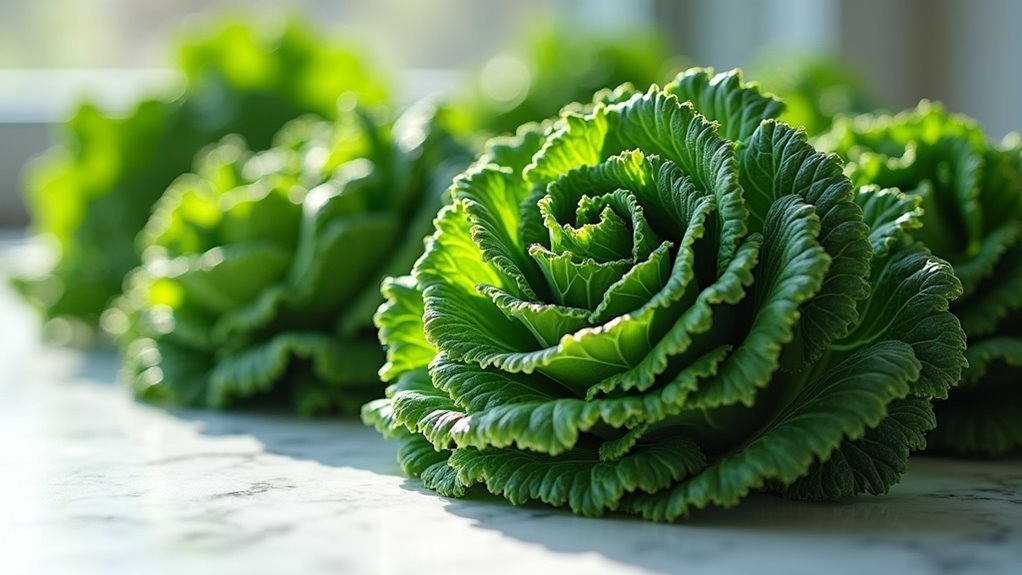
When you’re searching for the ultimate vitamin K source, kale stands unmatched among leafy greens. This nutritional powerhouse delivers over 800 mcg of vitamin K per cooked cup, dramatically exceeding most other greens.
You’ll get vitamin K1 in the form of phylloquinone, which your body needs for proper blood clotting and strong bone health.
You can easily add kale to salads, smoothies, and soups, boosting both nutrition and taste in your meals.
If you’re taking anticoagulant medications like warfarin, regular kale consumption helps maintain consistent vitamin K levels.
Whether you’re looking to strengthen bones or support healthy blood clotting, kale’s exceptional vitamin K content makes it an ideal choice for meeting your daily nutritional needs.
Spinach: A Nutrient-Dense Green Giant
While kale often steals the spotlight, spinach deserves equal recognition as a vitamin K powerhouse that’ll greatly boost your daily nutrient intake. This nutrient-dense green provides exceptional vitamin K1 content that supports essential bodily functions.
Here’s what makes spinach remarkable for vitamin K:
- High concentration: 100 grams delivers 145 mcg of vitamin K1, covering 121% of your daily value.
- Convenient serving: Just ½ cup of raw spinach provides 61% of your daily vitamin K1 needs.
- Enhanced absorption: Pair with healthy fats like olive oil for better vitamin K uptake.
- Bonus nutrients: You’ll also get vitamins A, C, and powerful antioxidants.
Regular spinach consumption supports bone health and proper blood clotting through its impressive vitamin K1 content.
Collard Greens: Traditional Southern Superfood
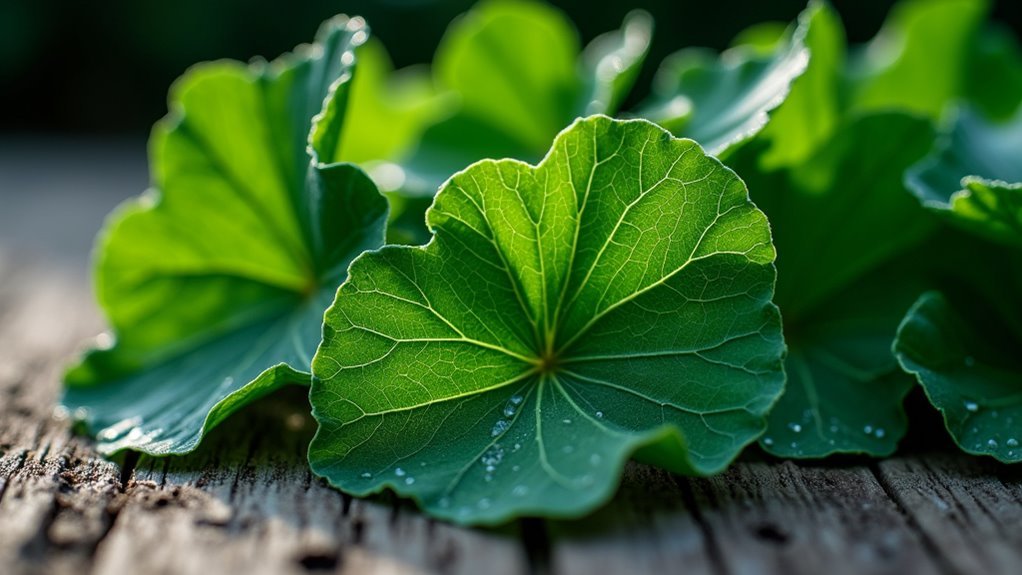
Moving beyond spinach, collard greens stand out as the ultimate vitamin K champion among leafy green vegetables. You’ll get an incredible 530 mcg of vitamin K from just ½ cup cooked—that’s over five times your daily requirement.
This traditional Southern superfood doesn’t just excel in vitamin K content; it’s packed with antioxidants, fiber, and vitamin C that support your overall wellness.
You can enjoy collard greens sautéed with ham hocks, steamed as a side dish, or blended into smoothies for versatility. Their exceptional vitamin K levels make them powerful allies for bone health.
However, if you’re taking anticoagulant medications like warfarin, you’ll need to maintain consistent consumption to keep your vitamin K intake stable.
Turnip Greens: Peppery Leaves With Big Benefits
You’ll find turnip greens pack an impressive vitamin K punch, delivering over 400 mcg per half-cup serving when boiled.
These peppery leaves don’t just stop at vitamin K—they’re loaded with vitamins A and C while staying remarkably low in calories.
How you prepare them greatly impacts their nutritional value, so choosing the right cooking method can maximize their health benefits.
Vitamin K Content
Turnip greens pack an impressive vitamin K punch, delivering approximately 426 mcg per half-cup serving when boiled. This remarkable vitamin K content places these leafy greens among the top sources for this essential nutrient, offering substantial health benefits for your daily nutrition.
The high amounts of vitamin K in turnip greens support several critical bodily functions:
- Blood clotting regulation – prevents excessive bleeding from wounds
- Bone health maintenance – strengthens skeletal structure and density
- Cardiovascular support – aids in proper calcium metabolism
- Daily intake fulfillment – meets recommended nutritional requirements efficiently
You’ll find that incorporating turnip greens into your meals provides exceptional nutritional value.
Their vitamin K content works alongside other nutrients like vitamins A and C, calcium, and fiber to promote extensive wellness throughout your body.
Nutritional Profile Overview
Beyond their exceptional vitamin K levels, turnip greens deliver a thorough nutritional powerhouse that’ll transform your health goals into achievable realities.
You’ll discover these peppery leafy greens pack substantial vitamin A and C, strengthening your immune system while supporting overall wellness. Their impressive calcium and iron content builds stronger bones and improves oxygen transport throughout your body.
What sets turnip greens apart from other leafy greens isn’t just their remarkable vitamin K content—it’s their versatility. You can enjoy them raw for maximum nutritional benefits or cook them using steaming and sautéing methods that preserve their potent nutrients while mellowing their distinctive peppery bite.
Adding turnip greens to your meals creates an effortless pathway to boosting your vitamin K intake alongside essential vitamins and minerals your body craves.
Cooking Methods Matter
While many leafy greens lose their nutritional punch during cooking, turnip greens actually retain most of their vitamin K content regardless of how you prepare them.
This exceptional nutrient retention sets these peppery leafy greens apart from other vegetables that become less nutritious after heating.
You can maximize turnip greens’ vitamin K content through these cooking methods:
- Steaming – Preserves nutrients while softening the peppery bite
- Sautéing – Quick cooking enhances flavor without significant nutrient loss
- Boiling – Even this harsh method maintains substantial vitamin K levels
- Stir-frying – Combines heat and movement for ideal taste and nutrition
Whether you’re adding them to soups, stews, or side dishes, you’ll still get over 400 mcg of vitamin K per half-cup serving.
Mustard Greens: Spicy Nutrition in Every Bite
You’ll find mustard greens pack an impressive 419 mcg of vitamin K per cooked cup, making them one of the most potent leafy greens for meeting your daily needs.
These spicy leaves don’t stop at vitamin K—they’re loaded with vitamins A, C, and E, plus fiber and calcium that support your bones and digestion.
Whether you eat them raw for maximum bite or cook them to mellow their pungency, you’ll retain their nutritional powerhouse status while adapting their flavor to your preference.
Vitamin K Content Analysis
When it comes to vitamin K powerhouses, mustard greens stand out as one of nature’s most concentrated sources.
You’ll find that these leafy greens deliver an impressive 419 mcg of vitamin K per 100 grams, which represents over 350% of your daily recommended intake.
This exceptional vitamin K content makes mustard greens among the highest-ranking leafy greens for this essential nutrient.
Here’s what you’re getting:
- 419 mcg vitamin K per 100-gram serving
- 350%+ daily value in a single portion
- Superior concentration compared to most vegetables
- Optimal absorption when consumed with healthy fats
You’re supporting vital bone health functions when you include these high in vitamin K greens in your diet.
The vitamin K content in mustard greens also promotes proper blood clotting mechanisms throughout your body.
Nutritional Benefits Beyond K
Although mustard greens’ vitamin K content steals the spotlight, these peppery leaves pack an impressive array of additional nutrients that’ll boost your overall health.
You’ll get powerful antioxidants like vitamins A and C, which strengthen your immune function while promoting healthy skin. The significant fiber content supports your digestion and creates lasting fullness, helping you maintain a healthy weight.
What makes mustard greens truly exceptional are their phytonutrients, compounds that combat inflammation and may reduce your risk of chronic diseases.
Despite being incredibly low in calories, they deliver these nutritional benefits while adding a distinctive spicy kick to your meals.
Whether you’re tossing them in salads or stir-frying them as a side dish, you’re maximizing both flavor and nutrition.
Cooking Methods Comparison
Since different cooking methods can dramatically affect mustard greens’ nutritional value and flavor profile, it’s crucial to choose techniques that maximize both taste and health benefits.
When you cook mustard greens properly, you’ll reduce their natural bitterness while preserving their impressive vitamin K content of approximately 530 mcg per half cup.
Here are the most effective cooking methods for mustard greens:
- Steaming – Retains vibrant color and maximum nutritional content
- Sautéing with olive oil – Helps you absorb vitamin K more effectively due to healthy fats
- Quick stir-frying – Preserves nutrients while adding complementary flavors
- Avoid boiling – Leads to significant nutrient loss into cooking water
You’ll get the best results by pairing these cooking methods with fat-soluble vitamin enhancers.
Swiss Chard: Colorful Stems and Vitamin-Rich Leaves
A powerhouse of nutrition hiding behind its stunning rainbow stems, Swiss chard delivers over 300 micrograms of vitamin K in just one cup when cooked—more than triple the daily recommended intake for adults.
You’ll find this exceptional leafy green stands out among vitamin K-rich vegetables, with its vibrant red, yellow, or white stems contributing additional vitamins and minerals to your diet.
You can easily incorporate Swiss chard into soups, salads, and stir-fries for a nutritious boost. To maximize absorption of vitamin K, pair it with healthy fats like olive oil or avocado.
Beyond vitamin K, you’ll also benefit from its abundant antioxidants, vitamin A, vitamin C, and magnesium, making Swiss chard a complete nutritional package.
Beet Greens: Don’t Throw Away These Nutrient Treasures
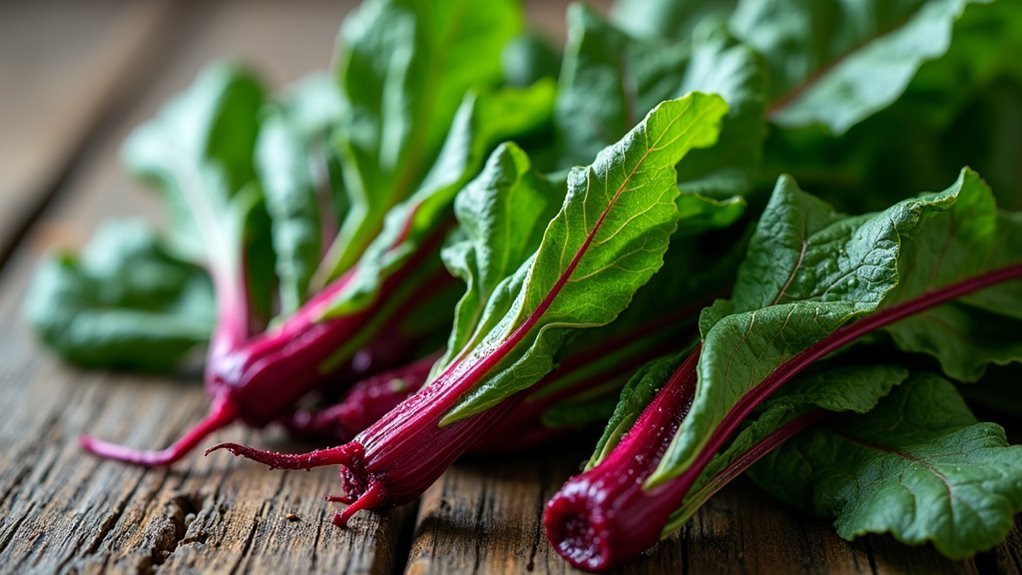
You’ve probably been tossing beet greens in the trash without realizing you’re discarding a vitamin K powerhouse that contains 381 mcg per 100 grams.
These nutrient-dense leaves shouldn’t end up in your compost bin when they can greatly boost your daily vitamin K intake.
Whether you’re adding them to salads, blending them into smoothies, or sautéing them as a side dish, beet greens offer versatile culinary options that’ll transform your cooking routine.
Vitamin K Content
Every 100 grams of beet greens delivers an impressive 381 mcg of vitamin K – that’s more than triple your daily requirement in a single serving. This makes beet greens one of the most potent foods high in vitamin K among all leafy greens, surpassing many popular options you’ll find in grocery stores.
The vitamin K content in beet greens offers several advantages for your dietary intake:
- Exceptional concentration – 381 mcg per 100 grams outperforms most other leafy greens
- Cost-effective nutrition – Often discarded, yet provides premium vitamin K density
- Versatile preparation – Maintains vitamin K content through sautéing, raw consumption, or blending
- Bonus nutrients – Combines vitamin K with vitamin A, vitamin C, and antioxidants
You’re getting maximum nutritional value from what’s typically considered kitchen waste.
Culinary Uses Tips
Knowing beet greens pack such impressive vitamin K levels, you’ll want to master the best ways to prepare and enjoy them. These versatile leafy greens shine when sautéed with garlic and olive oil, creating a vitamin K-rich side dish where healthy fats enhance nutrient absorption.
| Preparation Method | Benefits |
|---|---|
| Sautéed with olive oil | Enhances vitamin K absorption |
| Raw in salads | Preserves maximum nutrients |
| Blended in smoothies | Masks earthy flavor with fruits |
Light steaming preserves their vitamin content while maintaining their earthy, slightly sweet flavor. You can also add raw beet greens to salads for vibrant texture, pairing them with nuts for extra crunch. When cooking these nutritious leafy greens, avoid overcooking to retain their impressive nutritional profile.
Dandelion Greens: From Yard Weed to Health Food
While most people consider dandelions nothing more than pesky weeds cluttering their pristine lawns, you’re missing out on one of nature’s most potent vitamin K powerhouses.
Dandelion greens deliver an impressive 536 micrograms of vitamin K per 100 grams, surpassing most traditional leafy greens.
These versatile plants offer significant health benefits beyond their vitamin K content:
- Bone health support through exceptional calcium and vitamin K density
- Antioxidant protection from vitamins A and C
- Liver function enhancement due to concentrated nutrients
- Blood clotting regulation from high vitamin K levels
You can easily forage dandelion greens in most areas, making them a sustainable nutrition source.
Whether you consume them raw in salads, sauté them, or brew tea, you’re accessing remarkable nutritional value that’s been hiding in plain sight.
Arugula: Peppery Greens With Surprising Vitamin Content
From wild forage to cultivated cuisine, arugula brings sophisticated flavor and impressive nutrition to your plate. This peppery green delivers approximately 108.6 mcg of vitamin K per 100 grams, meeting 90% of your daily value.
Among leafy greens, arugula stands out for its exceptional nutrient density while maintaining just 25 calories per serving.
You’ll maximize arugula’s benefits by pairing it with healthy fats like olive oil, which enhances absorption of its fat-soluble vitamin K content. Beyond vitamin K, you’re getting antioxidants, vitamins A and C, plus calcium and potassium.
Whether you’re tossing it in salads, layering it on sandwiches, or using it as a garnish, arugula’s versatility makes boosting your vitamin K intake both delicious and effortless.
Romaine Lettuce: More Than Just a Salad Base
Most people underestimate romaine lettuce’s nutritional power, viewing it merely as crispy filler for Caesar salads. However, this popular leafy green delivers approximately 48 mcg of vitamin K per 100 grams, making it a valuable contributor to your daily intake.
Romaine lettuce’s vitamin K comes primarily as vitamin K1 (phylloquinone), which supports:
- Essential blood clotting functions
- Bone health maintenance
- Low-calorie nutrition with high antioxidant content
- Consistent vitamin K levels for medication management
You’ll find romaine lettuce particularly useful if you’re taking anticoagulants like warfarin, as it helps maintain steady vitamin K consumption.
Beyond salads, you can incorporate this nutritious green into wraps and sandwiches, boosting your meal’s overall vitamin content while enjoying its satisfying crunch.
Watercress: Small Leaves With Major Nutritional Impact
Don’t overlook watercress when searching for vitamin K powerhouses among leafy greens. This small but mighty green packs an incredible 250 mcg of vitamin K per 100 grams, delivering over 200% of your daily needs.
You’ll find watercress stands out among other leafy greens for its exceptional nutritional value, combining high vitamin K content with antioxidants, vitamins A and C, and essential minerals.
Adding watercress to your diet supports bone health and proper blood clotting functions. You can easily incorporate these peppery leaves into salads, sandwiches, or smoothies for a nutritional boost.
The distinctive sharp flavor enhances dishes while maximizing your vitamin K intake, making watercress an efficient choice for meeting your daily requirements.
Bok Choy: Asian Green With Western Health Benefits
Why settle for ordinary greens when bok choy delivers exceptional vitamin K content alongside diverse culinary possibilities? This Asian leafy green provides approximately 32 mcg of vitamin K per half-cup cooked serving, contributing greatly to your daily requirements.
Bok choy offers extensive health benefits beyond vitamin K:
- Contains essential nutrients like vitamin C, vitamin A, and calcium
- Provides antioxidant properties that reduce inflammation
- Supports immune function through nutrient density
- Enhances vitamin absorption when paired with healthy fats
You’ll find this versatile leafy green adapts perfectly to stir-fries, soups, and salads.
To maximize nutrient absorption, combine bok choy with olive oil or avocado. These healthy fat sources greatly enhance vitamin K uptake, ensuring you receive maximum health benefits from this nutritional powerhouse.
Endive: Bitter Greens With Sweet Health Rewards
Endive transforms your vitamin K intake with an impressive 216 mcg per 100-gram serving, delivering approximately 180% of your daily value in this crisp, bitter green. This chicory family member offers exceptional nutritional density that rivals traditional leafy greens, making dietary supplements unnecessary when you’re consuming adequate portions.
| Nutrient Benefit | Endive Advantage | Health Impact |
|---|---|---|
| Vitamin K Content | 216 mcg per 100g | Supports blood clotting |
| Antioxidant Power | High concentration | Reduces inflammation |
| Caloric Efficiency | Very low calories | Weight management |
| Texture Profile | Crisp and bitter | Enhances salad appeal |
You’ll maximize vitamin K absorption by pairing endive with healthy fats. Its anti-inflammatory properties and blood clotting support make this bitter green a powerhouse addition to your regular meal rotation.
Frequently Asked Questions
Which Leafy Greens Have the Most Vitamin K?
You’ll find kale tops the list with over 800 mcg per cooked cup, followed by collard greens at 530 mcg, turnip greens at 426 mcg, and beet greens at 220 mcg per serving.
What 3 Foods Contain the Highest Amount of Vitamin K?
You’ll find the highest vitamin K amounts in kale and spinach, both providing over 800 mcg per cooked cup, followed by beet greens at around 440 mcg per cooked cup.
What Greens Should I Avoid With Warfarin?
You shouldn’t completely avoid any greens with warfarin, but maintain consistent intake of high-vitamin K varieties like kale, spinach, collard greens, mustard greens, turnip greens, and Swiss chard to prevent INR fluctuations.
What Kind of Lettuce Has the Most Vitamin K?
You’ll find romaine lettuce contains the most vitamin K among lettuce varieties, providing 48 mcg per 100 grams. That’s about 40% of your daily value, making it considerably higher than other types.


Leave a Reply