
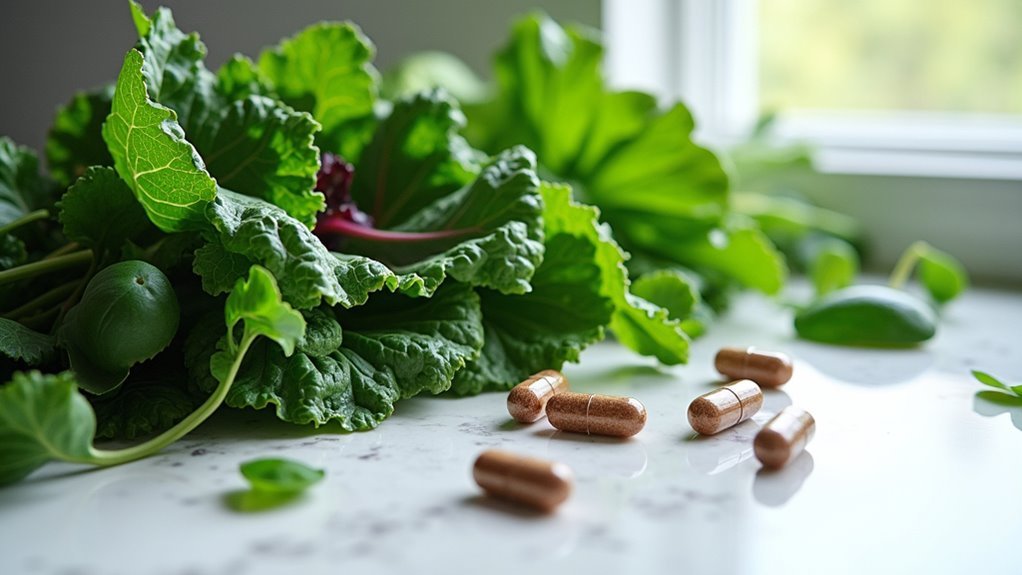
You can replace vitamin pills with nutrient-dense leafy greens that deliver powerful nutrition naturally. Kale provides 68% of your daily vitamin K needs in one cup, while microgreens contain up to 40 times more vitamins than mature vegetables. Spinach offers essential folate for blood health, and collard greens supply 25% of your calcium requirements. Swiss chard delivers magnesium for over 300 biochemical reactions. Continue exploring to discover the complete nutritional profiles of these green powerhouses.
Kale: The Vitamin K and Antioxidant Powerhouse

While many people turn to synthetic supplements for their daily nutrients, kale delivers an extraordinary 68% of your Daily Value for vitamin K in just one cup of raw leaves. This essential nutrient supports blood clotting and bone health naturally.
You’ll also get 22% DV for vitamin C and 6% DV for vitamin A, making kale one of the most nutrient-dense leafy greens available.
Kale’s powerful antioxidants, including lutein and beta-carotene, protect your eye health and may greatly lower disease risk.
You can enjoy it raw, cooked, or blended into smoothies—steaming preserves the most nutrients. By incorporating this versatile vegetable into your daily diet, you’re replacing synthetic vitamin supplements with nature’s own powerhouse.
Microgreens: Concentrated Nutrients in Tiny Packages
You’ll find that microgreens pack an extraordinary nutritional punch despite their small size, containing up to 40 times more vitamins and minerals than their fully-grown counterparts.
You can easily grow these nutrient powerhouses at home year-round, giving you constant access to fresh vitamins C, E, and K without relying on supplements.
When you compare microgreens gram-for-gram against mature vegetables, you’re getting considerably more bang for your nutritional buck in every tiny leaf.
Nutrient Density Per Gram
When you’re searching for maximum nutritional impact, microgreens deliver an extraordinary concentration of vitamins and minerals that’ll transform your approach to natural supplementation.
These tiny powerhouses pack up to 40 times the nutrient density of their full-grown versions, making every gram count toward your healthy diet goals.
You’ll get impressive amounts of vitamins C, E, and K from just one ounce of microgreens, along with antioxidants and phytochemicals that support peak wellness.
The health benefits of leafy microgreens extend beyond basic nutrition – they’re concentrated medicine in miniature form.
Whether you choose broccoli, radish, or pea shoots, you’re accessing more vitamins and minerals per bite than traditional vegetables provide, making them nature’s most efficient nutrient delivery system.
Growing Microgreens at Home
Growing microgreens at home transforms your kitchen into a year-round nutrient factory that requires nothing more than basic supplies and minimal counter space.
You’ll harvest fresh vitamins C, E, and K within just 7-14 days, making this the fastest path to concentrated nutrients. Popular varieties like broccoli, radish, and arugula microgreens contain up to 40 times more nutrients than their full-grown versions, delivering maximum health benefits in minimal space.
You don’t need gardening experience to succeed. Simply scatter seeds on growing medium, mist regularly, and watch your nutrient powerhouse emerge.
These tiny greens pack extraordinary vitamins and antioxidants into every bite, giving you fresh, potent nutrition regardless of season or outdoor growing conditions.
Vitamin Content Comparison
While mature vegetables certainly provide valuable nutrition, microgreens deliver an astounding concentration of vitamins that’ll revolutionize how you think about getting essential nutrients.
These tiny greens contain up to 40 times more vitamins and minerals per gram than their mature counterparts, making them incredibly powerful additions to your healthy diet.
You’ll find microgreens particularly rich in vitamins C, E, and K.
Studies reveal their vitamin C content considerably surpasses full-grown vegetables, boosting antioxidant properties dramatically.
The concentrated nutrient profile means just a small serving provides substantial portions of your daily vitamin requirements.
Collard Greens: Calcium and Folate Rich Vitamin Source
Because collard greens pack an impressive nutritional punch, they’re becoming a go-to choice for health-conscious individuals seeking natural vitamin sources.
You’ll get 25% of your daily calcium needs from just one cup of raw collard greens, supporting strong bones and proper muscle function. These nutrient-dense leaves also deliver 19% of your daily folate requirement, essential for DNA synthesis and red blood cell production—particularly significant if you’re pregnant.
What’s remarkable is that collard greens provide 131% of your daily vitamin K needs per cup, supporting blood clotting and bone metabolism.
One cup of collard greens delivers an exceptional 131% of your daily vitamin K requirement for optimal blood and bone health.
The thick leaves contain abundant dietary fiber that promotes healthy digestion. By incorporating collard greens into your meals, you’re choosing a natural alternative to vitamin pills while delivering critical nutrients your body needs.
Spinach: Folate and Manganese for Blood Health

When you’re looking to boost your blood health naturally, spinach delivers an exceptional combination of folate and manganese that’s hard to beat. One cup of raw spinach provides 15% of your daily folate needs, supporting red blood cell production and preventing anemia.
You’ll also get 12% of your manganese requirements, essential for proper metabolism and bone health.
Spinach’s blood health benefits extend beyond these key nutrients. The 121% daily value of vitamin K promotes healthy blood clotting, while antioxidants like lutein and beta-carotene support cardiovascular function.
Cabbage: Glucosinolates for Natural Disease Protection
As one of nature’s most powerful protective vegetables, cabbage delivers glucosinolates—sulfur-containing compounds that actively support your body’s natural defense mechanisms against disease.
These sulfur-rich molecules promote detoxification processes that may help protect against certain cancers while working alongside potent antioxidants like vitamin C to combat inflammation and oxidative stress.
Cabbage’s sulfur compounds naturally detoxify your body while vitamin C antioxidants fight inflammation and oxidative damage.
You’ll get 85% of your daily vitamin K needs from just one cup of raw cabbage, supporting both blood clotting and bone health.
When you ferment cabbage into sauerkraut, you’re boosting its probiotic content for enhanced gut health and stronger immune function.
Regular cabbage consumption also supports heart health through its fiber content and the cholesterol-lowering properties of glucosinolates, making it an excellent natural disease-fighting addition to your diet.
Beet Greens: Eye Health Vitamins and Minerals

While most people discard beet greens as kitchen waste, you’re missing out on one of nature’s most potent sources of eye-protecting nutrients. These overlooked leaves pack extraordinary vitamins and minerals that’ll transform your eye health naturally.
| Nutrient | Amount per Cup | Eye Health Benefit |
|---|---|---|
| Vitamin K | 127% DV | Maintains healthy vision |
| Vitamin A | 13% DV | Supports retina function |
| Vitamin C | 12% DV | Protects against oxidative stress |
Beet greens deliver powerful antioxidants like zeaxanthin and lutein, which specifically target eye disorders and support long-term vision health. By incorporating these nutrient-dense leaves into your meals, you’re naturally boosting your intake of essential eye-protecting compounds while potentially reducing your dependence on vitamin supplements.
Watercress: Medicinal Properties in Every Bite
You’ll find that watercress has served as a medicinal plant for centuries, with ancient cultures relying on its healing properties long before modern nutrition science emerged.
This aquatic green packs an impressive nutritional punch, delivering 71% of your daily vitamin K needs in just one cup while providing essential vitamins A and C.
What makes watercress truly special isn’t just its nutrient density—it’s the powerful combination of antioxidants and glucosinolates that may help reduce inflammation and cancer risk with every bite.
Ancient Healing Plant Properties
Throughout history, watercress has earned its reputation as nature’s medicine cabinet, delivering an impressive 71% of your daily vitamin K needs in just one cup while providing centuries-proven healing benefits.
This ancient healing plant stands out among leafy green vegetables for its remarkable medicinal properties that traditional healers recognized long before modern science validated them.
You’ll benefit from watercress’s rich concentration of phytochemicals that research suggests may help reduce cancer risk. The plant’s anti-inflammatory compounds work alongside its abundant antioxidants, including 17% of your daily vitamin C requirements.
When you choose watercress, you’re accessing a powerhouse that’s rich in minerals and bioactive compounds. Its peppery taste signals the presence of beneficial sulfur compounds that support your body’s natural detoxification processes, making synthetic supplements unnecessary.
Nutrient Density Per Serving
Dense nutritional power defines watercress, cramming extraordinary medicinal value into every single serving. This exceptional leafy green delivers concentrated vitamins that’ll replace your supplement routine naturally.
You’re getting incredible nutrient density from just one cup (34g) of watercress:
- 71% daily vitamin K – Essential for bone strength and proper blood clotting
- 17% daily vitamin C – Boosts immune function and provides antioxidant protection
- Rich vitamins A and E – Supports healthy skin and fights oxidative damage
- Anti-inflammatory compounds – Promotes cardiovascular health and reduces inflammation
Unlike processed vitamins, watercress delivers these nutrients in their natural, bioavailable forms. You can easily incorporate this powerhouse into salads, smoothies, or soups.
Before making significant dietary changes, consult your healthcare provider for personalized medical advice regarding your specific nutritional needs.
Romaine Lettuce: Blood Sugar Supporting Nutrients
When managing blood sugar levels, romaine lettuce emerges as a powerhouse vegetable that delivers essential nutrients while keeping glucose spikes at bay.
You’ll benefit from its low glycemic index, which helps regulate blood sugar naturally through healthy eating choices. This leafy green provides 40% of your daily vitamin K needs per cup, supporting blood clotting and bone health alongside green vegetables like kale.
The fiber content promotes digestive health while creating satiety that prevents overeating and subsequent blood sugar fluctuations.
You’re also getting 23% of daily vitamin A requirements, strengthening immune function and vision. Rich antioxidants combat oxidative stress and inflammation, supporting metabolic health.
Unlike vitamin pills, romaine lettuce delivers these blood sugar-supporting nutrients in their natural form, making absorption more efficient for your body.
Swiss Chard: Magnesium and Blood Sugar Regulation
You’ll find Swiss chard packed with magnesium, delivering 37% of your daily value per cooked cup to power over 300 essential biochemical reactions in your body.
This powerhouse green doesn’t just stop at magnesium—it contains syringic acid, a compound that works alongside the mineral to enhance your blood sugar control naturally.
When you’re looking to replace vitamin supplements while managing your glucose levels, Swiss chard’s unique combination of nutrients makes it an ideal choice for your daily meals.
Magnesium Content Benefits
Among the many nutritional treasures found in Swiss chard, magnesium stands out as a particularly powerful mineral for blood sugar regulation. You’ll get approximately 150 mg of magnesium per cooked cup, which delivers 37% of your daily recommended intake.
This impressive magnesium content offers these key benefits:
- Improves insulin sensitivity – helping your body use glucose more effectively
- Enhances glucose metabolism – supporting better blood sugar control naturally
- Reduces type 2 diabetes risk – through consistent healthy blood sugar management
- Supports cardiovascular health – particularly beneficial if you have insulin resistance
When you incorporate Swiss chard into your meals regularly, you’re naturally boosting your magnesium intake without supplements.
This approach supports both your metabolic health and blood sugar regulation simultaneously.
Syringic Acid Effects
Beyond magnesium’s blood sugar benefits, Swiss chard contains syringic acid, a powerful phenolic compound that works differently to manage your glucose levels. This natural compound inhibits carbohydrate-breaking enzymes, slowing glucose absorption in your bloodstream and preventing dangerous spikes.
| Benefit | Swiss Chard | Supplement Pills |
|---|---|---|
| Cost | Pennies per serving | $20-40 monthly |
| Side effects | None reported | Digestive issues |
| Absorption | Natural, ideal | Variable effectiveness |
| Additional nutrients | Vitamins A, C, K | Single compounds |
| Long-term safety | Thousands of years | Limited studies |
When you choose Swiss chard over supplements, you’re getting both magnesium and syringic acid working together. This combination provides superior blood sugar regulation compared to isolated vitamin pills, offering natural diabetes prevention through whole food nutrition.
Blood Sugar Management
Three essential mechanisms make Swiss chard’s magnesium content particularly effective for blood sugar management. This powerhouse among leafy greens delivers approximately 150 mg of magnesium per cooked cup, considerably supporting your daily requirements of 310-420 mg.
Here’s how Swiss chard’s magnesium promotes prime glycemic control:
- Enhances insulin sensitivity – allowing your cells to respond more effectively to insulin
- Accelerates glucose metabolism – helping your body process sugars more efficiently
- Prevents insulin resistance – addressing a key factor in diabetes development
- Slows glucose absorption – through fiber content that stabilizes blood sugar spikes
Studies consistently show that increasing magnesium intake from leafy greens like Swiss chard reduces type 2 diabetes risk while improving overall blood sugar regulation, making it an excellent natural alternative to supplements.
Arugula: Nitrates for Cardiovascular Health
While many people turn to supplements for heart health support, arugula offers a natural alternative packed with dietary nitrates that can greatly benefit your cardiovascular system. These nitrates convert into nitric oxide in your body, improving blood flow and lowering blood pressure naturally.
| Nutrient | Amount per Cup | Daily Value % | Cardiovascular Benefit | Easy Addition |
|---|---|---|---|---|
| Vitamin K | 18% DV | 18% | Blood health, bone strength | Salads |
| Nitrates | High content | Varies | Improved blood flow | Sandwiches |
| Vitamin C | Antioxidant | Varies | Reduces inflammation | Smoothies |
| Beta-carotene | Antioxidant | Varies | Combats oxidative stress | Raw consumption |
| Fiber | Moderate | Varies | Heart disease prevention | Cooked dishes |
Arugula’s peppery flavor makes incorporating this heart-healthy green simple and delicious.
Endive: Anti-inflammatory Compounds and Vitamin K
When you’re looking to maximize your vitamin K intake without relying on supplements, endive stands out as an exceptional choice, delivering an impressive 97% of your daily vitamin K needs in just one cup.
This leafy green doesn’t stop there—it’s packed with anti-inflammatory compounds like kaempferol that may help reduce inflammation and inhibit cancer cell growth.
Endive offers remarkable nutritional benefits for your overall health:
- Bone support – High vitamin K content strengthens bones and aids blood clotting
- Anti-inflammatory protection – Kaempferol compounds fight inflammation naturally
- Essential vitamins – Provides 6% DV vitamin A and 18% DV folate
- Culinary versatility – Crisp texture enhances salads, sandwiches, and cooked dishes
You’ll appreciate endive’s slightly bitter flavor while meeting your vitamin requirements naturally.
Essential Vitamins and Minerals Found in Leafy Greens
Beyond endive’s impressive vitamin K content, leafy greens collectively house a powerhouse of vitamins and minerals that’ll transform your nutritional profile.
You’ll discover that kale delivers 68% of your daily vitamin K needs per cup, while spinach provides an astounding 121%. These essential vitamins don’t stop there—spinach supplies 16% of your vitamin A requirements, and beet greens contribute 13%.
Your vitamin C intake gets a significant boost from collard greens at 22% daily value per cup. For bone health, you’ll benefit from the calcium found in kale and collard greens.
Collard greens deliver 22% of your daily vitamin C while kale provides essential calcium for stronger bones.
Don’t overlook folate either—spinach provides 12% of your daily needs, supporting vital DNA synthesis and cellular function throughout your body.
Building a Diverse Leafy Green Diet for Optimal Nutrition
Since different leafy greens offer unique nutritional profiles, you’ll maximize your vitamin intake by rotating through various types throughout the week.
This variety guarantees you’re getting thorough nutrients while supporting weight management through high fiber content.
Here’s how to build your diverse leafy green rotation:
- Monday-Tuesday: Start with spinach and kale, delivering over 100% daily value of vitamin K for bone health.
- Wednesday-Thursday: Switch to collard greens and Swiss chard for vitamins A, C, and folate.
- Friday-Saturday: Add beet greens and microgreens, which contain up to 40 times more nutrients than mature vegetables.
- Sunday: Experiment with preparation methods like steaming or sautéing to enhance nutrient retention.
This systematic approach helps you naturally replace vitamin pills while reducing chronic disease risks.
Frequently Asked Questions
What Leafy Greens Have the Most Vitamins?
You’ll find collard greens pack the most vitamins, delivering 131% daily vitamin K plus significant vitamin A and C. Beet greens follow closely with 127% vitamin K, while spinach provides 121% vitamin K daily.
Do Greens Replace Vitamins?
You can replace many vitamin pills with leafy greens since they’re packed with vitamins A, C, and K. One cup of spinach provides 121% of your daily vitamin K needs naturally.
Which Vegetable Is Known as Multivitamin Green?
You’ll find several greens called “multivitamin greens,” including kale, spinach, and collard greens. They’re all nutrient powerhouses, but kale’s often considered the classic multivitamin green due to its exceptional vitamin density.
What Is the King of Green Leafy Vegetables?
Kale’s considered the king of green leafy vegetables because you’ll get exceptional nutrient density, including 68% daily vitamin K in one cup. It’s packed with antioxidants and offers incredible versatility.


Leave a Reply